

The ability to find your books efficiently has become both easier and more complex in the digital age. With millions of titles available across physical libraries, digital stores, and online archives, readers face an abundance of choice that can feel overwhelming. Whether you're tracking down a half-remembered childhood favorite, locating a specific academic text, or discovering your next great read, mastering the art of book discovery requires understanding the tools, systems, and strategies that connect readers with the right titles at the right time.
Understanding Book Discovery Infrastructure
The systems that help readers find your books rely on sophisticated metadata frameworks developed over decades. Libraries and retailers use standardized cataloging systems to organize and describe titles, making them searchable across multiple dimensions.
The Library of Congress MARC 21 format serves as the backbone of library cataloging worldwide. This bibliographic standard captures everything from author names and publication dates to subject classifications and physical descriptions. When you search a library catalog, you're querying records structured according to these exacting specifications.
Key metadata elements that power book discovery include:
- Title and subtitle variations
- Author names and contributor roles
- ISBN and other standard identifiers
- Subject headings and classification codes
- Publication information and edition details
- Physical or digital format specifications
Modern discovery goes beyond traditional library catalogs. Publishers and retailers exchange metadata through ONIX for Books, the industry-standard format that enables consistent product information across the entire supply chain. This standardization ensures that when you search for a title, the same accurate information appears whether you're browsing a library catalog, an online retailer, or a recommendation engine.
The Role of Identifiers in Book Location
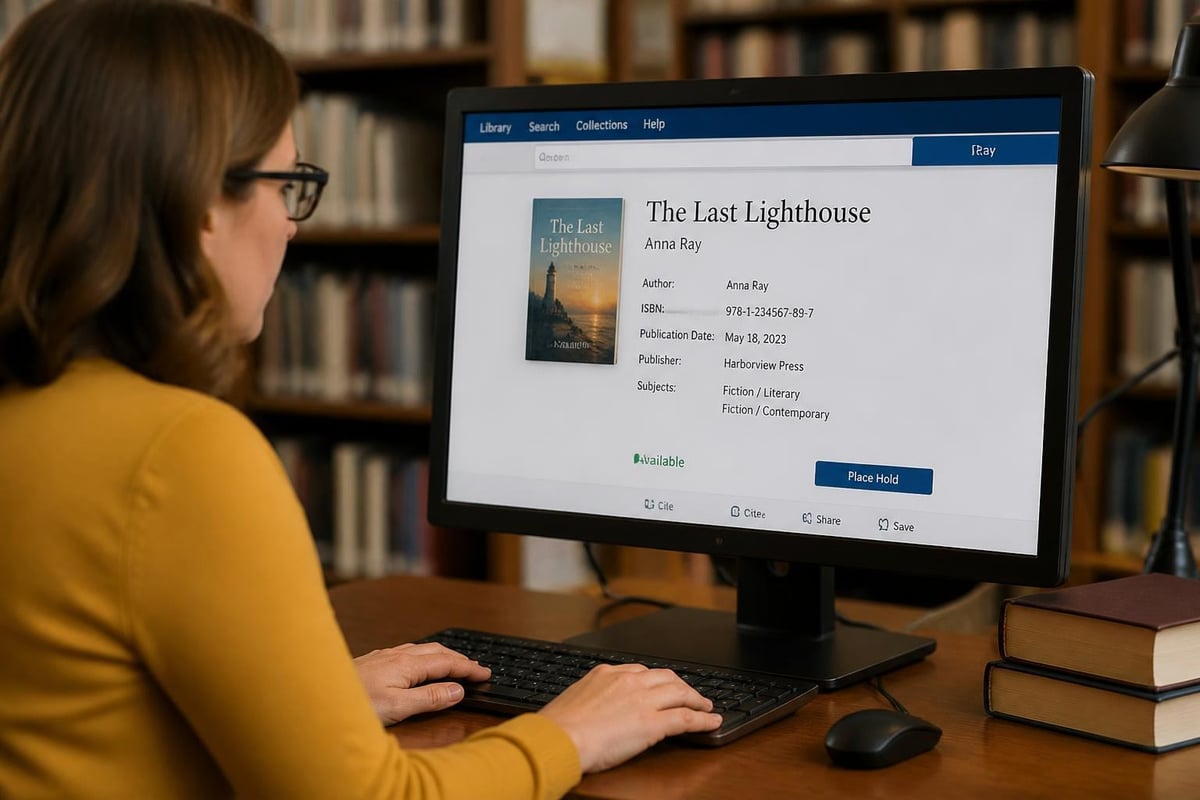
The International Standard Book Number represents the most powerful tool for pinpointing exact editions. Understanding how ISBNs work transforms vague searches into precise results. Each ISBN uniquely identifies a specific edition of a title, distinguishing hardcover from paperback, first edition from revised, English from translated versions.
When you need to find your books with absolute certainty, the ISBN eliminates ambiguity. A 10-digit or 13-digit ISBN leads directly to the exact version you're seeking, bypassing similar titles, different editions, or works with identical names by different authors.
Strategic Search Techniques for Different Platforms
Different discovery platforms require tailored search approaches. Library catalogs, digital stores, and specialized databases each have unique strengths and optimal query strategies.
Library Catalog Searching
The University of British Columbia’s library guide demonstrates effective catalog search tactics. Libraries typically offer multiple search modes, each suited to different discovery scenarios.
| Search Type | Best For | Example Query |
|---|---|---|
| Title | Known titles | "The God of the Woods" |
| Author | Browsing by creator | "Sarah J. Maas" |
| Subject | Topical exploration | "artificial intelligence ethics" |
| Keyword | Exploratory searching | "climate change policy solutions" |
| ISBN | Exact edition | "978-0-123456-78-9" |
Keyword searching casts the widest net but requires refinement. Start broad, then narrow using Boolean operators (AND, OR, NOT) and filters for publication date, format, or language. Subject searches leverage controlled vocabularies that group related works, helping you find your books on topics even when titles don't contain your search terms.
WorldCat extends library searching globally, aggregating holdings from thousands of institutions. When local libraries lack a title, WorldCat reveals which libraries worldwide own copies and facilitates interlibrary loan requests. This massive discovery service proves invaluable for rare, out-of-print, or specialized academic titles.
Digital Store and Archive Navigation
Commercial platforms and open digital libraries offer different search capabilities than traditional catalogs. Google Books Advanced Search provides granular filters for full-text searching, publication date ranges, language, and even content viewability (full view, preview, or snippet only).
Advanced search parameters that improve results:
- Exact phrase matching using quotation marks
- Date range limiting to find contemporary or historical works
- Language filtering for multilingual collections
- Subject or category constraints to narrow broad topics
- Publisher or ISBN searching for specific editions
The Open Library search system combines retailer-style browsing with library-level bibliographic detail. Its edition-centric approach helps readers distinguish between formats, printings, and regional releases. Many titles offer borrowable digital copies through controlled digital lending, expanding access beyond purchase-only models.
For readers seeking psychological thriller or mystery ebook deals, dedicated genre pages at specialized retailers like Tell eBook organize titles by category, making discovery more intuitive than searching massive general catalogs.

Leveraging Academic and Research Collections
Scholarly readers pursuing academic titles or historical works benefit from specialized discovery tools designed for research collections. HathiTrust Digital Library provides access to millions of digitized volumes from academic libraries, with advanced search and workset-building capabilities for large-scale research projects.
HathiTrust's search interface supports:
- Full-text searching across public domain works
- Metadata-only searching for in-copyright titles
- Collection-building tools for organizing research sources
- Rights determination and access level indication
- Catalog record export for citation management
The platform distinguishes between full-view (public domain or open access) and limited-view (search-only) materials, helping researchers understand access levels before requesting physical copies through libraries.
Building Personal Discovery Systems
Efficient readers develop personalized strategies to find your books based on their specific needs and reading patterns. These systems combine multiple tools and approaches for comprehensive coverage.
Multi-Platform Search Workflows
Rather than relying on a single discovery channel, strategic searchers query multiple systems in sequence:
- Start with ISBN or exact title in a universal catalog like WorldCat
- Check local library availability for physical or digital borrowing
- Search retail platforms for purchase options and pricing
- Explore open archives for public domain or open-access versions
- Review academic repositories for scholarly editions or critical texts
This layered approach reveals all available formats, access methods, and price points. A title might be borrowable from your local library, available as a free public domain ebook, or discounted at specialty retailers like those featured in the Tell eBook shop.
Recommendation and Discovery Algorithms
Modern book discovery increasingly relies on algorithmic recommendations that analyze reading patterns and preferences. A 2024 academic survey of book recommendation systems examines collaborative filtering, content-based methods, and hybrid approaches that help readers find your books through personalized suggestions.
Common recommendation techniques include:
| Method | How It Works | Strengths |
|---|---|---|
| Collaborative filtering | Matches you with similar readers' choices | Discovers unexpected titles |
| Content-based | Analyzes features of books you've enjoyed | Finds similar themes and styles |
| Metadata matching | Uses genre, topic, and attribute tags | Precise category navigation |
| Social recommendations | Leverages friends' and community ratings | Trusted, curated suggestions |
These systems work best when you actively rate and review titles, providing data that refines future recommendations. Over time, algorithmic discovery becomes increasingly personalized, surfacing titles that align with your evolving tastes.
Organizing and Tracking Your Reading
Once you find your books, effective organization ensures you can relocate titles, track reading progress, and manage wish lists across platforms. Personal library management has evolved from paper lists to sophisticated digital tools.
Reading Lists and Wish Lists
Most retail platforms and reading apps offer built-in list features for saving titles you want to read. Strategic readers maintain separate lists for different purposes:
- Priority reading for immediate next books
- Seasonal or mood-based lists (summer reads, comfort re-reads)
- Research or reference collections for topical exploration
- Gift ideas organized by recipient
- Format-specific lists (audiobook commute queue, print TBR)
Cross-referencing these lists with library availability, pricing alerts, and new release calendars creates an efficient acquisition workflow. When a wishlisted title appears on discount at retailers like Tell eBook’s discount ebook section, you're ready to purchase immediately.
Genre-Specific Discovery Strategies
Different genres require tailored discovery approaches based on publication patterns, reader communities, and available metadata.
Fiction Discovery
Fiction readers often prioritize author discovery, series tracking, and thematic browsing. Effective fiction search strategies include:
Author-centric approaches that explore backlists, similar authors, and publisher imprints. When you discover Sarah J. Maas books resonate with your preferences, exploring her complete works and recommended read-alikes yields rich discovery.
Series and sequel tracking using publication order, reading order guides, and series-specific databases. Fantasy and science fiction particularly benefit from dedicated genre pages that organize multi-volume epics chronologically.
Thematic and trope-based searching through specialized tags, reader-curated lists, and recommendation communities. Readers seeking specific relationship dynamics, plot structures, or world-building elements find your books more effectively through these granular descriptors than through broad genre labels.

Nonfiction Navigation
Nonfiction discovery relies heavily on subject classification, topical currency, and authority signals. Effective approaches include:
- Subject heading browsing using Library of Congress or Dewey Decimal classifications
- Citation chasing following references from known authoritative works
- Publisher reputation filtering by academic presses or specialty imprints
- Publication date filtering for current research or historical perspectives
- Author credentials evaluating expertise and institutional affiliations
Academic and professional nonfiction particularly benefits from specialized categories that segment broad topics into practitioner-focused, theoretical, or introductory levels.
Format-Specific Considerations
The format you prefer affects where and how you find your books. Print, ebook, and audiobook discovery each involve different platforms, metadata, and availability patterns.
Print Book Location
Physical books require geographic awareness. Library catalogs indicate branch locations and circulation status. Bookstore inventory systems show in-store availability and cross-store transfers. Out-of-print titles may require searching used book marketplaces, antiquarian dealers, or interlibrary loan networks.
WorldCat's location features help you find your books in nearby libraries, displaying distance, holdings status, and request options. For rare or collectible editions, specialized rare book databases and dealer networks supplement general discovery tools.
Digital Format Discovery
Ebook and audiobook discovery involves platform-specific considerations around DRM, format compatibility, and device ecosystems. Readers using Kindle, Kobo, Apple Books, or other platforms must verify format availability and compatibility before purchase.
Cross-platform shoppers benefit from ISBN searching across multiple retailers to compare pricing, format options, and bundle availability. Some titles release simultaneously in all digital formats while others stagger ebook and audiobook publication or restrict certain formats to specific regions.
Emerging Discovery Technologies
The future of book discovery incorporates linked data, semantic search, and machine learning advances that promise more intuitive and comprehensive finding tools.
OCLC’s linked data initiatives work to make bibliographic information more accessible to general web search engines. By expressing library catalog data as linked open data, these projects aim to surface books directly in Google searches, voice assistant queries, and other discovery interfaces beyond traditional library catalogs.
Emerging technologies improving book discovery:
- Voice search and conversational queries for natural language book finding
- Visual search for finding books from cover images or screenshots
- Augmented reality for browsing virtual shelves and spatial navigation
- AI-powered summarization for evaluating relevance before committing to read
- Cross-platform reading sync for seamless format and device switching
These innovations promise to make the process to find your books more intuitive, reducing friction between discovery intent and reading engagement.
Privacy and Discovery Personalization
Personalized discovery requires balancing recommendation quality with privacy preferences. Reading histories reveal intimate details about interests, beliefs, and personal circumstances. Strategic readers make informed choices about data sharing.
Privacy considerations in book discovery:
- Pseudonymous accounts for sensitive topic exploration
- VPN usage when researching politically sensitive materials
- Privacy-focused platforms that minimize tracking
- Local-only reading apps that don't sync data
- Regular data deletion from commercial platforms
Readers in restrictive regions or researching sensitive topics should evaluate platform privacy policies and consider access methods that protect reading privacy while still enabling effective discovery.
Mastering the ability to find your books efficiently transforms reading from a passive activity into an intentional practice, connecting you with exactly the titles that serve your needs, interests, and growth. Whether you're building a research collection, curating a summer reading list, or tracking down a half-remembered favorite, the strategies and tools outlined here provide a comprehensive framework for discovery across all formats and platforms. Tell eBook simplifies this process by offering instant-access ebooks and audiobooks across diverse genres, all organized for easy browsing and backed by competitive pricing that makes building your digital library both affordable and convenient.