

Graphic books have evolved from niche entertainment to a cornerstone of contemporary literature, bridging visual art and narrative storytelling in ways that engage readers across all age groups and backgrounds. Whether you're exploring superhero adventures, historical memoirs, or educational content, these visually rich narratives offer unique reading experiences that traditional text-based books cannot replicate. The format has gained significant traction in publishing, education, and libraries, making it essential for readers and collectors to understand what defines this dynamic medium and how to navigate its expanding landscape.
Understanding the Scope of Graphic Books
Graphic books encompass a broad spectrum of visual narratives that combine illustrations with text to tell stories or convey information. The term covers everything from traditional comic books and manga to long-form graphic novels and illustrated nonfiction. Unlike conventional books that rely solely on prose, these works use sequential art-a series of images arranged in deliberate sequence-to guide readers through plots, concepts, and character development.
The distinction between various types of graphic books matters for collectors and readers alike. Comic books typically appear as periodicals with serialized stories, while graphic novels present complete narratives in a single volume. Manga represents the Japanese tradition of right-to-left reading with distinctive artistic conventions. Trade paperbacks collect multiple comic issues into bound editions, and webcomics translate digital-first content into print formats.
Market Growth and Industry Recognition
The graphic books industry has experienced remarkable expansion over recent years. According to market analysis from ICv2, the sector reached new sales peaks in 2025, demonstrating sustained reader interest across multiple distribution channels. This growth reflects broader acceptance within mainstream publishing and educational institutions.
Libraries and schools have increasingly incorporated graphic books into their collections, recognizing their educational value and ability to engage reluctant readers. The American Library Association’s Graphic Novels & Comics Round Table provides specialized resources for librarians developing these collections, offering cataloging standards and selection criteria that legitimize the format within professional contexts.
Key market segments include:
- Bookstore channels (independent and chain retailers)
- Direct market comic shops
- Digital platforms and subscription services
- Educational institutional purchases
- Library acquisitions

Genre Diversity in Graphic Books
The versatility of graphic books allows creators to tackle virtually any subject matter or genre. This breadth makes them accessible entry points for readers who might find traditional prose intimidating or less engaging. Fiction dominates the market, but nonfiction graphic books have carved substantial niches in education, journalism, and memoir writing.
Fiction Categories
Superhero narratives remain popular, though contemporary graphic books explore far more diverse fictional territories. Fantasy and science fiction translate exceptionally well to visual formats, where artists can realize imaginative worlds without budget constraints. Mystery and thriller graphic books use visual pacing and panel layouts to build suspense and reveal clues. Romance and slice-of-life stories benefit from expressive character artwork that conveys emotion and interpersonal dynamics.
| Genre | Key Characteristics | Audience Appeal |
|---|---|---|
| Superhero | Action-oriented, serialized storytelling | Broad demographic appeal |
| Fantasy/Sci-Fi | World-building emphasis, visual spectacle | Young adult to adult readers |
| Horror | Atmospheric art, psychological tension | Mature readers |
| Literary Fiction | Character-driven, experimental layouts | Adult literary audiences |
Nonfiction and Educational Applications
Nonfiction graphic books have expanded significantly, particularly in memoir, history, and science communication. Authors use visual storytelling to make complex information accessible, breaking down scientific concepts, historical events, or personal experiences into digestible visual sequences.
The graphic medicine movement represents a specialized nonfiction category where healthcare professionals and patients share medical experiences through illustrated narratives. Research published in academic health science collections examines how these works contribute to medical humanities education and patient communication.
Educational benefits include:
- Visual learning support for diverse learning styles
- Complex concept simplification through illustration
- Historical event contextualization with period-accurate artwork
- Scientific process visualization
- Cultural perspective broadening through international creators
Reading Habits and Demographic Trends
Understanding who reads graphic books helps collectors and retailers curate appropriate selections. Research on U.S. reading habits indicates that reading patterns vary significantly by age, education, and other demographic factors. Graphic books appeal across these segments, though specific genres resonate differently with various groups.
Young adult readers represent a substantial market segment, drawn to coming-of-age stories, fantasy adventures, and contemporary realistic fiction. Adult readers increasingly embrace graphic memoirs, literary adaptations, and genre fiction that tackles mature themes. Children's graphic books, including early reader formats and middle-grade adventures, introduce sequential art literacy at foundational levels.
Digital vs. Physical Formats
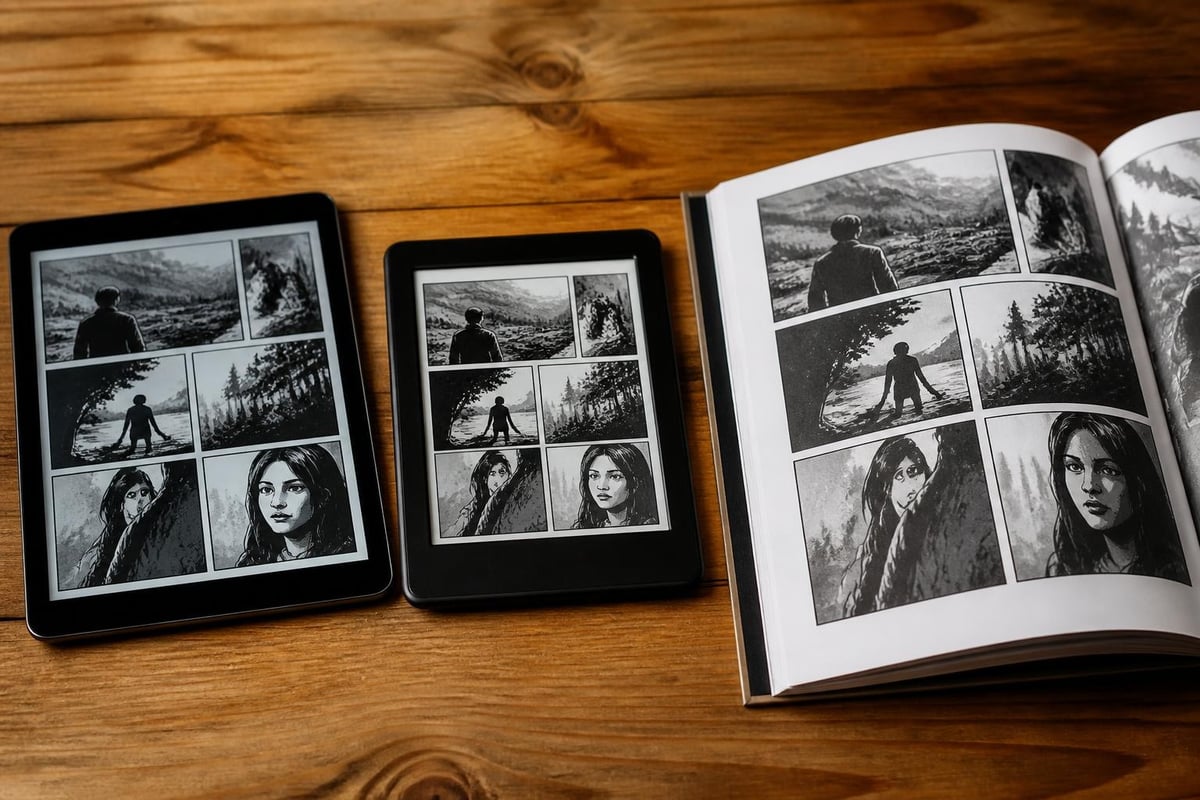
The rise of e-books has impacted graphic books differently than traditional prose. While many readers appreciate the convenience of digital platforms like Tell eBook, graphic books present unique formatting challenges. Panel layouts, page turns, and two-page spreads lose impact on small screens, though tablet devices and dedicated comic readers offer improved experiences.
Physical collections remain popular among enthusiasts who value artwork quality, collectibility, and the tactile experience of flipping pages. Limited editions, signed copies, and variant covers create collector markets that thrive alongside digital accessibility.
Building a Graphic Books Collection
Whether you're establishing a personal library or curating selections for an e-book platform, strategic collection development ensures quality and diversity. Start by identifying core interests and gradually expanding into adjacent genres and styles. This approach prevents overwhelming choice paralysis while building foundational knowledge.
Selection Criteria
Quality graphic books demonstrate strong integration between visual and textual elements. The artwork should advance the narrative rather than merely illustrate text, while dialogue and captions complement rather than redundantly describe what images show. Pacing matters significantly-panel transitions, page composition, and visual rhythm create reading flow that distinguishes masterful works from mediocre efforts.
Evaluation factors:
- Artistic merit: Technical skill, stylistic consistency, expressive character work
- Narrative strength: Plot coherence, character development, thematic depth
- Visual-textual integration: How images and words work together
- Production quality: Print reproduction, paper stock, binding durability
- Cultural significance: Awards recognition, critical reception, historical importance
Discovering New Titles
Multiple resources help readers discover graphic books aligned with their interests. Professional reviews from publications like Publishers Weekly’s comics coverage provide industry insights and market trends. Academic journals such as ImageTexT offer scholarly analysis and critical perspectives that deepen understanding.
Online communities, creator websites, and convention appearances allow direct engagement with artists and writers. Many platforms, including comprehensive e-book stores, organize graphic books by category and series, facilitating browsing and discovery.
Creator Recognition and Author Exploration
Tracking favorite creators enhances collection coherence and reading satisfaction. Unlike traditional publishing where readers might follow prose authors, graphic books require attention to both writers and artists, as visual storytelling depends equally on both contributions. Some creators handle both roles, while others collaborate in writer-artist partnerships.
Following specific creators leads to discovering their broader bodies of work, including lesser-known projects that might otherwise escape notice. Many platforms organize content by authors, enabling systematic exploration of individual creators' catalogues.
Recognizing Excellence
Industry awards highlight exceptional work and emerging talent. The Eisner Awards, Hugo Awards for Best Graphic Story, and Ignatz Awards recognize achievement across categories. Library associations and educational organizations maintain recommended reading lists that identify age-appropriate and pedagogically valuable titles.
| Award | Focus Area | Significance |
|---|---|---|
| Eisner Awards | Industry-wide excellence | Highest comic industry honor |
| Harvey Awards | Creator-voted recognition | Peer-acknowledged quality |
| Ignatz Awards | Independent and alternative works | Cutting-edge innovation |
| YALSA Great Graphic Novels | Teen readers | Educational relevance |

Research and Academic Resources
Serious readers and researchers benefit from scholarly infrastructure supporting graphic books studies. The Library of Congress research guide provides authoritative reference materials, cataloging approaches, and archival collections that document the medium's history and development. Academic programs now offer courses in comics studies, sequential art, and visual narrative theory.
Critical analysis deepens appreciation by revealing how creators use visual grammar-panel composition, gutter space, color theory, and typography-to generate meaning beyond surface storytelling. Understanding these techniques transforms casual reading into informed engagement with artistic choices and narrative construction.
Preservation and Archiving
Proper storage extends graphic books' lifespan, particularly for collectible physical editions. Acid-free backing boards, protective sleeves, and climate-controlled environments prevent deterioration. Digital archives preserve out-of-print works and rare editions, ensuring accessibility for future readers and researchers.
Practical Reading Strategies
Graphic books require different reading approaches than traditional prose. New readers sometimes struggle with visual literacy-interpreting panel sequences, understanding visual metaphors, and following non-linear layouts. These skills develop with practice, much like learning any language's conventions.
Reading tips for beginners:
- Slow down to absorb visual details often missed in quick scanning
- Notice how panel size and shape affect pacing and emphasis
- Pay attention to background elements that establish context
- Recognize that gutter space (between panels) implies action and time passage
- Consider color choices and their emotional or symbolic significance
Integration with Broader Reading Habits
Graphic books complement rather than replace traditional reading. Many readers maintain diverse libraries that include prose fiction, nonfiction, poetry, and graphic narratives. Each format offers distinct advantages, and variety enriches overall literacy and cultural knowledge.
Parents and educators often use graphic books as bridge texts that build reading confidence before transitioning to text-heavy materials. However, this approach risks undervaluing the format's unique artistic and literary merits. Mature graphic books deserve recognition as sophisticated literature requiring visual literacy skills distinct from prose comprehension.
The comprehensive product catalog available through dedicated e-book platforms ensures readers can access diverse formats within unified digital libraries, facilitating seamless movement between graphic books and traditional texts based on mood and interest.
Future Directions and Emerging Trends
The graphic books landscape continues evolving with technological advances and changing reader preferences. Webcomics and digital-first publishing democratize creation, allowing independent creators to reach audiences without traditional publishing gatekeepers. Motion comics add limited animation to static images, while augmented reality experiments blend physical books with digital enhancements.
Diversity in creators and subject matter has expanded dramatically, with more voices from underrepresented communities bringing fresh perspectives and stories. International translation efforts introduce English-language readers to manga, European bandes dessinées, and global comics traditions that enrich the medium's artistic vocabulary.
Subscription models and library lending platforms increase accessibility, though creator compensation remains a critical concern requiring sustainable business models that support artistic labor. The balance between reader affordability and creator livelihood shapes the industry's future trajectory.
Graphic books represent a vibrant, expanding medium that combines artistic excellence with narrative sophistication across every conceivable genre and subject matter. Whether you're drawn to superhero adventures, literary memoirs, educational content, or experimental storytelling, the format offers rich reading experiences that engage both visual and textual literacy. Tell eBook provides comprehensive access to diverse graphic books alongside traditional e-books and audiobooks, making it simple to explore this dynamic medium and discover your next favorite series or creator. Start building your graphic books collection today and experience storytelling that transcends the limitations of words alone.
Ready to start your collection? Browse the Tell eBook shop for graphic novels, comics, and more.