

The digital reading landscape has transformed dramatically over the past decade, with multiple platforms competing for readers' attention and loyalty. Among these options, the ebook Kobo store has carved out a distinctive position by offering readers an alternative to the dominant marketplace, emphasizing open formats, international availability, and seamless integration with public libraries. For readers seeking flexibility, choice, and a truly global catalog, understanding how Kobo's ecosystem functions can unlock new possibilities for building and enjoying a digital library. Whether you're new to e-readers or considering switching platforms, exploring what makes Kobo unique reveals opportunities that extend far beyond simple book purchases.
Understanding the Kobo Ecosystem
The ebook Kobo store operates as part of Rakuten Kobo, a subsidiary of the Japanese e-commerce giant Rakuten. Unlike closed ecosystems that lock content to proprietary formats, Kobo has built its reputation on supporting EPUB, the industry-standard open format that provides readers with greater flexibility and control over their digital libraries.
This architectural decision influences every aspect of the platform. When you purchase from the Kobo store, you're acquiring files that can be read across multiple devices and applications, not just Kobo-branded hardware. The company offers dedicated e-readers, mobile apps for iOS and Android, desktop applications for Windows and Mac, and even web-based reading through browsers.
Device and Platform Support
Kobo's hardware lineup ranges from entry-level models to premium color E Ink devices. Recent reviews highlight innovations like the Kobo Libra Colour, which combines traditional e-paper benefits with the ability to display color content, particularly useful for comics, graphic novels, and illustrated nonfiction.
The cross-platform compatibility extends beyond Kobo's own products. Because purchases use EPUB format with Adobe DRM, readers can transfer books to various compatible devices and reading applications. This interoperability represents a significant advantage for readers who value technology independence.

Purchasing and Discovering Content
The buying process on Kobo.com follows familiar e-commerce patterns while offering features that enhance discovery and value. The ebook Kobo store organizes millions of titles across fiction and nonfiction categories, making it comparable to other major platforms in catalog size while excelling in international content availability.
Store Navigation and Features
The store interface provides multiple pathways for discovery:
- Curated collections organized by theme, season, and reading trends
- Personalized recommendations based on purchase history and browsing behavior
- Preview chapters allowing readers to sample books before buying
- Wishlist functionality for tracking titles and monitoring price changes
- Reading statistics integrated with the Kobo Reading Life rewards program
Price competitiveness varies by market and title, but Kobo frequently runs promotions and daily deals. The platform also participates in major sales events throughout the year, offering substantial discounts during holidays and special promotional periods.
International Availability
One area where the ebook Kobo store distinctly differentiates itself involves global reach. Kobo operates storefronts in dozens of countries, offering localized catalogs, pricing in local currencies, and content in numerous languages. This international focus makes Kobo particularly valuable for readers seeking books in languages beyond English or those living in regions underserved by other platforms.
| Feature | Kobo Approach | Reader Benefit |
|---|---|---|
| File Format | EPUB (open standard) | Device flexibility, format longevity |
| DRM Management | Adobe DRM (removable) | Greater ownership control |
| Geographic Access | 190+ countries | International content availability |
| Library Integration | OverDrive/Libby compatible | Free borrowing options |
| Audiobook Support | Integrated in store and apps | Single-platform media access |
Library Integration and Free Content
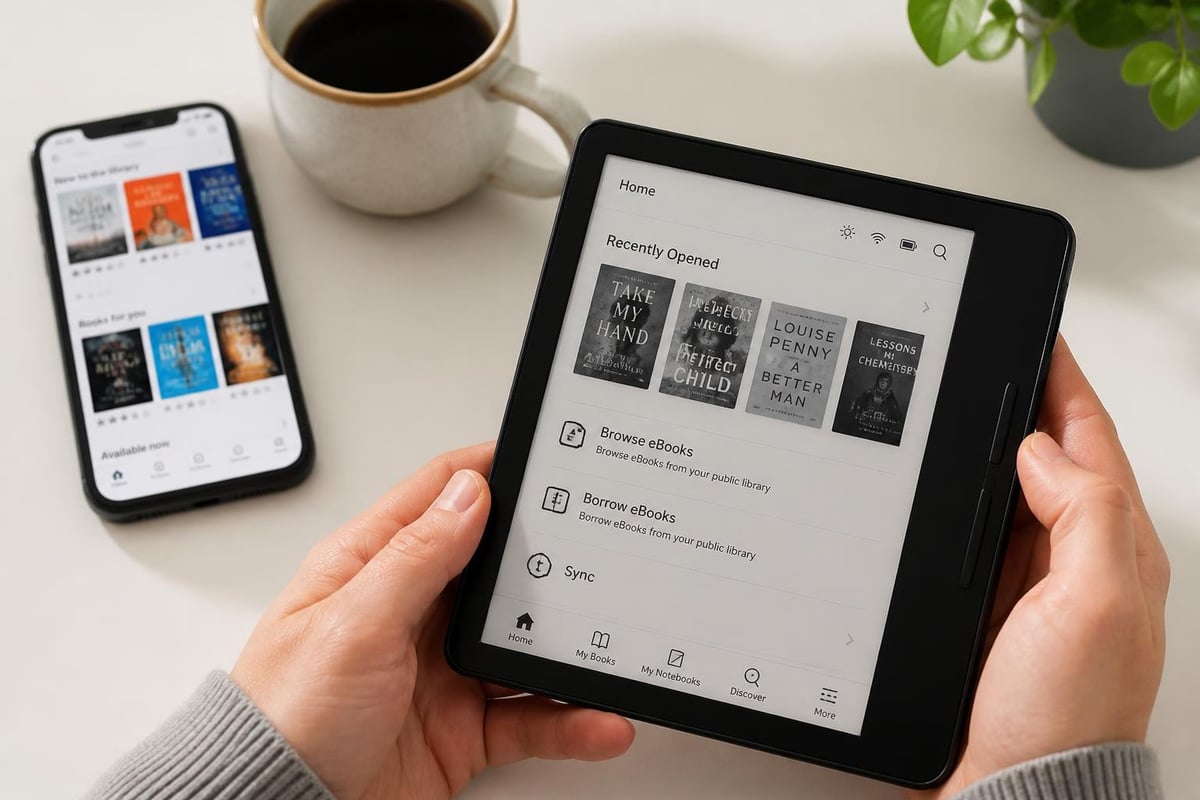
Perhaps the most compelling feature distinguishing the ebook Kobo store from competitors lies in its seamless integration with public library systems. Through partnerships with OverDrive and the Libby app, Kobo e-reader owners can borrow digital titles from their local libraries and read them directly on their devices without connecting to a computer.
How Library Borrowing Works
The process bridges institutional lending with personal reading devices. Library eResource guides detail the steps involved, which typically include:
- Linking your library card to your OverDrive/Libby account
- Browsing and borrowing titles through the library's digital collection
- Sending borrowed books directly to your Kobo device or app
- Reading library books alongside purchased content in a unified interface
- Automatic returns when lending periods expire
This integration eliminates the friction that previously made library e-books inconvenient. Readers can maintain a single device for both purchased and borrowed content, with library titles appearing in the same reading interface as books from the ebook Kobo store.
Economic Implications for Readers
The library integration creates a hybrid reading economy. Budget-conscious readers can supplement purchased titles with library borrows, effectively expanding their reading volume without proportional cost increases. For new release bestsellers, where library wait lists might be lengthy, readers can choose immediate purchase, while older backlist titles remain accessible through free borrowing.
Content Management and Format Flexibility
Beyond the ebook Kobo store's commercial offerings, the platform's open format support enables sophisticated content management. Readers who maintain personal digital libraries often use tools like Calibre for organizing and converting e-books from various sources into formats compatible with their Kobo devices.
Sideloading and Personal Libraries
Kobo devices accept content transferred via USB connection, allowing readers to supplement store purchases with:
- Public domain titles from Project Gutenberg and similar repositories
- Independent publisher releases not available in commercial stores
- Personal documents converted to EPUB format
- DRM-free purchases from other retailers
This flexibility particularly appeals to readers interested in nonfiction categories like technology and computers, where open-access academic papers and technical documentation complement commercial releases. Similarly, readers exploring business and finance topics can integrate white papers, reports, and independent publications with their Kobo-purchased content.
Format Conversion and Optimization
The EPUB standard supports rich formatting, embedded media, and reflowable text that adapts to screen sizes. However, books from different sources may require optimization for the best reading experience. Calibre and similar tools enable:
- Converting between formats (PDF to EPUB, MOBI to EPUB)
- Adjusting metadata for proper library organization
- Modifying cover images and book information
- Stripping DRM from legitimately purchased titles (where legally permitted)
- Creating collections and series groupings
Comparing Reading Experiences
Industry analyses and buyer guides frequently position Kobo against Amazon's Kindle ecosystem. Understanding these comparisons helps readers evaluate whether the ebook Kobo store aligns with their priorities and reading habits.
Feature Comparison Matrix
| Aspect | Kobo Advantage | Consideration |
|---|---|---|
| Format Support | Open EPUB standard | Broader device compatibility |
| Library Borrowing | Native integration | Direct device downloading |
| International Content | Extensive global catalog | Better non-English selection |
| Privacy | Less data tracking | Reduced ecosystem lock-in |
| Price Competition | Comparable with frequent sales | Market-dependent variations |
| Hardware Innovation | Color E Ink options | Cutting-edge display technology |
The reading interface itself prioritizes customization. Readers can adjust fonts from an extensive library of typefaces, modify line spacing and margins, enable publisher defaults or create custom themes, and access dictionary and translation tools across dozens of languages.
Audiobook Integration
The ebook Kobo store has expanded beyond text to incorporate audiobooks directly into its ecosystem. This convergence allows readers to purchase both formats of the same title and switch between reading and listening, with some titles offering Whispersync-style synchronization that maintains position across formats.
For readers exploring biography and memoir or business titles, this dual-format availability supports different consumption contexts throughout the day.
Market Position and Industry Dynamics
The broader e-book industry context shapes how the ebook Kobo store operates and evolves. Publishing industry analyses indicate that while Amazon dominates market share in many regions, alternative platforms like Kobo play crucial roles in maintaining competitive dynamics and preventing monopolistic control of digital reading.
Publisher Relationships
Kobo maintains direct relationships with major publishers and distributors, ensuring that its catalog remains current with new releases and bestsellers. The company has positioned itself as a publisher-friendly alternative, often cited as proof that viable competition exists in digital book retail.
This positioning benefits readers through:
- Competitive pricing pressure across the industry
- Alternative purchasing options when exclusive deals create frustrations
- Platform diversity that reduces single-point-of-failure risks for digital libraries
- Innovation incentives that drive features like library integration and format flexibility
Regional Variations
Corporate announcements from Rakuten highlight ongoing investments in regional expansion and localized content. The ebook Kobo store operates distinct storefronts for markets including the United States, Canada, United Kingdom, Australia, Netherlands, France, Italy, Spain, Portugal, and numerous others.
Each regional store curates content appropriate to local tastes, manages pricing in local currencies, and often features books unavailable in other territories. This localization creates opportunities for readers to access region-specific content while maintaining a single account across devices.

Specialized Content Categories
While the ebook Kobo store offers comprehensive coverage across all major genres, certain categories particularly benefit from its platform characteristics. Understanding these strengths helps readers maximize the value they extract from the ecosystem.
Comics and Graphic Novels
The introduction of color E Ink devices has transformed how the ebook Kobo store serves comics and graphic novels readers. These titles, which previously suffered on monochrome e-readers, now display with the color fidelity necessary for appreciating artwork while maintaining the eye-comfort advantages of E Ink technology.
Panel view modes, pinch-to-zoom functionality, and optimized page rendering make graphic content accessible and enjoyable. Independent creators and smaller publishers also find Kobo's platform accessible for distribution, expanding the available catalog beyond mainstream superhero titles.
Academic and Professional Content
Readers pursuing nonfiction topics in sciences, engineering, and technical fields appreciate Kobo's ability to handle complex EPUB3 files with embedded equations, diagrams, and interactive elements. The platform's note-taking and highlight features support active reading and research workflows.
Professional readers can organize extensive reference libraries using collections, access materials across devices as research needs dictate, and integrate DRM-free technical documentation with commercial titles. The ability to sideload content proves particularly valuable when working with institutional publications, conference proceedings, and specialized journals.
International Literature
Language learners and readers interested in literature beyond English-language markets find the ebook Kobo store's international catalogs invaluable. The platform offers extensive collections in French, Spanish, German, Italian, Portuguese, Dutch, Japanese, and numerous other languages, often with larger selections than competitors.
Built-in translation tools and dictionaries supporting dozens of languages assist readers exploring foreign-language content. This functionality transforms the reading device into a language-learning tool, enabling dictionary lookups and translation without leaving the reading interface.
Reader Community and Ecosystem Benefits
Beyond transactional book sales, the ebook Kobo store incorporates social and gamification elements designed to enhance engagement and foster reading habits. The Kobo Reading Life system tracks statistics, awards achievements, and creates a framework for setting and pursuing reading goals.
Reading Statistics and Achievements
The platform monitors reading behavior and presents analytics including:
- Books completed and pages read
- Reading time and session lengths
- Streak tracking for consecutive reading days
- Genre diversity across reading history
- Awards for milestones and reading patterns
These metrics appeal to data-oriented readers and those motivated by visible progress tracking. The gamification elements remain optional, allowing readers who prefer untracked reading to disable features while maintaining access to core functionality.
Social Features and Sharing
Kobo enables readers to connect with friends, share reading activity, and discover books through social connections. Privacy controls allow granular management of what information appears publicly, balancing community engagement with personal preference for reading privacy.
Highlighting and annotation capabilities support both personal note-taking and public sharing, with options to browse popular highlights from other readers. This crowdsourced annotation layer adds a social dimension to reading while preserving the solitary nature of the core experience.
Practical Considerations for New Users
Readers considering whether to invest in the Kobo ecosystem face practical questions about migration, compatibility, and ongoing costs. Understanding these operational details clarifies the commitment involved and potential friction points.
Migrating from Other Platforms
Switching to the ebook Kobo store from another ecosystem involves complexities related to existing libraries. Books purchased from Amazon, Apple Books, or other DRM-protected stores generally cannot be transferred directly due to incompatible digital rights management systems.
However, DRM-free purchases, public domain books, and content from DRM-removal-friendly platforms can migrate relatively easily. Tools like Calibre facilitate conversion and transfer, though readers must ensure compliance with applicable laws and terms of service regarding DRM removal.
For extensive existing libraries in incompatible formats, readers often adopt hybrid approaches, maintaining multiple reading apps or devices while gradually building new libraries in their preferred ecosystem.
Cost of Entry and Ongoing Expenses
Entry into Kobo reading requires either purchasing dedicated hardware or using free applications on existing devices. E-reader prices range from under one hundred dollars for basic models to several hundred for premium color devices, positioning them competitively with other dedicated reading hardware.
The ebook Kobo store itself charges no subscription fees, contrasting with unlimited reading services offered by competitors. Readers pay per title, with prices varying by format, publisher, and promotional status. This à la carte model provides cost transparency but requires more active budget management compared to subscription services.
Maximizing Value and Building Your Library
Strategic approaches to purchasing and library management help readers optimize their investment in the ebook Kobo store ecosystem. Understanding pricing patterns, taking advantage of promotions, and leveraging library integration maximizes both the quantity and quality of accessible content.
Strategic Purchasing Approaches
Experienced Kobo users often employ tactics including:
- Wishlist monitoring for price drops on desired titles
- Email newsletter subscriptions providing early notification of sales
- Daily deal checking to discover heavily discounted titles
- Preorder consideration when exclusive bonuses or discounts apply
- Bundle purchases when publishers offer series or collection discounts
The platform's price guarantee policies vary by region but often include protection against price drops shortly after purchase, allowing readers to request refunds of price differences when sales occur soon after buying at full price.
Balancing Purchase and Borrowing
Optimal library building often combines strategic purchases with library borrowing. Readers might purchase titles they anticipate rereading or keeping for reference, represented by categories like classics, reference works, and favorite authors, while borrowing books for single-read entertainment, represented by most contemporary romance or thriller titles.
This hybrid approach maximizes reading volume relative to spending while building a curated permanent library of personally significant titles. The seamless integration of purchased and borrowed content within the Kobo reading interface makes this strategy practical and friction-free.
The ebook Kobo store represents a mature, feature-rich alternative to dominant e-book platforms, offering open formats, extensive international catalogs, and seamless library integration that distinguish it in the digital reading marketplace. For readers who value flexibility, format freedom, and the ability to combine commercial purchases with library borrowing, Kobo's ecosystem delivers compelling advantages that enhance both the economics and experience of digital reading. Whether you're building a specialized collection in cooking and food, exploring art and architecture, or simply seeking your next great read, platforms like Tell eBook complement your reading journey by offering curated selections across diverse categories, making it easier to discover quality content that matches your interests and reading goals.