

The digital reading landscape has transformed dramatically since Amazon launched its Kindle platform, creating the world's largest marketplace for digital books. Understanding how the amazon ebooks kindle store operates in 2026 is essential for both readers seeking the best deals and authors looking to reach millions of potential customers. This comprehensive guide explores the platform's structure, features, and strategies for maximizing value whether you're consuming or creating content.
Understanding the Kindle Store Ecosystem
The amazon ebooks kindle store represents more than just a digital bookshelf. It's a comprehensive ecosystem connecting millions of readers with content creators through sophisticated technology and distribution networks. The platform processes billions of transactions annually, making it the dominant force in digital publishing.
Amazon's marketplace differs from traditional publishing in fundamental ways. Traditional gatekeepers have given way to algorithms and customer reviews, democratizing access while creating new challenges for discoverability. The store houses over 12 million titles spanning every conceivable genre, from psychological thrillers to technical manuals.
Platform Architecture and Access Points
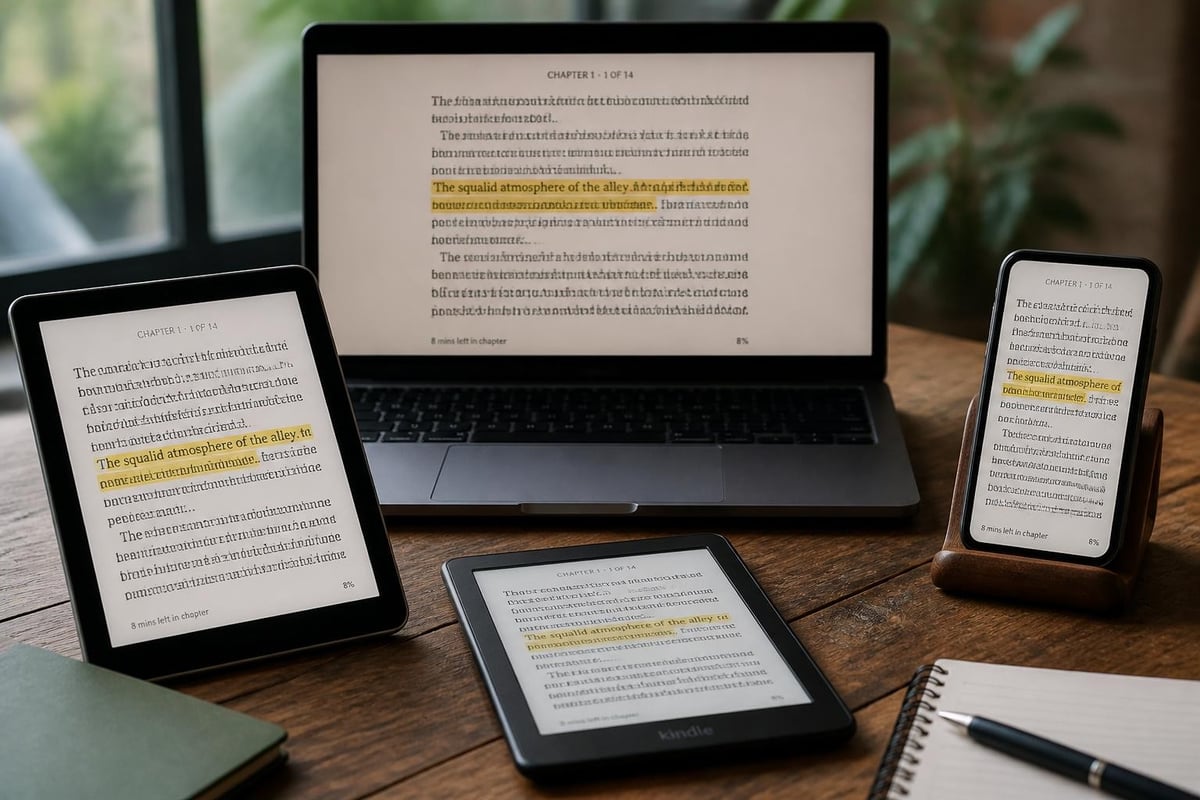
Readers can access Kindle content through multiple channels, each designed for specific use cases:
- Dedicated Kindle e-readers offering distraction-free reading with weeks of battery life
- Kindle mobile apps for iOS and Android smartphones and tablets
- Desktop applications for Windows and macOS computers
- Web-based Kindle Cloud Reader requiring no downloads or installations
Recent platform updates have expanded flexibility significantly. Amazon introduced new features including AI-powered reading assistants that answer questions about your books without spoiling plot points, demonstrating the company's commitment to enhancing the digital reading experience.
The cross-device synchronization remains one of Kindle's strongest features. Your reading position, highlights, and notes sync automatically across all devices, allowing seamless transitions between your morning commute reading on mobile and evening sessions on your e-reader.
Publishing to the Amazon Ebooks Kindle Store
For authors and publishers, the Kindle Direct Publishing platform has revolutionized content distribution. KDP enables anyone to publish professionally formatted ebooks without upfront costs, traditional publishing contracts, or minimum order quantities.
The Self-Publishing Process
Publishing your first title involves several distinct stages, each requiring careful attention to quality and compliance:
- Manuscript preparation following Amazon's technical specifications
- Cover design meeting minimum resolution and dimension requirements
- Metadata optimization including title, description, and keyword selection
- Pricing strategy balancing royalty rates with competitive positioning
- Distribution selection choosing markets and enrollment programs
The Kindle Publishing Guidelines outline detailed requirements for file formats, content quality, and acceptable material. Authors must navigate these specifications carefully to avoid publication delays or content rejection.
Royalty structures present strategic decisions. Authors choosing the 70% royalty option must price books between $2.99 and $9.99 and accept delivery costs deducted from royalties. The 35% option offers more pricing flexibility but lower per-sale earnings. These decisions significantly impact long-term revenue potential.
KDP Select and Exclusive Distribution
KDP Select enrollment grants access to promotional tools and Kindle Unlimited revenue but requires 90-day exclusivity within the amazon ebooks kindle store. This trade-off shapes publishing strategies across the industry.
| Feature | KDP Select (Exclusive) | Standard KDP |
|---|---|---|
| Royalty Rate | 70% (eligible titles) | 35% or 70% |
| Kindle Unlimited | Enrolled | Not available |
| Free Promotions | 5 days per 90-day term | Not available |
| Countdown Deals | Available | Not available |
| Distribution | Amazon only | All retailers |
According to Book Industry Study Group research, exclusive distribution through major platforms continues to generate debate about long-term author sustainability versus short-term promotional advantages. Many successful self-published authors experiment with both approaches throughout their careers.
Shopping Strategies for Maximum Value
Smart shoppers approach the amazon ebooks kindle store with strategies that maximize their reading budget while discovering quality content. The platform's pricing structure creates opportunities for savvy consumers who understand promotional patterns and alternative sources.
Price Monitoring and Deal Discovery
Kindle ebook pricing fluctuates constantly based on publisher promotions, algorithmic adjustments, and competitive dynamics. Daily deal sections feature limited-time discounts on selected titles, often reducing prices by 70-90% for 24-48 hour windows.
Third-party price tracking services monitor these fluctuations, alerting readers when wishlisted titles drop below specified thresholds. However, readers should also explore alternative platforms that consistently offer competitive pricing without requiring constant monitoring.
For instance, platforms like Tell eBook provide bestselling titles at lower prices than major retailers with instant EPUB and PDF downloads, offering an alternative to the Amazon ecosystem while maintaining format compatibility and quality standards.

Subscription Services and Reading Programs
Kindle Unlimited represents Amazon's answer to the subscription model dominating media consumption. For a flat monthly fee, subscribers access over two million titles, though selection skews toward self-published and indie titles rather than major publisher releases.
Evaluating subscription value requires honest assessment of your reading volume and genre preferences. Heavy readers consuming 4-5 books monthly typically find strong value, while occasional readers paying for unused access might benefit from individual purchases.
Prime Reading, included with Amazon Prime membership, offers a smaller rotating selection of approximately 3,000 titles. This provides casual readers with sufficient variety without additional subscription costs beyond their existing Prime benefits.
Genre Navigation and Discovery Features
The amazon ebooks kindle store organizes its massive catalog through multiple taxonomies designed to surface relevant content. Understanding these systems improves discovery efficiency and reduces time spent searching.
Category Systems and Browse Structures
Amazon employs a hierarchical category system allowing titles to appear in up to ten browse categories. These range from broad classifications like fiction and literature to highly specific niches such as "Post-Apocalyptic Science Fiction" or "Cozy Culinary Mysteries."
Popular categories attracting consistent reader interest include:
- Mystery and suspense with subgenres spanning cozy mysteries to psychological thrillers
- Science fiction and fantasy encompassing space opera, urban fantasy, and dystopian fiction
- Business and finance covering entrepreneurship, investing, and professional development
- Biography and memoir featuring historical figures and contemporary personalities
The mystery and suspense category remains perennially popular, with reader demand supporting thousands of new releases monthly. Similarly, science fiction titles consistently rank among the platform's bestsellers.
Algorithmic Recommendations and Curation
Amazon's recommendation engine analyzes purchase history, browsing behavior, and reader ratings to suggest relevant titles. These algorithms significantly influence discovery patterns, often determining which books gain visibility and which remain buried in search results.
Customer reviews carry substantial weight in both algorithmic ranking and human decision-making. Books accumulating numerous positive reviews receive preferential placement in search results and recommendation emails, creating a virtuous cycle where visibility drives sales, which generate more reviews.
The "customers who bought this also bought" feature connects related titles, helping readers discover series continuations, similar authors, and complementary genres. This automated curation reduces the paradox of choice while subtly steering readers toward commercially successful titles.
Technical Considerations and Format Standards
Digital books require technical specifications ensuring consistent rendering across diverse devices and screen sizes. The amazon ebooks kindle store supports multiple file formats, each with distinct advantages and limitations.
File Formats and Conversion
Kindle's proprietary formats (AZW, AZW3, KFX) optimize for Amazon's ecosystem but create compatibility challenges with non-Amazon devices. Authors submit manuscripts in DOC, DOCX, or EPUB formats, which Amazon converts automatically during publication.
| Format | Best Use Case | Limitations |
|---|---|---|
| MOBI | Legacy Kindle devices | No advanced typography |
| AZW3 | Modern Kindles | Amazon ecosystem only |
| KFX | Enhanced typesetting | Limited device support |
| EPUB | Industry standard | Requires conversion for Kindle |
Advanced features like embedded fonts, drop caps, and complex layouts require careful formatting to display correctly across all devices. The Kindle Create tool simplifies this process for non-technical authors, though professional formatting services often deliver superior results for complex projects.
Recent policy changes have affected how readers access their purchased content. TechRadar reported on significant modifications to Kindle ebook download and backup policies, highlighting the importance of understanding digital rights management and content ownership in the current marketplace.
DRM and Content Protection
Digital Rights Management (DRM) restricts how readers can use purchased content, preventing unauthorized copying while limiting legitimate backup and format conversion. Amazon applies DRM to most Kindle titles unless publishers explicitly opt out during the publication process.
This protection creates tension between publisher interests and reader rights. While DRM theoretically prevents piracy, it also restricts readers from:
- Converting files for use on non-Amazon devices
- Creating permanent backup copies independent of Amazon's servers
- Sharing purchased books with family members beyond Amazon's household sharing limits
- Accessing content if Amazon terminates accounts or discontinues services
Alternative retailers often provide DRM-free files in standard EPUB or PDF formats, offering greater flexibility for readers managing personal digital libraries across multiple platforms and devices.
Market Position and Industry Impact
The amazon ebooks kindle store commands an estimated 67% of the US ebook market, according to Publishers Weekly analysis of 2025 industry sales. This dominance shapes publishing economics, author strategies, and reader expectations across the entire industry.
Competitive Landscape in 2026
Despite Amazon's market leadership, alternative platforms continue serving specific reader segments. Apple Books attracts iOS users seeking ecosystem integration, while Kobo appeals to readers prioritizing DRM-free content and device ownership. Google Play Books leverages Android's global reach, and Barnes & Noble maintains a loyal customer base through its physical retail presence.
Independent ebook retailers focus on specific value propositions differentiating them from Amazon's comprehensive but sometimes overwhelming marketplace. Specialized stores may offer curated selections, author-direct sales with higher royalty shares, or competitive pricing on popular titles.
Readers exploring alternatives to the amazon ebooks kindle store discover options like Tell eBook, which provides diverse categories spanning business and finance to biography and memoir, often at prices below major retailers while delivering instant downloads in universally compatible formats.
Impact on Publishing Economics
Amazon's royalty structures and algorithmic visibility have fundamentally altered how authors earn income and build careers. The platform enables rapid publication and direct reader connection but concentrates power in algorithmic systems few authors fully understand.
Pricing pressure affects the entire industry. Readers conditioned to expect $0.99-$4.99 indie titles often resist paying traditional publisher prices, even for bestselling authors. This compression threatens mid-list author viability while potentially benefiting readers through increased access to affordable content.
The subscription model through Kindle Unlimited introduces additional complexity. Authors receive payment based on pages read rather than books sold, incentivizing longer works and serialized content while potentially devaluing shorter formats like novellas and short story collections.
Advanced Features and Reader Tools
Modern ebook platforms extend beyond simple text display, incorporating features that enhance comprehension, customize reading experiences, and integrate with broader digital ecosystems. The amazon ebooks kindle store continues expanding these capabilities in 2026.
Reading Enhancement Technologies
X-Ray functionality provides contextual information about characters, settings, and themes without requiring readers to navigate away from their current page. This feature proves particularly valuable in complex novels with large casts or intricate worldbuilding.
Word-wise technology assists early readers and language learners by displaying simple definitions above challenging words. Adjustable difficulty levels accommodate different reading proficiency, making ambitious literature more accessible to broader audiences.
Vocabulary Builder automatically collects words you look up during reading, creating personalized flashcard sets for review and retention. This passive learning tool particularly benefits readers consuming content in non-native languages or exploring technical subjects with specialized terminology.
Social and Sharing Features
Public notes and highlights enable readers to share insights and favorite passages with the broader Kindle community. Popular highlights appear automatically, showing which passages resonated most strongly with other readers of the same book.
Goodreads integration connects reading activity with the world's largest book recommendation network. Readers can rate finished books, track reading goals, and discover recommendations based on their Kindle library without manual data entry.
Family Library sharing permits household members to access purchased content across multiple Amazon accounts, though implementation details and restrictions vary by content type and publisher settings. Understanding these limitations prevents frustration when attempting to share specific titles.

Future Trends and Platform Evolution
The digital reading landscape continues evolving as technology advances and reader expectations shift. The amazon ebooks kindle store adapts to emerging trends while facing pressure from alternative formats and changing consumption patterns.
Audiobook Integration and Multimodal Reading
Whispersync for Voice synchronizes ebook and audiobook positions, enabling seamless transitions between reading and listening. This multimodal approach accommodates different contexts throughout daily routines-reading during quiet moments and listening during commutes or exercise.
Immersion Reading combines highlighted text with professional narration, creating an enhanced experience particularly valuable for language learners and readers with certain learning differences. Though requiring separate purchases of both formats, this feature represents meaningful innovation in accessibility.
The blurring boundaries between text and audio formats reflect broader media consumption trends. Younger readers particularly demonstrate willingness to switch between formats based on context rather than maintaining format loyalty.
Artificial Intelligence and Personalization
AI integration extends beyond recommendation algorithms into active reading assistance. Chatbots can now answer questions about plot points, character backgrounds, and thematic elements without spoiling future developments, functioning as interactive reading companions.
Predictive reading analyzes consumption patterns to pre-download anticipated next purchases, reducing wait times and enabling offline access before readers consciously request specific titles. This anticipatory service model prioritizes convenience while raising privacy questions about data collection and behavioral prediction.
Future developments may include AI-generated summaries, automated series tracking with spoiler protection, and dynamic pricing adjusted to individual purchase history and reading patterns. These innovations promise enhanced personalization while potentially fragmenting the shared reading experience.
Alternative Marketplaces and Reader Choice
While the amazon ebooks kindle store dominates market share, readers benefit from exploring alternative sources offering different value propositions, specialized curation, or format flexibility. Diversifying purchasing channels supports competitive markets and reduces dependence on single platforms.
Independent Retailers and Direct Sales
Author-direct sales through personal websites eliminate retailer margins, potentially reducing reader costs while increasing author revenue. However, this approach sacrifices the discovery advantages and trust signals provided by established marketplaces.
Independent ebook retailers often specialize in specific genres or values-DRM-free content, international availability, or particular format support. These focused missions attract readers whose priorities align with specific platform philosophies rather than comprehensive selection.
Readers concerned about long-term access increasingly seek DRM-free alternatives providing true ownership rather than limited licenses. Formats like EPUB and PDF work across any compatible device regardless of retailer business continuity, offering security against platform changes or account restrictions.
For those seeking quality titles at competitive prices, stores like Tell eBook deliver instant access to business titles, classic literature, and contemporary fiction without ecosystem lock-in, maintaining compatibility with Kindle devices while offering format flexibility.
Library Systems and Public Access
Public library digital lending through services like OverDrive and Libby provides free ebook access funded by tax dollars and library budgets. These systems support Kindle delivery for many titles, combining Amazon's user experience with libraries' free access model.
Waiting lists for popular titles mirror physical library constraints, teaching patience while democratizing access to bestsellers regardless of personal budget. This system supports authors through institutional purchases while expanding readership beyond retail customers.
Academic and research libraries increasingly offer ebook collections with simultaneous use capabilities, transforming scholarly reading practices and supporting distributed learning models. These specialized collections operate outside consumer marketplaces but represent significant portions of overall ebook usage.
The amazon ebooks kindle store has fundamentally transformed how readers discover, purchase, and consume digital books while creating unprecedented opportunities for authors to reach global audiences. Understanding this ecosystem's mechanics, economics, and alternatives empowers both readers and creators to maximize value while navigating an increasingly complex marketplace. Whether you're seeking the latest bestseller or exploring niche genres, Tell eBook offers a curated selection across fiction, business, and biography categories with competitive pricing and instant downloads in formats compatible with your preferred reading devices.