

The ancient Greek myth of Persephone has captivated readers, writers, and scholars for millennia. From classical texts to contemporary novels, the story of the maiden abducted to the underworld and her mother’s grief-stricken search represents one of mythology’s most enduring narratives. Seeking Persephone has become more than a mythological pursuit-it represents humanity’s quest to understand transformation, seasonal cycles, loss, and renewal. This exploration examines how the Persephone myth has evolved through literature, why modern audiences remain fascinated by her story, and how contemporary retellings breathe new life into this ancient tale.
The Original Myth: Understanding Persephone’s Journey
The Homeric Hymn to Demeter, composed around the seventh century BCE, provides the earliest comprehensive account of Persephone’s abduction. In this narrative, Hades, god of the underworld, seizes the young maiden while she gathers flowers in a meadow. Her mother Demeter, goddess of agriculture and the harvest, searches the earth desperately, neglecting her divine duties as she grieves.
The core elements of the myth include:
- The abduction of Persephone (also called Kore, meaning “maiden”) by Hades
- Demeter’s relentless search and subsequent withdrawal of fertility from the earth
- Zeus’s intervention to negotiate Persephone’s partial return
- The compromise requiring Persephone to spend part of each year in the underworld
- The explanation of seasonal cycles through her annual descent and return
This foundational story established themes that would resonate through centuries of literary interpretation. The Theoi Classical Texts collection demonstrates how various ancient authors, from Hesiod to Ovid, adapted and embellished the narrative across different cultural contexts.
Ancient Variations and Cultural Significance
Ancient Greek and Roman writers presented multiple versions of the Persephone narrative, each emphasizing different aspects. Some texts portrayed her as an unwilling victim, while others suggested varying degrees of agency or eventual acceptance of her role as queen of the underworld.
The Eleusinian Mysteries, secret religious rites held annually near Athens, centered on the Demeter-Persephone relationship. These ceremonies promised initiates hope for a better afterlife and connected the agricultural cycle to spiritual rebirth. Seeking Persephone became a metaphor for spiritual enlightenment and transformation.
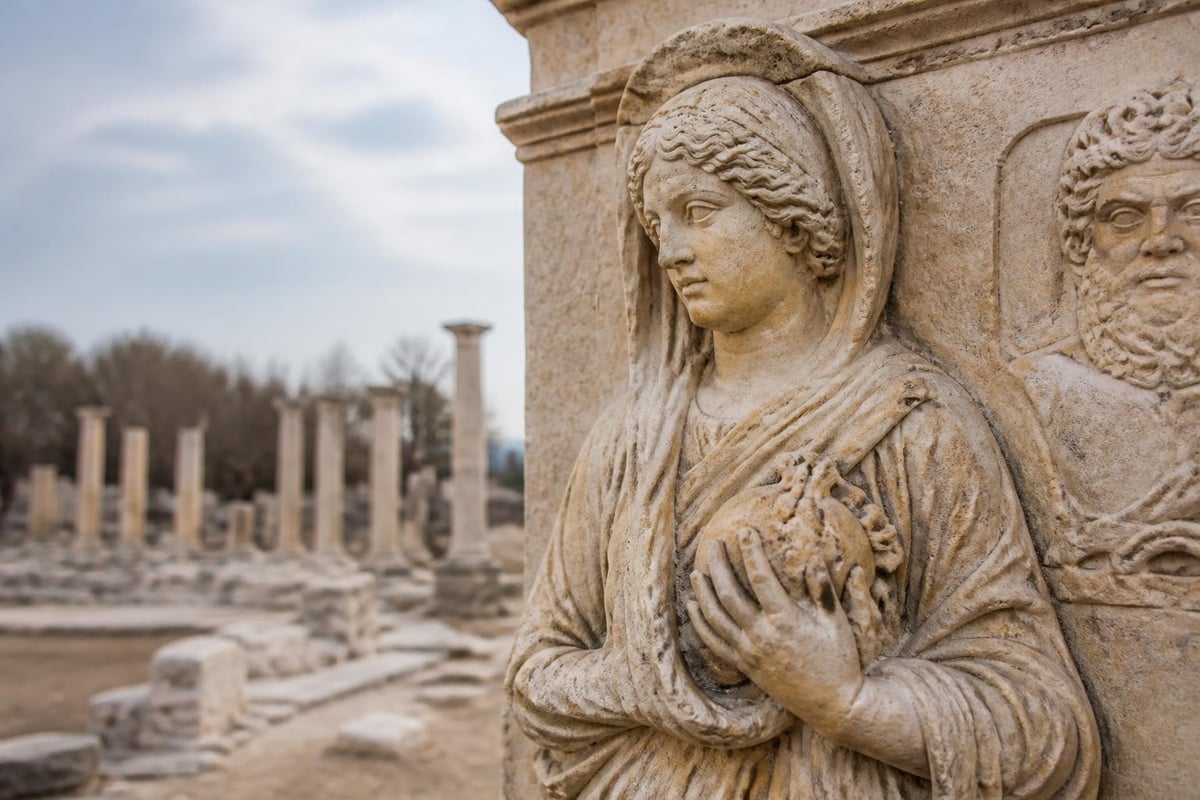
Literary Representations Through the Centuries
Classical literature established the foundation, but seeking Persephone through subsequent literary periods reveals evolving cultural values and interpretations. Medieval and Renaissance writers often allegorized the myth, transforming it into Christian parables about sin, redemption, and seasonal renewal.
| Literary Period | Interpretation Focus | Key Themes |
|---|---|---|
| Classical | Religious/agricultural cycle | Divine power, maternal grief, seasonal explanation |
| Medieval | Christian allegory | Sin, redemption, spiritual death and rebirth |
| Romantic | Emotional depth | Individual suffering, nature’s response to human emotion |
| Victorian | Female virtue | Innocence, duty, domestic sphere versus freedom |
| Modern | Psychological complexity | Identity, autonomy, trauma, transformation |
The Romantic poets found particular resonance in Demeter’s grief and nature’s sympathetic response. Victorian writers often focused on Persephone’s innocence and the moral implications of her fate, reflecting contemporary anxieties about female virtue and autonomy.
Twentieth-Century Reinterpretations
Modernist and postmodernist writers approached the myth with psychological depth and feminist critique. Authors began examining the story through lenses of power, consent, and female agency. The narrative evolved from simple abduction to complex exploration of identity formation and transformation.
Notable twentieth-century poets including H.D., Louise Glück, and Rita Dove created powerful reimaginings that centered Persephone’s voice and perspective. These works questioned traditional interpretations and explored themes of:
- Female autonomy and choice
- Mother-daughter relationships and separation
- Identity transformation through trauma
- Reclaiming agency within oppressive systems
- The duality of existence between different worlds
Contemporary literary criticism examines how Demeter-Persephone reception in modern literature reflects changing cultural attitudes toward gender, power, and mythology itself.
Contemporary Retellings: The Persephone Renaissance
The twenty-first century has witnessed an explosion of Persephone retellings across multiple genres. Seeking Persephone in contemporary fiction reveals a hunger for stories that center female experiences, explore consent and transformation, and reimagine ancient power dynamics through modern sensibilities.
Popular Fiction and Fantasy
Young adult and adult fantasy literature has embraced the Persephone myth with unprecedented enthusiasm. Authors create elaborate world-building around the core narrative, often expanding minor details into full mythological universes.
Common approaches in contemporary retellings include:
- Granting Persephone agency in choosing her fate
- Exploring romance between Persephone and Hades as equals
- Depicting the underworld as refuge rather than prison
- Examining Demeter’s possessiveness alongside her love
- Contextualizing the abduction within broader divine politics
These retellings often appear in the science fiction and fantasy category, where readers seeking fresh perspectives on familiar myths discover innovative narrative approaches. The popularity of these stories demonstrates how ancient myths continue evolving to address contemporary concerns.
Romantic Retellings and Fanfiction
Recent scholarship on fanfiction explores how romantic retellings of the Persephone myth proliferate in both published fiction and online fan communities. These stories frequently reimagine the Hades-Persephone relationship as consensual romance, addressing modern readers’ discomfort with the abduction narrative while preserving mythological elements.

This trend reflects broader cultural conversations about consent, relationships, and female autonomy. Authors navigate the tension between mythological source material and contemporary ethical frameworks, creating stories that honor the myth’s power while updating its values.
Psychological and Archetypal Interpretations
Carl Jung and his followers identified Persephone as a significant archetypal figure representing the maiden who must descend into darkness to achieve maturity and wholeness. Seeking Persephone becomes a metaphor for psychological development and the necessary journey through difficulty toward self-knowledge.
The Descent Motif in Personal Transformation
Modern psychological interpretations frame Persephone’s underworld journey as representing:
- The transition from innocence to experience
- Confrontation with shadow aspects of self
- Integration of opposing forces within personality
- Acceptance of life’s dual nature (light and dark, growth and decay)
- Emergence as a more complete, powerful individual
Therapeutic and self-help literature frequently employs Persephone imagery to discuss depression, trauma recovery, and personal transformation. The annual cycle of descent and return offers hope that difficult periods serve necessary purposes in psychological development.
Feminist Psychological Readings
Feminist psychologists reexamine the myth through frameworks emphasizing women’s developmental journeys distinct from male-centered models. These interpretations explore mother-daughter separation, female sexuality, and the development of autonomous identity separate from parental influence.
The tension between Demeter’s protective love and Persephone’s need for independence resonates with contemporary discussions of parenting, boundaries, and healthy separation. Seeking Persephone becomes seeking authentic selfhood beyond familial and societal expectations.
The Myth in Visual Arts and Popular Culture
Beyond literature, Persephone appears throughout visual arts, music, theater, and digital media. Each artistic medium offers unique opportunities for reinterpreting and experiencing her story.
Visual Representations Across Time
Artistic depictions of Persephone have evolved alongside cultural values. Ancient Greek pottery typically showed the abduction itself, while Roman frescoes often depicted her enthroned beside Hades. Renaissance and Baroque paintings emphasized drama and emotion, particularly Demeter’s grief.
Modern and contemporary artists approach the subject with diverse techniques and perspectives:
- Symbolic representations of transformation and duality
- Feminist reinterpretations challenging victimhood narratives
- Surrealist explorations of psychological themes
- Digital art and illustration connecting myth to contemporary aesthetics
Those interested in artistic interpretations can explore resources in the art and architecture category, which includes studies of mythological themes across artistic movements.
Theater, Opera, and Performance
Musical and theatrical adaptations bring embodied performance to the Persephone narrative. From ancient Greek drama to contemporary opera, performance allows audiences to experience the myth’s emotional intensity through multiple sensory channels.
Modern theatrical productions often emphasize feminist interpretations, staging choices that question power dynamics, and non-traditional casting that expands who can tell and embody these ancient stories. Performance creates community around shared mythological experience, continuing the tradition of collective ritual engagement with the Persephone narrative.
Why Seeking Persephone Remains Relevant
The enduring appeal of the Persephone myth stems from its flexibility and depth. The story accommodates multiple interpretations while maintaining emotional resonance across cultural and temporal boundaries.
| Universal Theme | Contemporary Relevance |
|---|---|
| Transformation through adversity | Personal growth narratives, resilience literature |
| Maternal love and letting go | Parenting discussions, separation anxiety |
| Seasonal cycles | Environmental awareness, natural rhythms |
| Power and consent | #MeToo era, autonomy conversations |
| Dual identity | Work-life balance, code-switching, multiple roles |
| Return and renewal | Recovery narratives, second chances |
The Search for Female Agency
Contemporary readers seeking Persephone often search specifically for versions that grant her autonomy and complexity beyond victimhood. This reflects broader cultural movements examining how stories shape understanding of gender, power, and possibility.
Modern retellings frequently explore questions including: What if Persephone chose her fate? What if the underworld offered freedom unavailable in the upper world? What if Demeter’s protection became suffocation? These questions resonate with readers navigating their own choices between safety and growth, tradition and transformation.
Academic and Scholarly Perspectives
Contemporary classical scholarship continues examining the Persephone myth through various critical lenses. Researchers analyze ancient textual variations, archaeological evidence, religious practices, and cultural transmission patterns.
Recent Scholarly Developments
Twenty-first-century scholarship employs interdisciplinary approaches combining classical philology, archaeology, anthropology, gender studies, and reception theory. The Attalus scholarly index provides valuable resources for tracking variant traditions and less-common ancient attestations of the myth.
Current research areas include:
- Pre-Greek origins of the Persephone myth
- Cross-cultural comparisons with similar descent narratives
- Gender dynamics in ancient mystery religions
- Evolution of iconographic representations
- Modern adaptations and cultural appropriation concerns
This academic work provides foundation for informed creative retellings and deepens appreciation for the myth’s complexity across centuries.

Teaching the Myth in Educational Contexts
Educators use the Persephone narrative to teach various subjects including mythology, literature, gender studies, and religious history. The story’s accessibility combined with its interpretive depth makes it ideal for engaging students in critical thinking about narrative, culture, and meaning-making.
Students examining different versions of the myth develop analytical skills comparing sources, identifying cultural values embedded in narratives, and understanding how stories evolve across time and context. Seeking Persephone becomes a model for approaching all mythological and literary study.
Finding Persephone in Your Reading Journey
Readers interested in exploring Persephone narratives have unprecedented access to diverse interpretations. From faithful classical translations to radical contemporary reimaginings, the range of available texts allows personalized engagement with this ancient story.
Building a Persephone Reading List
A comprehensive exploration might include:
- Classical sources: Homeric Hymn to Demeter, Ovid’s Metamorphoses
- Poetry: Works by Louise Glück, Rita Dove, Carol Ann Duffy
- Contemporary novels: Fantasy retellings that reimagine the core narrative
- Scholarly analysis: Academic studies examining cultural reception
- Comparative mythology: Books exploring similar descent myths globally
The fiction and literature section offers access to both classical texts and modern retellings, while the shop provides curated selections across multiple categories for readers building their mythological libraries.
Discovering New Interpretations
The market for Persephone retellings continues expanding in 2026, with authors finding fresh angles on seemingly exhausted material. Psychological thrillers incorporate mythological themes, literary fiction explores mother-daughter dynamics through mythic frameworks, and genre fiction uses the descent motif across science fiction, fantasy, and mystery contexts.
Readers seeking these interpretations benefit from platforms offering genre eBook deals in psychological thriller, fantasy, and mystery categories, where mythologically-inspired contemporary fiction frequently appears at accessible prices.
The Eternal Return: Persephone Across Cultures
While Greek mythology provides the most familiar version, descent narratives appear across global mythological traditions. Sumerian Inanna, Japanese Izanami, and Polynesian Hine-nui-te-pō share thematic elements with Persephone, suggesting universal human concern with death, renewal, and transformation.
Comparative mythology reveals how different cultures address similar existential questions through narrative. Seeking Persephone connects to seeking understanding of life’s fundamental patterns: the necessity of loss, the promise of return, the transformation through darkness into wisdom.
These cross-cultural parallels enrich contemporary retellings, as authors draw on multiple traditions to create layered, globally-informed mythological fiction that speaks to diverse audiences while honoring specific cultural origins.
The journey of seeking Persephone through literature, art, and culture reveals how ancient stories continuously renew themselves in contemporary consciousness. Whether you’re drawn to classical scholarship, psychological interpretation, or imaginative retellings, the Persephone myth offers inexhaustible depths for exploration. Tell eBook provides access to diverse titles spanning mythology, fiction, and scholarly analysis, helping you discover the perfect interpretation of this timeless narrative for your reading journey.