

Contemporary love story books have emerged as a dominant force in modern publishing, capturing hearts and topping bestseller lists with their relatable characters, emotionally resonant narratives, and deeply human explorations of connection. Unlike historical or paranormal romance, these stories unfold in our world, tackling modern dating, career pressures, mental health, and the complexities of relationships in 2026. Whether you’re drawn to witty rom-coms, poignant second-chance romances, or slow-burn tales of emotional discovery, the contemporary romance landscape offers rich diversity and authentic storytelling that speaks to readers seeking both escapism and reflection.
The Rise of Contemporary Romance in Today’s Market
The commercial success of contemporary love story books reflects broader cultural shifts in how readers consume and value romance fiction. According to Book Riot’s analysis of American reading habits, romance continues to attract increasingly diverse audiences, driven by social media communities, reduced genre stigma, and the desire for emotionally intelligent storytelling. The accessibility of digital formats has democratized discovery, allowing readers to explore niche subgenres and debut authors with unprecedented ease.
The Guardian reported that steamy romance sales have doubled in recent years, fueled by BookTok recommendations and a cultural embrace of romance as legitimate, valuable literature. Contemporary titles, in particular, benefit from this momentum because they mirror readers’ lived experiences. Characters navigate workplace dynamics, family expectations, mental health journeys, and identity questions that resonate deeply with modern audiences.
Digital Reading Preferences Shape Discovery
While Pew Research Center data shows Americans still favor print books, digital and audio formats continue to grow, especially for romance readers who value privacy and convenience. The ability to instantly download titles from platforms like Tell eBook’s shop means readers can dive into a new contemporary romance the moment a BookTok video sparks interest or a friend shares a recommendation.

Defining Characteristics of Contemporary Love Stories
Contemporary love story books distinguish themselves through several defining features that set them apart from other romance subgenres. First and foremost, they unfold in modern or near-modern settings, typically within the last decade or present day. Characters use smartphones, navigate social media, work in contemporary professions, and encounter relationship challenges shaped by today’s cultural landscape.
Emotional Authenticity and Complex Characters
Modern readers demand depth. Contemporary romance protagonists possess fully realized inner lives, personal goals beyond finding love, and authentic emotional journeys. These aren’t cardboard cutouts waiting for rescue; they’re individuals with careers, friendships, traumas, aspirations, and agency. The romance enhances their lives rather than completing them.
Key character elements include:
- Professional ambitions and career conflicts
- Mental health representation (anxiety, depression, therapy)
- Family dynamics and intergenerational trauma
- Identity exploration (sexuality, cultural heritage, personal values)
- Established friend groups and community connections
The relationship itself becomes a vehicle for character growth, pushing protagonists to confront insecurities, communicate vulnerably, and develop emotional maturity. This psychological depth transforms contemporary love story books from simple escapism into meaningful explorations of human connection.
Real-World Conflict and Stakes
Contemporary settings allow authors to explore timely social issues within romantic frameworks. Characters grapple with workplace harassment, economic insecurity, racial microaggressions, disability representation, and LGBTQ+ identity in ways that feel urgent and relevant. The romance doesn’t exist in a vacuum but intersects with broader social realities.
Common conflict sources include:
- Career vs. relationship balance
- Geographic separation and long-distance challenges
- Past trauma and trust issues
- Family approval and cultural expectations
- Economic inequality between partners
- Public scrutiny (especially in celebrity/sports romances)
These conflicts ground the narrative in recognizable experiences, making the emotional stakes feel authentic and the eventual happy ending satisfying because it required genuine growth and compromise.
Popular Subgenres Within Contemporary Romance
The contemporary love story books category encompasses remarkable diversity, with distinct subgenres catering to varied reader preferences. Understanding these niches helps readers discover their ideal matches and authors target their audiences effectively.
| Subgenre | Characteristics | Reader Appeal |
|---|---|---|
| Rom-Com | Light tone, witty banter, comedic situations | Escapism, laughter, feel-good vibes |
| Second-Chance | Former lovers reuniting, past baggage | Emotional depth, redemption arcs |
| Workplace Romance | Office settings, professional ethics conflicts | Forbidden attraction, power dynamics |
| Sports Romance | Athlete protagonists, team dynamics | Alpha heroes, dedication themes |
| Small-Town Romance | Close-knit communities, slower pace | Cozy settings, found family |
| Celebrity Romance | Fame, public scrutiny, privacy challenges | Glamour, high stakes, fish-out-of-water |
The Rom-Com Renaissance
Romantic comedies have experienced a remarkable resurgence, both in publishing and film adaptations. Contemporary rom-coms blend sharp humor with genuine emotion, often featuring quirky protagonists, delightful banter, and situations that balance absurdity with heartfelt truth. These books provide joy and laughter while still delivering satisfying emotional arcs.
According to Publishers Weekly’s analysis of YA trends, readers increasingly seek balance between darker themes and lighter, hopeful narratives. Rom-coms fulfill this desire perfectly, offering optimism without sacrificing emotional authenticity or character complexity.
Emotional and Issue-Driven Romance
At the opposite end of the tonal spectrum, many contemporary love story books tackle heavier themes with sensitivity and care. These narratives explore grief, addiction, chronic illness, domestic violence survival, and trauma recovery within romantic frameworks. The love story becomes part of the healing journey, though never presented as a cure-all.
Books like Reminders of Him exemplify this approach, weaving romance with profound explorations of redemption, motherhood, and second chances after tragedy. These emotionally rich narratives resonate with readers seeking depth and catharsis alongside their happy endings.
Cover Design Trends and Visual Marketing
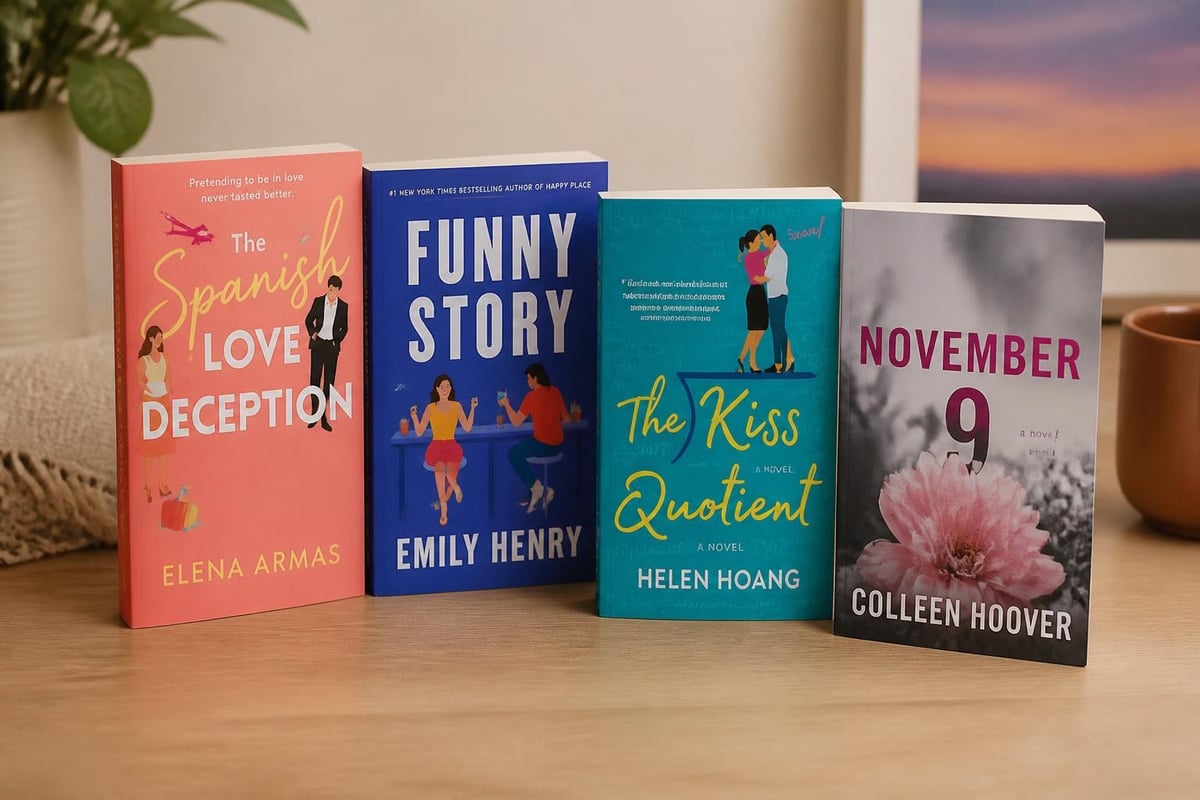
The visual presentation of contemporary love story books plays a crucial role in attracting readers and signaling genre expectations. Publishers Weekly’s examination of romance cover design trends reveals several key movements shaping 2026’s visual landscape.
Illustrated Covers Dominate
Hand-drawn or digitally illustrated covers have largely displaced photographic imagery, particularly for rom-coms and contemporary romance. These whimsical, colorful designs convey personality, warmth, and accessibility while avoiding the limitations of stock photography. Illustrated characters can represent diverse body types, ethnicities, and ages without the constraints of available model photos.
Current design elements include:
- Bold, saturated color palettes
- Character-focused compositions showing protagonists
- Typography that reflects tone (playful fonts for rom-coms, elegant scripts for emotional stories)
- Scene-setting details (city skylines, small-town storefronts, workplace interiors)
- Symbolic objects (books, coffee cups, musical instruments)
Genre-Specific Visual Codes
Readers develop sophisticated visual literacy, instantly recognizing subgenre cues through cover design. Sports romances often feature athletic imagery and bold, masculine typography. Small-town romances showcase pastoral settings and warm, earthy tones. Workplace romances might display office environments or professional attire.
These visual codes serve both readers and retailers, enabling quick categorization and targeted marketing. When browsing digital platforms like Tell eBook, cover design becomes the primary discovery tool, making strong visual branding essential for author success.
Editorial and Market Trends Shaping Contemporary Romance
Understanding current market dynamics helps readers anticipate emerging voices and authors position their work strategically. Several significant trends are reshaping contemporary love story books in 2026.
Authenticity in Representation
Readers demand authentic representation across sexuality, race, disability, body type, and cultural background. Contemporary romance increasingly features protagonists from marginalized communities written by own-voices authors who bring lived experience to their narratives. This shift enriches the genre, offering readers diverse mirrors and windows while challenging historical romance’s homogeneous defaults.
According to K-lytics’ romance market analysis, multicultural romance represents one of the fastest-growing subgenres, with readers actively seeking stories reflecting the diversity of modern relationships. Publishers recognize this demand, prioritizing acquisition of diverse contemporary voices.
The Influence of Social Media on Story Structure
BookTok and Bookstagram have fundamentally altered how contemporary love story books are written, marketed, and consumed. Authors craft “TikTok-able” moments: highly quotable dialogue, emotionally intense scenes, and surprising plot twists designed to generate user-generated content. This doesn’t diminish quality but reflects audience engagement patterns.
The most successful contemporary romances now feature:
- Memorable quotes perfect for social sharing
- Distinct character voices that inspire fan casting
- Scenes that translate well to visual media
- Tropes clearly identifiable for recommendation algorithms
- Emotional beats that create discussion and debate
This symbiotic relationship between content creation and consumption shapes narrative choices, pacing, and marketing strategies across the industry.
Mental Health and Therapy Normalization
Contemporary protagonists increasingly attend therapy, practice mindfulness, take medication for mental health conditions, and discuss emotional wellness openly. This normalization reflects broader cultural conversations while providing readers validation and potentially modeling healthy coping strategies.
Romance narratives that incorporate mental health do so with nuance, avoiding the harmful trope of love “curing” mental illness while showing how healthy relationships can support individual wellness journeys. This sophistication elevates contemporary love story books beyond escapism into meaningful cultural commentary.

Finding Quality Contemporary Romance
With thousands of contemporary love story books published annually, discovery presents both opportunity and challenge. Readers can employ several strategies to identify titles matching their preferences.
Curated Lists and Critical Recognition
Reputable media outlets increasingly recognize romance’s literary merit. TIME’s methodology for selecting the best romance novels demonstrates thoughtful curation considering prose quality, originality, emotional impact, and representation. The Los Angeles Times’ year-end coverage regularly features contemporary romance among general fiction picks, signaling crossover appeal and critical legitimacy.
These curated lists provide entry points for readers new to contemporary romance while highlighting standout titles deserving wider recognition. Cross-referencing multiple sources helps identify consensus favorites and hidden gems.
Trope-Based Discovery
Romance readers often search by trope rather than author or title, seeking specific emotional experiences or relationship dynamics. Common contemporary romance tropes include:
- Enemies to lovers
- Forced proximity
- Fake relationship/marriage of convenience
- Brother’s best friend
- Single parent romance
- Grumpy/sunshine pairings
- Roommates to lovers
Online retailers and specialized platforms enable trope-based browsing, allowing readers to find precisely the emotional journey they crave. This targeted discovery increases satisfaction and reduces reading slumps.
Supporting Digital Platforms
While mainstream retailers dominate sales, specialized platforms often provide better discovery tools, competitive pricing, and support for independent authors. Platforms offering bestselling eBooks at lower prices than major retailers with instant EPUB/PDF download make building a digital library affordable and convenient.
For readers exploring contemporary romance seriously, building relationships with trusted digital retailers ensures access to new releases, backlist titles, and exclusive deals across the genre’s full spectrum.
The Enduring Appeal of Romance Archetypes
Despite contemporary settings and modern sensibilities, certain romantic archetypes persist across centuries of literature. Literary Hub’s exploration of why readers still love Mr. Darcy examines how Pride and Prejudice’s core dynamics-initial misunderstanding, gradual revelation, emotional growth-remain emotionally satisfying 200 years later.
Timeless Dynamics in Modern Contexts
Contemporary love story books recontextualize classic dynamics for 2026 audiences. The “Darcy archetype”-proud, initially off-putting, ultimately devoted-appears in countless modern iterations: the demanding boss who softens, the cynical athlete who learns vulnerability, the wounded artist who risks connection.
These archetypes endure because they tap into fundamental human desires: being truly seen, experiencing transformative love, witnessing emotional growth. Contemporary settings simply provide fresh frameworks for timeless emotional truths.
Evolution Through Modern Sensibilities
However, modern romance updates these archetypes to align with contemporary values. The alpha hero who once dominated through wealth and assertion now demonstrates emotional intelligence, respects boundaries, and communicates openly. The independent heroine doesn’t surrender her autonomy for love but finds partnership that enhances rather than diminishes her identity.
This evolution ensures contemporary romance remains relevant and resonant, honoring what works emotionally while rejecting outdated gender dynamics, power imbalances, and toxic relationship models.
Building Your Contemporary Romance Library
Creating a well-rounded contemporary romance collection requires strategic selection across subgenres, heat levels, and emotional tones. Readers benefit from variety, allowing mood-appropriate choices and preventing reading fatigue.
Balancing Variety and Preference
Consider including:
- Light rom-coms for palate cleansers
- Emotionally intense stories for when you crave catharsis
- Steamy romances for specific moods
- Sweet romances without explicit content
- Diverse representation across all categories
- Both series and standalone titles
Digital libraries excel here, allowing readers to maintain extensive collections without physical storage constraints. E-readers and apps enable organization by mood, trope, heat level, or any custom categorization system.
Discovering Through Related Genres
Readers who enjoy contemporary love story books often appreciate fiction and literature more broadly, particularly contemporary fiction with romantic elements that may not fit strict romance genre definitions. Similarly, those drawn to paranormal or fantasy romance might explore paranormal love story books while maintaining a contemporary romance core collection.
Cross-genre exploration enriches reading life while helping readers articulate precise preferences through comparison and contrast.
The Business of Contemporary Romance
Understanding market dynamics provides context for readers wondering why certain books receive massive marketing pushes while others languish in obscurity. Contemporary romance publishing operates through traditional houses, independent publishers, and robust self-publishing ecosystems, each with distinct advantages.
Traditional Publishing Advantages
Major publishers offer advance capital, professional editing, wide distribution, and marketing resources. Debut authors securing traditional deals gain credibility, bookstore placement, and potential media coverage. However, traditional timelines mean 12-24 month gaps between acquisition and publication, potentially missing trend windows.
Self-Publishing and Author Control
Many romance authors choose self-publishing for creative control, faster release schedules, and higher royalty percentages. This path requires authors to fund editing, cover design, and marketing independently but allows direct reader relationships and rapid iteration based on market response.
The most successful contemporary romance authors often employ hybrid strategies, maintaining both traditional contracts and self-published backlists to maximize reach and income while retaining creative freedom.
Reading Formats and Contemporary Romance
Contemporary love story books adapt beautifully across reading formats, each offering distinct advantages depending on context and preference.
E-books and Privacy
Digital formats provide privacy for readers who enjoy steamy romance but prefer discretion in public spaces. E-readers eliminate recognizable covers and enable reading anywhere without announcing genre choices. The convenience of instant access means readers can impulse-purchase recommended titles and start reading immediately.
Audiobook Performance
Audiobook narration adds interpretive layers to contemporary romance, with skilled performers voicing distinct characters, conveying emotional subtext, and building tension through pacing and tone. Romance-specific narrators develop devoted followings, with readers seeking out titles featuring favorite performers.
The intimacy of audio particularly suits contemporary romance’s emotional intensity, creating immersive experiences during commutes, workouts, or household tasks.
Print Nostalgia and Collectibility
Despite digital convenience, many readers maintain print collections of favorite contemporary romances, valuing physical books for rereading, display, and tangible connection. Special editions, signed copies, and aesthetically pleasing spines make contemporary romance increasingly collectible, particularly as the genre gains cultural legitimacy.
Contemporary love story books offer unparalleled emotional richness, diversity, and accessibility, reflecting modern relationship complexities while delivering the hope and connection readers crave. Whether you prefer witty rom-coms, emotionally intense dramas, or steamy slow-burns, the contemporary romance landscape provides endless options for discovery and enjoyment. Tell eBook makes building your ideal romance library effortless with competitive pricing, instant downloads, and a diverse selection spanning the full contemporary love story spectrum-start exploring today and find your next unforgettable read.