

The landscape of digital reading continues to transform at an unprecedented pace. As we navigate through 2026, the concept of next books has evolved beyond simple digitization of printed works. Today’s readers expect seamless integration across devices, enhanced accessibility features, intelligent discovery mechanisms, and immersive experiences that blend text, audio, and interactive elements. Understanding what defines these modern formats helps publishers, retailers, and readers alike prepare for the ongoing evolution of how we consume written content in an increasingly digital world.
Understanding the Modern Digital Reading Movement
This term encompasses far more than the latest releases hitting virtual shelves. It represents a fundamental shift in how publishers create, distribute, and enhance digital content to meet contemporary reader expectations.
These publications are characterized by several defining features:
- Advanced metadata standards that improve discoverability
- Cross-platform compatibility ensuring consistent experiences
- Built-in accessibility features serving diverse reader needs
- Enhanced formats supporting multimedia integration
- Intelligent recommendation systems powered by structured data
Technical Standards Powering Modern Digital Publications
The foundation of modern digital publications rests on robust technical standards that ensure interoperability and longevity. The EPUB 3.3 specification recently published by W3C represents the current state-of-the-art for digital publication formats, introducing capabilities that were unimaginable just a decade ago.
These standards address critical challenges facing digital publishers. File portability ensures readers can access their purchases across multiple devices and platforms. Metadata consistency enables sophisticated discovery mechanisms. Accessibility compliance guarantees that these publications serve readers with varying abilities and preferences.
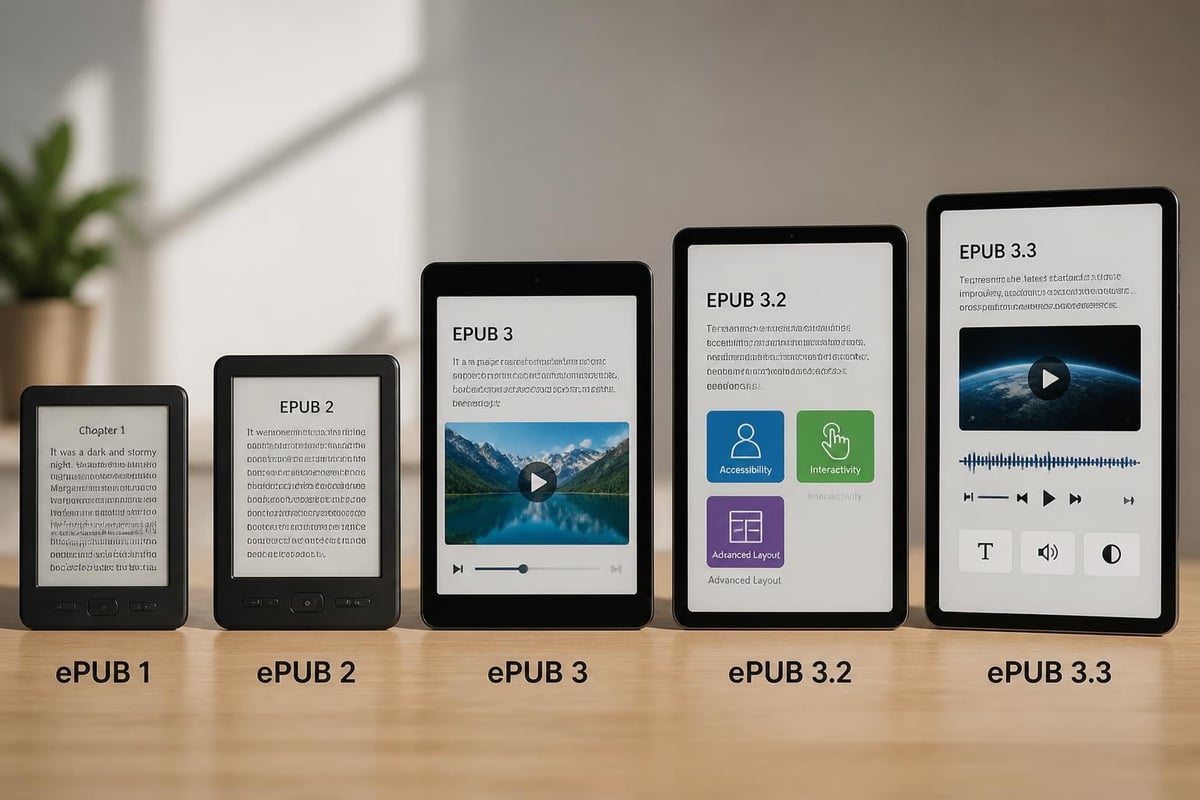
Modern ebook retailers like Tell eBook implement these standards to deliver reliable, future-proof experiences. When you purchase digital content built on current specifications, you invest in publications designed to remain accessible and functional for years to come.
Accessibility as a Core Principle
One of the most significant shifts in modern digital publishing involves the integration of accessibility features as standard components rather than afterthoughts. The EPUB Accessibility 1.2 recommendation establishes comprehensive guidelines ensuring digital publications serve all readers regardless of their abilities.
Key Accessibility Features in Contemporary Digital Books
Modern accessible publications incorporate multiple layers of functionality designed to accommodate diverse reading needs and preferences.
| Accessibility Feature | Reader Benefit | Implementation Standard |
|---|---|---|
| Semantic markup | Screen reader navigation | EPUB 3.3 structural elements |
| Alternative text | Image comprehension | WCAG-compliant descriptions |
| Adjustable typography | Visual comfort customization | CSS-based font controls |
| Synchronized audio | Multi-sensory engagement | Media Overlays specification |
| Table navigation | Non-visual data access | Enhanced HTML tables |
Publishers creating accessible digital books recognize that accessibility improvements benefit all readers, not just those with disabilities. Adjustable text sizes help readers in varying light conditions. Alternative navigation assists users consuming content during commutes. Synchronized text and audio supports language learners and multitaskers.
The market for accessible digital content continues expanding rapidly. Readers increasingly expect publications to include these features by default. Discovering a diverse catalog means finding titles that accommodate your preferred reading style and environmental conditions.
Metadata Architecture and Discoverability
Behind every successful digital reading ecosystem lies sophisticated metadata architecture. These structured data frameworks determine whether readers discover relevant titles or miss perfect matches buried in vast digital catalogs.
The ONIX Standard for Book Metadata
The ONIX for Books standard documented by the Library of Congress serves as the industry backbone for comprehensive book metadata. This XML-based framework captures hundreds of data points about each publication, from basic bibliographic information to detailed marketing classifications.
Critical metadata elements include:
- Precise subject categorization using BISAC, Thema, or custom taxonomies
- Contributor information with roles, biographical details, and authority records
- Edition relationships linking audiobooks, translations, and revised versions
- Rights and availability specifying territorial restrictions and pricing
- Content warnings and advisories helping readers make informed choices
Retailers implementing robust metadata practices create superior discovery experiences. When you explore Tell eBook’s catalog, sophisticated metadata enables filtering by nuanced criteria, revealing titles matching your specific interests.
Structured Data for Web-Based Discovery
Beyond traditional supply chain metadata, modern digital books leverage web-native standards for enhanced online discoverability. The Schema.org Book vocabulary provides standardized markup that search engines and recommendation systems understand.
Implementing Google’s Book structured data guidelines helps publishers and retailers surface relevant content in search results with rich snippets displaying ratings, authors, formats, and pricing. These enhanced listings significantly improve click-through rates and conversion.

A comprehensive analysis of metadata schemas published by the European Union Intellectual Property Office demonstrates the complexity of maintaining interoperability across cultural sectors. Publishers producing modern digital publications must navigate multiple standards while ensuring consistency across distribution channels.
The Audiobook Revolution
No discussion of the future of reading would be complete without examining the explosive growth of audiobook formats. According to Publishers Weekly reporting on 2024 market performance, audiobook sales rose thirteen percent to reach $2.2 billion, demonstrating sustained consumer appetite for audio formats.
Why Audiobooks Represent the Future
The Audio Publishers Association’s comprehensive survey data reveals fascinating insights about audiobook adoption patterns. Younger demographics show particularly strong preferences for audio consumption, suggesting this format will only gain prominence as these formats evolve.
Factors driving audiobook growth include:
- Multitasking compatibility allowing consumption during commutes, exercise, and household tasks
- Professional narration enhancing storytelling through vocal performance
- Reduced eye strain appealing to screen-fatigued readers
- Accessibility advantages for visually impaired and dyslexic readers
- Subscription models providing economical access to extensive catalogs
Platforms offering both text and audio formats position themselves advantageously for reader preferences. Whether you prefer traditional reading or audio formats, these publications accommodate multiple consumption modes, often within the same purchase.
Integration Between Text and Audio
The most sophisticated implementations create seamless bridges between text and audio experiences. Whispersync-style technologies allow readers to switch between formats mid-book, with synchronized progress tracking ensuring continuity.
Publishers increasingly produce enhanced ebooks with embedded audio elements. Multimedia cookbooks include technique demonstrations. Language learning materials integrate pronunciation guides. Children’s books feature read-along narration that highlights text as audio plays.
Enhanced Formats and Interactive Elements
Modern digital books push beyond static text to incorporate interactive elements that transform passive reading into engaging experiences. These enhancements vary dramatically across genres and reader demographics.
Interactive Fiction and Choose-Your-Own-Adventure
Digital formats enable sophisticated branching narratives impossible in print. Readers make choices affecting plot progression, character relationships, and story outcomes. These interactive narratives particularly resonate with younger audiences accustomed to video game storytelling mechanics.
Technical implementation requires careful planning. Publishers must design intuitive navigation systems, maintain narrative coherence across branches, and ensure all paths deliver satisfying experiences. When executed effectively, interactive fiction demonstrates unique possibilities for digital publishing.
Educational Enhancements and Study Features
Academic and educational publishers leverage digital formats to create powerful learning tools. Digital books designed for education incorporate features specifically supporting knowledge acquisition and retention.
| Educational Feature | Learning Benefit | Technical Implementation |
|---|---|---|
| Embedded quizzes | Comprehension assessment | JavaScript interaction layers |
| Searchable glossaries | Terminology reference | Linked definition databases |
| Annotation systems | Personal note-taking | Cloud-synchronized highlights |
| Progress tracking | Study habit monitoring | Learning management integration |
| Multimedia supplements | Multi-modal learning | Embedded video and audio |
Students and lifelong learners benefit tremendously from these enhancements. The ability to search entire libraries instantly, cross-reference multiple sources, and maintain centralized notes transforms research and study workflows.

Subscription Models and Reading Economics
The business models surrounding digital reading continue evolving as rapidly as the formats themselves. Subscription services have fundamentally altered reader expectations about pricing and access.
The Shift Toward Access Over Ownership
Traditional book purchasing emphasized permanent ownership of individual titles. Subscription platforms instead offer temporary access to vast catalogs for flat monthly fees. This shift mirrors broader digital consumption patterns across music, video, and software.
Advantages of subscription models include:
- Lower financial barriers encouraging reading experimentation
- Instant access to trending titles without individual purchase decisions
- Algorithmic recommendations exposing readers to unexpected discoveries
- Family sharing options distributing costs across household members
- Environmental benefits reducing physical production and shipping
However, subscription models also raise concerns about reader rights, platform lock-in, and author compensation. When subscriptions end, access disappears. This temporary nature contrasts sharply with permanent ownership’s peace of mind.
Hybrid Approaches Balancing Access and Ownership
Forward-thinking retailers recognize that different readers prefer different models. Some purchases merit permanent ownership while casual interests suit temporary access. Digital reading ecosystems increasingly offer flexible options.
Tell eBook’s platform provides direct purchase options ensuring permanent access to titles you want to own. This ownership model guarantees your library remains accessible regardless of subscription status or platform changes.
Personalization and Discovery Algorithms
The explosion of available digital content creates both opportunity and challenge. With millions of digital titles available, sophisticated discovery mechanisms become essential for connecting readers with relevant titles.
Machine Learning and Recommendation Systems
Modern recommendation engines analyze vast datasets to predict reader preferences. These systems consider purchase history, browsing behavior, rating patterns, and demographic information to generate personalized suggestions.
Effective recommendation systems balance multiple factors:
- Similarity to previously enjoyed titles ensuring relevance
- Diversity preventing filter bubbles and echo chambers
- Serendipity introducing unexpected but appealing options
- Trending content capturing cultural momentum
- Editorial curation maintaining human judgment
The most sophisticated platforms combine algorithmic recommendations with expert curation. Automated systems excel at pattern recognition across massive datasets. Human curators contribute contextual understanding, seasonal relevance, and quality assessment that algorithms miss.
The Role of Reader Reviews and Social Signals
User-generated content plays increasingly important roles in digital book discovery. Reader reviews provide authentic perspectives that marketing copy cannot replicate. Rating aggregations help filter massive catalogs to identify standout titles.
Social reading features enable friends to share recommendations, discuss books, and participate in virtual book clubs. These community elements transform solitary reading into shared cultural experiences, particularly valuable as physical bookstores decline.
Format Flexibility and Device Compatibility
Digital books must function seamlessly across the bewildering array of devices modern readers use. A single title might be consumed on smartphones during commutes, tablets while relaxing, desktop computers for research, and dedicated e-readers for extended reading sessions.
Responsive Design for Reading Interfaces
Publishers and retailers implementing responsive design principles ensure content adapts gracefully to varying screen sizes, orientations, and capabilities. Text reflows dynamically. Images scale appropriately. Navigation controls adjust for touch versus mouse input.
Technical challenges multiply when accommodating diverse devices. E-ink displays require different optimization than backlit LCD screens. Touch interfaces demand larger interaction targets than mouse-driven navigation. Battery constraints on mobile devices necessitate efficient rendering.
Cloud Synchronization and Cross-Device Reading
Modern readers expect to pick up exactly where they left off regardless of which device they use. Cloud synchronization systems track reading positions, bookmarks, highlights, and notes across all devices accessing a reader’s account.
This functionality requires robust infrastructure. Synchronization must occur quickly enough to feel instantaneous while managing conflicts when readers use multiple devices simultaneously. Privacy considerations demand secure transmission and storage of reading data.
The Future Trajectory of Digital Reading
Looking beyond 2026, several emerging trends will likely define the continued evolution of digital reading. Artificial intelligence integration, immersive technologies, and environmental consciousness all present both opportunities and challenges.
AI-Powered Reading Assistance
Machine learning models are beginning to offer sophisticated reading assistance. Real-time translation enables readers to enjoy works in languages they don’t speak fluently. Summarization tools help researchers quickly extract key concepts from lengthy texts. Contextual explanations provide historical and cultural background for references readers might miss.
These AI enhancements raise important questions about reading authenticity and comprehension. Does translation assistance genuinely enable cross-cultural understanding or create illusions of comprehension? Do summaries support learning or encourage superficial engagement? Digital publishers will increasingly navigate these tensions.
Environmental Considerations
Digital formats inherently offer environmental advantages over physical books by eliminating paper production, printing processes, and transportation logistics. However, the energy consumption of server infrastructure, device manufacturing, and electronic waste present their own environmental challenges.
Environmentally conscious readers increasingly consider these factors when choosing between formats and platforms. Publishers and retailers emphasizing sustainable practices, renewable energy usage, and efficient distribution systems may gain competitive advantages.
Building Your Digital Library
For readers navigating the evolving landscape of digital content, several practical strategies help build satisfying, accessible, and sustainable libraries.
Start by identifying your format preferences. Do you primarily read text, listen to audio, or switch between both? Understanding your consumption patterns guides platform and purchase decisions.
Prioritize platforms supporting open standards. Publications built on EPUB 3.3 and other non-proprietary formats remain accessible even if specific retailers close or change policies. Avoid excessive dependence on proprietary ecosystems.
Evaluate accessibility features matching your needs. Whether you require screen reader compatibility, adjustable typography, or synchronized audio, ensure your chosen platform delivers necessary functionality.
Consider ownership versus access trade-offs. Beloved books you’ll reread deserve permanent ownership. Casual interests or research materials might suit subscription access. Many readers benefit from hybrid approaches using both models.
Explore diverse catalogs thoughtfully. Use recommendation systems as discovery starting points rather than definitive guides. Seek editorial curation, reader reviews, and community discussions to identify hidden gems algorithms might miss.
The selection available through Tell eBook demonstrates the breadth possible when retailers prioritize diverse catalogs, multiple formats, and reader-centric policies.
The evolution of next books represents opportunity for readers seeking richer, more accessible, and more personalized literary experiences. By understanding the technical standards, accessibility features, metadata architecture, and format innovations shaping modern digital publications, you can make informed decisions that enhance your reading life. Whether you prefer traditional ebooks, audiobooks, or enhanced interactive formats, platforms like Tell eBook offer diverse catalogs designed to meet contemporary reader expectations while respecting the timeless joy of great storytelling.