

Google Play Books represents one of the largest digital distribution platforms for independent authors and publishers, reaching millions of readers across more than 75 countries. With the right approach to google play ebook publishing, content creators can tap into this vast marketplace and generate sustainable revenue streams. Understanding the platform's requirements, optimization strategies, and distribution mechanics is essential for anyone seeking to maximize their digital publishing success in 2026.
Understanding the Google Play Books Ecosystem
The Google Play Books platform operates on a partnership model where publishers and authors can distribute their content directly to readers worldwide. This ecosystem supports multiple formats, pricing structures, and promotional tools designed to help content creators reach their target audiences effectively.
Platform Requirements and Eligibility
Before beginning your google play ebook publishing journey, you need to meet specific criteria. Publishers must be at least 18 years old and possess the legal rights to distribute their content. Google requires either an individual or business entity registration through the Google Play Books Partner Center.
Key eligibility requirements include:
- Valid government-issued identification for verification
- Tax information specific to your country of residence
- Banking details for royalty payments
- Proof of content ownership or publishing rights
- Compliance with Google's content policies and guidelines
The Partner Center serves as your central hub for managing all aspects of your publishing business. This platform allows you to upload content, set pricing, track sales analytics, and manage your payment information. Registration typically takes 24 to 48 hours for approval, though verification can extend longer depending on your location and documentation completeness.
Supported File Formats and Specifications
Google Play Books accepts EPUB and PDF formats, with EPUB being the preferred option for reflowable text. Your files must meet specific technical standards to ensure optimal reader experience across devices.
| Format | Best Use Case | File Size Limit | DRM Support |
|---|---|---|---|
| EPUB 2.0.1 | Fiction, narrative non-fiction | 100 MB | Yes |
| EPUB 3.0 | Enhanced ebooks, multimedia | 100 MB | Yes |
| Fixed-layout, image-heavy | 100 MB | Yes |
EPUB files provide the most flexibility, adapting to different screen sizes and allowing readers to customize font sizes, styles, and background colors. PDFs work best for cookbooks, photography collections, or design-focused content where layout preservation is critical.
Preparing Your Manuscript for Publication
Professional formatting significantly impacts reader satisfaction and review ratings. Your manuscript preparation should address both technical requirements and user experience considerations before you begin the google play ebook publishing process.
Formatting Best Practices
Start with a clean manuscript in your word processor. Remove manual formatting like extra spaces, tabs for indentation, or hard returns within paragraphs. Use style sheets or formatting tools to ensure consistency throughout your document.
Essential formatting elements:
- Title page with book title, author name, and copyright information
- Table of contents with working hyperlinks
- Chapter headings using consistent hierarchy
- Standard paragraph formatting with automatic indentation
- Properly formatted front matter and back matter
- Embedded images at 300 DPI minimum resolution
Many authors use dedicated software like Calibre, Vellum, or Atticus for ebook conversion. These tools automate much of the formatting process and ensure your files meet platform specifications. According to this comprehensive publishing guide, proper file preparation prevents common upload errors and rejection issues.
Metadata Optimization
Metadata functions as your book's discovery mechanism on the Google Play Store. Strategic optimization of these elements directly influences your visibility in search results and category rankings.
Your title should be concise and include relevant keywords that potential readers might use when searching. The subtitle provides additional space for descriptive information or series identifiers. Category selection places your book in front of browsing readers, so choose the most specific categories that accurately represent your content.
Critical metadata components:
- Book title and subtitle
- Author name and contributor information
- Publisher name
- Publication date
- ISBN (optional but recommended)
- Language designation
- Age ratings and content warnings
- Book description (up to 4,000 characters)
- Subject categories (BISAC codes)
Your book description serves as sales copy, enticing browsers to purchase or sample your work. Focus on benefits rather than features, highlighting what readers will gain from your book. Use formatting options like bullet points and short paragraphs for readability.
Navigating the Upload and Publishing Process
The google play ebook publishing workflow involves several distinct stages from initial upload through final publication. Understanding each step helps prevent delays and ensures a smooth launch process.
Account Setup and Configuration
Begin by accessing the Google Play Books Partner Center and completing your profile. You'll need to provide tax information through appropriate forms (W-9 for US citizens, W-8BEN for international publishers). Payment setup requires a valid bank account capable of receiving international transfers.
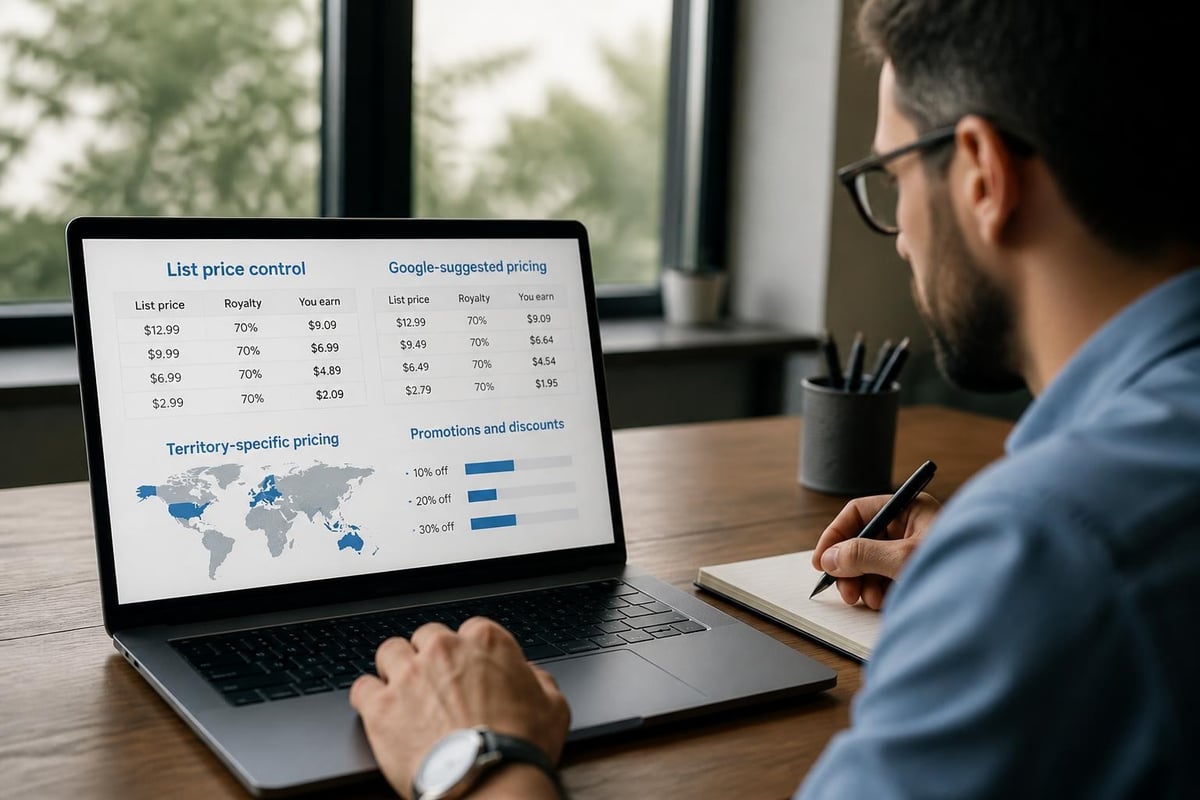
Choose your pricing model during setup. You can opt for either list price control or Google-suggested pricing. List price control gives you full authority over pricing in each territory, while Google-suggested pricing allows the platform to automatically adjust prices based on market conditions and competition.
Content Upload Steps
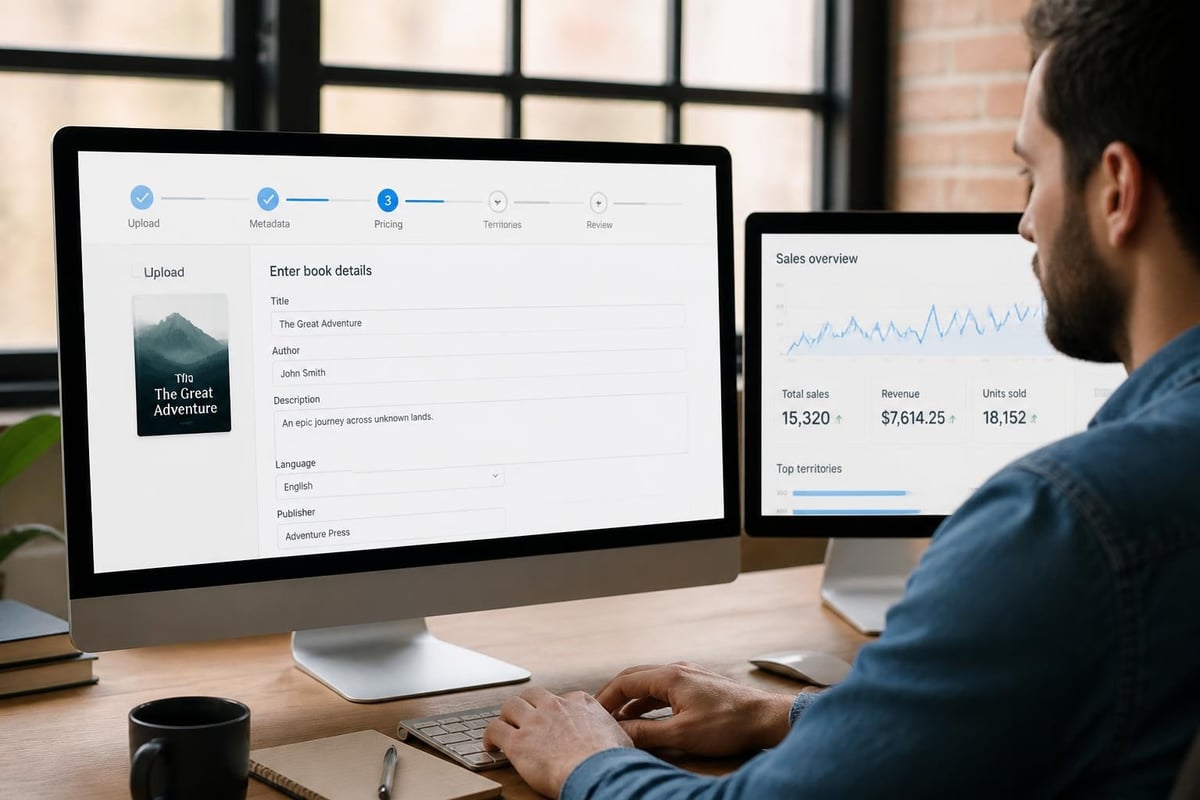
Once your account is configured, navigate to the "Add a new book" section in your Partner Center dashboard. The upload wizard guides you through each required field systematically.
Step-by-step upload process:
- Enter basic book information (title, authors, description)
- Upload your EPUB or PDF file
- Add a high-quality cover image (1600 x 2560 pixels minimum)
- Set your pricing and territory availability
- Choose DRM preferences
- Review and submit for publication
Google's system automatically validates your file for technical errors. If problems are detected, you'll receive specific error messages indicating what needs correction. Common issues include missing table of contents, improper file structure, or image resolution problems. Resources like this step-by-step publishing guide provide detailed troubleshooting assistance.
Your book typically appears in the Google Play Store within 24 to 72 hours after approval. However, propagation to all international storefronts may take up to five business days.
Pricing Strategies and Royalty Structure
Strategic pricing directly impacts both your sales volume and total revenue. Google Play Books offers competitive royalty rates, but understanding the payment structure helps you optimize your earnings through google play ebook publishing.
Royalty Calculations
Google pays 52% royalties on books priced between $2.99 and $200.00. Books priced below $2.99 or above $200.00 earn 52% royalties on 58% of the list price (effectively 30.16%). This structure incentivizes pricing within the standard range while allowing flexibility for promotional strategies.
| Price Range | Royalty Rate | Calculation Method |
|---|---|---|
| $0.01 – $2.98 | 52% of 58% of list price | Approximately 30.16% |
| $2.99 – $200.00 | 52% | Direct percentage |
| $200.01+ | 52% of 58% of list price | Approximately 30.16% |
You receive payments approximately 30 days after the end of each month, provided your account balance exceeds the minimum threshold of $10. International publishers should account for currency conversion fees and transfer charges when calculating net income.
Competitive Pricing Analysis
Research comparable titles in your genre to establish baseline pricing expectations. Fiction genres typically range from $2.99 to $6.99 for standalone novels, while non-fiction and specialized content can command higher prices based on perceived value.
Consider your book length, production quality, and market positioning. A comprehensive business guide with original research might justify $9.99 or higher, while a novella in a crowded romance category might perform better at $3.99. According to publishing distribution experts, strategic pricing adjustments based on performance data can increase overall revenue by 20-40%.
Pricing optimization tactics:
- Launch promotions at reduced prices to generate reviews
- Premium pricing for specialized or professional content
- Series pricing with discounted first books
- Seasonal adjustments based on shopping patterns
- Regional pricing variations to match local purchasing power
Marketing and Discoverability Optimization
Publication represents just the beginning of your google play ebook publishing success. Proactive marketing and strategic optimization significantly impact your long-term sales performance and reader reach.
Keyword and Category Selection
Google Play Books uses both your metadata and content analysis to determine search visibility. Strategic keyword placement in your title, subtitle, and description influences ranking for relevant searches.
Select up to three BISAC categories that accurately represent your content. More specific categories often provide better visibility than broad classifications. A cozy mystery novel performs better in "Fiction / Mystery & Detective / Cozy / General" than simply "Fiction / Mystery & Detective."

Promotional Tools and Features
Google Play Books offers several promotional mechanisms to increase visibility and drive sales. Understanding these tools helps you create effective marketing campaigns within the platform.
Available promotional options:
- Price promotions (temporary discounts of up to 100%)
- Pre-orders to build launch momentum
- Series bundling for multi-book collections
- Sample chapters to encourage trial
- Author pages to build your brand
The platform also supports promotional pricing changes that you can schedule in advance. Many successful publishers run regular promotions, particularly during major shopping periods or when launching new series installments. Detailed guidance on promotional strategies and pricing tactics provides additional insights into maximizing campaign effectiveness.
Distribution and Territory Management
Global reach represents one of the most valuable aspects of google play ebook publishing. Strategic territory management allows you to optimize availability while protecting existing distribution agreements or regional rights.
Territory Selection Strategy
You can make your book available in all territories where Google Play Books operates, or restrict distribution to specific countries. Consider existing contracts, language availability, and market demand when making territory decisions.
Most independent publishers benefit from maximum distribution, selecting all available territories to maximize potential readership. However, traditional publishing contracts often reserve specific regional rights, requiring careful territory configuration to avoid conflicts.
Territory considerations:
- Language availability and translation status
- Existing distribution agreements or contracts
- Regional pricing and purchasing power
- Copyright and intellectual property laws
- Cultural sensitivity and content appropriateness
The Partner Center allows granular control over pricing for each territory. You can set different prices based on local market conditions, competition, and purchasing power parity. Resources like this comprehensive publishing overview explain territory-specific optimization strategies.
Multi-Platform Distribution
While Google Play Books provides extensive reach, many publishers use aggregation services to distribute across multiple platforms simultaneously. This approach trades slightly higher royalty percentages for simplified management and broader distribution.
Direct publishing to Google Play Books gives you maximum control and higher royalties. Distribution services like PublishDrive or Draft2Digital simplify multi-platform management but typically retain a percentage of earnings. For detailed comparison of distribution methods and royalty structures, consider your publishing goals and operational capacity.
Technical Troubleshooting and Quality Assurance
Even carefully prepared files occasionally encounter technical issues during the google play ebook publishing process. Understanding common problems and their solutions prevents publication delays and ensures optimal reader experience.
Common Upload Errors
File validation failures typically stem from structural problems, missing elements, or specification violations. Google's system provides specific error codes and descriptions to guide correction.
Frequent technical issues:
- Missing or improperly formatted table of contents
- Broken internal hyperlinks or cross-references
- Images exceeding file size limits or resolution requirements
- Invalid CSS or styling conflicts
- Metadata character limits exceeded
- Cover image dimension or format problems
Preview your book thoroughly using Google's built-in preview tool before finalizing publication. This tool displays your book exactly as readers will see it across different devices and screen sizes. Pay special attention to chapter breaks, image placement, and formatting consistency.
Post-Publication Updates
You can update your published books at any time through the Partner Center. Common updates include correcting typos, adding content, updating cover designs, or modifying metadata. Changes typically propagate to the live store within 24 hours.
Readers who previously purchased your book receive update notifications for significant content revisions. Minor corrections like typo fixes update automatically without notification. Maintain version control documentation to track changes and ensure quality improvements over time.
Analytics and Performance Tracking
Data-driven decision making separates successful publishers from those who struggle with google play ebook publishing. Google provides comprehensive analytics tools to monitor sales, track reader behavior, and optimize your publishing strategy.
Sales Reporting and Metrics
The Partner Center dashboard displays real-time sales data, revenue tracking, and performance metrics. You can view information by date range, territory, or individual title.
| Metric | Description | Strategic Value |
|---|---|---|
| Units Sold | Total copies purchased | Measure overall demand |
| Revenue | Gross earnings before fees | Calculate profitability |
| Page Reads | Pages consumed in subscription programs | Engagement indicator |
| Return Rate | Percentage of refunded purchases | Quality signal |
| Average Rating | Customer review scores | Market reception |
Monitor these metrics regularly to identify trends, assess promotional effectiveness, and guide pricing decisions. Sudden changes in sales patterns often indicate external factors like reviews, promotions, or competitive activity worth investigating.
Optimization Based on Data
Use analytics insights to refine your publishing strategy continuously. Books with high page-through rates but low purchases might benefit from better cover design or description optimization. High return rates suggest quality issues requiring content revision.
Compare performance across territories to identify underperforming markets. Consider localized marketing efforts or pricing adjustments for regions showing potential but underdelivering. Regular analysis helps you allocate resources effectively and maximize return on your publishing investment.
Mastering google play ebook publishing requires attention to technical requirements, strategic pricing, and ongoing optimization based on performance data. Success comes from treating publishing as a business, continuously refining your approach based on reader feedback and market response. Whether you're publishing your first title or managing an extensive catalog, Tell eBook offers a curated selection of resources across fiction, business, comics, and biographies to support your reading and research needs throughout your publishing journey.