

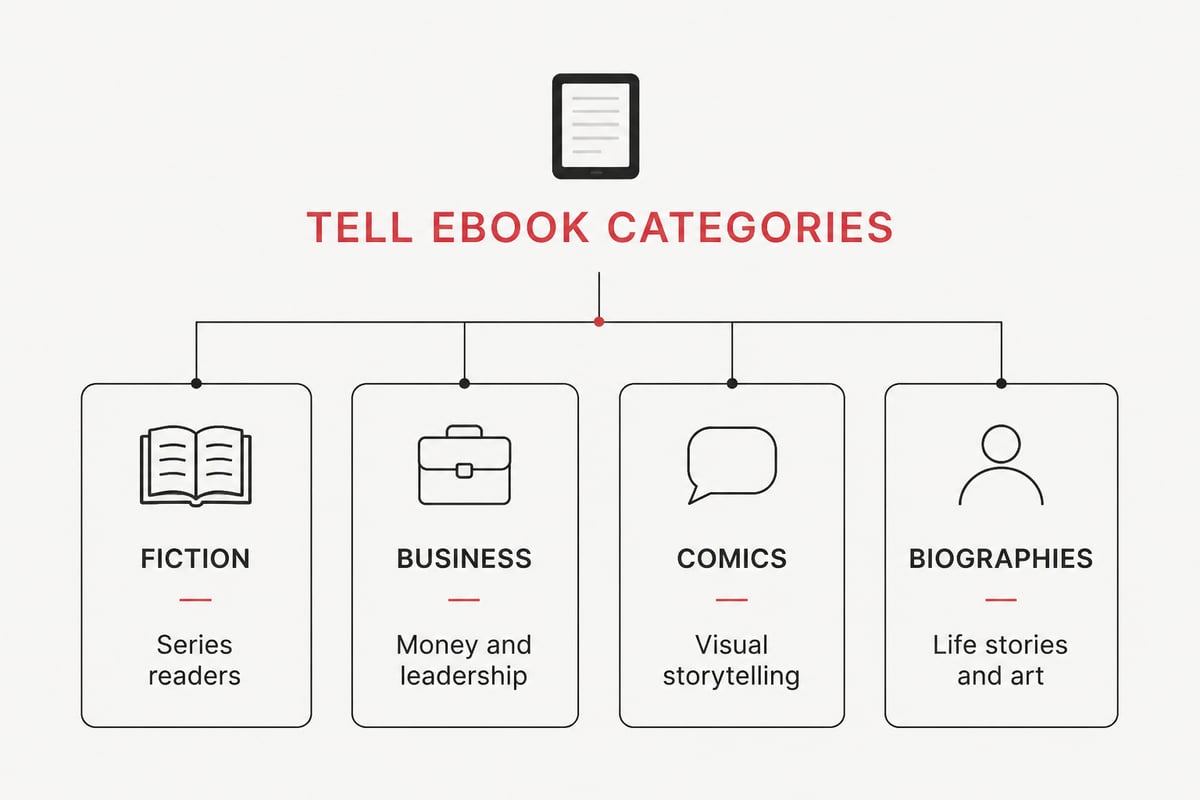
To discover more on Tell eBook, start with the main shop and work through its categories: fiction, business, comics, and biographies, all offered as eBooks and audiobooks with instant download. This guide shows you how the catalog is organized, how to find titles that match your taste, and how to get the most from the files you buy.
What You Can Find in the Tell eBook Catalog
The Tell eBook catalog covers eBooks and audiobooks across fiction, business, comics, and biographies, so most reading moods have a home. Titles can be downloaded instantly, with no shipping involved.
That last point matters for readers who want to spend less and read sooner. Because the store is digital only, there is nothing to ship and nothing to wait for. If you want a physical printed book mailed to your door, this is not the right store for you. If you want a growing digital library at lower prices, it is.
The main shop page is the best starting point. From there you can move into any category and compare titles side by side.
How to Discover More Books by Category
The fastest way to discover more titles is to browse one category at a time and follow the authors and subjects that catch your attention. Each category rewards a slightly different approach.
Fiction and Series
Series readers benefit most from browsing by author. The catalog includes the Murderbot Diaries by Martha Wells, and you can move through the run in order, from Artificial Condition to Rogue Protocol and on to System Collapse. If you prefer epic science fiction, Frank Herbert’s Dune Saga Collection, Books 1-6 bundles a long reading project into a single purchase.
Business and Money
Business readers can pair practical guides with profiles of the people behind famous companies.
Biographies and Art
Biography is one of the deepest shelves. You can read about musicians in Here We Are Now: The Lasting Impact of Kurt Cobain, painters in David Hockney: The Biography, 1937-1975, or the story behind a pop icon in Andy Warhol and the Can That Sold the World.
A Simple Process to Discover More Titles
A repeatable browsing routine will help you discover more books you actually finish. Follow these steps the next time you open the store:
- Pick one category that matches your mood this week rather than scanning everything.
- Choose one anchor title you already like and note its author and subject.
- Browse related titles by the same author or on the same topic.
- Compare formats by checking whether an audiobook edition suits your commute or workout.
- Save a short list of two or three titles so your next purchase is already decided.
This approach keeps the catalog from feeling overwhelming. A tight shortlist beats an endless scroll, and it keeps spending under control.
Reading More for Less Money
For a reader who finishes several books a month, that difference adds up across a year. Pick a monthly book budget first, then see how many titles it covers instead of letting individual purchases set the pace.
A few habits stretch the budget further:
- Buy series in bundles when a collection is offered. Frank Herbert's Dune Saga Collection, Books 1-6 is one example, packaging a long reading project into a single purchase.
- Alternate a full-price new release with a lower-priced backlist title, so one expensive pick does not crowd out the rest of the month.
- Choose audiobooks for tasks where your hands are busy, so reading time grows without extra hours.
- Keep a short list of two or three titles so you buy deliberately rather than on impulse, and finish what you own before adding more.
Why the EPUB Format Matters
EPUB is the format that makes your purchases flexible, and Tell eBook delivers titles in EPUB, a format that works across many reading devices and apps. You buy once, keep your books forever, and read or listen anywhere.
The format itself is well documented. The Library of Congress describes EPUB as a family of standards for distributing digital publications. According to the W3C EPUB 3 Overview, EPUB 3 packages structured digital publications, including web content such as HTML, CSS, and SVG, into a single file.
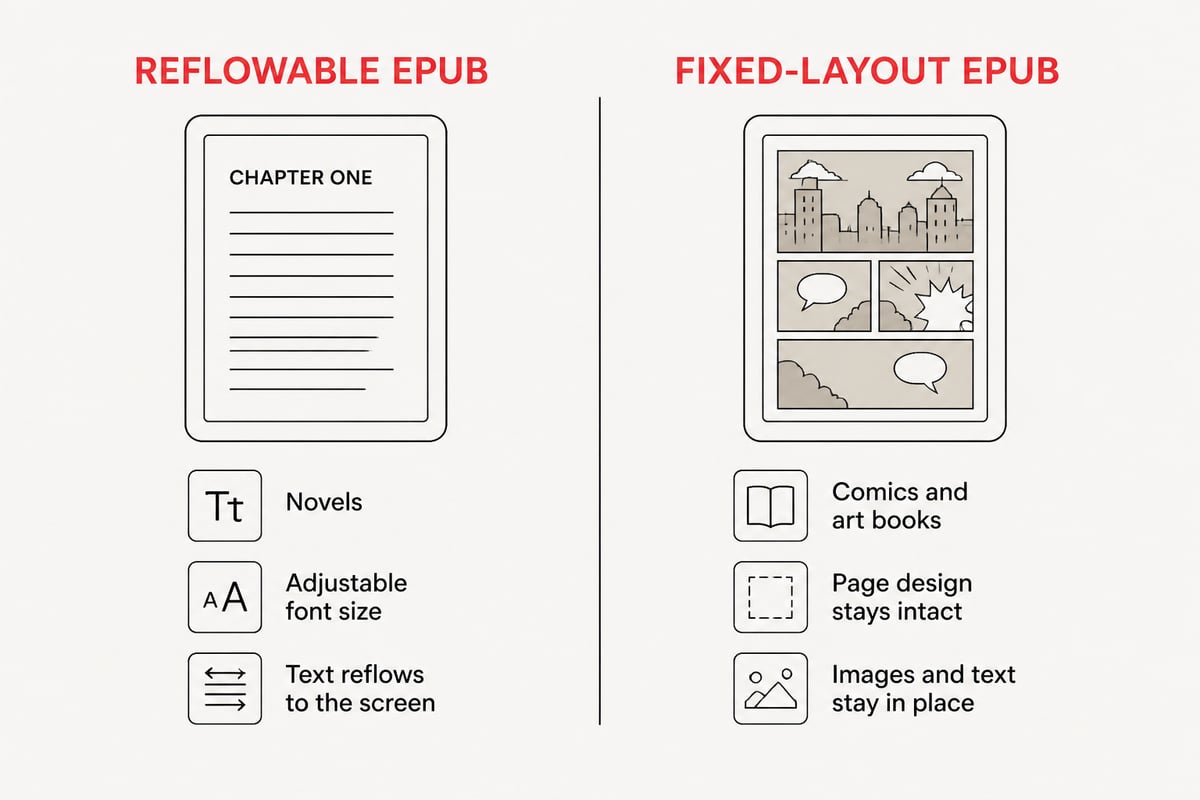
For everyday reading, the most noticeable benefit is reflow. The same W3C overview explains that EPUB reading systems typically reflow text and pagination to fit the display area and the reader's preferred font size. In practice, you can enlarge the type on a small phone screen or tighten it on a tablet without losing your place.
Publishers compare the two common formats in similar terms. A Routledge guide to EPUB and PDF ebook formats covers reflow, customization, and accessibility features, which helps explain why many readers prefer EPUB for novels and long nonfiction while PDF can suit fixed layouts.
Accessibility Features Worth Checking
You can discover more comfortable ways to read by looking at accessibility features, which benefit anyone who reads in dim light, on small screens, or for long stretches. Adjustable text size and reflow are the most visible examples.
Behind the scenes, EPUB can also carry descriptive information. The Library of Congress notes that EPUB accessibility metadata can describe access modes, accessibility features, and potential hazards such as flashing content or sound. This kind of detail helps readers judge whether a title will suit their needs before they begin.
Illustrated books and comics deserve extra attention. Fixed-layout EPUBs keep page designs intact, and the W3C guidance on fixed-layout EPUB accessibility outlines the challenges and best practices involved. If you love art books or comics, expect them to behave differently from a standard novel, with less text reflow and more emphasis on the page image.
Discover More Through Art Books and Annotated Collections
Art and illustrated titles are an underused corner of the catalog, and they reward slow browsing. Annotated volumes pair images with commentary, which suits readers who like to understand what they are looking at rather than simply glance at it. A single painting can take on new meaning once you read about its composition, its subject, and the period in which it was made.
Examples include Claude Monet: Annotated Paintings, Gustav Klimt: Annotated Drawings, and Edouard Manet: Annotated Paintings. For a more narrative approach, Sargent's Women: Four Lives Behind the Canvas tells the stories of the people who sat for the painter.
A useful pairing is to read an annotated volume alongside a biography. David Hockney's life story, for instance, adds context to any visual study of his era. Fixed-layout art books keep each page design intact, so expect less text reflow and more emphasis on the image. These are good reading on a tablet, where larger screens show detail well. Check how each title displays on your device before settling in for a long session.
Matching Audiobooks to Your Routine
Audiobooks fit into time that print and screens cannot, so choosing them by routine is the most practical way to listen more. Think about where your dead time is: a commute, a walk, housework, or an evening wind-down. Write down two or three recurring blocks of time in your week and assign a title to each one.
Match the genre to the moment:
- Commute or errands: fast-paced fiction and science fiction hold attention through interruptions. A series like the Murderbot Diaries works well because each installment picks up the thread quickly.
- Walks and workouts: biographies and business narratives move at a steady pace. A profile such as Andrew Carnegie by David Nasaw suits a long, unhurried walk.
- Evenings: familiar series are easy to follow when you are tired, and revisiting a favorite requires little effort.
Because purchases are yours to keep, you can build a listening library over time rather than renting access. That also means you can return to a favorite title whenever you like, and replay a chapter you drifted away from without worrying about a loan expiring.
Keep Your Library Organized as It Grows
A growing library stays useful only if you can find things in it, so a little organization pays off. Sort by status rather than by title, using simple shelves such as "reading now," "next up," and "finished."
Because Tell eBook files are EPUB, you can usually load them into a compatible reading app and manage collections there. Keep series together, and note the reading order for long runs like the Murderbot Diaries so you never start a book out of sequence. A quick note on why you bought each title also helps months later, when a shortlist has turned into a full shelf.
Readers who run their own online shops or communities often borrow the same habit for their work. If you also manage an online store, resources such as Futur Media for Shopify design and the Talk Shop community can help you organize that side of your life with the same care.
Frequently Asked Questions
Do I need a special device to read Tell eBook titles?
No. Titles are delivered in the EPUB format, which many e-readers, phones, and tablets support through their reading apps. EPUB 3 packages structured content such as HTML, CSS, and SVG into a single file, and reading systems typically reflow the text to fit your screen and preferred font size. That means a phone you already own is enough to start reading today.
Will I lose access to my books later?
You buy once and keep your books forever, and you can read or listen anywhere. Because the files are EPUB rather than tied to one app, you can often move them between devices or load them into a compatible reading app. Keeping a copy on more than one device is a sensible habit for any digital library.
Is there a wait or a shipping fee?
eBooks and audiobooks are available for instant download, with no shipping involved. Nothing is mailed, so you can buy a title on your lunch break and begin it before the hour is up.
How do I find specific prices or file details for a title?
Check the individual product page, or use Tell eBook's contact page for questions about a particular title. Product pages are the right place to confirm details for the exact edition you want, whether that is an eBook or an audiobook. If you are comparing several titles, open each page in its own tab and compare them side by side before deciding.
Pick one category this week, such as fiction, business, or biographies, and write down three titles you would like to read next. Then head to the catalog, compare formats, and fill your shortlist with books you will finish; Tell eBook makes that easy with instant downloads, lower prices, and a wide selection, so Go to Shop and start building your next reading stack today.