

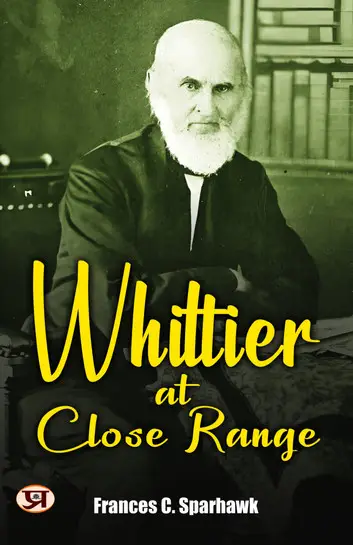
Description
A literary giant, remembered by someone who truly knew him. John Greenleaf Whittier (1807–1892) was one of America’s most beloved poets — a Quaker farm boy whose verses, from the nostalgic “Snow-Bound” to the stirring “Barbara Frietchie,” captured the heart of nineteenth-century New England. In Whittier at Close Range, written in the early 1900s, Frances C. Sparhawk draws on her personal acquaintance with the poet to offer an intimate, affectionate portrait.
Rather than a formal biography, this is a warm first-hand account: Whittier’s quiet daily habits, his deep Quaker faith, his love of nature and simple country pleasures, and the fierce moral conviction that made him one of America’s leading abolitionist voices — a man who used his fame to speak for those who had no voice.
For readers of classic American poetry and history, a charming window into the life and times of a gentle, principled soul.
John Greenleaf Whittier (1807–1892) was one of America’s most beloved poets — a Quaker farm boy whose verses, from the nostalgic “Snow-Bound” to the stirring “Barbara Frietchie,” captured the heart of 19th-century New England. In Whittier at Close Range, written in the early 1900s, New England author Frances C. Sparhawk draws on her personal acquaintance with the poet to offer an intimate, affectionate portrait of the man behind the poetry.
n
n
Rather than a formal biography, this is a warm first-hand account: Whittier’s quiet daily habits, his deep Quaker faith, his love of nature and simple country pleasures, and the fierce moral conviction that made him one of America’s leading abolitionist voices. Sparhawk reveals a gentle, principled soul whose kindness to friends matched his courage in public — a man who used his fame to speak for those who had no voice.
n
n
For readers of classic American poetry and history, Whittier at Close Range is a charming window into the life and times of a literary giant, told by someone who truly knew him.




Reviews
There are no reviews yet