Description
Where the North Sea Touches Alabama: A Groundbreaking Work of Sociological Fictocriticism by Allen C. Shelton
Discovering Where the North Sea Touches Alabama: An Experimental Masterwork
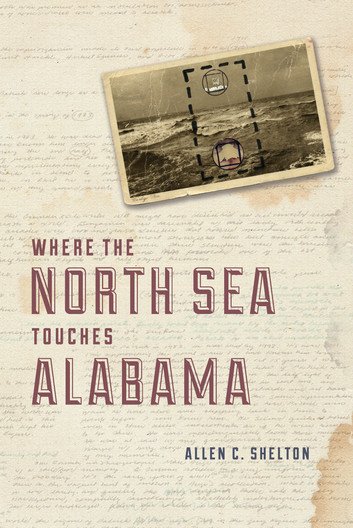
Where the North Sea Touches Alabama represents a revolutionary approach to sociological writing and academic storytelling. Moreover, Allen C. Shelton’s 2013 work defies traditional genre boundaries with bold experimentation. Published by the University of Chicago Press, this 384-page volume challenges readers’ expectations about scholarly writing. Furthermore, the book blends fiction, criticism, theory, and memoir into something entirely new.
The title “Where the North Sea Touches Alabama” comes from a 1979 sermon by a Sand Mountain preacher. Additionally, the preacher proclaimed that “In Christ there is no East or West, North or South.” This theological statement about transcending geographical boundaries becomes a metaphor for Shelton’s entire project. Therefore, the book explores how distant places, times, and lives connect through invisible underground rivers.
Shelton, a Buffalo-based associate professor, creates a work that resists easy categorization or simple description. Meanwhile, he weaves together autobiography, theory, and the tragic story of his friend Patrik Keim. The result is a psycho-sociological landscape that operates on multiple levels simultaneously and powerfully. Consequently, readers encounter a text that demands active engagement and rewards careful, patient reading.
The Tragic Story of Patrik Keim at the Heart of Where the North Sea Touches Alabama
Patrik Keim, an artist living in Athens, Georgia, serves as the book’s emotional and intellectual center. Moreover, Keim was Shelton’s friend and what the author calls his “theoretical muse” for years. The artist’s life and eventual suicide provide the narrative thread that holds the book together. Furthermore, Keim’s stories serve as a lens through which Shelton examines broader questions about art and existence.
The relationship between Shelton and Keim transcends typical friendship or academic collaboration in important ways. Additionally, Keim’s artistic vision and theoretical insights deeply influenced Shelton’s sociological thinking and approach. The book explores how one person’s creativity can shape another’s intellectual development over time. Therefore, the work becomes both a tribute and a theoretical exploration of influence, connection, and loss.
Keim’s suicide casts a shadow over the entire narrative, giving it urgency and emotional weight. Meanwhile, Shelton refuses to sensationalize or exploit his friend’s death for dramatic effect or shock. Instead, he approaches the tragedy with tenderness, respect, and deep philosophical inquiry about meaning. Thus, the book becomes a meditation on mortality, friendship, and the limits of understanding.
The Athens, Georgia, setting provides crucial context for understanding Keim’s life and artistic practice. Furthermore, the city’s particular cultural and social landscape shapes the story in essential ways. Shelton captures the texture of this Southern college town with precision and affection throughout. Consequently, the place becomes inseparable from the narrative and theoretical arguments Shelton develops carefully.
Genre-Crossing Fictocriticism: A New Approach to Sociological Writing
Where the North Sea Touches Alabama exemplifies what scholars call fictocriticism or sociological fictocriticism effectively. Moreover, this experimental genre seamlessly blends fictional narrative techniques with critical theory and scholarly analysis. Shelton refuses to separate creative writing from academic inquiry in his innovative methodological approach. Furthermore, he demonstrates that rigorous thinking can coexist with literary artistry and emotional authenticity.
Traditional sociology typically maintains clear boundaries between researcher and subject, analysis and narrative presentation. Additionally, conventional academic writing prioritizes objectivity and distance over personal involvement and emotional engagement. Shelton deliberately violates these conventions to create something more honest and more revealing. Therefore, his approach challenges fundamental assumptions about how sociological knowledge should be produced and shared.
The fictocritical method allows Shelton to explore truths that conventional sociology might miss entirely. Meanwhile, he can incorporate imagination, speculation, and poetic insight alongside empirical observation and theoretical analysis. This methodological flexibility creates space for different kinds of understanding to emerge organically. Thus, the book demonstrates the potential of experimental approaches to expand sociology’s reach and relevance.
The work’s genre-crossing nature makes it difficult to classify within traditional academic categories. Furthermore, this resistance to categorization is precisely the point Shelton wants to make about knowledge. He argues that the most important insights often emerge at the boundaries between disciplines. Consequently, Where the North Sea Touches Alabama occupies a liminal space that proves surprisingly productive and illuminating.
Theoretical Influences: Benjamin, Kafka, and the European Tradition
Walter Benjamin’s influence permeates Where the North Sea Touches Alabama from beginning to end. Moreover, the German Jewish philosopher’s approach to history, memory, and modernity shapes Shelton’s entire project. Benjamin’s concept of the “dialectical image” provides a key methodological tool for the book’s structure. Furthermore, his attention to fragments, ruins, and forgotten histories resonates deeply with Shelton’s concerns.
Franz Kafka’s literary vision also plays a crucial role in shaping the book’s atmosphere and approach. Additionally, Kafka’s exploration of alienation, bureaucracy, and existential anxiety powerfully informs Shelton’s sociological imagination. The Czech writer’s ability to make the ordinary seem strange and uncanny influences Shelton’s descriptive style. Therefore, readers encounter a world that feels simultaneously familiar and deeply unsettling throughout the narrative.
The book draws on an impressive range of European theoretical traditions and intellectual movements:
- Georges Bataille’s transgressive philosophy and theory of the sacred
- Max Weber’s analysis of rationalization and disenchantment in modern society
- Michel Foucault’s genealogical method and analysis of power relations
- Karl Marx’s critique of capitalism and theory of alienation
- Critical theory’s examination of culture, society, and domination
These theoretical influences don’t appear as simple citations or academic name-dropping in the text. Instead, Shelton integrates these thinkers’ ideas organically into his narrative and analytical framework throughout. Meanwhile, he puts them in conversation with Southern culture, American landscapes, and personal experience. Thus, European theory becomes a tool for understanding specifically American realities and individual lives.
The combination of high theory with personal narrative creates productive tension throughout the entire work. Furthermore, Shelton demonstrates that abstract philosophical concepts have concrete implications for lived experience and understanding. His approach makes difficult theoretical ideas accessible without significantly simplifying or distorting them. Consequently, the book serves as both an introduction to critical theory and an original contribution to it.
Underground Rivers, Portals, and Underworlds in Where the North Sea Touches Alabama
The metaphor of underground rivers runs throughout Where the North Sea Touches Alabama as a central organizing principle. Moreover, Shelton argues that invisible connections link distant places, times, and people in unexpected ways. These subterranean flows operate beneath the surface of ordinary reality, connecting seemingly separate worlds. Furthermore, the underground river metaphor allows Shelton to explore how past and present interpenetrate constantly.
Portals are another key concept in Shelton’s theoretical and narrative architecture throughout the book. Additionally, certain places, moments, and encounters function as doorways between different realms of experience and understanding. These portals allow movement between the everyday world and deeper, stranger dimensions of existence. Therefore, the book encourages readers to recognize transformative possibilities in ordinary circumstances and unexpected moments.
The concept of underworlds operates on multiple levels simultaneously in Shelton’s complex theoretical framework. Meanwhile, underworlds can be literal (subterranean spaces), metaphorical (hidden social realities), or psychological (unconscious depths). Shelton explores how these different underworlds connect and influence the visible, conscious, official world above. Thus, the book reveals layers of reality that conventional sociology typically ignores or dismisses entirely.
These metaphors allow Shelton to discuss connections that rational, linear thinking cannot adequately capture or explain. Furthermore, they provide a vocabulary for describing experiences that exceed ordinary language and conventional categories. The underground rivers, portals, and underworlds become tools for sociological imagination and theoretical innovation. Consequently, Shelton significantly expands what counts as legitimate sociological knowledge and acceptable methodological approaches.
Psycho-Sociological Landscape and Magical Realism
Where the North Sea Touches Alabama creates a psycho-sociological landscape throughout its pages, as Shelton calls it. Moreover, this landscape exists at the intersection of individual psychology and social structures simultaneously. The book refuses to separate inner experience from outer social reality in its analytical approach. Furthermore, Shelton demonstrates how personal and collective dimensions of existence constantly shape each other.
The slow unfurling of magical elements distinguishes this work from conventional sociological or autobiographical writing. Additionally, Shelton gradually and organically introduces supernatural, mystical, and uncanny elements into the narrative. These magical aspects don’t contradict the book’s serious theoretical and sociological purposes at all. Therefore, readers encounter a text that embraces both rational analysis and enchantment, logic and mystery.
The magical realism in the book serves specific theoretical and methodological purposes beyond mere stylistic flourish. Meanwhile, it allows Shelton to represent experiences and insights that realist conventions cannot adequately convey. The magical elements reveal truths about social reality that purely rational discourse might obscure or miss. Thus, fantasy becomes a tool for sociological understanding rather than an escape from it.
The psycho-sociological landscape Shelton creates includes several distinctive features and characteristics throughout:
- Blurred boundaries between past and present, memory and immediate experience
- Interpenetration of different geographical locations and cultural contexts
- Presence of ghosts, spirits, and other non-rational entities
- Dreams and visions are treated as valid sources of knowledge
- Attention to atmosphere, mood, and affective dimensions of social life
- Recognition of enchantment and mystery in contemporary existence
This approach challenges sociology’s traditional commitment to disenchantment and rationalization of the world. Furthermore, Shelton argues that acknowledging the magical dimensions of experience yields a more complete sociological understanding. His work suggests that the discipline has impoverished itself by excluding non-rational ways of knowing. Consequently, Where the North Sea Touches Alabama opens new possibilities for sociological imagination and methodological experimentation.
Intersecting Lives: Shelton, Keim, Benjamin, and Others
The book’s structure revolves around the intersection of multiple lives across time and space. Moreover, Shelton’s own biography interweaves with Patrik Keim’s story throughout the narrative in complex ways. Walter Benjamin’s life and work provide another crucial thread in this tapestry of interconnected existences. Furthermore, other figures appear and disappear, creating a rich network of relationships and influences.
The intersections between these lives aren’t merely biographical coincidences or interesting historical parallels. Additionally, Shelton argues that these connections reveal deeper patterns in how lives influence one another. The book explores how one person’s thoughts, actions, and creations ripple outward through time. Therefore, individual existence becomes part of larger collective patterns and historical movements beyond personal control.
Benjamin’s tragic death while fleeing the Nazis resonates with Keim’s suicide in Athens, Georgia. Meanwhile, both deaths raise questions about the relationship between historical violence and personal despair. Shelton examines how large-scale social forces manifest in individual lives and private tragedies. Thus, the personal becomes political, and the political becomes deeply personal throughout the narrative.
The author’s presence in the text adds layers of complexity and self-reflexivity. Furthermore, Shelton doesn’t pretend to objective distance but acknowledges his subjective involvement in the story. His friendship with Keim, his intellectual debt to Benjamin, and his personal struggles all shape the narrative. Consequently, the book becomes a meditation on how we simultaneously understand others and ourselves.
Physical, Historical, and Social Relationships Explored
Where the North Sea Touches Alabama examines the physical relationships among bodies, spaces, and material objects. Moreover, Shelton pays close attention to how physical proximity and distance shape human connection. The book explores touch, presence, and embodiment as crucial dimensions of social existence. Furthermore, physical geography becomes inseparable from social geography throughout Shelton’s analytical framework.
Historical relationships receive equally careful attention as Shelton traces connections across time and temporal boundaries. Additionally, the book demonstrates how past events continue to shape present realities in often invisible ways. History isn’t simply background context but an active force in contemporary life and experience. Therefore, understanding the present requires taking historical depth and temporal complexity seriously.
Social relationships form the third dimension of Shelton’s tripartite analytical focus throughout the entire work. Meanwhile, he examines how power, intimacy, friendship, and alienation structure human interaction and collective life. Social relationships operate at multiple scales, from intimate friendships to large-scale institutional structures. Thus, the book moves fluidly between micro and macro levels of sociological analysis.
The intersection of physical, historical, and social dimensions creates the book’s distinctive analytical perspective. Furthermore, Shelton refuses to privilege any single dimension over the others in his theoretical approach. Instead, he shows how these three aspects of existence constantly interact and mutually constitute each other. Consequently, readers gain a more holistic understanding of how social reality operates and how lives unfold.
Realms of Fantasy, Revelation, and Reflection
Fantasy operates as a legitimate mode of sociological inquiry throughout Where the North Sea Touches Alabama. Moreover, Shelton uses imaginative speculation to explore possibilities that empirical observation alone cannot reveal. Fantasy allows him to ask “what if” questions that open new avenues for understanding. Furthermore, the fantastic elements in the book serve analytical purposes rather than mere entertainment or escapism.
Revelation represents another key mode through which the book operates and produces knowledge about reality. Additionally, Shelton draws on religious and mystical traditions of revealed truth and sudden insight. These moments of revelation punctuate the narrative, offering glimpses of deeper patterns and hidden connections. Therefore, the book validates non-rational ways of knowing alongside conventional academic analysis and empirical research.
Reflection provides the third mode through which Shelton develops his arguments and explores his themes. Meanwhile, the book includes extended passages of philosophical meditation and theoretical contemplation throughout. These reflective sections allow Shelton to step back from the narrative and examine larger implications. Thus, the work balances storytelling with analysis, showing with telling, narrative with commentary.
The movement between fantasy, revelation, and reflection creates a distinctive rhythm throughout the entire text. Furthermore, this tripartite structure mirrors the book’s thematic concerns with multiple dimensions of reality. Readers must adjust to shifting modes and different kinds of discourse as they progress. Consequently, the reading experience itself becomes part of the book’s argument about multiple ways of knowing.
The Title’s Origin and Theological Dimensions
The title Where the North Sea Touches Alabama comes from a specific historical moment and religious context. Moreover, a Sand Mountain preacher delivered a sermon in 1979 that provided Shelton with this evocative phrase. The preacher proclaimed that “In Christ there is no East or West, North or South.” Furthermore, he declared that in this spiritual reality, “the North Sea touches Alabama” literally and metaphorically.
This theological statement about transcending geographical boundaries resonates powerfully throughout Shelton’s secular sociological project. Additionally, the phrase captures the book’s central concern with unexpected connections and impossible proximities. The North Sea and Alabama represent distant, seemingly incompatible worlds brought together through invisible means. Therefore, the title announces the book’s interest in how separate realities can touch and interpenetrate.
The religious origin of the title adds another layer of meaning to this ostensibly secular work. Meanwhile, Shelton takes the theological imagination seriously even while pursuing sociological rather than religious goals. The preacher’s vision of spiritual geography informs Shelton’s approach to social and psychic geography. Thus, the book demonstrates how religious insight can contribute to sociological understanding in unexpected ways.
Sand Mountain itself holds significance in Alabama’s cultural and religious landscape. Furthermore, the region is known for its Pentecostal churches and distinctive religious practices and beliefs. Shelton’s engagement with this Southern religious culture adds regional specificity to his theoretical arguments. Consequently, the book remains grounded in particular places even as it makes universal claims about connection.
Target Audience and Interdisciplinary Appeal
Where the North Sea Touches Alabama appeals primarily to readers interested in experimental sociology and innovative methodology. Moreover, scholars seeking alternatives to conventional academic writing will find much to admire here. The book demonstrates the possibilities of combining rigor with creativity, analysis with artistry, and theory with narrative. Furthermore, it provides a model for academics wanting to write more adventurously and authentically.
Literary scholars and creative writers will appreciate Shelton’s attention to language, style, and narrative craft. Additionally, the book’s engagement with literary figures like Kafka and Benjamin makes it relevant to literature departments. The fictocritical approach bridges the gap between creative writing and critical analysis effectively throughout. Therefore, the work appeals to readers interested in genre experimentation and boundary-crossing writing practices.
Philosophers and cultural theorists will find substantial engagement with major European intellectual traditions throughout the text. Meanwhile, Shelton’s use of Benjamin, Foucault, and others demonstrates sophisticated theoretical literacy and original application. The book contributes to ongoing conversations about the relevance and contemporary applications of critical theory. Thus, it serves as both an introduction to these thinkers and an original theoretical contribution.
The book also appeals to several other audiences with different interests and backgrounds:
- Readers interested in Southern culture and regional studies
- Those fascinated by the relationship between place and identity
- People drawn to experimental, genre-defying literature
- Scholars of memory studies and trauma theory
- Anyone interested in friendship, loss, and mourning
- Readers seeking alternatives to conventional academic prose
General readers with patience for challenging, unconventional texts may also find the book rewarding. Furthermore, Shelton’s emotional honesty and narrative skill make the work accessible despite its theoretical sophistication. The book rewards careful reading with insights about life, death, friendship, and meaning. Consequently, Where the North Sea Touches Alabama reaches beyond narrow academic audiences to touch broader readerships.
Academic Significance and Methodological Innovation
Where the North Sea Touches Alabama represents a significant intervention in sociological methodology and disciplinary boundaries. Moreover, the book challenges sociology’s traditional commitment to scientific objectivity and emotional distance from subjects. Shelton demonstrates that subjective involvement can produce valid, valuable sociological knowledge and genuine insight. Furthermore, his work encourages other scholars to experiment with form, style, and methodological approaches.
The book contributes to growing interest in creative analytical practices within sociology and related disciplines. Additionally, it joins other experimental works that push against conventional academic writing constraints and expectations. Shelton’s success demonstrates that rigorous thinking doesn’t require dry, impersonal prose or formulaic structure. Therefore, the work has influenced subsequent scholars seeking to write more creatively and authentically.
The fictocritical approach Shelton employs has roots in feminist scholarship and postmodern theory from decades past. Meanwhile, he adapts and extends these traditions in new directions suited to his particular concerns. The book shows how fictocriticism can effectively address questions about friendship, loss, and social connection. Thus, Shelton expands the range of topics and themes that fictocritical methods can productively explore.
The work’s academic significance extends beyond its methodology to include substantive theoretical contributions. Furthermore, Shelton’s arguments about underground connections, portals, and underworlds offer new analytical tools. His psycho-sociological landscape provides a framework for understanding how individual and collective dimensions interact constantly. Consequently, the book advances sociological theory while simultaneously transforming how that theory gets expressed.
Critical Reception and Scholarly Impact
Where the North Sea Touches Alabama has received recognition for its bold experimentation and theoretical sophistication. Moreover, reviewers have praised Shelton’s courage in pursuing such an unconventional project and seeing it through. The book has sparked conversations about the future of sociological writing and academic publishing. Furthermore, it has inspired other scholars to attempt similarly experimental approaches in their own work.
Critics have particularly noted the book’s emotional power and its ability to move readers deeply. Additionally, Shelton’s treatment of Patrik Keim’s life and death has been recognized as both respectful and profound. The book demonstrates that academic writing can be emotionally affecting without sacrificing intellectual rigor. Therefore, it challenges false dichotomies between thinking and feeling, analysis and emotion, head and heart.
Some readers have found the book challenging, difficult, or frustrating due to its unconventional structure. Meanwhile, others celebrate precisely these qualities as evidence of Shelton’s commitment to his experimental vision. The work demands active engagement and patience from readers willing to meet it on its terms. Thus, the book divides readers between those who embrace its innovations and those who prefer conventions.
The scholarly impact of Where the North Sea Touches Alabama continues to grow as more readers discover it. Furthermore, the book appears increasingly on syllabi in sociology, cultural studies, and creative writing courses. Its influence is evident in subsequent experimental work that cites Shelton as inspiration and precedent. Consequently, the book has significantly helped legitimize fictocritical approaches within sociology and adjacent disciplines.
Why This Book Matters Today
Where the North Sea Touches Alabama offers crucial alternatives to dominant modes of academic knowledge production today. Moreover, it demonstrates that scholarship can be creative, personal, and emotionally honest without losing rigor. The book challenges the increasing corporatization and standardization of academic writing and research practices. Furthermore, it reminds scholars that other ways of producing and sharing knowledge remain possible and valuable.
The book’s themes of connection, loss, and friendship resonate powerfully in our increasingly fragmented world. Additionally, Shelton’s exploration of how lives intersect across time and space speaks to contemporary concerns. His attention to underground connections and hidden relationships offers hope for finding meaning in isolation. Therefore, the work addresses existential questions that remain urgent and relevant for contemporary readers.
The methodological innovations Shelton introduces have implications beyond sociology for multiple disciplines and fields. Meanwhile, his fictocritical approach could be adapted to history, anthropology, geography, and other human sciences. The book demonstrates how to make academic writing more engaging, accessible, and truthful simultaneously. Thus, Where the North Sea Touches Alabama influences conversations about scholarly communication across disciplinary boundaries.
The work’s engagement with Southern culture and geography adds regional specificity, often missing from theory. Furthermore, Shelton shows how universal theoretical concerns can be explored through particular places and local contexts. His attention to Alabama, Athens, and Sand Mountain grounds abstract ideas in concrete realities. Consequently, the book contributes to ongoing efforts to decenter academic knowledge production geographically.
Conclusion: A Landmark Work of Sociological Imagination
Where the North Sea Touches Alabama stands as a landmark achievement in experimental sociology and academic writing. Allen C. Shelton’s bold vision creates something genuinely new in the sociological literature. Moreover, the book demonstrates that rigorous thinking and creative expression can coexist productively and powerfully. The work honors Patrik Keim’s memory while making significant theoretical and methodological contributions to sociology.
Shelton’s integration of European theory with Southern culture produces unexpected insights and fresh perspectives. Furthermore, his attention to underground rivers, portals, and underworlds provides new analytical tools. The psycho-sociological landscape he creates reveals dimensions of social reality that conventional approaches miss entirely. Therefore, the book significantly and permanently expands sociology’s reach and enriches its analytical vocabulary.
The fictocritical method Shelton employs opens new possibilities for how sociologists can write and think. Additionally, his work encourages scholars to take risks, experiment with form, and write more authentically. Where the North Sea Touches Alabama proves that academic writing can be literary, personal, and theoretically sophisticated simultaneously. Thus, the book influences not just what sociologists study but how they communicate their findings.
This remarkable work deserves attention from anyone interested in innovative scholarship and experimental writing practices. Moreover, it offers readers a profound meditation on friendship, loss, memory, and the connections that bind us. Where the North Sea Touches Alabama ultimately demonstrates the power of sociological imagination to illuminate human existence. Consequently, Allen C. Shelton’s masterwork will continue inspiring readers and scholars for years to come.






Reviews
There are no reviews yet.