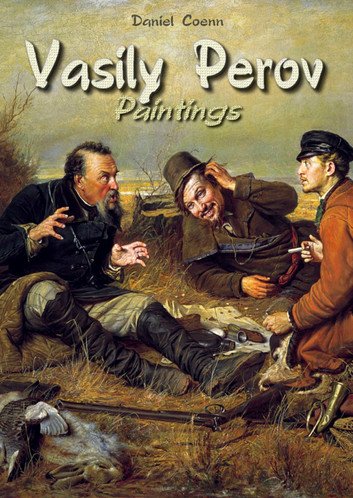
Description
Vasily Perov Paintings: A Digital Gallery of Russian Realist Masterpieces
Discover the powerful world of Vasily Perov’s paintings in this stunning My Pocket Gallery collection. Daniel Coenn presents a carefully curated selection of works by Russia’s most influential realist painter. Moreover, this e-book brings museum-quality art directly to your personal device. Experience the emotional depth and social commentary that defined 19th-century Russian art.
Understanding Vasily Perov’s Artistic Vision
Vasily Perov revolutionized Russian art through his unflinching portrayal of everyday life. Born in 1833, he became a founding member of the Peredvizhniki movement. Furthermore, this group of artists rejected academic conventions to paint authentic Russian experiences. Perov’s work captured the struggles, joys, and dignity of ordinary people.
His paintings reveal the harsh realities of peasant life in Imperial Russia. Additionally, he documented religious hypocrisy, poverty, and social injustice with remarkable honesty. Perov believed art should serve society by exposing truth and inspiring change. His compassionate vision transformed how Russians saw themselves and their world.
The Peredvizhniki Movement and Social Realism
The Wanderers, or Peredvizhniki, changed Russian art history forever through their revolutionary approach. They organized traveling exhibitions to bring art directly to the people. Moreover, they rejected the artificial subjects favored by academic institutions at that time. Perov stood at the forefront of this democratic artistic movement.
These artists believed painting should address real social issues and human conditions. Therefore, they depicted peasants, workers, and marginalized people with dignity and respect. Their work challenged the aristocratic establishment and inspired social consciousness. Perov’s contributions to this movement remain his most enduring legacy.
Vasily Perov Paintings: Themes and Subject Matter
Perov explored several recurring themes throughout his distinguished career spanning nearly four decades. His paintings often depicted religious ceremonies, peasant life, and social inequality. Furthermore, he created powerful portraits that revealed the inner character of his subjects. Each work demonstrates his commitment to truth and human dignity.
His most famous paintings include “The Last Tavern at the City Gates.” Additionally, “Troika” shows children hauling water in brutal winter conditions. “The Drowned Woman” addresses tragedy with haunting sensitivity and emotional power. These masterpieces showcase his ability to evoke profound emotional responses.
Technical Mastery and Artistic Style
Perov’s technical skills matched his powerful social vision and humanitarian concerns perfectly. He mastered composition, color, and light to create deeply moving scenes. Moreover, his brushwork ranged from precise detail to expressive, loose passages. This versatility kept his paintings visually engaging and emotionally compelling.
His color palette often featured muted earth tones that enhanced the somber mood. Additionally, he used dramatic lighting to focus attention on key elements. Perov understood how technical choices could amplify emotional and narrative impact. His paintings demonstrate complete control over the medium of oil painting.
What This My Pocket Gallery Edition Offers
Daniel Coenn has assembled an exceptional collection of Vasily Perov’s paintings for modern audiences. This digital edition provides convenient access to the artist’s most significant works. Furthermore, the portable format allows you to study these masterpieces anywhere, anytime. The My Pocket Gallery series makes fine art accessible to everyone.
High-resolution images reveal details often missed in printed reproductions or museum visits. Moreover, the affordable price removes financial barriers to art appreciation and education. This e-book serves both casual admirers and serious students of Russian art. It represents an invaluable resource for understanding 19th-century realist painting.
Key Features of This Collection
This comprehensive e-book delivers numerous benefits for art enthusiasts and history lovers:
- Museum-Quality Reproductions: Examine every detail in Vasily Perov’s paintings with clarity
- Portable Convenience: Carry an entire gallery in your pocket wherever you travel
- Curated Selection: Daniel Coenn chose the most representative and powerful works
- Historical Significance: Understand Perov’s role in Russian art and social history
- Affordable Access: Enjoy masterpieces without expensive museum trips or art books
- Educational Value: Learn about 19th-century Russian society through visual documentation
- Instant Availability: Download immediately and begin exploring Perov’s remarkable artistic legacy
- Reference Resource: Return repeatedly to study technique, composition, and historical context
Perov’s Most Celebrated Masterpieces
The artist created numerous unforgettable works that continue to move viewers today worldwide. “Troika” remains one of the most heartbreaking images in Russian art history. Furthermore, it depicts three exhausted children struggling to pull a water barrel. The painting became a symbol of childhood suffering under harsh conditions.
“The Last Tavern at the City Gates” shows a family’s desperate situation. Additionally, “Easter Procession in the Country” satirizes religious hypocrisy with biting social commentary. “The Drowned Woman” addresses suicide and social despair with profound sensitivity. Each painting demonstrates Perov’s extraordinary empathy and artistic courage.
Depicting Russian Peasant Life
Perov devoted much of his career to documenting the lives of Russia’s peasantry. These people formed the vast majority of the population during his lifetime. Moreover, they endured extreme poverty, harsh weather, and social oppression without relief. Perov gave them dignity and visibility through his compassionate artistic vision.
His paintings show peasants working, celebrating, mourning, and surviving against difficult odds. Furthermore, he never romanticized their struggles or presented false sentimentality. Perov portrayed reality honestly while maintaining respect for his subjects’ humanity. This balance made his work both powerful and deeply moving.
Religious Themes and Social Commentary
Many of Vasily Perov’s Paintings address religious subjects with critical, questioning perspectives. He exposed corruption and hypocrisy within the Orthodox Church establishment. Additionally, he contrasted genuine faith with empty ritual and institutional self-interest. These controversial works sparked intense debate in Russian society.
“Easter Procession in the Country” shows drunken clergy stumbling through their duties. Moreover, “The Monastery Refectory” depicts monks feasting while peasants starve outside. Perov risked official censure to reveal these uncomfortable truths about religious institutions. His courage inspired other artists to address social issues directly.
Portrait Work and Psychological Depth
Beyond social commentary, Perov excelled at portraiture that revealed inner character. He painted fellow artists, writers, and cultural figures with penetrating psychological insight. Furthermore, his portraits of Dostoevsky and other luminaries remain definitive images. These works demonstrate his ability to capture essence beyond mere appearance.
His portrait subjects seem to gaze directly into the viewer’s soul. Moreover, Perov revealed vulnerability, intelligence, and complexity in every face he painted. He understood that great portraiture requires empathy as much as technical skill. His portraits rank among the finest achievements in Russian art.
Historical Context of Perov’s Era
Understanding the historical period significantly enriches the appreciation of Perov’s artistic achievements. He worked during a time of tremendous social upheaval in Imperial Russia. Additionally, serfdom was abolished in 1861, creating massive social and economic disruption. Artists like Perov documented these transformative changes through their work.
The intelligentsia constantly debated Russia’s future direction and its relationship with Western Europe. Moreover, censorship restricted what artists and writers could say about social conditions. Perov navigated these restrictions while maintaining his commitment to truth and justice. His work reflects the tensions and hopes of his turbulent era.
The My Pocket Gallery Series Philosophy
Daniel Coenn created this series to democratize access to world-class art. The My Pocket Gallery books focus on individual artists for comprehensive exploration. Furthermore, the digital format leverages modern technology to enhance art appreciation. Each volume balances visual experience with accessible information and historical context.
The series emphasizes looking at art rather than reading lengthy academic analysis. Therefore, readers can form their own emotional and intellectual responses to artworks. This approach respects both the art and the viewer’s intelligence and sensitivity. It invites personal discovery rather than prescribing rigid interpretations.
Why Perov Matters Today
Vasily Perov’s work remains relevant because social inequality still exists worldwide today. His compassionate vision reminds us to see dignity in every human being. Moreover, his artistic courage inspires contemporary artists to address difficult social issues. Perov proved that art can be both beautiful and socially conscious.
His paintings document a specific historical moment while addressing universal human experiences. Furthermore, they demonstrate how art can serve as a witness, a form of protest, and a memorial. Perov’s legacy extends beyond Russian art to influence social realism globally. His work continues teaching us about empathy, justice, and artistic integrity.
Perfect for Students and Art Lovers
This collection effectively serves multiple audiences with different interests and educational needs. Art history students will appreciate the comprehensive selection of representative works. Moreover, those interested in Russian history gain visual insight into 19th-century society. Casual art lovers will respond to the emotional power and beauty.
The digital format supports various learning styles, and research needs perfectly well. Furthermore, you can reference specific paintings quickly during discussions or academic writing. The book functions as both an introduction and an ongoing reference resource for study. It becomes more valuable with repeated viewing and deeper contemplation.
Perov’s Life and Career Journey
Born Vasily Grigorevich Perov in 1833, the artist overcame difficult early circumstances. His father was a provincial prosecutor, but Perov grew up in poverty. Moreover, he studied at the Moscow School of Painting, Sculpture, and Architecture. His talent earned him recognition and support from progressive patrons.
He traveled to Paris in the 1860s but found Western subjects uninspiring. Consequently, he returned to Russia to paint the subjects he truly cared about. Perov taught at the Moscow School, influencing the next generation of artists. He died in 1882, leaving behind an extraordinary body of socially conscious work.
Comparing Perov to Western Realists
Perov’s work shares similarities with Western realist painters like Courbet and Millet. All three artists rejected romantic idealization to depict working-class life honestly. However, Perov’s work carries a distinctly Russian character and social context. His paintings reflect specifically Russian conditions, traditions, and spiritual concerns.
Western realists often celebrated peasant life’s dignity and simple beauty more optimistically. Moreover, Perov’s work tends toward darker, more critical social commentary and analysis. His paintings expose injustice more directly than most Western realist works. This difference reflects Russia’s more severe social conditions during his lifetime.
The Power of Visual Storytelling
Perov excelled at narrative painting that tells complete stories within single images. His compositions guide the viewer’s eye through carefully arranged elements and figures. Furthermore, every detail contributes to the overall narrative and emotional impact. His paintings work like frozen moments from larger, ongoing dramas.
Facial expressions, body language, and environmental details all convey meaning and emotion. Additionally, Perov used symbolic elements to deepen the significance and resonance of his paintings. He understood that visual storytelling requires clarity, focus, and emotional authenticity. His narrative skills make his paintings immediately accessible to diverse audiences.
Preserving Cultural Memory Through Art
Historical paintings like Perov’s serve crucial functions in preserving collective cultural memory. They show us how people lived, worked, and suffered in past eras. Moreover, they reveal social structures, values, and conflicts that shaped historical development. Art provides evidence that written records alone cannot fully capture.
Perov’s meticulous attention to detail makes his work especially valuable to historians. Therefore, researchers study his paintings to understand clothing, architecture, and daily life. His work answers questions about Russian society that text sources leave unclear. These paintings preserve sensory and emotional information for future generations.
How to Approach This Collection
Viewing this e-book with openness and curiosity will significantly enhance your experience. Take time to examine each painting carefully before moving to the next. Moreover, notice how Perov uses composition, light, and color to create mood. Look for recurring themes and technical approaches throughout his body of work.
Consider the historical and social context as you view these powerful images. Furthermore, think about what these paintings reveal about human nature and society. Notice how Perov balances realism with artistic interpretation and emotional expression. Allow yourself to respond emotionally as well as intellectually to the images.
Building Your Digital Art Library
This e-book provides an excellent foundation for a comprehensive digital art collection. The My Pocket Gallery series offers numerous volumes covering different artists and periods. Furthermore, collecting these affordable editions allows systematic exploration of art history. You can develop genuine expertise without a large financial investment or extensive travel.
Digital collections offer practical advantages over physical books and museum memberships today. Moreover, you can access your entire library instantly from any device, anywhere. This convenience encourages regular engagement with art rather than occasional viewing only. Frequent exposure deepens understanding and appreciation over time through repeated encounters.
The Enduring Appeal of Social Realism
Perov’s paintings continue attracting viewers because they address timeless human concerns. His work speaks to anyone who cares about justice, dignity, and truth. Additionally, his technical excellence provides endless opportunities for study and admiration today. The paintings simultaneously and completely satisfy both emotional and intellectual needs.
Modern audiences appreciate art that engages with real social issues and conditions. Moreover, Perov’s work reminds us that beauty and social consciousness can coexist. His paintings prove that accessible art can also be profound and meaningful. They demonstrate that empathy and skill create the most powerful artistic statements.
Conclusion: A Legacy of Compassion and Truth
Vasily Perov’s paintings represent a crucial chapter in the history of Russian and world art. This My Pocket Gallery edition by Daniel Coenn makes his work accessible worldwide. Moreover, the digital format ensures these important paintings reach contemporary audiences everywhere. Perov’s compassionate vision continues to inspire artists and viewers across cultures today.
His technical mastery, social consciousness, and emotional depth justify continued study and appreciation. Furthermore, his work provides both aesthetic pleasure and historical insight into Russian society. This collection serves as both an introduction and a lasting reference for Perov’s achievements. Consequently, it deserves a place in every art enthusiast’s digital library today.
The artist’s legacy endures because he captured universal human experiences with honesty. His paintings transcend their specific historical moment to speak across generations and cultures. Moreover, they remind us that art can serve justice while remaining beautiful. Perov’s work continues to enrich our understanding of art, history, and human dignity.



Reviews
There are no reviews yet.