Description
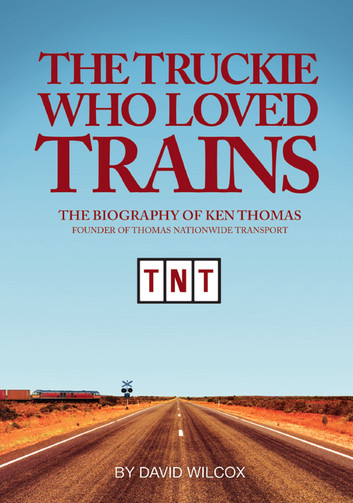
The Truckie Who Loved Trains: How Ken Thomas Built Thomas Nationwide Transport from One Truck to a Global Empire
In 1946, a university-educated man with two degrees made an unlikely career pivot. Ken Thomas founded Thomas Nationwide Transport with a single truck and virtually no knowledge of the trucking industry. His journey from deceived entrepreneur to transport magnate represents one of Australia’s most remarkable business success stories.
Moreover, his vision transformed how goods moved across continents. This biography chronicles the extraordinary life of a railway worker’s son who revolutionized road transport. Furthermore, it reveals how innovation and determination built an empire that would span 60 countries.
From Academic to Accidental Truckie: The Unlikely Beginning of Thomas Nationwide Transport
Ken Thomas never intended to become a trucking magnate. He possessed two university degrees and promising career prospects ahead. However, a relative’s deception changed everything in 1946. The relative misled Thomas into purchasing a single truck for a transport venture. Consequently, Thomas found himself in an industry he knew nothing about. Nevertheless, he refused to accept defeat or abandon his investment.
The irony of his situation ran deep through family history. Thomas was the son of a railway worker who spent his career on trains. Yet here stood Ken, entering the road transport business as a competitor. Furthermore, his lack of industry experience could have proven fatal to his ambitions. Instead, Thomas approached trucking with fresh eyes and innovative thinking. Therefore, he identified opportunities that industry veterans had overlooked for years.
Post-war Australia presented both challenges and opportunities for new businesses. The transport sector was heavily regulated and fragmented across state lines. Moreover, government policies favored rail transport over road alternatives. Road taxes and restrictions made trucking economically challenging for small operators. However, Thomas saw potential where others saw only obstacles.
The Railway Son’s Revolutionary Vision: Integrating Road and Rail
Thomas’s background as a railway worker’s son shaped his unique approach. Unlike other truckies who viewed trains as competition, Thomas saw collaboration. He understood that road and rail transport could complement each other perfectly. Therefore, he pioneered integrated transport solutions that combined both modes efficiently. This vision earned him the nickname “the truckie who loved trains.”
His innovative approach solved a critical problem in Australian logistics. Railways excelled at long-distance bulk transport between major cities and regional centers. However, they couldn’t deliver goods directly to individual businesses or homes. Consequently, a gap existed in the supply chain’s final miles. Thomas filled this gap by positioning his trucks as railway partners. Moreover, he negotiated agreements that made Thomas Nationwide Transport the preferred road connector.
This integration strategy proved revolutionary for the entire transport industry. Thomas developed systems where goods transferred seamlessly between rail and road. Furthermore, he invested in infrastructure that facilitated these smooth transitions. His depots were strategically located near railway terminals and major routes. Additionally, he standardized loading procedures to minimize transfer times and costs. The efficiency gains attracted major clients seeking reliable, cost-effective distribution solutions.
Navigating the Regulatory Maze: Challenges in Post-War Australia
The post-World War II transport landscape presented formidable regulatory challenges. State governments imposed different rules, taxes, and restrictions on interstate trucking. Moreover, powerful railway unions and government railway departments opposed road transport expansion. They viewed trucks as threats to railway jobs and revenue streams. Consequently, Thomas faced political battles alongside his business challenges.
Road taxes were particularly punitive for trucking operators during this era. Governments charged fees based on vehicle weight and distance traveled. Furthermore, these taxes were designed to protect railway monopolies from competition. Thomas had to navigate complex compliance requirements across multiple jurisdictions. Nevertheless, he persisted in building relationships with regulators and politicians.
The regulatory environment slowly evolved throughout the 1950s and 1960s. Economic growth demanded more flexible transport solutions than railways alone could provide. Therefore, governments gradually relaxed restrictions on interstate trucking operations. Thomas positioned his company to capitalize on each regulatory reform. Additionally, he advocated publicly for fair competition and transport modernization.
Building an Empire: From One Truck to Australia’s Largest
The growth trajectory of Thomas Nationwide Transport was nothing short of extraordinary. Starting with a single truck in 1946, Thomas built systematically and strategically. He reinvested profits into additional vehicles, infrastructure, and route expansion. Moreover, he focused on service reliability and customer relationships above all else. Within just 25 years, his company became Australia’s largest transport operation.
Key milestones marked this remarkable ascent:
- 1946: Founded with one truck and zero industry experience
- 1958: Rebranded to TNT, creating a memorable and modern identity
- 1961: Took the company public, raising capital for aggressive expansion
- 1967: Merged with Peter Abeles’ Alltrans, creating an industry powerhouse
- Early 1970s: Achieved dominance in Australian domestic transport market
- 1972: Thomas stepped back from day-to-day leadership amid internal changes
The 1958 rebranding to TNT represented more than just a name change. It signaled Thomas’s vision for a modern, professional transport company. Furthermore, the acronym was memorable, pronounceable, and worked across multiple languages. This foresight proved invaluable as international expansion accelerated in subsequent decades.
Going public in 1961 provided capital for rapid fleet expansion and infrastructure investment. Thomas understood that dominating the Australian market required scale and presence. Therefore, he acquired smaller regional operators and established depots in strategic locations. Additionally, he invested heavily in vehicle maintenance facilities and logistics technology.
The Abeles Partnership: Growth, Tension, and Eventual Sidelining
The 1967 merger with Peter Abeles’ Alltrans created Australia’s transport giant. Abeles brought complementary strengths in international shipping and aggressive business tactics. Moreover, the combined entity had resources to pursue ambitious expansion plans. However, the partnership between Thomas and Abeles proved complicated and ultimately contentious.
Thomas was an innovator and builder focused on operational excellence. Abeles was a dealmaker and empire-builder with political connections and bold ambitions. Furthermore, their management styles and priorities often clashed over strategic decisions. Nevertheless, the partnership initially delivered impressive results for TNT’s growth trajectory.
By 1972, Thomas found himself increasingly sidelined from company leadership. Abeles had consolidated power and pursued directions that differed from Thomas’s vision. Consequently, Thomas stepped back from active management of the company he founded. The transition was painful for a man who had built everything from nothing. However, Thomas maintained dignity and focused on other interests and activism.
Going Global: TNT’s International Expansion Across Six Continents
Thomas Nationwide Transport didn’t remain confined to Australian borders for long. The company’s international expansion began in 1970 with entry into Canada. Moreover, this marked the beginning of an aggressive global growth strategy. TNT established operations in New Zealand, Brazil, and Singapore by 1973. Furthermore, the company continued expanding throughout the 1970s and 1980s.
The international expansion strategy focused on establishing integrated transport networks globally. TNT replicated its successful Australian model of combining road, rail, and shipping. Additionally, the company pursued acquisitions and partnerships in target markets. By 1987, TNT had entered the crucial United States market. Eventually, the company operated in more than 60 countries across six continents.
This global expansion transformed TNT into a true multinational logistics powerhouse. The company competed directly with established international carriers and postal services. Moreover, TNT pioneered express delivery services that challenged traditional shipping timelines. The orange TNT trucks became familiar sights in cities worldwide. Furthermore, the company’s integrated approach to logistics influenced industry practices globally.
Innovation and Legacy: Transforming Transport, Trucking, and Logistics
Ken Thomas’s contributions extended far beyond building a successful company. He fundamentally transformed how the transport industry operated in Australia and beyond. Moreover, his innovations in fleet management, logistics coordination, and intermodal transport became industry standards. Thomas proved that trucking could be professional, efficient, and technologically sophisticated.
His key innovations included:
- Intermodal integration: Seamlessly connecting road and rail transport networks
- Standardized operations: Creating consistent procedures across diverse geographic regions
- Fleet management systems: Pioneering maintenance schedules and vehicle tracking technologies
- Customer service focus: Prioritizing reliability and communication over lowest-cost operations
- Professional training: Developing driver training programs that elevated industry standards
- Strategic depot placement: Optimizing facility locations for maximum efficiency and coverage
These innovations influenced competitors and raised standards across the entire industry. Furthermore, Thomas demonstrated that transport companies could be growth businesses attracting investment. His success inspired a generation of entrepreneurs in logistics and distribution. Additionally, his integrated approach anticipated modern supply chain management principles.
Beyond Business: Social Activism and Political Engagement
Thomas didn’t limit his influence to the business world alone. He was actively engaged in social and political causes throughout his life. Moreover, he used his platform and resources to advocate for issues he believed in. His activism reflected values formed during his earlier academic and working-class background.
Thomas spoke publicly about fair competition, workers’ rights, and economic policy. Furthermore, he challenged government policies he viewed as protecting monopolies over consumers. His railway background gave him unique credibility when discussing transport policy reform. Additionally, he supported various charitable causes and community organizations throughout his career.
The Company After Thomas: Dutch Acquisition and FedEx Integration
TNT continued evolving long after Thomas’s departure from active leadership. The company remained a major player in global logistics through the 1980s and 1990s. However, the competitive landscape intensified as express delivery and e-commerce transformed the industry. Consequently, TNT faced pressure from larger competitors with deeper resources.
In 1996, Dutch postal company TPG acquired TNT in a significant transaction. The acquisition brought TNT into a European logistics conglomerate with global ambitions. Moreover, the Dutch ownership provided capital for continued expansion and modernization. The company operated as TNT Express under various ownership structures for two decades.
The final chapter came in 2016 when FedEx acquired TNT Express. This acquisition integrated Thomas’s legacy company into one of the world’s largest logistics networks. Therefore, the single truck that Ken Thomas purchased in 1946 had evolved into part of a truly global operation. The TNT brand gradually disappeared as FedEx integrated operations and rebranded services.
Conclusion: The Enduring Impact of an Unlikely Transport Pioneer
Ken Thomas’s story resonates because it defies conventional entrepreneurial narratives. He wasn’t an industry insider or experienced operator when he started. Moreover, he entered trucking through deception rather than passion or planning. Nevertheless, Thomas transformed his accidental beginning into one of Australia’s greatest business success stories.
His legacy extends beyond the company that bore his name. Thomas proved that innovation and fresh thinking could disrupt established industries. Furthermore, he demonstrated that collaboration could be more powerful than competition. The railway worker’s son who loved trains built a trucking empire by integrating rather than fighting rail transport. Additionally, his emphasis on professionalism and service elevated an entire industry’s standards.
Today’s global logistics networks owe debts to pioneers like Ken Thomas. His vision of seamless intermodal transport anticipated modern supply chain management. Moreover, his focus on reliability and customer service remains relevant in the e-commerce era.
The truckie who loved trains showed that unlikely entrepreneurs could build empires. Furthermore, his story reminds us that innovation often comes from outsiders who question industry assumptions. Ken Thomas’s journey from deceived university graduate to transport magnate inspires entrepreneurs facing their own unlikely beginnings.






Reviews
There are no reviews yet.