Description
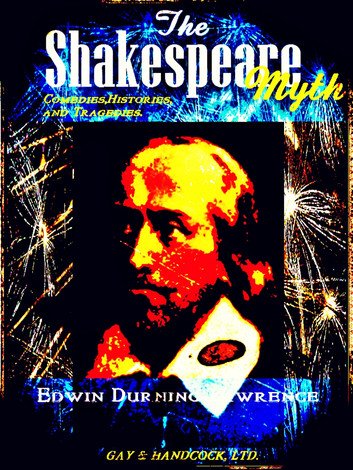
The Shakespeare Myth: A Comprehensive Synopsis of Sir Edwin Durning-Lawrence’s Controversial Investigation
Introduction to The Shakespeare Myth
The Shakespeare Myth by Sir Edwin Durning-Lawrence challenges everything we know about William Shakespeare. This groundbreaking e-book questions the traditional authorship narrative. Moreover, it presents compelling evidence that demands reconsideration. The author systematically dismantles centuries of accepted literary history. Furthermore, he offers alternative theories about the true author’s identity.
Sir Edwin Durning-Lawrence was a distinguished scholar and member of Parliament. He dedicated years to investigating the Shakespeare authorship question. Additionally, he meticulously examined original documents and historical records. His findings shocked the literary establishment of his time. Consequently, his work remains controversial to this day.
The Central Argument of The Shakespeare Myth
Durning-Lawrence argues that William Shakespeare of Stratford-upon-Avon was not the playwright. Instead, he proposes that Francis Bacon wrote the famous works. Moreover, he suggests an elaborate conspiracy concealed this truth. The evidence he presents spans multiple disciplines and historical periods. Therefore, readers must consider various types of proof throughout the book.
The author begins by examining Shakespeare’s documented life in Stratford. He notes the lack of educational records for the supposed genius. Furthermore, no manuscripts exist in Shakespeare’s handwriting. His will mentions no books, plays, or literary materials whatsoever. However, it does list mundane household items and property.
Educational Background and Literary Knowledge
The Shakespeare Myth emphasizes the extensive classical knowledge displayed in the plays. The work extensively references Latin, Greek, French, and Italian sources. Moreover, they demonstrate intimate familiarity with court life and legal proceedings. Yet, according to historical records, William Shakespeare had minimal formal education.
Durning-Lawrence points out that the plays contain sophisticated legal terminology. They also display detailed knowledge of continental European geography and customs. Additionally, the works show familiarity with aristocratic hunting and falconry practices. Such knowledge would be impossible for a provincial glover’s son to acquire.
The author contrasts this with Francis Bacon’s documented education and experiences. Bacon attended Cambridge University and studied law at Gray’s Inn. Furthermore, he traveled extensively throughout Europe during his youth. He also served in Queen Elizabeth’s court and held high government positions.
Cryptographic Evidence in The Shakespeare Myth
One of the most fascinating sections explores hidden codes and ciphers. Durning-Lawrence claims that Bacon embedded his name throughout Shakespeare’s works. Moreover, he provides detailed examples of these cryptographic signatures. The author explains various cipher systems used during the Elizabethan era. Therefore, readers gain insight into Renaissance methods of concealing information.
The book examines specific passages in which Bacon’s name is allegedly encoded. These include numerical ciphers and acrostic patterns within the text. Additionally, Durning-Lawrence analyzes the structure of certain sonnets and plays. He argues these contain deliberate mathematical patterns pointing to Bacon’s authorship.
Critics have challenged these cryptographic interpretations over the years. However, Durning-Lawrence presents his evidence with meticulous attention to detail. Furthermore, he invites readers to verify his findings independently. The cipher evidence remains one of the most debated aspects of his theory.
Historical Documents and Contemporary References
The Shakespeare Myth extensively scrutinizes contemporary documents from Shakespeare’s lifetime. The author notes the absence of tributes or recognition during Shakespeare’s life. Moreover, no contemporary writer identified him as a great literary genius. Ben Jonson’s later tribute came years after Shakespeare’s death, raising questions.
Durning-Lawrence carefully examines the publication history of the First Folio. He questions why it appeared seven years after Shakespeare’s death. Additionally, he analyzes the suspicious circumstances surrounding its compilation and publication. The dedication and prefatory materials contain puzzling inconsistencies and cryptic language.
The book also investigates Shakespeare’s signatures on legal documents. These signatures show a barely literate hand with inconsistent spelling. Furthermore, they differ dramatically in style and formation. Such variation suggests that the writer is unfamiliar with writing his own name regularly.
The Stratford Monument Controversy
The author dedicates significant attention to Shakespeare’s monument in Stratford’s Holy Trinity Church. Originally, the monument depicted a man holding a wool sack, not a writer. Moreover, early sketches show this completely different representation. The current monument, showing a writer with a pen and paper, appeared later.
Durning-Lawrence argues this change represents deliberate historical revisionism. Someone altered the monument to retroactively support the Shakespeare authorship narrative. Additionally, he provides documentary evidence of the monument’s original appearance. This evidence comes from travelers’ accounts and early drawings of the church.
The timing of the monument’s alteration coincides suspiciously with the rise of Shakespeare worship. Furthermore, it occurred at a time when establishing Shakespeare’s literary credentials became culturally important. The author suggests that powerful interests orchestrated this deception to maintain the myth.
Francis Bacon: The True Author
The book presents Francis Bacon as the most likely author. Bacon possessed the education, experience, and knowledge displayed in the plays. Moreover, his writings show stylistic similarities to Shakespeare’s. He also had strong motivations for concealing his authorship of popular plays.
Key reasons Bacon might have hidden his authorship include:
- Social Status: Playwriting was considered beneath a nobleman’s dignity during that era
- Political Career: Association with popular theater could damage his governmental ambitions
- Legal Position: His role as Attorney General required maintaining a serious scholarly reputation
- Philosophical Works: He wanted recognition for his scientific and philosophical contributions instead
- Royal Favor: Queen Elizabeth and King James might have disapproved of such activities.
Durning-Lawrence traces parallels between Bacon’s acknowledged works and Shakespeare’s plays. He identifies similar phrases, ideas, and philosophical concepts throughout both bodies of work. Additionally, he notes that Bacon’s essays contain passages remarkably similar to Shakespeare’s sonnets.
The Conspiracy Theory Explained
The Shakespeare Myth proposes an elaborate conspiracy involving multiple parties. The author suggests Bacon deliberately recruited Shakespeare as a front man. Moreover, other writers and nobles were likely aware of this arrangement. The conspiracy required maintaining secrecy across decades and multiple reigns.
Durning-Lawrence identifies several individuals who may have participated in the deception. These include Ben Jonson, the Earl of Southampton, and various publishers. Furthermore, he suggests the conspiracy continued even after both men died. Later scholars and institutions perpetuated the myth to avoid embarrassment.
The author acknowledges that conspiracy theories face natural skepticism from readers. However, he argues the evidence demands consideration of coordinated deception. Additionally, he points out that literary fraud was not uncommon during the period.
Linguistic and Stylistic Analysis
The book examines vocabulary, syntax, and stylistic patterns in Shakespeare’s works in meticulous detail. Durning-Lawrence identifies sophisticated rhetorical devices throughout the plays and sonnets. Moreover, he demonstrates how these match Bacon’s documented writing style precisely. The author provides side-by-side comparisons of passages from both writers’ works.
Statistical analysis of word usage reveals striking similarities between the two authors. Both favor certain unusual words and phrases that rarely appear elsewhere. Furthermore, both employ similar metaphorical structures and argumentative techniques. These parallels extend beyond coincidence according to Durning-Lawrence’s analysis.
The author also examines the philosophical content underlying Shakespeare’s greatest works. He identifies Baconian ideas about science, nature, and human knowledge throughout the plays. Additionally, he shows how Shakespeare’s works promote Bacon’s vision of empirical investigation.
Contemporary Reactions and Criticism
Durning-Lawrence acknowledges the hostile reception his theory received from traditional scholars. The literary establishment initially dismissed his arguments without serious consideration. Moreover, many critics personally attacked his credentials and motivations. However, he maintained that evidence should speak for itself regardless of source.
The book systematically addresses common objections to the anti-Stratfordian position. Critics argue that conspiracy theories require too many participants to maintain the impossible secrecy required. Furthermore, they point to contemporary references that clearly identify Shakespeare. Durning-Lawrence counters each objection with detailed historical and textual evidence.
Some scholars have praised the author’s meticulous research, even while disagreeing with the conclusions. His compilation of documentary evidence remains valuable even to traditional Shakespeareans. Additionally, his work inspired subsequent researchers to investigate the authorship question further.
The Broader Authorship Debate
The Shakespeare Myth exists within a larger controversy about Shakespeare’s identity. Multiple candidates have been proposed as the true author over the centuries. Moreover, the debate continues to generate passionate arguments on all sides. Durning-Lawrence’s work represents one of the earliest systematic challenges to traditional attribution.
Other proposed authors include:
- Christopher Marlowe
- Edward de Vere, Earl of Oxford
- William Stanley, Earl of Derby
- Mary Sidney Herbert, Countess of Pembroke
- A committee of multiple writers
Each theory has its proponents and supporting evidence. However, Durning-Lawrence focuses exclusively on making the case for Francis Bacon. Furthermore, he argues that Bacon’s candidacy has the strongest documentary support. The author dismisses other alternatives as lacking sufficient evidence or logical coherence.
Impact on Literary Scholarship
The book significantly influenced subsequent generations of Shakespeare skeptics and researchers. It established many arguments that later anti-Stratfordians would develop further. Moreover, it forced traditional scholars to defend their position more rigorously. The authorship question became a legitimate field of academic inquiry, in part, because of this work.
Durning-Lawrence’s methodology combined historical research with textual analysis in an innovative way. He demonstrated that the authorship question deserved serious scholarly attention. Additionally, he showed that challenging established narratives could yield valuable insights. His work encouraged others to question received wisdom in literary history.
The book also sparked public interest in the Shakespeare authorship controversy. General readers became aware that legitimate questions existed about traditional attribution. Furthermore, the work demonstrated that literary history involves interpretation and debate, not just facts.
Modern Relevance and Continuing Controversy
The Shakespeare Myth remains relevant to contemporary discussions about authorship and attribution. Modern scholars continue debating the questions Durning-Lawrence raised over a century ago. Moreover, new evidence and analytical techniques keep the controversy alive. Digital humanities tools now allow unprecedented analysis of linguistic patterns and stylistic features.
Some recent discoveries support aspects of Durning-Lawrence’s arguments. However, other findings strengthen the traditional attribution to William Shakespeare of Stratford. The debate has become more sophisticated but no less contentious over time. Furthermore, it raises important questions about how we establish historical truth.
The authorship question also touches on broader issues of class and education. Can genius emerge from humble origins without formal training? Or does great literature require extensive education and aristocratic experience? These questions resonate beyond Shakespeare studies into contemporary discussions about talent and opportunity.
Critical Assessment of the Evidence
Readers should approach Durning-Lawrence’s arguments with both openness and critical thinking. The author presents substantial evidence that deserves careful consideration. However, his conclusions require extraordinary proof, given their challenge to established history. Moreover, some of his cryptographic evidence relies on subjective interpretation.
The strongest aspects of his case include:
- Documentation of Shakespeare’s limited education and literacy
- Analysis of the extensive knowledge displayed in the plays
- Examination of suspicious circumstances surrounding publication and attribution
- Identification of stylistic similarities between Bacon and Shakespeare
- Investigation of altered historical monuments and records
The weakest aspects involve speculative connections and conspiracy theories requiring many participants. Additionally, some cipher evidence appears forced or relies on selective reading. The author sometimes dismisses contrary evidence too quickly without adequate explanation.
Conclusion: The Enduring Mystery
The Shakespeare Myth by Sir Edwin Durning-Lawrence presents a comprehensive challenge to traditional views of Shakespeare’s authorship. The book compiles extensive evidence questioning whether William Shakespeare wrote the famous plays. Moreover, it offers Francis Bacon as a credible alternative candidate with superior credentials. Whether readers accept the author’s conclusions or not, the work demands engagement.
The authorship question may ultimately never be definitively resolved without new documentary evidence. However, Durning-Lawrence’s investigation enriches our understanding of Elizabethan literary culture. Furthermore, it reminds us that historical narratives require constant questioning and reevaluation. The book encourages readers to think critically about accepted truths in literature and history.
This e-book remains essential reading for anyone interested in the Shakespeare authorship controversy. It presents the anti-Stratfordian case with scholarly rigor and passionate conviction. Additionally, it demonstrates how challenging orthodoxy can be in advancing knowledge even when conclusions remain disputed. Durning-Lawrence’s work continues to inspire debate and investigation more than a century after publication.


Reviews
There are no reviews yet.