

Description
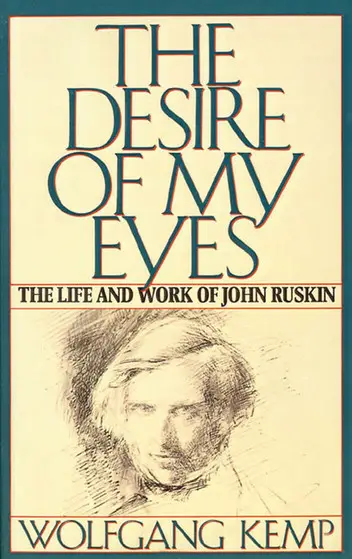
The Victorian who tried to save the world through beauty. Few Victorians loom larger — or stranger — than John Ruskin (1819–1900). Wolfgang Kemp’s celebrated critical biography traces how a precocious art critic became one of the nineteenth century’s most influential and original minds.
Ruskin first made his name defending J.M.W. Turner and championing Gothic architecture; he ended it as a fierce social critic railing against industrial capitalism. Kemp reads the criticism, diaries, and relationships as a single psychological drama — the fault lines of a life lived across the whole Victorian age, from art and architecture to prophetic social reform.
For readers of art history, Victorian biography, and cultural criticism, this illuminates why Ruskin’s writings on work, beauty, and society still resonate: the Gothic Revival he championed reshaped British taste, and his questions about what labor and beauty are for have never gone away.
Few Victorians loom larger — or stranger — than John Ruskin. The Desire of My Eyes, Wolfgang Kemp’s celebrated critical biography (translated from German by Jan van Heurck), traces how a precocious art critic became one of the 19th century’s most influential and original minds. Ruskin (1819–1900) first made his name defending the painter J.M.W. Turner and championing Gothic architecture; he ended it as a fierce social critic railing against industrial capitalism.
Kemp’s study, first published in Germany in 1983, reads Ruskin’s criticism, diaries, and relationships as a single psychological drama. Rather than a cradle-to-grave chronicle, it traces the fault lines of a life lived across the span of the Victorian age — the same decades as Queen Victoria’s reign.
What the biography illuminates:
-
n
- Ruskin’s evolution from art and architecture critic to prophetic social reformer
- His defense of Turner and the Gothic Revival that reshaped British taste
- The interplay between his aesthetic theories and his turbulent private life
- Why his writings on work, beauty, and society still resonate today
n
For readers of art history, Victorian biography, and cultural criticism, The Desire of My Eyes remains the essential one-volume portrait of Ruskin.
window.option_df_23612 = {“outline”:[],”autoEnableOutline”:”false”,”autoEnableThumbnail”:”false”,”overwritePDFOutline”:”false”,”direction”:”1″,”pageSize”:”0″,”source”:”https://tellebook.com/wp-content/uploads/2025/10/1_tellebook_The-Desire-of-My-Eyes.pdf”,”wpOptions”:”true”}; if(window.DFLIP && window.DFLIP.parseBooks){window.DFLIP.parseBooks();}


Reviews
There are no reviews yet