Description
The Engine of Innovation
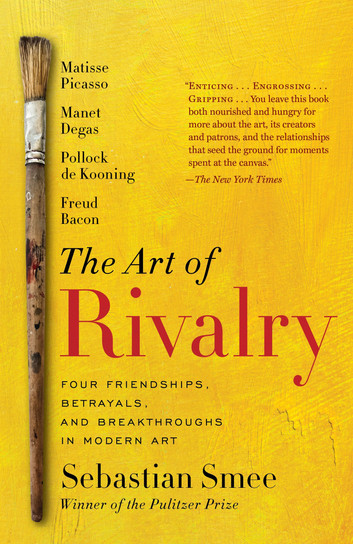
Sebastian Smee explores the competitive bonds between eight legendary artists in this compelling book. He argues that modernism did not emerge from solitary geniuses. Instead, it was often the result of intense, fraught friendships between peers. These relationships provided the friction necessary for creative breakthroughs. Consequently, the book moves past the myth of the lone artist to reveal a web of influence. Rivalry, in this sense, is an act of deep intimacy.
The Parisian Connection
The narrative begins with the complex relationship between Édouard Manet and Edgar Degas. These two French masters shared a deep respect but also a sharp competitive edge. A famous incident involving a slashed painting perfectly illustrates their volatile bond.
Moreover, Smee details the legendary jostling for power between Henri Matisse and Pablo Picasso. Picasso often felt threatened by Matisse’s radical use of color. Thus, their “frenemy” dynamic pushed both men to redefine the boundaries of Western art.
Postwar Tension and Grit
The author then shifts his focus to the gritty art scenes of London and New York. He examines the symbiotic link between the painters Lucian Freud and Francis Bacon. Bacon’s raw, violent style famously liberated Freud from his earlier, more meticulous approach.
Furthermore, Smee analyzes the relationship between Jackson Pollock and Willem de Kooning. Pollock’s “action painting” served as both a challenge and an inspiration for his older rival. Therefore, their shared struggle for dominance helped shift the art world’s center to America.
Key Rivalries Profiled
The book centers on four specific pairs of artists who shaped the modern era:
Manet and Degas: The pioneers of Impressionism who debated the truth of the gaze.
Matisse and Picasso: The giants of the early 20th century who vied for leadership.
Pollock and de Kooning: The titans of Abstract Expressionism in postwar New York.
Freud and Bacon: The British masters who explored the darker side of the human figure.
Breaking Away to Greatness
Ultimately, The Art of Rivalry is a study of how artists find their unique voices. Smee shows that a “flashpoint” of betrayal or rupture often leads to a new beginning. By pushing against each other, these men were forced to innovate and evolve. Additionally, the book provides a rich psychological profile of each individual involved. It demonstrates that the desire to be inimitable often starts with a close connection. In conclusion, the work is a masterful blend of biography and art criticism.


Reviews
There are no reviews yet.