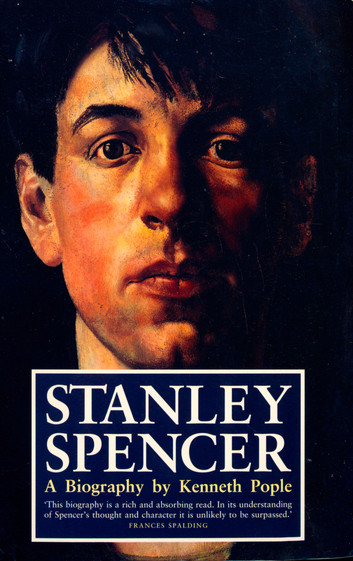
Stanley Spencer (Text Only) by Ken Pople

Author: Ken Pople

Price range: $0.99 through $21.49

Ken Pople explores the eccentric life and visionary paintings of Stanley Spencer. This biography examines his spiritual obsession and local landscapes. Readers discover the unique genius of a great British artist.

Additional information

Publisher

HarperCollins Publishers

Release Date

June 23, 2016

Number of pages

605

Language

English

ISBN

9780008193287

Download options

Epub

Format

Digital Book, Paper Book

SKU: 9780008193287 Categories: , , , Product ID: 26055

Description

Stanley Spencer: A Comprehensive Biography of Britain’s Visionary Artist

“Stanley Spencer (Text Only)” by Ken Pople offers an intimate portrait of one of Britain’s most extraordinary painters. Stanley Spencer transformed twentieth-century British art through his unique spiritual vision and unconventional techniques. Moreover, this comprehensive biography explores the artist’s complex life, revolutionary works, and enduring cultural impact. Therefore, readers gain deep insight into Spencer’s artistic genius and the personal struggles that shaped his creative output.

Ken Pople brings exceptional expertise to this biographical study of Stanley Spencer’s remarkable life and career. Furthermore, Pople’s meticulous research illuminates the artist’s motivations, relationships, and creative processes throughout his journey. The “Text Only” format focuses entirely on narrative depth without visual distractions or supplementary materials. Consequently, readers experience a purely literary exploration of Spencer’s life that emphasizes story over imagery.

Stanley Spencer (1891-1959) created paintings that merged everyday English village life with profound religious symbolism. Additionally, his work challenged conventional boundaries between sacred and secular art in revolutionary ways. He painted biblical scenes set in his beloved Cookham village with startling originality and conviction. Therefore, Spencer’s art remains uniquely recognizable and continues to captivate audiences worldwide even today.

Ken Pople’s Biographical Approach to Stanley Spencer

Ken Pople established himself as a leading authority on Stanley Spencer through decades of dedicated research. Moreover, his biographical methodology combines scholarly rigor with accessible narrative storytelling that engages general readers. Pople interviewed people who knew Spencer personally and examined extensive archival materials and correspondence. Furthermore, his approach reveals the artist as a complex human being rather than a distant icon.

The biography traces Stanley Spencer’s development from childhood through his emergence as a major artist. Additionally, Pople explores the psychological and spiritual dimensions that drove Spencer’s creative vision throughout life. He examines how personal relationships, religious beliefs, and village life influenced the artist’s work profoundly. Therefore, readers understand Spencer’s art within the full context of his lived experience and beliefs.

Pople’s “Text Only” format allows for deep narrative immersion without interruption from visual elements or sidebars. Moreover, this approach suits readers who prefer sustained literary engagement with biographical subjects and stories. The text-focused presentation emphasizes Spencer’s life story and the ideas behind his revolutionary artistic vision. Consequently, the biography works excellently for both casual readers and serious students of art history.

Stanley Spencer’s Early Life and Artistic Formation

Stanley Spencer was born in Cookham, Berkshire, in 1891 into a large, intellectually vibrant family. Moreover, his childhood in this Thames-side village profoundly shaped his entire artistic vision and spiritual worldview. The Spencer household valued music, literature, and religious discussion, creating a rich cultural environment always. Furthermore, young Stanley developed an intense attachment to Cookham that lasted throughout his entire life.

Spencer attended the Slade School of Fine Art in London from 1908 to 1912 during its golden age. Additionally, he studied alongside other talented artists who would shape twentieth-century British art significantly later. His teachers recognized his exceptional talent and unconventional approach to religious and figurative painting immediately. Therefore, Spencer emerged from the Slade with technical skills and a distinctive artistic voice already forming.

World War I interrupted Stanley Spencer’s artistic development when he served as a medical orderly. Moreover, his wartime experiences in Macedonia profoundly affected his psychological state and artistic vision permanently. He witnessed suffering and death that would haunt him and inspire major works decades later. Consequently, the war became a recurring theme in Spencer’s art throughout his subsequent career.

The Unique Artistic Vision of Stanley Spencer

Stanley Spencer developed a highly distinctive style that merged realism with visionary spiritual symbolism throughout. Moreover, he painted biblical scenes as if they occurred in contemporary Cookham among ordinary villagers. His technique combined meticulous attention to detail with bold compositional choices and unusual perspectives always. Furthermore, Spencer’s work defied easy categorization within conventional art historical movements or schools entirely.

The artist believed that everyday life contained sacred significance and spiritual meaning in every moment. Additionally, he saw no separation between the mundane and the divine in his philosophical worldview. Spencer painted domestic scenes, village activities, and human relationships with the same reverence as biblical narratives. Therefore, his art challenged viewers to recognize spiritual dimensions in ordinary existence and daily life.

Stanley Spencer’s paintings often featured unusual spatial arrangements and multiple perspectives within single compositions. Moreover, he crowded his canvases with figures and details that created intense visual complexity and richness. His color palette ranged from earthy naturalism to vibrant, almost hallucinatory intensity depending on subject. Consequently, Spencer’s work remains immediately recognizable and unlike any other artist’s visual language or style.

Major Works and Recurring Themes in Spencer’s Art

Stanley Spencer created numerous masterpieces that secured his reputation as a major twentieth-century British artist. Moreover, certain works stand out for their ambition, technical achievement, and profound spiritual vision combined. These paintings demonstrate the full range of Spencer’s artistic capabilities and his unique approach to subjects. Furthermore, they reveal the themes that obsessed him throughout his long and productive career.

Spencer’s most significant works include these remarkable paintings among many others he created:

  • The Resurrection, Cookham (1924-1927) – His masterpiece depicting villagers rising from graves in Cookham churchyard
  • The Sandham Memorial Chapel murals (1927-1932) – Extensive cycle based on his World War I experiences
  • The Shipbuilding on the Clyde series (1940-1946) – Wartime commission celebrating industrial workers’ contributions
  • Christ Carrying the Cross (1920) – Biblical scene set in Cookham with villagers as participants
  • Self-Portrait with Patricia Preece (1936) – Controversial nude double portrait from his troubled second marriage
  • The Resurrection: Port Glasgow (1947-1950) – Another resurrection scene set in an industrial Scottish town

Each major work demonstrates Stanley Spencer’s commitment to merging spiritual vision with observed reality completely. Additionally, these paintings reveal his technical mastery and willingness to tackle ambitious, complex compositions fearlessly. The recurring themes of resurrection, redemption, and transfiguration dominate his most important works throughout. Therefore, Spencer’s art consistently explores transformation and the possibility of spiritual renewal in life.

Stanley Spencer’s Spiritual and Religious Dimensions

Religion formed the absolute core of Stanley Spencer’s artistic vision and personal philosophy throughout his life. Moreover, he possessed an intensely personal, unorthodox Christian faith that defied conventional religious categories entirely. Spencer believed that Christ’s presence permeated all existence and that heaven existed here on earth. Furthermore, his paintings attempted to reveal this spiritual reality hidden within everyday village life.

Stanley Spencer’s religious art rejected traditional iconography in favor of contemporary settings and modern dress. Additionally, he placed biblical events in Cookham as if they were happening among his neighbors. This approach shocked some viewers but reflected Spencer’s genuine belief in Christianity’s immediate, present relevance. Therefore, his religious paintings feel urgent and contemporary rather than distant historical recreations or illustrations.

The artist’s spiritual vision extended beyond conventional Christianity to embrace a kind of mystical pantheism. Moreover, he saw sexual love and physical desire as sacred expressions of divine creative energy. Spencer’s frank treatment of sexuality in religious contexts scandalized critics but reflected his integrated worldview. Consequently, his art challenges viewers to reconsider boundaries between sacred and profane, spiritual and physical.

Stanley Spencer’s Complex Personal Relationships

Stanley Spencer’s personal life was marked by intense, often troubled relationships that profoundly affected his art. Moreover, his first marriage to Hilda Carline in 1925 provided stability and inspiration for years. Hilda became Spencer’s muse and appeared in numerous paintings as a symbol of love and devotion. Furthermore, their relationship represented an ideal of spiritual and physical union that Spencer cherished deeply.

The marriage deteriorated in the 1930s when Stanley Spencer became infatuated with Patricia Preece. Additionally, he divorced Hilda in 1937 and immediately married Patricia in a disastrous union that lasted. Patricia showed little interest in Spencer romantically and maintained a relationship with another woman throughout. Therefore, Spencer’s second marriage brought him profound unhappiness and emotional turmoil that affected his work.

Stanley Spencer never stopped loving Hilda and wrote her letters constantly even after their divorce. Moreover, after Hilda’s death in 1950, Spencer continued writing to her as if she still lived. These letters reveal the depth of his emotional attachment and his inability to move beyond loss. Consequently, his later works often reflect themes of longing, regret, and the hope for reunion.

Stanley Spencer and the British Art World

Stanley Spencer occupied an unusual position within the twentieth-century British art establishment throughout his career. Moreover, he remained somewhat apart from major movements like Bloomsbury or the Euston Road School. His work was too idiosyncratic and personal to fit neatly into prevailing artistic trends or groups. Furthermore, Spencer’s focus on spiritual themes seemed old-fashioned to some modernist critics and contemporaries.

Despite his outsider status, Stanley Spencer received significant recognition and important commissions during his lifetime. Additionally, he was elected to the Royal Academy in 1950, though he had a complicated relationship. His work appeared in major exhibitions and attracted both praise and controversy from critics regularly. Therefore, Spencer achieved commercial success and critical respect even while remaining artistically independent.

The artist’s relationship with other painters and the broader art community remained cordial but distant. Moreover, he preferred working in isolation in Cookham rather than participating in London’s artistic social scene. Spencer’s single-minded focus on his own vision left little energy for networking or movement-building. Consequently, he influenced British art through his work’s power rather than through personal relationships or teaching.

The Significance of the Text Only Format

The “Text Only” designation in this biography’s title indicates a purely textual presentation without illustrations. Moreover, this format choice reflects a deliberate focus on narrative depth and literary quality over visual elements. Readers engage with Stanley Spencer’s life story through words alone without relying on image reproductions. Furthermore, this approach suits digital reading platforms and reduces production costs for wider accessibility.

A text-only biography of a visual artist might seem paradoxical but offers unique advantages for readers. Additionally, it forces readers to imagine Spencer’s paintings based on verbal descriptions and contextual information. This imaginative engagement can deepen understanding of the artist’s creative process and intentions more actively. Therefore, the format encourages active reading rather than passive viewing of reproduced artworks or photographs.

Ken Pople’s descriptive prose compensates for the absence of visual materials through vivid, detailed writing. Moreover, he describes Spencer’s paintings with enough specificity that readers can visualize compositions and techniques. The text-only approach also allows for longer, more nuanced discussions of individual works and themes. Consequently, readers gain literary and analytical depth that illustrated biographies sometimes sacrifice for visual impact.

Stanley Spencer’s Impact on Modern British Art

Stanley Spencer’s influence on twentieth-century British art extends far beyond his immediate contemporaries and followers. Moreover, he demonstrated that figurative painting could remain vital and relevant in an increasingly abstract age. His commitment to narrative, spiritual content, and technical skill inspired later generations of representational painters. Furthermore, Spencer proved that regional, personal subject matter could achieve universal significance and emotional power.

The artist’s willingness to merge high spiritual themes with everyday settings influenced subsequent British painters significantly. Additionally, his frank treatment of sexuality and the body in religious contexts opened new possibilities. Spencer showed that contemporary art could engage seriously with faith without resorting to traditional iconography. Therefore, he expanded the range of acceptable subjects and approaches for religious art in modernity.

Stanley Spencer’s legacy includes his demonstration that artistic vision need not conform to prevailing movements. Moreover, he proved that an artist could achieve greatness while remaining geographically and stylistically independent. His example encouraged later painters to trust their own unique perspectives rather than following trends. Consequently, Spencer’s career validates individualism and authenticity in artistic practice against conformist pressures.

Stanley Spencer’s Later Years and Final Works

Stanley Spencer continued painting prolifically throughout the 1950s despite declining health and personal difficulties. Moreover, he remained committed to his artistic vision and produced significant works until shortly before death. His later paintings often returned to themes of resurrection and spiritual transformation with renewed intensity. Furthermore, these final works demonstrate undiminished technical skill and imaginative power despite physical challenges.

The artist received increasing recognition during his final decade, including his Royal Academy election in 1950. Additionally, major retrospective exhibitions introduced Spencer’s work to new audiences and younger generations of viewers. He continued living and working in Cookham, maintaining his lifelong connection to the village always. Therefore, Spencer achieved the satisfaction of seeing his artistic legacy secured before his death.

Stanley Spencer died in 1959 at age 68, leaving behind an extraordinary body of work. Moreover, his death marked the end of a unique artistic vision that had enriched British culture. The artist was buried in Cookham churchyard, the setting of his most famous resurrection painting. Consequently, Spencer’s final resting place connects him eternally to the village that inspired his greatest works.

Why Stanley Spencer Matters Today

Stanley Spencer’s art remains powerfully relevant to contemporary audiences despite changing artistic fashions and trends. Moreover, his exploration of spirituality speaks to ongoing human needs for meaning and transcendence today. In an increasingly secular age, Spencer’s paintings offer a vision of sacred possibility within ordinary life. Furthermore, his work challenges viewers to see their own environments with fresh, spiritually attuned eyes.

The artist’s frank treatment of sexuality, desire, and the body feels surprisingly modern and honest. Additionally, his willingness to depict physical intimacy within spiritual contexts anticipates contemporary integrated approaches to embodiment. Spencer refused to separate physical and spiritual dimensions of human experience in his worldview completely. Therefore, his art offers a holistic vision that resonates with current interests in mind-body integration.

Stanley Spencer’s commitment to place-based art inspires contemporary artists exploring local and regional identities. Moreover, his deep attachment to Cookham demonstrates how specific locations can yield universal artistic meaning. In a globalized world, Spencer’s example validates the significance of rootedness and local knowledge. Consequently, his work encourages artists and viewers to value their own particular places and communities.

The Enduring Legacy of Stanley Spencer’s Vision

“Stanley Spencer (Text Only)” by Ken Pople preserves and transmits the artist’s remarkable legacy to readers. Moreover, the biography ensures that Spencer’s life story and artistic achievements remain accessible to future generations. Pople’s thorough research and engaging narrative style bring the artist vividly to life through words. Furthermore, the book serves as an essential resource for anyone seeking to understand this extraordinary painter.

Stanley Spencer’s paintings continue to attract viewers and inspire artists more than sixty years after death. Additionally, major museums worldwide include his works in their permanent collections and special exhibitions regularly. His unique vision and technical mastery ensure his place among Britain’s greatest twentieth-century artists permanently. Therefore, Spencer’s reputation has only grown stronger as time reveals his work’s enduring power and relevance.

The artist ultimately succeeded in his ambition to reveal spiritual dimensions within everyday English village life. Moreover, his paintings invite viewers into a transformed vision of reality where the sacred permeates existence. Stanley Spencer’s art challenges, inspires, and moves audiences across generations and cultural boundaries. Consequently, his legacy endures as a testament to the power of individual artistic vision and faith.

Reviews

There are no reviews yet.

Be the first to review “Stanley Spencer (Text Only) by Ken Pople”

Your email address will not be published. Required fields are marked *

E-mail
Password
Confirm Password