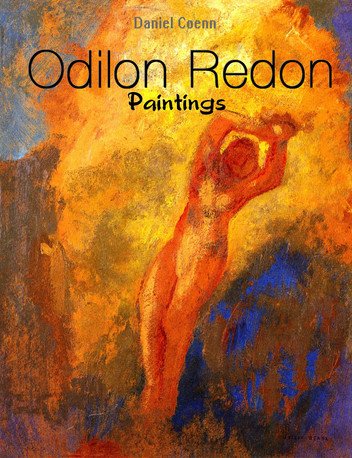
Description
Odilon Redon: French Symbolist Master in My Pocket Gallery
Odilon Redon stands as one of France’s most enigmatic Symbolist painters. Born in Bordeaux in 1840, he died in Paris in 1916. His artistic journey spans two distinct periods. Initially, Odilon Redon created haunting charcoal drawings called “Noirs.” Later, he transformed his palette into vibrant explosions of color. This evolution makes Odilon Redon uniquely fascinating among 19th-century artists.
The Early Life and Artistic Formation of Odilon Redon
Redon’s childhood in Bordeaux shaped his mysterious artistic vision. He studied under the academic painter Jean-Léon Gérôme in Paris. However, the visionary printmaker Rodolphe Bresdin influenced him more profoundly. Bresdin taught Redon to see beyond visible reality. This mentorship sparked Redon’s lifelong fascination with dreams and imagination.
The young artist developed skills across multiple mediums. He became a masterful printmaker, lithographer, and pastellist. His technical versatility allowed him to express complex symbolic ideas. Moreover, this range of skills distinguished him from his contemporaries.
Odilon Redon’s “Noirs”: The Dark Period
Redon’s early career focused on monochromatic charcoal works. He called these haunting pieces his “Noirs,” meaning “blacks” in French. These drawings explored darkness, mystery, and the subconscious mind. They depicted strange creatures, disembodied eyes, and fantastical beings.
The “Noirs” established Redon’s reputation in avant-garde circles. Critics found them disturbing yet mesmerizing. Furthermore, these works revealed his deep interest in the invisible world. Redon believed art should express inner visions rather than external reality.
The Famous Eye-Balloon
One of Redon’s most iconic images emerged during this period. “The Eye Like a Strange Balloon Mounts Toward Infinity” appeared in 1878. This lithograph shows a giant eye floating skyward like a balloon. The image perfectly captures Redon’s surreal sensibility.
The eye motif recurred throughout his career. It symbolized vision, consciousness, and spiritual awareness. Additionally, it represented the artist’s role as a seer. Redon created nearly 200 prints exploring such symbolic themes.
Literary Influences on Odilon Redon’s Work
Literature profoundly shaped Redon’s artistic imagination. He particularly admired the American writer Edgar Allan Poe. Poe’s tales of mystery and psychological horror resonated deeply. Consequently, Redon created several print series inspired by Poe’s stories.
French Symbolist poets also influenced his vision. Stéphane Mallarmé and Joris-Karl Huysmans championed his work. These writers appreciated Redon’s ability to visualize abstract ideas. Meanwhile, he illustrated their texts with evocative imagery.
The Dramatic Transformation: Odilon Redon’s Color Period
Around 1900, Redon’s art underwent a stunning transformation. He abandoned his dark charcoals for vibrant oils and pastels. This shift surprised critics and collectors alike. Nevertheless, the change revealed new dimensions of his talent.
Brilliant colors now dominated his canvases. He painted radiant flowers, mythological scenes, and dreamlike landscapes. The somber mood of the “Noirs” gave way to joy. However, his work retained its symbolic and imaginative qualities.
Why Odilon Redon Embraced Color
Several factors prompted this dramatic evolution. Personal happiness played a significant role in the transformation. His marriage and family life brought contentment and optimism. Additionally, he felt liberated from the constraints of monochrome.
The Impressionists’ use of color also inspired him. He admired their luminous palettes and bold techniques. Thus, Redon synthesized Symbolist content with colorist methods. This unique combination created his mature masterpieces.
Flowers: Odilon Redon’s Beloved Subject
Flowers became Redon’s favorite motif in his later years. He painted countless floral still lifes in vivid hues. These works glow with an almost mystical radiance. Roses, poppies, and anemones burst from his canvases.
His flower paintings transcend mere botanical illustration. They express spiritual beauty and emotional depth. Moreover, they demonstrate his mastery of pastel and oil techniques. Each petal seems to pulse with inner light.
Characteristics of Redon’s Floral Works
His flower paintings share several distinctive qualities:
- Intense, saturated colors that seem to emanate light
- Loose, expressive brushwork that suggests rather than defines
- Mysterious, undefined backgrounds that create dreamlike atmospheres
- Emotional resonance that elevates flowers to symbolic status
- Masterful use of pastels to achieve velvety textures
Odilon Redon’s Artistic Philosophy
Redon believed art should explore invisible realms. He rejected pure naturalism and photographic realism. Instead, he sought to depict dreams, fantasy, and imagination. His art opened doors to the subconscious mind.
“My drawings inspire and are not to be defined,” he wrote. This statement captures his artistic philosophy perfectly. Furthermore, it explains why his images remain so enigmatic. Redon wanted viewers to bring their own interpretations.
Technical Mastery Across Multiple Mediums
Redon’s technical skills were extraordinary and diverse. He excelled in charcoal, lithography, etching, pastel, and oil painting. This versatility allowed him to choose the perfect medium. Each technique served his expressive needs differently.
His lithographs demonstrate precise control and tonal subtlety. The pastels glow with luminous, powdery color. Meanwhile, his oil paintings achieve rich, jewel-like surfaces. Consequently, he created approximately 457 artworks across these mediums.
Odilon Redon as Precursor to Surrealism
Art historians recognize Redon as a Surrealist precursor. His dream imagery anticipated the movement by decades. André Breton and other Surrealists admired his work greatly. They saw him as a spiritual ancestor.
Redon’s exploration of the unconscious mind was revolutionary. He depicted irrational juxtapositions and impossible creatures. These elements would become Surrealist hallmarks. Therefore, his influence extended far beyond his lifetime.
Connections to Later Movements
Redon’s impact reached multiple 20th-century art movements. The Symbolists claimed him as their visual poet. Surrealists embraced his dreamlike imagery and psychological depth. Abstract Expressionists appreciated his emotional intensity and color.
His work bridges 19th-century Romanticism and modern abstraction. This transitional position makes him historically significant. Moreover, it explains his enduring relevance to contemporary audiences.
The 2005 MoMA Exhibition: “Beyond The Visible”
The Museum of Modern Art honored Redon in 2005. Their exhibition “Beyond The Visible” showcased his achievements. It presented both his dark and colorful periods. Critics praised the comprehensive retrospective enthusiastically.
The exhibition introduced Redon to new generations of viewers. It demonstrated his continued relevance to contemporary art. Furthermore, it solidified his reputation as a major master. Attendance records confirmed widespread public interest.
My Pocket Gallery: Odilon Redon Paintings by Daniel Coenn
This e-book brings Redon’s masterpieces to your mobile device. Daniel Coenn has curated a stunning digital collection. The My Pocket Gallery series makes great art accessible. You can carry Redon’s paintings wherever you go.
The digital format offers unique advantages for art appreciation. High-resolution images reveal every brushstroke and color nuance. Zoom features let you examine details closely. Additionally, the portable format encourages frequent viewing.
Features of This Digital Collection
The e-book includes carefully selected representative works. Both dark and colorful periods receive thorough coverage. Each image appears in excellent reproduction quality. Brief contextual information accompanies the paintings.
The My Pocket Gallery format suits modern lifestyles perfectly. Art lovers can study Redon during commutes or travels. The collection serves students, scholars, and casual enthusiasts alike. Therefore, it democratizes access to museum-quality art.
Why Collect Odilon Redon’s Work Digitally
Digital art collections offer practical benefits over physical books. They require no shelf space and never deteriorate. You can access them instantly on multiple devices. Moreover, they cost less than traditional art books.
For Redon specifically, digital reproduction works exceptionally well. His colors and tonal subtleties translate beautifully to screens. Modern displays capture his luminous pastels and oils faithfully. Consequently, the viewing experience remains powerful and authentic.
The Enduring Appeal of Odilon Redon
Redon’s art continues to captivate viewers over a century later. His unique vision transcends historical periods and artistic movements. The mysterious quality of his imagery never grows stale. Each viewing reveals new layers of meaning.
His evolution from darkness to light inspires many people. It suggests personal transformation and spiritual growth are possible. Furthermore, his technical mastery across mediums demonstrates artistic dedication. These qualities make him perpetually relevant.
Conclusion
Odilon Redon created a singular body of work that defies easy categorization. His journey from haunting charcoals to radiant pastels mirrors a spiritual awakening. He explored dreams, imagination, and the invisible world with unmatched sensitivity. His approximately 457 artworks span printmaking, drawing, and painting.
Born in Bordeaux in 1840 and dying in Paris in 1916, Redon witnessed tremendous artistic changes. He absorbed influences from academic training, visionary mentors, and literary Symbolism. His famous “Noirs” established his reputation for mysterious, psychological imagery. Later, his vibrant flower paintings revealed joy and chromatic brilliance.
As a precursor to Surrealism, Redon influenced generations of modern artists. The 2005 MoMA exhibition “Beyond The Visible” confirmed his enduring importance. Today, digital collections like “Odilon Redon Paintings by Daniel Coenn” make his work accessible. The My Pocket Gallery series allows art lovers to carry masterpieces everywhere. This democratization of art would surely have pleased Redon himself.




Reviews
There are no reviews yet.