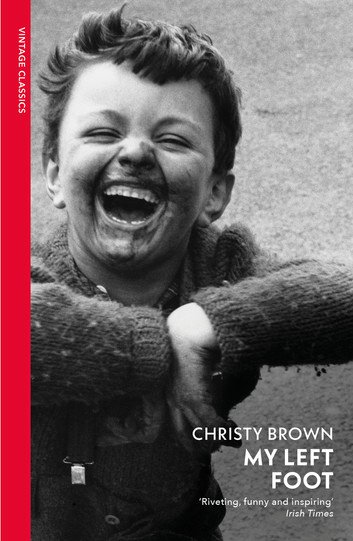
Description
My Left Foot by Christy Brown: An Inspiring Memoir of Triumph Over Cerebral Palsy
Introduction to My Left Foot: Christy Brown’s Remarkable Autobiography
“My Left Foot” by Christy Brown stands as one of the most inspiring autobiographies ever written. This powerful memoir chronicles Brown’s life with severe cerebral palsy in mid-20th-century Dublin, Ireland. Furthermore, “My Left Foot” reveals how Brown learned to communicate, write, and paint using only his left foot. The autobiography captures his journey from a child dismissed as intellectually disabled to an acclaimed artist.
Additionally, Brown’s story demonstrates the extraordinary power of human determination and familial love. Moreover, “My Left Foot” challenges societal assumptions about disability and human potential in profound ways.
Christy Brown’s memoir offers readers an intimate look at his struggles, triumphs, and creative achievements. Consequently, this autobiography has inspired millions worldwide since its publication in 1954. Therefore, “My Left Foot” remains essential reading for anyone interested in disability narratives and human resilience.
Living with Cerebral Palsy in Mid-Century Ireland
Christy Brown was born in 1932 into a working-class Dublin family, one of 13 surviving children. His severe cerebral palsy left him unable to control his speech or body movements. However, his mother recognized intelligence and awareness behind his physical limitations from the beginning. Furthermore, she refused to institutionalize him despite medical advice and societal pressure during that era.
Brown’s early years were marked by frustration as he struggled to communicate his thoughts and feelings. Additionally, many people assumed his physical disability meant intellectual impairment, which caused profound isolation. Yet his family, particularly his mother, provided unwavering support and believed in his potential. Moreover, they created an environment where Brown could develop despite overwhelming physical challenges.
The Ireland of Brown’s youth offered few resources or accommodations for people with disabilities. Consequently, his family’s dedication became crucial to his survival and eventual success as an artist.
The Breakthrough: Communicating and Creating with My Left Foot
The pivotal moment in “My Left Foot” occurs when young Christy grabs chalk with his left foot. This single controllable body part became his gateway to communication and artistic expression. Furthermore, Brown painstakingly learned to write letters and words using only his left foot’s movements. The process required extraordinary patience, determination, and countless hours of practice to achieve basic control.
Additionally, Brown’s mother encouraged his efforts and celebrated each small victory along his difficult journey. His left foot became the tool through which he could finally share his inner world. Moreover, he developed remarkable dexterity that eventually allowed him to type manuscripts and create paintings. Therefore, what others might consider a severe limitation became Brown’s instrument of liberation and creativity.
Brown’s breakthrough demonstrated that intelligence and creativity exist independently of physical ability or conventional communication methods. Consequently, his story challenged medical and societal assumptions about cerebral palsy and disability more broadly.
My Left Foot: Artistic Achievement and Literary Success
Christy Brown’s autobiography details his development as both a writer and a visual artist. His paintings, created entirely with his left foot, gained recognition for their emotional depth and technical skill. Furthermore, Brown wrote poetry, novels, and ultimately his groundbreaking memoir using a specially adapted typewriter. His literary voice proved sharp, witty, and deeply observant of human nature and Irish society.
“My Left Foot” itself became an international bestseller and established Brown as a significant literary figure. Additionally, his subsequent novels and poetry collections demonstrated his range and artistic maturity beyond autobiography. Moreover, Brown’s success opened doors for other artists with disabilities and changed public perceptions. Yet he never allowed his disability to define his identity or limit his artistic ambitions.
His achievements proved that physical limitations need not constrain intellectual or creative potential when determination meets opportunity.
Key Themes Explored in My Left Foot
Christy Brown’s powerful autobiography addresses these essential topics and experiences throughout his remarkable narrative:
- Overcoming severe physical disability through determination, creativity, and family support
- The crucial role of maternal love and belief in Brown’s development and success
- Communication barriers and the isolation experienced by people with disabilities
- Societal prejudices and misconceptions about cerebral palsy in mid-20th-century Ireland
- The transformative power of artistic expression as liberation and self-actualization
- Growing up in a large, working-class Dublin family with limited resources
- The relationship between physical limitation and intellectual/creative freedom
- Brown’s journey from childhood frustration to adult artistic recognition and achievement
The Cultural Impact and Enduring Significance of My Left Foot
“My Left Foot” transformed public understanding of cerebral palsy and disability when it appeared in 1954. Brown’s honest, unsentimental account challenged readers to reconsider their assumptions about physical limitations and human potential. Furthermore, the memoir demonstrated that people with severe disabilities possess rich inner lives and creative capabilities. Additionally, Brown’s story inspired the disability rights movement through its powerful first-person narrative.
The 1989 film adaptation, starring Daniel Day-Lewis, introduced Brown’s story to new generations worldwide. Moreover, the movie’s critical and commercial success brought renewed attention to the original autobiography. Consequently, “My Left Foot” continues influencing discussions about disability, accessibility, and inclusion in contemporary society.
Brown’s refusal to accept others’ limitations on his potential resonates across cultures and generations. Therefore, his memoir remains relevant for anyone facing obstacles or fighting against societal constraints.
Why My Left Foot Matters Today
Christy Brown’s autobiography offers timeless lessons about human resilience, determination, and the power of supportive relationships. His story reminds readers that physical disability does not diminish a person’s humanity or potential. Furthermore, “My Left Foot” challenges contemporary society to create more inclusive environments for people with disabilities. Additionally, Brown’s artistic achievements demonstrate what becomes possible when barriers are removed and support is provided.
The memoir also celebrates the often-overlooked heroism of families who support members with disabilities. Moreover, Brown’s wit, intelligence, and artistic vision shine through every page of his autobiography. Consequently, readers encounter not a “disability story” but a fully realized human life, complex and deep.
“My Left Foot” ultimately affirms that every person deserves opportunities to develop their unique gifts and contributions.
Conclusion
“My Left Foot” by Christy Brown remains one of the most powerful and inspiring autobiographies in modern literature. This remarkable memoir chronicles Brown’s journey from a child with severe cerebral palsy to an acclaimed writer and painter. Furthermore, his story demonstrates the transformative power of determination, family love, and artistic expression. Brown’s ability to communicate and create using only his left foot stands as a testament to human adaptability.
Therefore, “My Left Foot” continues inspiring readers worldwide while challenging assumptions about disability and human potential. This autobiography deserves its place as an essential work celebrating the triumph of the human spirit.





Reviews
There are no reviews yet.