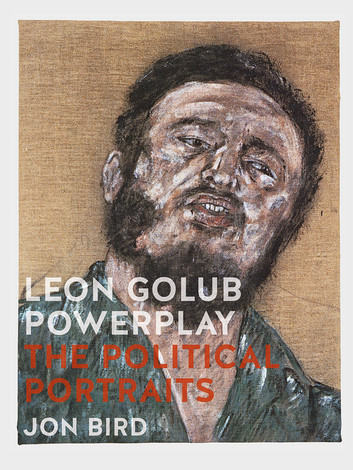
Leon Golub Powerplay: The Political Portraits

Price range: $10.87 through $31.37

Jon Bird and Gill Perry examine the raw power of Leon Golub’s political portraits. This book explores themes of authority and conflict. These artworks challenge viewers with their intense imagery.

Additional information

Publisher

Reaktion Books

Release Date

April 15, 2016

Language

English

ISBN

9781780236162

Download options

Epub

Format

Digital Book, Paper Book

SKU: 9781780236162 Categories: , , , Product ID: 26005

Description

Leon Golub Powerplay: A Deep Dive into Political Art and Power

Introduction: Understanding Leon Golub Political Portraits

Leon Golub political portraits represent some of the most provocative artwork of the twentieth century. This e-book by Jon Bird and Gill Perry examines Golub’s unflinching exploration of power, violence, and authority. Moreover, the authors provide critical analysis of how Golub challenged conventional portraiture. Therefore, readers gain insight into art that confronts uncomfortable political realities. Additionally, the book explores themes of masculinity, dominance, and institutional control.

The text focuses specifically on Golub’s “Powerplay” series from the 1980s. Furthermore, it contextualizes these works within broader political and artistic movements. Consequently, readers understand both the historical significance and contemporary relevance of Golub’s vision.

Who Was Leon Golub?

Leon Golub (1922-2004) was an American painter known for his monumental canvases. He consistently depicted scenes of violence, interrogation, and political oppression throughout his career. Additionally, Golub rejected abstract expressionism’s dominance in favor of figurative painting. His work therefore stood apart from mainstream artistic trends of his time.

Golub studied at the Art Institute of Chicago and later lived in Paris. However, he eventually returned to New York where he produced his most significant work. His paintings often featured mercenaries, interrogators, and victims in stark, confrontational compositions.

The artist’s technique involved scraping and abrading paint to create raw, weathered surfaces. This method reinforced the brutal subject matter he explored. Moreover, his figures appeared monumental yet vulnerable, powerful yet morally compromised.

The Powerplay Series: Core Themes and Subjects

The “Powerplay” series examines dynamics of dominance and submission in political contexts. These Leon Golub political portraits depict men in positions of authority and control. Furthermore, the paintings explore how power operates through physical presence and psychological intimidation.

Key themes in the Powerplay series include:

  • Masculine aggression and its relationship to institutional power
  • The psychology of dominance and submission
  • Visual representation of political violence and coercion
  • Interrogation scenes and power imbalances
  • The banality of evil in bureaucratic systems
  • Complicity and moral ambiguity in power structures

Golub’s figures often appear in ambiguous spaces without clear geographical or temporal markers. Therefore, the scenes become universal rather than specific to particular conflicts. This approach makes the work disturbingly relevant across different political contexts and historical periods.

Jon Bird and Gill Perry’s Critical Approach

Jon Bird brings expertise in visual culture and critical theory to this analysis. Meanwhile, Gill Perry contributes deep knowledge of modern and contemporary art history. Together, they provide a comprehensive examination of Golub’s artistic and political project.

The authors situate Golub’s work within postwar American art and global political developments. Additionally, they explore how his paintings respond to Vietnam, Cold War tensions, and Latin American conflicts. Their analysis therefore connects aesthetic choices to historical circumstances and ideological positions.

Bird and Perry also examine Golub’s relationship to feminist critiques of masculine power. Consequently, they reveal how his work both depicts and interrogates patriarchal violence. The authors avoid simplistic readings and instead embrace the work’s complexity and contradictions.

Visual Language and Artistic Technique

Golub developed a distinctive visual vocabulary for representing power and violence. His figures appear larger than life, often reaching ten feet or more in height. Moreover, the scale creates an imposing, even threatening presence for viewers.

The artist worked on unstretched canvas laid flat on the floor. He applied paint thickly and then scraped it away with meat cleavers and solvents. This destructive process created surfaces that appear ancient, damaged, and archaeological in character.

His color palette typically featured harsh reds, sickly greens, and muddy earth tones. These choices reinforced the paintings’ unsettling emotional impact. Furthermore, the abraded surfaces suggested decay, corruption, and the passage of time.

Golub’s figures often stare directly at viewers, implicating them in the scenes depicted. Therefore, viewers cannot maintain comfortable distance or detached observation. Instead, they become witnesses and potentially complicit participants in the power dynamics portrayed.

Political Context and Historical Significance

The Powerplay series emerged during the Reagan era and the Cold War’s final decade. Consequently, the work reflects anxieties about American military intervention and covert operations. Golub specifically referenced mercenaries, death squads, and state-sponsored violence in Latin America.

However, the paintings avoid documentary specificity or journalistic reportage. Instead, they operate as allegorical explorations of power’s fundamental nature. This approach gives the work enduring relevance beyond its immediate historical moment.

Bird and Perry examine how Golub’s paintings function as political critique without didacticism. Moreover, they explore the ethical complexities of representing violence aesthetically. The authors therefore address ongoing debates about art’s relationship to political engagement and social responsibility.

Masculinity, Violence, and the Male Body

Golub’s work obsessively returns to representations of male bodies and masculine power. His figures display their physicality through aggressive postures, muscular builds, and dominating gestures. Additionally, many paintings feature nudity or semi-nudity that emphasizes corporeal vulnerability alongside displays of strength.

The artist explored how masculinity constructs itself through violence and domination. Furthermore, his paintings reveal the psychological dimensions of masculine performance and identity. Therefore, the work anticipates contemporary discussions about toxic masculinity and gender violence.

Bird and Perry analyze how Golub’s representations both critique and potentially reproduce masculine power. They examine this tension without resolving it definitively. Consequently, readers must grapple with the work’s ambiguities and uncomfortable implications.

The Viewer’s Role and Ethical Implications

Golub deliberately positioned viewers as witnesses to scenes of violence and intimidation. His figures often acknowledge the viewer’s presence through direct gazes and confrontational poses. Therefore, looking at these paintings becomes an ethically charged act rather than passive consumption.

The authors explore how this strategy implicates viewers in power structures they observe. Moreover, they examine whether aesthetic representation of violence risks aestheticizing or normalizing it. These questions remain central to debates about political art and representation.

Bird and Perry also consider how gallery and museum contexts affect reception of Golub’s work. Institutional framing potentially domesticates the paintings’ radical critique. However, the work’s visceral power often resists comfortable assimilation into art world conventions.

Artistic Influences and Contemporaries

Golub drew inspiration from ancient Roman art, particularly relief sculptures depicting military conquests. He also referenced Renaissance and Baroque painting traditions. Additionally, his work engaged with twentieth-century precedents including Goya, Picasso, and Francis Bacon.

However, Golub’s approach differed significantly from his abstract expressionist contemporaries. While they pursued formal innovation and subjective expression, he insisted on figurative representation and political content. Therefore, his work occupied a marginal position within postwar American art.

The authors situate Golub alongside other politically engaged artists of his generation. They compare his approach to that of Nancy Spero, his wife and artistic collaborator. Furthermore, they examine connections to European figuration and socially committed art movements.

Legacy and Contemporary Relevance

Leon Golub’s influence extends to contemporary artists addressing power, violence, and political conflict. His unflinching approach to difficult subject matter established important precedents. Moreover, his technical innovations in painting continue to inspire younger generations.

The book examines how Golub’s work anticipates contemporary concerns about surveillance, torture, and state violence. Images from Abu Ghraib and Guantanamo Bay echo compositions Golub created decades earlier. Therefore, his paintings appear prophetic in their understanding of power’s visual manifestations.

Bird and Perry also consider how digital media and photography have changed conditions for political art. Nevertheless, they argue that Golub’s painted images retain unique power and relevance. The deliberate, labor-intensive process of painting adds weight and significance to the subjects depicted.

Book Structure and Critical Framework

The e-book combines close visual analysis with theoretical and historical contextualization. Bird and Perry employ interdisciplinary approaches drawing from art history, political theory, and cultural studies. Consequently, their analysis illuminates multiple dimensions of Golub’s complex project.

The book’s structure includes:

  1. Biographical overview of Golub’s life and career development
  2. Detailed examination of the Powerplay series and related works
  3. Analysis of artistic techniques and visual strategies
  4. Historical contextualization within Cold War politics
  5. Theoretical frameworks for understanding power and representation
  6. Assessment of critical reception and artistic legacy

Each chapter builds upon previous discussions while introducing new analytical perspectives. Therefore, readers develop increasingly sophisticated understanding of Golub’s achievement. The authors balance accessibility with intellectual rigor throughout.

Why This Book Matters

“Leon Golub Powerplay: The Political Portraits” offers essential analysis of a major twentieth-century artist. Bird and Perry provide the most comprehensive examination of this crucial body of work. Moreover, they demonstrate why Golub’s paintings remain urgently relevant to contemporary political and cultural debates.

The book serves multiple audiences including art historians, students, and general readers interested in political art. Additionally, it contributes to ongoing discussions about representation, violence, and ethical responsibility. Therefore, it functions as both scholarly resource and accessible introduction.

For anyone seeking to understand how art engages with power and politics, this text proves invaluable. Furthermore, it illuminates broader questions about visual culture’s role in shaping political consciousness. The authors successfully demonstrate that Leon Golub political portraits continue speaking powerfully to our current moment.

Conclusion: Art, Power, and Political Consciousness

Jon Bird and Gill Perry’s examination of Leon Golub’s Powerplay series reveals art’s capacity for political critique. Their analysis demonstrates how Golub’s paintings expose power’s mechanisms and psychological dimensions. Moreover, they show how his work challenges viewers to confront uncomfortable truths about violence and complicity.

The book ultimately argues for art’s continuing relevance to political understanding and social change. Golub’s paintings refuse easy answers or comfortable resolutions. Instead, they demand sustained attention and critical reflection from viewers.

This e-book therefore serves as both tribute to Golub’s achievement and call for continued engagement. Political art matters precisely because it makes visible what power structures prefer to hide. Consequently, studying these works becomes an act of political consciousness and ethical responsibility.

Reviews

There are no reviews yet.

Be the first to review “Leon Golub Powerplay: The Political Portraits”

Your email address will not be published. Required fields are marked *

E-mail
Password
Confirm Password