Description
Experience the Sublime Vision of Germany’s Greatest Romantic Master
Caspar David Friedrich Paintings presents a comprehensive digital collection of works by Germany’s most influential Romantic artist. This portable gallery showcases paintings that revolutionized landscape art through spiritual depth and emotional intensity. Moreover, it provides convenient access to masterpieces that defined nineteenth-century Romanticism and transformed European art forever. The collection celebrates an artist whose contemplative landscapes continue inspiring viewers with their mysterious beauty and profound symbolism.
Understanding Caspar David Friedrich Paintings and Their Revolutionary Impact
Caspar David Friedrich lived from 1774 to 1840 and became the most important German artist of his generation. He grew up in the Baltic port town of Greifswald in Swedish Pomerania with a strict Lutheran upbringing. Furthermore, his childhood experiences with death and loss profoundly shaped his melancholic artistic vision throughout his career. His Protestant faith influenced his spiritual approach to nature and landscape painting fundamentally and permanently.
Friedrich studied at the Copenhagen Academy before settling in Dresden, where he developed his distinctive style. He rejected conventional landscape painting that merely depicted picturesque scenery for decorative purposes and aesthetic pleasure. Additionally, he transformed landscape into a vehicle for spiritual contemplation, emotional expression, and philosophical meditation. Thus, his innovative approach elevated landscape painting to the same intellectual status as history painting.
He drew inspiration from nature through careful outdoor observation and detailed sketches made during walking tours. He explored the mountains, forests, and coastlines of Germany, capturing specific natural features and atmospheric effects. Moreover, he combined these observed elements in studio compositions that created symbolic rather than topographical landscapes. Hence, his paintings balanced naturalistic detail with imaginative arrangement for deeper spiritual and emotional meaning.
The Rückenfigur: Friedrich’s Signature Compositional Device
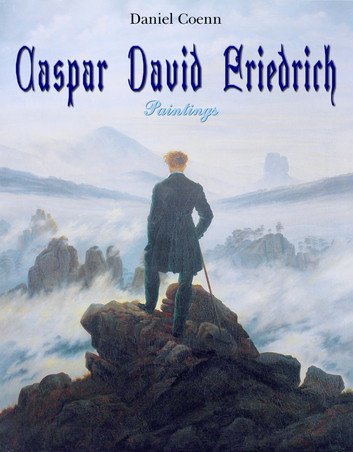
Friedrich pioneered the “Rückenfigur” technique featuring figures seen from behind gazing into landscape vistas before them. This compositional device invites viewers to identify with the contemplative figure and share their perspective directly. Furthermore, the rear-facing figure creates psychological distance while simultaneously drawing viewers into the painting’s emotional space. Thus, this innovative technique transforms passive observation into active participation and personal contemplation of nature.
His most famous use of this technique appears in “Wanderer above the Sea of Fog” from 1818. The painting shows a man standing on a rocky precipice overlooking a misty mountain landscape below. Moreover, the figure’s elevated position and contemplative stance embody Romantic ideals of individual experience and spiritual transcendence. Hence, this iconic image became one of the most recognizable symbols of Romanticism in European art.
The Rückenfigur appears throughout Friedrich’s work in various contexts including seashores, mountain peaks, and forest clearings. These figures stand alone or in small groups, always absorbed in contemplation of nature’s grandeur. Additionally, their anonymity allows any viewer to project themselves into the scene and experience personal reflection. Therefore, this technique democratizes spiritual experience by making it accessible to all viewers regardless of background.
Friedrich’s Spiritual and Symbolic Approach to Nature
Friedrich viewed nature as a site of spiritual discovery rather than mere aesthetic pleasure or scientific observation. He believed landscapes could reveal divine presence and inspire religious feelings without traditional Christian iconography explicitly. Furthermore, he used natural elements symbolically to convey spiritual truths and emotional states through visual metaphors. Thus, his paintings function as visual theology that communicates through natural forms rather than biblical narratives.
His Protestant Lutheran background shaped his emphasis on direct personal relationship with the divine through nature. He rejected Catholic imagery and institutional religious art in favor of individual spiritual experience and contemplation. Moreover, he believed nature itself constituted a sacred text that revealed God’s presence to attentive observers. Hence, his landscapes serve as Protestant alternatives to traditional religious painting and Catholic devotional imagery.
He employed recurring symbolic elements throughout his work including Gothic ruins, bare trees, and distant horizons. Gothic ruins represented the decline of Catholic medieval Christianity and the passage of earthly institutions. Additionally, bare trees symbolized death and resurrection while distant horizons suggested spiritual transcendence and eternal life. Therefore, his paintings require careful reading to understand their complex symbolic language and spiritual meanings.
The Sublime in Caspar David Friedrich Paintings
Friedrich’s work embodies the Romantic concept of the sublime: nature’s overwhelming power that inspires awe and terror. He depicted vast landscapes that dwarf human figures and emphasize humanity’s smallness before nature’s grandeur. Furthermore, his paintings evoke feelings of insignificance mixed with spiritual elevation and transcendent wonder simultaneously. Thus, his work captures the paradoxical emotions that define sublime experience in Romantic aesthetic theory.
“Monk by the Sea” from 1808-1810 exemplifies his treatment of the sublime through radical compositional simplicity. The painting shows a tiny monk standing before an enormous empty sky and desolate seashore. Moreover, the minimal composition and muted colors create an oppressive atmosphere that conveys existential isolation and spiritual longing. Hence, this revolutionary painting shocked contemporary viewers with its stark emptiness and emotional intensity.
“The Sea of Ice” from 1823-1824 depicts a shipwreck crushed by massive ice floes in Arctic waters. The painting shows nature’s destructive power and humanity’s vulnerability before forces beyond control or comprehension. Additionally, the jagged ice formations create a dynamic composition that conveys violent natural forces and inevitable destruction. Therefore, this work demonstrates how Friedrich used landscape to explore humanity’s relationship with overwhelming natural power.
Friedrich’s Famous Masterpieces and Iconic Works
Caspar David Friedrich Paintings includes his most celebrated works that defined Romantic landscape painting throughout Europe. “Wanderer above the Sea of Fog” remains his most iconic image and symbol of Romantic individualism. Moreover, “The Abbey in the Oakwood” shows a ruined Gothic monastery surrounded by bare trees and a monks’ funeral procession. These masterpieces demonstrate his ability to combine naturalistic detail with symbolic meaning and emotional depth.
“Chalk Cliffs on Rügen” from 1818 depicts figures at the edge of dramatic white cliffs overlooking the Baltic Sea. The painting combines vertiginous perspective with symbolic references to faith, danger, and spiritual contemplation throughout. Furthermore, the composition uses the Rückenfigur technique to draw viewers into the scene’s psychological and spiritual dimensions. Thus, this work exemplifies how Friedrich integrated multiple techniques to create complex multilayered meanings.
“Two Men Contemplating the Moon” from 1819-1820 shows two figures in German traditional dress observing the moon. The painting explores themes of friendship, contemplation, and humanity’s relationship with cosmic mysteries beyond understanding. Additionally, the twilight setting and mysterious atmosphere create a mood of quiet reverence and philosophical meditation. Hence, this work demonstrates Friedrich’s ability to convey profound ideas through simple compositional elements.
Key masterpieces featured in this collection include:
- “Wanderer above the Sea of Fog” (1818) – iconic Rückenfigur composition
- “Monk by the Sea” (1808-1810) – radical sublime landscape
- “The Abbey in the Oakwood” (1809-1810) – Gothic ruins and mortality
- “The Sea of Ice” (1823-1824) – shipwreck and nature’s destructive power
- “Chalk Cliffs on Rügen” (1818) – vertiginous coastal landscape
- “Two Men Contemplating the Moon” (1819-1820) – friendship and contemplation
- “Morning in the Riesengebirge” (1810-1811) – mountain sunrise and spiritual awakening
- “The Stages of Life” (1835) – allegorical meditation on mortality
Friedrich’s Response to Enlightenment Rationalism
Friedrich’s art emerged as a response to Enlightenment rationalism that emphasized reason over emotion and feeling. He rejected the scientific approach to nature that reduced landscapes to measurable physical phenomena without spiritual dimension. Furthermore, he championed emotion, intuition, and spiritual experience as valid ways of understanding reality and truth. Thus, his paintings represent Romantic rebellion against rationalist philosophy and the materialist worldview of the previous generation.
He believed art should express inner feelings and spiritual truths rather than merely imitate external appearances. His landscapes convey subjective emotional states and personal spiritual experiences rather than objective topographical information. Moreover, he insisted that artists must feel what they paint and communicate genuine emotion to viewers. Hence, his theoretical writings and artistic practice emphasized authenticity, sincerity, and emotional truth above technical skill.
His work influenced early Romantic ideas about art, nature, and the self throughout German-speaking Europe. He participated in Dresden’s artistic community and exchanged ideas with poets, philosophers, and fellow artists regularly. Additionally, his paintings inspired literary works and philosophical writings that explored similar themes of nature and spirituality. Therefore, his influence extended beyond visual arts to shape the broader Romantic cultural movement comprehensively.
Friedrich’s Working Methods and Artistic Process
Friedrich worked primarily in his studio, composing paintings from sketches and studies made during outdoor excursions. He took extensive walking tours through German landscapes, drawing specific natural features and atmospheric effects carefully. Furthermore, he maintained detailed sketchbooks that recorded trees, rocks, clouds, and architectural elements for later use. Thus, his paintings combined observed reality with imaginative arrangement to create symbolic rather than topographical landscapes.
He built compositions slowly and deliberately, often working on paintings for extended periods before completion. His meticulous technique involved careful layering of thin glazes to create luminous atmospheric effects and subtle tonal gradations. Moreover, he paid extraordinary attention to light, using it symbolically to suggest spiritual presence and divine illumination. Hence, his technical mastery served his spiritual and philosophical intentions rather than mere display of skill.
He often created multiple versions of successful compositions, exploring variations in lighting, season, and atmospheric conditions. This practice allowed him to investigate how different conditions affected the paintings’ emotional impact and symbolic meanings. Additionally, he sometimes painted pendant pairs designed to be viewed together for complementary or contrasting effects. Therefore, his working methods demonstrated systematic exploration of how formal elements communicate spiritual and emotional content.
The Symbolism of Light and Darkness
Friedrich used light and darkness symbolically throughout his work to suggest spiritual states and divine presence. Morning light often represents spiritual awakening, hope, and divine grace illuminating the faithful soul’s darkness. Furthermore, twilight and evening scenes suggest contemplation, mystery, and the threshold between earthly and spiritual realms. Thus, his careful manipulation of light creates the paintings’ emotional atmosphere and communicates their spiritual meanings effectively.
His paintings frequently feature dramatic backlighting with figures silhouetted against luminous skies or glowing horizons. This technique creates mysterious atmosphere while suggesting transcendent light beyond earthly darkness and material existence. Moreover, the contrast between dark foreground and luminous distance suggests spiritual journey from earthly to heavenly realms. Hence, his lighting choices reinforce the paintings’ allegorical meanings and guide viewers’ emotional and spiritual responses.
He depicted various times of day including dawn, midday, twilight, and night to explore different moods. Each lighting condition carries specific symbolic associations and creates a distinctive emotional atmosphere throughout compositions carefully. Additionally, he used fog, mist, and atmospheric effects to create ambiguity and suggest mysteries beyond rational comprehension. Therefore, his mastery of atmospheric effects served both aesthetic and symbolic purposes in creating meaningful landscapes.
Friedrich’s Influence on Later Art Movements
Friedrich’s work fell into obscurity after his death but was rediscovered in the early twentieth century. Symbolist painters and early modernists recognized his psychological depth and symbolic approach to landscape painting. Furthermore, his emphasis on subjective experience and emotional expression anticipated Expressionism and abstract art movements significantly. Thus, his influence extended far beyond Romanticism to shape modern art’s development in unexpected ways.
His reduction of landscape to essential elements and emphasis on mood over detail influenced abstract painters. Artists recognized how his compositions used simplified forms to convey emotional and spiritual content without narrative. Moreover, his treatment of landscape as a vehicle for inner experience rather than external reality anticipated modern abstraction. Hence, he served as an important precursor to twentieth-century movements that emphasized subjective expression over representation.
Surrealists appreciated his mysterious atmospheres and dreamlike qualities that suggested unconscious psychological depths and hidden meanings. His paintings’ symbolic ambiguity and emotional intensity resonated with Surrealist interests in dreams and psychological states. Additionally, contemporary artists continue finding inspiration in his spiritual approach to nature and landscape as contemplative space. Therefore, his work maintains relevance for understanding both historical Romanticism and contemporary artistic practice today.
Nature as Site of Contemplation and Personal Reflection
Friedrich transformed landscape painting into a vehicle for personal contemplation and philosophical meditation on existence. His paintings invite viewers to pause, reflect, and consider their relationship with nature and spiritual realities. Furthermore, his contemplative figures model the kind of attentive observation and emotional openness he believed necessary. Thus, his work functions as a visual invitation to slow down and engage deeply with the natural world.
He depicted nature as sanctuary from modern urban life and industrial development that alienated people from authentic experience. His landscapes offer refuge where individuals can reconnect with fundamental truths obscured by social conventions. Moreover, his emphasis on solitary contemplation reflects Romantic valorization of individual experience over collective social identity. Hence, his paintings celebrate personal spiritual journey and direct unmediated encounter with nature’s mysteries.
His work suggests that nature reveals truths inaccessible through rational analysis or scientific investigation alone. He believed contemplative observation could produce spiritual insights and emotional understanding beyond intellectual knowledge’s limitations. Additionally, his paintings demonstrate how landscape can serve as a mirror reflecting viewers’ inner emotional and spiritual states. Therefore, his art invites active participation rather than passive aesthetic appreciation or detached observation.
Gothic Ruins and Mortality in Friedrich’s Work
Friedrich frequently depicted Gothic ruins as symbols of mortality, the passage of time, and earthly institutions’ impermanence. These crumbling medieval structures represent both the Catholic Church’s decline and all human achievements’ inevitable decay. Furthermore, ruins situated in wild nature suggest how natural forces ultimately reclaim human constructions and civilizations. Thus, Gothic ruins function as memento mori reminding viewers of death’s inevitability and earthly life’s transience.
“The Abbey in the Oakwood” shows a ruined monastery surrounded by bare trees and a monks’ funeral procession. The painting combines multiple death symbols including ruins, winter, bare trees, and a funeral to create a meditation on mortality. Moreover, the Gothic architecture’s skeletal remains echo the bare trees’ forms, reinforcing themes of death and decay. Hence, this masterpiece exemplifies how Friedrich layered symbolic elements to create complex allegorical meanings.
His ruins often appear at twilight or in moonlight, emphasizing their mysterious and melancholic character effectively. These atmospheric conditions create a mood of nostalgia and contemplation appropriate to meditation on time’s passage. Additionally, ruins frequently frame distant views suggesting spiritual transcendence beyond earthly decay and material dissolution. Therefore, even his most melancholic images contain hope for spiritual resurrection and eternal life beyond death.
Seasons and Natural Cycles in Caspar David Friedrich Paintings
Friedrich used seasonal imagery symbolically to explore themes of life, death, and spiritual renewal throughout his career. Winter scenes with bare trees and snow represent death, dormancy, and spiritual desolation requiring faith. Furthermore, spring and summer landscapes suggest rebirth, hope, and spiritual awakening after darkness and despair. Thus, seasonal cycles provided natural metaphors for spiritual journey and Christian themes of death and resurrection.
His winter landscapes often feature solitary figures in desolate settings that emphasize isolation and spiritual testing. These harsh environments require faith and endurance, suggesting spiritual trials that strengthen believers’ commitment and devotion. Moreover, the stark beauty of winter scenes demonstrates how even desolation contains aesthetic and spiritual value. Hence, his winter paintings balance melancholy with appreciation for nature’s austere beauty in all seasons.
His depictions of dawn and sunrise frequently suggest spiritual awakening and divine grace illuminating darkness. Morning light breaking through mist or clouds represents hope, renewal, and God’s presence entering the world. Additionally, these transitional moments between night and day symbolize the threshold between earthly and spiritual existence. Therefore, his careful attention to specific times and seasons reinforces the paintings’ allegorical meanings and spiritual themes.
The Importance of Solitude and Isolation
Friedrich’s paintings emphasize solitude as a necessary condition for authentic spiritual experience and self-knowledge through contemplation. His solitary figures stand apart from society, seeking truth through direct encounter with nature’s mysteries. Furthermore, isolation allows escape from social conventions and superficial concerns that distract from spiritual realities. Thus, his work celebrates the Romantic ideal of the individual standing alone before nature and God without mediation.
His compositions often place single figures in vast landscapes that emphasize their physical smallness and isolation. This scale relationship suggests humanity’s insignificance before nature’s grandeur and divine infinity beyond human comprehension. Moreover, the figures’ solitude creates space for viewers to project themselves into scenes and experience personal contemplation. Hence, isolation functions both thematically and compositionally to facilitate viewer engagement and spiritual reflection.
He occasionally depicted pairs or small groups, but even these figures appear absorbed in private contemplation. They rarely interact directly, instead sharing silent communion through mutual observation of nature’s beauty. Additionally, these group compositions suggest how spiritual experience can be shared without words or explicit communication. Therefore, even his less isolated figures maintain contemplative distance that preserves individual spiritual autonomy and personal reflection.
What You’ll Find in This Digital Collection
This comprehensive collection features Friedrich’s paintings from throughout his career spanning early works to late masterpieces. It includes his most famous compositions like “Wanderer above the Sea of Fog” and lesser-known works that demonstrate his range. Moreover, the collection showcases his various subjects including mountains, seashores, forests, ruins, and atmospheric landscapes. Thus, viewers gain a complete overview of his artistic development and thematic preoccupations over four decades.
The collection emphasizes his innovative compositional techniques including the Rückenfigur and dramatic atmospheric effects throughout. Viewers will find numerous examples of his symbolic use of light, ruins, trees, and natural elements. Furthermore, high-quality digital images allow close examination of his meticulous technique and subtle tonal gradations. Hence, the collection serves both casual appreciation and serious study of his artistic methods and meanings.
Caspar David Friedrich Paintings provides convenient access to works scattered across museums worldwide in a single portable format. Traditional art books are expensive and difficult to transport while traveling or studying in various locations. However, digital collections offer instant access on phones, tablets, and computers anywhere with immediate convenience. Additionally, users can zoom in to examine details that reveal Friedrich’s technique and symbolic elements clearly.
For Students, Scholars, and Romanticism Enthusiasts
This collection serves diverse audiences interested in Romanticism, German art, and landscape painting’s philosophical dimensions comprehensively. Students gain convenient reference material for courses in nineteenth-century art, Romanticism, and German cultural history. Moreover, scholars appreciate having comprehensive image collections for research and teaching without expensive museum visits. The accessible format supports both casual appreciation and serious academic study effectively and efficiently.
Art enthusiasts discover or rediscover a master whose contemplative landscapes reward repeated viewing and careful interpretation. Friedrich’s paintings reveal new symbolic meanings and emotional depths with each encounter and changing life perspectives. Furthermore, the collection allows building personal relationships with specific works through frequent, convenient access over time. Hence, it supports sustained engagement that deepens artistic understanding and appreciation of Romantic aesthetics significantly.
Teachers and educators find the portable format ideal for classroom presentations and student assignments across levels. Digital images project clearly for group viewing and discussion of technique, symbolism, and historical context. Additionally, students can access the same images for homework and independent study outside class time. Therefore, the collection enhances art education from introductory surveys to advanced graduate seminars in Romanticism.
Friedrich’s Legacy and Contemporary Relevance
Friedrich’s influence on landscape painting and Romantic aesthetics remains profound and continues inspiring contemporary artists today. His spiritual approach to nature offers an alternative to purely aesthetic or scientific approaches to landscape representation. Furthermore, his emphasis on contemplation and personal reflection resonates with contemporary concerns about mindfulness and meaningful experience. Thus, his work maintains relevance beyond historical interest for understanding art’s spiritual and philosophical dimensions.
His paintings speak to universal human experiences including mortality, spirituality, solitude, and nature’s overwhelming power. These timeless themes transcend specific historical contexts and continue engaging viewers across cultures and generations. Moreover, his visual language of symbols and atmospheric effects communicates without requiring specialized knowledge or training. Hence, his work remains accessible while offering depths that reward careful study and repeated viewing.
Contemporary environmental concerns give his reverent treatment of nature new urgency and relevance for modern audiences. His paintings remind viewers of nature’s spiritual value beyond economic utility or recreational purposes alone. Additionally, his contemplative approach suggests how slowing down and observing carefully can deepen environmental awareness. Therefore, his work contributes to contemporary discussions about humanity’s relationship with the natural world and environmental ethics.
Why Caspar David Friedrich Paintings Matter Today
Friedrich created landscapes that transformed how artists and viewers understood nature’s spiritual and emotional dimensions permanently. His innovative techniques including the Rückenfigur revolutionized landscape composition and viewer engagement with painted scenes. Furthermore, his symbolic approach elevated landscape painting to a vehicle for profound philosophical and spiritual meditation. Thus, his artistic achievements carried both technical and intellectual dimensions that influenced European art fundamentally.
His work represents Romanticism’s highest achievements in visual arts and embodies the movement’s core values perfectly. He demonstrated how emotion, spirituality, and individual experience could produce art as intellectually serious as history painting. Moreover, his paintings influenced literature, philosophy, and broader cultural movements beyond visual arts alone significantly. Hence, understanding his work illuminates Romanticism comprehensively across multiple disciplines and cultural expressions.
The My Pocket Gallery series makes experiencing his contemplative masterworks easier than ever before in history. Art lovers can carry his complete works in their pockets and view them anywhere with convenience. Additionally, the digital format allows sharing discoveries with friends and family instantly across any distance. Therefore, technology serves democratic ideals by making great art accessible to everyone interested regardless of location.
Building Your Understanding of German Romanticism
Friedrich’s work provides an ideal entry point for understanding German Romanticism’s distinctive character and philosophical foundations. His clear symbolic language and powerful compositions make his paintings immediately engaging for all viewers. Moreover, his spiritual themes and contemplative approach demonstrate Romanticism’s emphasis on emotion and individual experience. Thus, studying his work builds appreciation for both artistic skill and philosophical depth simultaneously.
The collection allows comparing different periods and subjects within Friedrich’s career development over four decades. Early works show his initial experiments with symbolic landscape while later works reveal mature philosophical vision. Furthermore, viewers can trace how his style evolved while his spiritual concerns remained consistent throughout. Hence, the collection illustrates artistic growth within a coherent vision and distinctive personality over time.
Understanding Friedrich enriches appreciation of Romanticism across literature, music, and philosophy beyond visual arts alone. His paintings embody ideas that writers, composers, and philosophers explored through different media and forms. Additionally, recognizing connections between visual and literary Romanticism deepens understanding of the movement’s cultural impact. Therefore, studying his work illuminates broader patterns in nineteenth-century European culture and intellectual history.
The Convenience of Portable Digital Art Collections
Caspar David Friedrich Paintings offers unprecedented access to this master’s works through convenient digital technology. Traditional museum visits require travel, admission fees, and limited viewing time that restrict access significantly. However, digital collections provide unlimited viewing opportunities on personal devices anywhere at any time conveniently. Moreover, users control their viewing experience, spending as much time as desired with individual works.
Digital formats preserve Friedrich’s legacy for future generations in durable, easily shareable formats that resist degradation. Physical books deteriorate over time, but digital files can be copied and preserved indefinitely without quality loss. Furthermore, digital collections can be updated with new scholarship, higher-resolution images, and supplementary materials easily. Thus, this format serves both immediate convenience and long-term cultural preservation goals effectively.
The portable format encourages spontaneous viewing and repeated engagement with artworks over extended periods naturally. Users can view paintings during commutes, travel, or quiet moments throughout daily life without planning. Additionally, the collection facilitates comparing multiple works to understand Friedrich’s techniques and development comprehensively. Therefore, digital technology democratizes access while supporting serious study and casual appreciation equally well.
Conclusion: The Enduring Power of Friedrich’s Vision
Caspar David Friedrich created landscapes that continue moving viewers with their spiritual depth and emotional intensity today. His innovative compositional techniques and symbolic approach revolutionized landscape painting and influenced modern art’s development profoundly. Moreover, his contemplative vision offers a timeless invitation to pause, reflect, and consider life’s deepest mysteries. Caspar David Friedrich Paintings in this convenient digital collection ensures his legacy remains accessible to contemporary audiences worldwide.
His extraordinary ability to convey spiritual experience through natural forms established new possibilities for landscape painting. He proved that landscapes could communicate profound philosophical ideas and emotional truths as effectively as traditional subjects. Furthermore, his emphasis on individual contemplation and direct experience anticipated modern concerns with authenticity and personal meaning. Thus, his artistic achievements carried both historical significance and continuing relevance for contemporary viewers.
This essential collection belongs in every art lover’s digital library alongside the great Romantic masters comprehensively. It offers both immediate visual pleasure and opportunities for deeper study and understanding over extended time. Moreover, it preserves and celebrates an artist whose contemplative vision established German Romanticism’s foundations permanently. Hence, Caspar David Friedrich Paintings provides lasting value for anyone interested in art, spirituality, or nature’s sublime beauty and power.



Reviews
There are no reviews yet.