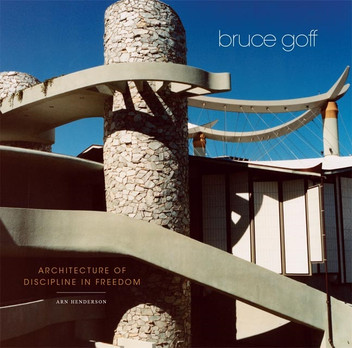
Bruce Goff: Architecture of Discipline in Freedom by Arn Henderson

Price range: $14.49 through $34.99

Arn Henderson examines the visionary career of architect Bruce Goff in this comprehensive study. He reveals how Goff’s unconventional designs blended absolute artistic freedom with a rigorous, self-imposed structural discipline.

Additional information

Publisher

University of Oklahoma Press

Release Date

April 27, 2017

Number of pages

312

Language

English

ISBN

9780806158297

Download options

Epub

Format

Digital Book, Paper Book

SKU: 9780806158297 Categories: , , , , Product ID: 26304

Description

Bruce Goff Architecture: A Revolutionary Vision of Discipline and Freedom

Bruce Goff architecture represents one of America’s most innovative design philosophies. Arn Henderson’s comprehensive e-book explores this visionary architect’s unique approach. The book reveals how Goff balanced creative freedom with structural discipline. Moreover, it shows why his work remains influential today.

Understanding Bruce Goff’s Architectural Philosophy

Bruce Goff challenged conventional design thinking throughout his career. He believed architecture should express individual creativity and organic forms. However, he never abandoned structural integrity or functional requirements. Instead, Goff merged artistic vision with engineering precision.

Henderson’s book examines this delicate balance in detail. The author shows how Goff developed his distinctive style. Additionally, the text explores his influences and inspirations. Consequently, readers gain deep insight into his creative process.

Goff’s work defied easy categorization or simple labels. He drew inspiration from nature, music, and diverse cultures. Furthermore, he incorporated unconventional materials into his designs. His buildings featured spirals, crystals, and organic shapes.

Key Elements of Bruce Goff Architecture

The book identifies several defining characteristics of Goff’s work. These elements set him apart from his contemporaries. Moreover, they continue to inspire architects today.

Core principles of Goff’s design approach include:

  • Organic forms inspired by natural patterns and structures
  • Innovative use of unconventional materials like coal and glass
  • Integration of art, architecture, and environmental context
  • Emphasis on individual expression over standardized solutions
  • Balance between creative freedom and structural discipline
  • Attention to client needs and personal preferences

Henderson demonstrates how these principles guided every project. The author provides detailed analysis of major works. Additionally, he includes lesser-known projects that reveal Goff’s range.

Bruce Goff’s Career and Major Works

Goff began his architectural career at just twelve years old. He worked in an architecture firm during his youth. By his twenties, he had already designed notable buildings. His early work showed remarkable maturity and innovation.

The book chronicles his most significant projects throughout decades. Henderson examines the Bavinger House in Norman, Oklahoma. This iconic structure exemplifies Goff’s organic design philosophy. The spiral form and natural materials create harmony with surroundings.

Furthermore, the text explores Goff’s academic career and influence. He taught at the University of Oklahoma for many years. His teaching inspired countless students and future architects. Consequently, his impact extended far beyond his own buildings.

The Discipline Within Creative Freedom

Henderson’s central thesis explores an apparent paradox in Bruce Goff architecture. How did Goff maintain structural integrity while pursuing radical designs? The answer lies in his rigorous understanding of engineering principles.

Goff never let creativity compromise safety or functionality. Instead, he used technical knowledge to enable bold visions. His discipline provided the foundation for his freedom. Therefore, his buildings were both artistic and structurally sound.

The book reveals Goff’s meticulous planning and attention to detail. He studied materials extensively before incorporating them into designs. Moreover, he collaborated closely with engineers and craftsmen. This teamwork ensured his visions could become reality.

Why This Book Matters Today

Contemporary architects continue to study Bruce Goff’s innovative approaches. His work offers valuable lessons for modern design challenges. Additionally, his philosophy remains relevant in today’s architectural discourse.

Henderson’s book provides essential context for understanding Goff’s contributions. The author draws on extensive research and primary sources. Furthermore, he includes rare photographs and architectural drawings. These visual elements enhance the reader’s understanding significantly.

The text also addresses Goff’s legacy and ongoing influence. Many contemporary architects cite him as an inspiration. His willingness to challenge conventions opened new possibilities. Consequently, he helped expand architecture’s creative boundaries.

Conclusion: A Must-Read for Architecture Enthusiasts

“Bruce Goff: Architecture of Discipline in Freedom” offers comprehensive insight. Henderson successfully captures the essence of Goff’s revolutionary vision. The book balances scholarly rigor with accessible writing style.

Readers will discover how Bruce Goff architecture transformed American design. They’ll understand his unique balance of freedom and discipline. Moreover, they’ll appreciate his lasting impact on architectural thinking.

This e-book serves students, professionals, and enthusiasts equally well. It provides both historical context and design inspiration. Therefore, it deserves a place in every architecture lover’s library.

Reviews

There are no reviews yet.

Be the first to review “Bruce Goff: Architecture of Discipline in Freedom by Arn Henderson”

Your email address will not be published. Required fields are marked *

E-mail
Password
Confirm Password