Description
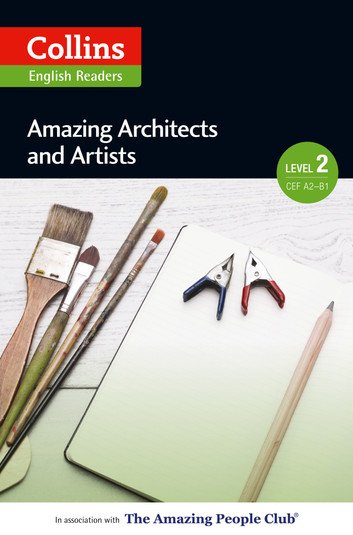
Amazing Architects and Artists: A2-B1 – Inspiring Stories for English Learners
Introduction to Amazing Architects and Artists
Amazing Architects and Artists is a captivating collection of biographical stories. And it brings history’s greatest creative minds to life. Moreover, this book serves dual purposes for readers. Therefore, it educates while simultaneously improving English language skills.
F. H. Cornish and Fiona MacKenzie wrote this engaging educational resource. And they crafted five first-person narratives about influential figures. Furthermore, the book belongs to the Collins Amazing People ELT Readers series. Consequently, it effectively combines language learning with inspirational content.
The book features architects and artists who changed the world. And their stories inspire readers across generations. Moreover, each biography reveals personal struggles and triumphs. Therefore, readers connect emotionally with these historical figures.
What Makes This Book Special
Amazing Architects and Artists offers unique benefits for language learners. And it presents complex historical figures in accessible language. Moreover, the first-person narrative style creates immediate engagement. Consequently, readers feel like they’re hearing directly from these great architects.
The book targets specifically A2-B1 level English learners. And this intermediate level allows for meaningful exploration of content. Furthermore, the vocabulary challenges readers without overwhelming them. Therefore, students progress naturally while enjoying compelling stories.
Each story stands alone as a complete narrative. However, together they create a broader picture of creativity. And they show how innovation transcends time and culture. Moreover, they demonstrate that genius comes in many forms.
The Collins Amazing People ELT Readers Series
This book belongs to a respected educational series. And Collins has developed these readers specifically for language learners. Moreover, the series covers various fields and historical periods. Consequently, students can explore diverse interests while improving English.
The series uses carefully controlled language throughout. Furthermore, it introduces new vocabulary gradually and contextually. And it reinforces grammar patterns through natural storytelling. Therefore, learning happens organically rather than mechanically.
Collins Amazing People readers have helped millions of students worldwide. Moreover, teachers appreciate their educational value and engagement factor. And students enjoy learning about remarkable historical figures. Therefore, the series has become a global classroom staple.
Leonardo da Vinci: The Ultimate Renaissance Genius
Leonardo da Vinci represents the quintessential Renaissance man. And his story opens readers’ minds to limitless possibilities. Moreover, he excelled in multiple fields simultaneously. Therefore, his biography inspires readers to pursue diverse interests.
Da Vinci was born in 1452 in Vinci, Italy. And he showed artistic talent from an early age. Furthermore, he apprenticed with the renowned artist Andrea del Verrocchio. Consequently, he learned techniques that would define his career.
His paintings include some of history’s most famous artworks. The Mona Lisa captivates viewers with her mysterious smile. And The Last Supper revolutionized religious art forever. Moreover, these masterpieces demonstrate his understanding of human emotion.
However, da Vinci was much more than a painter. And he designed flying machines centuries before airplanes existed. Furthermore, he studied anatomy, engineering, and architecture extensively. Therefore, he embodied the spirit of curiosity and innovation.
Da Vinci’s Scientific Contributions
Leonardo da Vinci filled thousands of notebook pages with observations. And these notebooks clearly reveal his scientific genius. Moreover, he drew detailed anatomical studies from cadaver dissections. Consequently, he significantly advanced medical understanding.
He designed war machines, bridges, and hydraulic systems. Furthermore, he conceptualized submarines and helicopters remarkably early. And his engineering drawings demonstrate a sophisticated understanding of mechanics. Therefore, modern engineers still study his work today.
His curiosity knew no boundaries. Moreover, he questioned everything and observed nature meticulously. And he believed art and science were interconnected disciplines. Therefore, he approached both with equal passion and dedication.
Christopher Wren: Rebuilding London After Disaster
Christopher Wren’s story demonstrates resilience and vision in the wake of catastrophe. And he transformed London following the devastating Great Fire. Moreover, his architectural legacy continues to define the city today. Therefore, his influence remains visible and celebrated.
Wren was born in 1632 in Wiltshire, England. And he initially pursued astronomy and mathematics professionally. Furthermore, he became a professor at Oxford University. Consequently, his scientific background informed his architectural approach.
The Great Fire of 1666 destroyed much of London. And this disaster created an unprecedented rebuilding opportunity. Moreover, Wren seized this chance to reimagine the city. Therefore, he designed over fifty churches in London.
His masterpiece is St. Paul’s Cathedral in London. And this magnificent building took thirty-five years to complete. Furthermore, it features a stunning dome visible across the city. Consequently, it became an iconic symbol of London itself.
Wren’s Architectural Philosophy
Christopher Wren believed architecture should serve both beauty and function. And he studied classical Roman and Greek designs extensively. Moreover, he adapted these principles to English tastes and needs. Therefore, his buildings feel both timeless and distinctly British.
He incorporated mathematical precision into his architectural plans. Furthermore, he used innovative engineering techniques for his era. And he solved complex structural problems with elegant solutions. Therefore, his buildings have endured for centuries.
Wren also designed secular buildings beyond churches alone. Moreover, he worked on palaces, hospitals, and university buildings. And each project received his careful attention and creativity. Therefore, his influence extended throughout British architecture.
Antoni Gaudí: Visionary of Organic Architecture
Antoni Gaudí created some of the world’s most unique buildings. And his work in Barcelona attracts millions of visitors annually. Moreover, his architectural style defies conventional categorization completely. Therefore, he remains one of history’s most distinctive architects.
Gaudí was born in 1852 in Catalonia, Spain. And he showed artistic talent and creativity from a young age. Furthermore, he studied architecture at the Barcelona Higher School of Architecture. Consequently, he developed his unique organic architectural style.
His buildings incorporate natural forms and flowing curves throughout. Moreover, he used colorful mosaics and unconventional materials extensively. And he believed architecture should reflect nature’s patterns. Therefore, his buildings look almost alive and growing.
The Sagrada Família is his most ambitious project to date. Construction began in 1882 and continues today. Furthermore, this massive basilica combines Gothic and Art Nouveau styles. Consequently, it has become Barcelona’s most famous landmark.
Gaudí’s Unique Design Approach
Antoni Gaudí rarely used straight lines in his designs. And he preferred curves that mimicked natural forms instead. Moreover, he studied the structures of nature, such as trees and bones. Therefore, his buildings have organic, flowing qualities.
He designed furniture, gates, and decorative elements for his buildings. Furthermore, he controlled every aspect of his architectural projects. And he often improvised and adjusted plans during construction. Therefore, his buildings evolved organically over time.
Gaudí was deeply religious and incorporated spiritual symbolism everywhere. Moreover, he saw architecture as a way to glorify God. His later years were almost exclusively devoted to Sagrada Família. Therefore, his faith and work became inseparable.
The Other Amazing Architects and Artists Featured
The book includes two additional influential creative figures. And each brings unique perspectives and contributions to art history. Moreover, their stories complement the other three biographies perfectly. Therefore, readers gain a comprehensive view of creative excellence.
These architects and artists represent different time periods and styles. Furthermore, they faced distinct challenges and opportunities in their careers. And each left a lasting legacy in their field. Therefore, their inclusion enriches the book’s overall message.
The variety of stories shows that creativity manifests in different ways. Moreover, it demonstrates that there’s no single path to greatness. And it encourages readers to find their own unique voices. Therefore, the book inspires rather than prescribes specific approaches.
The Power of First-Person Narratives
Amazing Architects and Artists use first-person storytelling throughout. And this narrative choice creates immediate intimacy with subjects. Moreover, readers feel like they’re hearing directly from these historical figures. Consequently, the stories become more engaging and memorable.
First-person narratives allow readers to understand motivations and feelings. Furthermore, they reveal the human side of famous people. And they show that even geniuses faced doubts and obstacles. Therefore, readers relate to these figures more personally.
This narrative style also benefits language learners specifically. Moreover, it provides natural examples of personal pronouns and verb tenses. And it demonstrates how to tell stories about oneself. Therefore, students learn practical communication skills while reading.
Educational Benefits for English Language Learners
This book offers multiple advantages for ELT students. And it provides authentic reading practice at appropriate difficulty levels. Moreover, it introduces vocabulary related to art, architecture, and history. Consequently, students expand their knowledge in multiple areas simultaneously.
The controlled language ensures comprehension without frustration. Furthermore, new words appear in context with sufficient support. And grammar structures reinforce patterns students are learning. Therefore, reading becomes both educational and enjoyable.
The biographical format teaches students how to discuss people’s lives. Moreover, it provides models for describing achievements and contributions. And it demonstrates past tense usage in natural contexts. Therefore, students gain practical language skills for real communication.
Key Themes Explored Throughout the Book
The book explores several important themes that connect all stories:
- Creativity and Innovation: How original thinking changes the world
- Perseverance Through Challenges: Overcoming obstacles to achieve goals
- Passion and Dedication: The importance of loving your work
- Learning from Nature: Finding inspiration in the natural world.
- Legacy and Impact: Creating work that endures beyond your lifetime
- Curiosity and Exploration: Never stopping learning and questioning
- Vision and Imagination: Seeing possibilities others cannot see
These themes resonate with readers of all ages. And they provide valuable life lessons beyond language learning. Moreover, they inspire students to pursue their own creative dreams. Therefore, the book impacts readers on multiple levels.
How the Stories Inspire Modern Readers
These historical figures remain relevant to contemporary audiences. And their struggles mirror challenges people face today. Moreover, their creative solutions inspire modern problem-solving approaches. Consequently, readers find practical wisdom in these historical narratives.
Leonardo da Vinci’s interdisciplinary approach encourages broad learning. Furthermore, Christopher Wren’s resilience after disaster teaches adaptability. And Antoni Gaudí’s unique vision celebrates individual creativity. Therefore, each story offers distinct but complementary lessons.
The book shows that greatness requires hard work and dedication. Moreover, it demonstrates that talent alone isn’t sufficient for success. And it reveals that even geniuses faced rejection and criticism. Therefore, readers gain realistic perspectives on achievement.
Vocabulary Development Through Context
Amazing Architects and Artists introduces specialized vocabulary naturally. And words related to art and architecture appear throughout. Moreover, the context makes meanings clear without constant recourse to a dictionary. Consequently, students learn new words more effectively.
The book includes terms like “masterpiece,” “innovation,” and “legacy.” Furthermore, it teaches descriptive language for discussing the visual arts. And it provides vocabulary for describing buildings and structures. Therefore, students gain useful specialized terminology.
Repeated exposure to key vocabulary reinforces learning effectively. Moreover, seeing words in different contexts deepens understanding. And the engaging stories make vocabulary memorable. Therefore, students retain new words better than through memorization alone.
Grammar Patterns in Natural Context
The first-person narratives naturally provide excellent examples of grammar. And past tense forms appear consistently throughout the stories. Moreover, students see how to construct biographical narratives correctly. Consequently, they learn grammar through authentic usage.
The book demonstrates proper use of time expressions and sequencing. Furthermore, it shows how to connect ideas and events logically. And it provides models for describing causes and effects. Therefore, students improve their overall writing and speaking abilities.
Complex sentences appear alongside simpler structures appropriately. Moreover, this variety helps students recognize different sentence patterns. And it prepares them for more advanced reading materials. Therefore, the book serves as a bridge to higher levels.
Cultural and Historical Context
The book provides valuable cultural and historical information naturally. And readers learn about different time periods and places. Moreover, they understand how historical context influenced these creative figures. Consequently, students gain broader knowledge beyond language skills alone.
Renaissance Italy, post-fire London, and modernist Barcelona come alive. Furthermore, readers understand the social and political environments these artists navigated. And they see how cultural movements influenced artistic expression. Therefore, the book significantly enriches students’ general education.
This cultural knowledge helps students understand Western art and architecture. Moreover, it provides context for visiting museums and historical sites. And it enables more meaningful conversations about art and history. Therefore, the educational value extends beyond the classroom.
Who Should Read This Book
Amazing Architects and Artists suit readers of all types perfectly. And intermediate English learners find it appropriately challenging. Moreover, art and architecture enthusiasts enjoy the biographical content. Consequently, the book effectively appeals to diverse audiences.
Students preparing for English proficiency exams benefit from this reading. Furthermore, teachers can use it for classroom instruction or homework. And self-study learners find it accessible and motivating. Therefore, it works in multiple educational contexts.
Young adults and adults both find the content engaging. Moreover, the stories inspire readers regardless of age or background. And the language level accommodates serious learners without frustration. Therefore, the book has broad appeal across demographics.
Using This Book in the Classroom
Teachers can incorporate this book into lessons in various ways. And it works well for individual reading or group discussions. Moreover, it provides material for writing assignments and presentations. Consequently, it offers flexible teaching opportunities.
Students can compare and contrast the different architects and artists. Furthermore, they can research additional information about these figures. And they can create projects inspired by the stories. Therefore, the book sparks creativity and deeper learning.
Discussion questions can explore the themes and lessons presented. Moreover, students can debate which figure they find most inspiring. And they can relate the stories to their own lives. Therefore, the book generates meaningful classroom conversations.
The Importance of Biographical Reading
Reading biographies offers unique educational benefits for language learners. And it provides natural narrative structures to study and emulate. Moreover, it teaches how to discuss people’s lives and achievements. Consequently, students develop important communication skills.
Biographies also inspire and motivate readers through real examples. Furthermore, they show that success comes from effort and persistence. And they demonstrate that everyone faces challenges and setbacks. Therefore, they provide both language practice and life lessons.
The biographical format introduces students to historical figures they should know. Moreover, it builds cultural literacy and general knowledge simultaneously. And it makes history personal and relatable. Therefore, biographies serve multiple educational purposes effectively.
Comparing Different Creative Approaches
The book allows readers to compare five distinct creative approaches. And each architect and artist had unique methods and philosophies. Moreover, these differences show that creativity can manifest in many valid ways. Consequently, readers learn to appreciate diverse artistic visions.
Leonardo da Vinci systematically combined art with scientific inquiry. Furthermore, Christopher Wren applied mathematical precision to architectural beauty. And Antoni Gaudí drew inspiration directly from natural forms. Therefore, each approach offers valuable insights and lessons.
Understanding these different approaches helps students develop their own creativity. Moreover, it shows that there’s no single correct way to create. And it encourages experimentation and personal expression. Therefore, the book fosters creative thinking beyond language learning.
Building Reading Confidence and Fluency
Amazing Architects and Artists help students gradually build reading confidence. And the controlled language prevents overwhelming frustration. Moreover, the engaging content motivates continued reading. Consequently, students develop better reading habits and skills.
Completing the book gives students a sense of accomplishment. Furthermore, it proves they can read substantial English texts successfully. And it prepares them for more challenging materials ahead. Therefore, it serves as an important milestone in language learning.
The first-person narratives flow naturally and hold the reader’s interest. Moreover, the relatively short chapters allow for manageable reading sessions. The varied content prevents boredom and monotony. Therefore, students stay engaged throughout the entire book.
Connecting Past Genius to Present Possibilities
The book effectively bridges historical achievement and contemporary inspiration. And it shows that the past informs and enriches the present. Moreover, it demonstrates that creativity and innovation remain timeless values. Consequently, readers see connections between then and now.
Modern architects and artists still study these historical figures today. Furthermore, their techniques and philosophies continue to influence contemporary work. And their legacies inspire new generations of creative people. Therefore, these stories remain relevant and valuable.
Students can apply lessons from these biographies to their own lives. Moreover, they can pursue their passions with renewed dedication. And they can approach challenges with greater confidence and resilience. Therefore, the book impacts readers beyond language learning alone.
Why Amazing Architects and Artists Matter
This book is more than just language-learning material. And it celebrates human creativity and achievement across centuries. Moreover, it shows that individuals can change the world through dedication. Consequently, it inspires while educating simultaneously.
The combination of language instruction and inspirational content is powerful. Furthermore, it makes learning English more meaningful and purposeful. And it connects language skills to broader knowledge and values. Therefore, students gain more than vocabulary and grammar.
Amazing Architects and Artists prove that educational materials can inspire deeply. Moreover, it demonstrates that language learning and personal growth can go hand in hand. And it shows that the right book can change perspectives and motivate action. Therefore, this book deserves attention from educators and learners worldwide.
Final Thoughts on This Remarkable Collection
F. H. Cornish and Fiona MacKenzie have created something truly special. And their book serves multiple purposes with excellence. Moreover, it makes language learning engaging and meaningful. Therefore, it stands out significantly among ELT readers.
The five architects and artists featured represent the best of human creativity. Furthermore, their stories teach valuable lessons about perseverance and innovation. And they inspire readers to pursue their own creative dreams. Therefore, the book impacts readers on multiple levels simultaneously.
Whether you’re learning English or love inspiring stories, this book delivers. Moreover, it proves that education can be both effective and enjoyable. And it shows that the right stories can change how we see ourselves and our possibilities. Therefore, Amazing Architects and Artists deserve a place in every language learner’s library.


Reviews
There are no reviews yet.