Description
Discover the Satirical Genius of Georgian England’s Greatest Storyteller
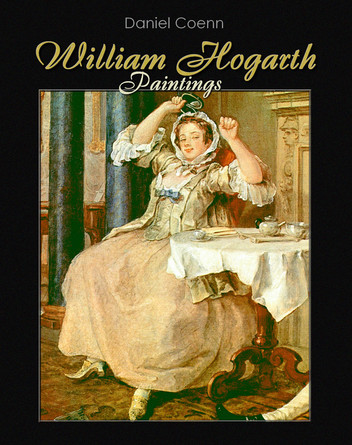
William Hogarth Paintings brings the remarkable works of England’s most innovative eighteenth-century artist to your digital device. This portable collection showcases a painter who revolutionized art through narrative storytelling and biting social commentary. Moreover, it offers convenient access to an artist whose moral tales captured Georgian London’s vices and virtues. The collection celebrates a master whose paintings combined entertainment, instruction, and unflinching observation of human nature.
Understanding William Hogarth Paintings and Their Revolutionary Impact
William Hogarth created some of the most influential and entertaining artworks in British art history. He invented what he called “modern moral subjects” that told sequential stories through multiple paintings. Furthermore, his narrative series functioned like visual novels or early comic strips with continuing characters. His art challenged the dominance of foreign artists in England while establishing distinctly British themes.
Hogarth lived from 1697 to 1764 and witnessed Georgian London’s dramatic social transformations firsthand. He grew up in modest circumstances and understood both high society and London’s dangerous streets. Additionally, his father’s imprisonment for debt profoundly shaped his views on social injustice and hypocrisy. Therefore, his paintings reflected genuine knowledge of the society he satirized so brilliantly.
His works exposed the follies, vices, and pretensions of all social classes with equal vigor. He showed aristocrats, merchants, prostitutes, and criminals in narratives that revealed universal human weaknesses. Nevertheless, he maintained sympathy for victims of social systems while condemning predatory behavior sharply. Thus, his art balanced moral instruction with entertainment and genuine compassion for human frailty.
The Revolutionary Narrative Approach of William Hogarth Paintings
Before Hogarth, British painting consisted primarily of portraits and imported Italian or French historical paintings. He recognized that sequential narrative paintings could reach broader audiences and convey complex moral lessons. However, he needed to develop entirely new compositional strategies for telling stories through connected images. This radical innovation transformed British art and established patterns that influenced generations of artists.
He created series of paintings that followed characters through moral decline or social misadventures sequentially. Each painting in a series showed a different stage in the protagonist’s journey. Moreover, every canvas contained numerous details that advanced the story and provided social commentary. Hence, viewers could “read” his paintings like chapters in a book with continuing narratives.
His compositions packed extraordinary amounts of information into single images without appearing cluttered or confusing. He guided viewer attention through careful arrangement of figures, gestures, and significant details throughout compositions. Furthermore, he used lighting, color, and spatial relationships to emphasize important narrative and moral elements. Therefore, his technical mastery served his storytelling ambitions while creating visually satisfying and balanced compositions.
Iconic Narrative Series in William Hogarth Paintings Collections
Hogarth’s most famous works are his great narrative series that exposed Georgian society’s hypocrisies. These multi-painting sequences told complete stories with beginnings, middles, and tragic or cautionary endings. Additionally, they demonstrated his genius for combining entertainment with moral instruction and social criticism. Thus, understanding these key series helps appreciate his entire artistic achievement and cultural impact.
Five narrative series particularly exemplify Hogarth’s genius and revolutionary approach to painting:
- A Harlot’s Progress (1732) – Six scenes showing a country girl’s descent into prostitution and death
- A Rake’s Progress (1735) – Eight paintings depicting a young heir’s moral and financial ruin
- Marriage A-la-Mode (1743) – Six scenes exposing aristocratic marriage’s corruption and tragic consequences
- Industry and Idleness (1747) – Twelve prints contrasting two apprentices’ divergent moral paths
- An Election (1754-1755) – Four paintings satirizing political corruption and electoral bribery
These series demonstrate Hogarth’s ability to create compelling narratives while maintaining high artistic quality. They show his mastery of composition, characterization, and the expressive power of accumulated detail. Moreover, they reveal how he used specific stories to explore universal themes of greed and vanity. Thus, his narrative paintings transcend their specific historical moment to speak across centuries.
The Artistic Techniques Behind William Hogarth Paintings
Hogarth developed distinctive technical approaches that enhanced his paintings’ narrative clarity and visual impact. He used strong lighting to direct viewer attention to crucial narrative elements and significant details. Furthermore, he employed color strategically to create focal points and establish mood throughout his compositions. His technical choices always served his storytelling purposes while demonstrating complete mastery of painting fundamentals.
His compositions arranged multiple figures and objects to create clear spatial relationships and narrative connections. He positioned characters to suggest relationships, conflicts, and power dynamics through body language and placement. Additionally, he filled backgrounds with significant details that enriched stories and provided social commentary. Therefore, every element in his paintings contributed to overall narrative meaning and visual coherence.
Hogarth painted with careful attention to textures, materials, and surface qualities that enhanced realism. He rendered fabrics, metals, and flesh with convincing tactile presence that drew viewers into scenes. Moreover, he captured facial expressions and gestures that conveyed character psychology and emotional states clearly. Hence, his technical skill supported his narrative ambitions while creating paintings that rewarded close examination.
Hogarth’s Connection to Printmaking and Popular Culture
Hogarth achieved fame and financial success primarily through prints made from his painted series. He recognized that engravings could reach far larger audiences than original paintings ever could. Furthermore, prints allowed middle-class buyers to own his works and spread his moral messages widely. Thus, printmaking became central to his artistic practice and his influence on British culture.
His prints demonstrated unprecedented technical quality and innovative approaches to reproductive engraving techniques. He supervised engravers closely to ensure prints captured his paintings’ details and tonal subtleties. Moreover, he sold prints by subscription, creating anticipation and ensuring financial returns before publication. Hence, he pioneered business models that gave artists greater control over their work’s distribution.
The widespread distribution of his prints made him England’s first truly popular artist. His images appeared in homes across social classes and sparked conversations about morality and society. Additionally, his prints influenced literature, theater, and popular culture far beyond the art world. Therefore, his work in printmaking amplified his paintings’ impact and established his enduring cultural influence.
Hogarth’s Portraits and Their Psychological Depth
Beyond his famous narrative series, Hogarth created remarkable portraits that demonstrated his psychological insight. He painted friends, family members, theatrical figures, and philanthropists with characteristic honesty and perception. Furthermore, his portraits combined physical likeness with character revelation that went beyond conventional flattery. Thus, his portrait work ranks among his most accomplished and personally revealing artistic achievements.
His portrait style emphasized natural poses and genuine expressions rather than artificial formal dignity. He captured sitters in moments of animation and personality rather than stiff conventional poses. Moreover, he used informal settings and props that revealed character and professional identity effectively. Hence, his portraits feel more alive and psychologically present than many contemporary formal portraits.
He often portrayed middle-class professionals and merchants rather than exclusively aristocratic subjects like many portraitists. His sitters included actors, writers, sea captains, and philanthropists who represented emerging social classes. Additionally, he painted children with genuine affection and understanding of childhood psychology and behavior. Therefore, his portraits documented a broader range of Georgian society than conventional aristocratic portraiture.
The Social Commentary in William Hogarth Paintings
Hogarth used his art to expose and critique Georgian society’s injustices, hypocrisies, and cruelties. His paintings attacked political corruption, religious hypocrisy, medical quackery, and legal system abuses relentlessly. Furthermore, he showed sympathy for victims of social systems while condemning those who exploited them. Thus, his work functioned as powerful social criticism disguised as entertaining narrative art.
William Hogarth Paintings particularly excel at revealing the consequences of vice, greed, and moral weakness. His narratives showed how individual failings led to personal destruction and harmed innocent people. Moreover, his paintings demonstrated how social institutions often enabled rather than prevented moral corruption. Hence, his art combined individual moral instruction with broader critique of systemic social problems.
He drew on direct observation of London life for authentic details that gave his satires credibility. His paintings included recognizable locations, contemporary fashions, and current events that grounded stories in reality. Additionally, he populated scenes with character types his audiences would recognize from daily life. Therefore, his social commentary gained power from its specificity and observable truth rather than abstract moralizing.
Hogarth’s Influence on British Art and Culture
Hogarth’s narrative innovations influenced British art profoundly and established patterns that continued for generations. His sequential storytelling approach inspired later artists including Thomas Rowlandson and George Cruikshank significantly. Furthermore, his combination of entertainment and moral instruction became a distinctly British artistic tradition. Thus, his artistic innovations helped shape British visual culture’s development for centuries.
His success demonstrated that British artists could compete with continental masters and develop distinctive national styles. He proved that contemporary British subjects could be as worthy as classical or biblical themes. Moreover, his commercial success through prints showed artists could achieve financial independence without aristocratic patronage. Hence, he transformed British artists’ professional possibilities and cultural status dramatically.
Contemporary artists, illustrators, and filmmakers continue finding inspiration in his narrative techniques and social observation. His sequential storytelling anticipated comic strips, graphic novels, and cinematic narrative structures directly. Additionally, his satirical approach to social commentary remains relevant for artists addressing contemporary issues. Therefore, his work maintains vitality and relevance for creators working in diverse media today.
The Humor and Wit in William Hogarth Paintings
Hogarth infused his moral narratives with humor, wit, and visual jokes that made instruction entertaining. His paintings rewarded careful examination with clever details, visual puns, and satirical references throughout compositions. Furthermore, he understood that laughter could convey moral lessons more effectively than solemn preaching. Hence, his art balanced serious social criticism with genuine entertainment and comic invention.
His visual humor ranged from broad slapstick to subtle satirical references that educated viewers appreciated. He included falling chamber pots, drunken brawls, and physical comedy alongside sophisticated literary and artistic allusions. Moreover, he satirized contemporary fads, fashions, and cultural pretensions with sharp observational wit. Thus, his paintings operated on multiple levels that engaged diverse audiences simultaneously.
He often included self-portraits or personal references hidden within his narrative paintings playfully. These insider jokes rewarded his friends and regular viewers while adding layers of meaning. Additionally, he used visual symbols and emblems that eighteenth-century audiences would recognize and interpret correctly. Therefore, his paintings functioned as complex visual texts that repaid repeated viewing and careful study.
Hogarth’s Depictions of London Life
Hogarth created the most comprehensive visual record of eighteenth-century London life in all its variety. His paintings documented streets, taverns, theaters, prisons, and private homes with extraordinary detail and accuracy. Furthermore, they captured the energy, danger, and vitality of Georgian London at its peak. Thus, his works provide invaluable historical evidence alongside their artistic and narrative achievements.
His London teemed with diverse characters from all social levels interacting in crowded urban spaces. He showed aristocrats, merchants, servants, beggars, prostitutes, and criminals occupying the same city simultaneously. Moreover, he captured the noise, chaos, and sensory overload of urban life convincingly. Hence, his paintings transport viewers to Georgian London more effectively than written descriptions alone.
He documented contemporary architecture, fashions, furnishings, and material culture with meticulous attention to detail. His paintings show what people wore, how rooms were decorated, and what objects surrounded daily life. Additionally, he captured street life including vendors, entertainers, and the constant flow of urban humanity. Therefore, his works serve as visual encyclopedias of eighteenth-century English material and social culture.
The Moral Philosophy Behind William Hogarth Paintings
Hogarth’s narratives embodied Enlightenment beliefs in reason, education, and the possibility of moral improvement. He believed that showing vice’s consequences could deter viewers from similar behavior effectively. Furthermore, he thought art could teach moral lessons more powerfully than sermons or written instruction. Thus, his paintings reflected optimistic faith in art’s capacity to improve society and individual behavior.
His moral philosophy emphasized practical consequences rather than abstract religious or philosophical principles primarily. He showed how greed led to poverty, lust to disease, and vanity to ridicule. Moreover, he demonstrated how individual moral failings harmed families, communities, and society broadly. Hence, his approach appealed to self-interest and practical wisdom rather than purely spiritual concerns.
He maintained sympathy for human weakness while condemning predatory behavior and systemic injustice firmly. His narratives distinguished between victims of circumstance and those who deliberately exploited others for gain. Additionally, he showed how social systems often trapped people in destructive patterns beyond individual control. Therefore, his moral vision combined individual responsibility with recognition of social and economic forces.
Hogarth’s Theory of Beauty and Aesthetic Ideas
Beyond his narrative paintings, Hogarth developed influential theories about beauty and aesthetic perception systematically. He published “The Analysis of Beauty” in 1753, arguing that serpentine lines created visual pleasure. Furthermore, he challenged conventional academic theories and asserted that variety and intricacy produced aesthetic satisfaction. Thus, he contributed to aesthetic philosophy while revolutionizing narrative painting simultaneously.
His aesthetic theory emphasized dynamic movement and visual complexity over static classical simplicity and symmetry. He argued that the eye enjoyed following curved lines and discovering varied forms throughout compositions. Moreover, he believed that too much regularity produced boredom while controlled variety maintained viewer interest. Hence, his theoretical writings explained principles evident in his own compositional practices and choices.
His ideas influenced British aesthetic theory and challenged the dominance of continental academic orthodoxy significantly. He asserted that English artists could develop independent aesthetic principles rather than merely copying foreign models. Additionally, he democratized aesthetic discussion by writing for general audiences rather than exclusively learned scholars. Therefore, his theoretical work complemented his practical achievements in establishing British artistic independence and confidence.
Why William Hogarth Paintings Matter Today
Hogarth’s art remains powerfully relevant in our contemporary world of social inequality and political corruption. His penetrating observations of human nature and social systems speak to ongoing concerns and struggles. Furthermore, his paintings remind us that moral choices have real consequences for individuals and communities. Thus, his eighteenth-century works address issues still urgent in the twenty-first century’s complex society.
His technical achievements and narrative innovations continue influencing artists across diverse media and contemporary approaches. Graphic novelists, filmmakers, and illustrators study his sequential storytelling techniques and compositional strategies regularly. Moreover, his ability to combine entertainment with social criticism provides enduring lessons for contemporary artists. Hence, his work remains central to understanding narrative art’s possibilities and cultural functions today.
Contemporary interest in social justice and systemic critique has renewed appreciation for Hogarth’s distinctive contributions. His unflinching examination of power, corruption, and exploitation anticipated later artistic movements and contemporary concerns. Additionally, his work bridges historical periods and connects eighteenth-century innovations to contemporary narrative art seamlessly. Therefore, his art speaks to both historical understanding and contemporary artistic practice effectively.
The Convenience of Digital Art Collections
William Hogarth Paintings in the My Pocket Gallery series offers unprecedented access to this master’s works. Traditional art books are heavy, expensive, and difficult to carry while traveling or studying remotely. However, digital collections provide instant access to high-quality images on phones, tablets, and computers anywhere. Moreover, users can zoom in to examine the extraordinary details that make Hogarth’s paintings endlessly fascinating.
Digital formats allow art lovers to study paintings anywhere without visiting distant museums or libraries. Students can reference specific works while writing papers or preparing presentations with immediate convenience. Furthermore, the portable format encourages spontaneous viewing and repeated engagement with artworks over extended time. Thus, technology democratizes access to cultural treasures previously available only to privileged museum visitors.
The collection preserves Hogarth’s legacy for future generations in durable, easily shareable digital formats. Physical books deteriorate over time, but digital files can be copied and preserved indefinitely. Additionally, digital collections can be updated with new scholarship, higher-resolution images, and supplementary materials easily. Therefore, this format serves both immediate convenience and long-term cultural preservation goals effectively.
For Students, Scholars, and Art Enthusiasts
This collection serves diverse audiences interested in art history, British culture, and visual narrative comprehensively. Students gain convenient reference material for courses in British art, eighteenth-century studies, and narrative theory. Moreover, scholars appreciate having comprehensive image collections for research and teaching without expensive museum visits. The accessible format supports both casual appreciation and serious academic study effectively and efficiently.
Art enthusiasts discover or rediscover a master whose works reward repeated viewing and careful contemplation. Hogarth’s paintings reveal new details and meanings with each encounter and changing life perspectives. Furthermore, the collection allows building personal relationships with specific works through frequent, convenient access. Hence, it supports the kind of sustained engagement that deepens artistic understanding and appreciation significantly.
Teachers and educators find the portable format ideal for classroom presentations and student assignments. Digital images project clearly for group viewing and discussion of composition, technique, and narrative meaning. Additionally, students can access the same images for homework and independent study outside class. Therefore, the collection enhances art education at all levels from introductory surveys to advanced seminars.
Building Your Understanding of British Art
Hogarth’s work provides an ideal entry point for understanding British art’s distinctive character and development. His clear narratives and accessible subject matter make his paintings immediately engaging for all viewers. Moreover, his technical mastery demonstrates how traditional skills could serve revolutionary artistic visions and innovations. Thus, studying his work builds appreciation for both academic training and creative experimentation simultaneously.
The collection allows comparing different periods and approaches within Hogarth’s career development over four decades. Early works show his development from engraver to painter while later works reveal mature mastery. Furthermore, viewers can trace how his style evolved while his moral vision remained remarkably consistent. Hence, the collection illustrates artistic growth and development within a coherent vision and purpose.
Understanding Hogarth enriches appreciation of artists he influenced and traditions he helped establish significantly. His narrative strategies and social commentary established patterns that subsequent British artists adapted and transformed. Additionally, recognizing his influence helps viewers understand connections between seemingly different artistic movements and periods. Therefore, studying his work illuminates broader patterns in British art’s development and distinctive character.
Hogarth’s Place in Art History
Art historians recognize Hogarth as one of the most important and innovative British artists ever. He established narrative painting as a legitimate and commercially viable artistic genre in Britain. Furthermore, his work influenced British visual culture profoundly and helped establish national artistic identity and confidence. Thus, his historical importance extends beyond individual achievements to broader cultural and artistic developments.
His English nationality and middle-class background challenged the dominance of foreign artists in British patronage. He proved that native artists could achieve excellence without Italian training or aristocratic continental connections. Additionally, his commercial success through prints demonstrated alternative economic models for artistic practice and independence. Nevertheless, his achievements earned respect even from those who initially dismissed his unconventional approach.
Major museums worldwide now recognize Hogarth’s importance and actively collect his paintings and prints. Retrospective exhibitions have introduced his work to new audiences and sparked renewed critical interest. Moreover, art market prices for his works have risen dramatically as collectors recognize his quality. Hence, his reputation continues growing as more people discover his distinctive artistic vision and achievements.
The Evolution of Hogarth’s Style
Hogarth’s artistic development shows fascinating evolution from engraver to accomplished painter and theorist. His early works demonstrate mastery of engraving techniques and growing ambition in composition and scale. However, exposure to continental painting and sustained practice transformed his technical abilities dramatically over time. Additionally, his narrative ambitions pushed him to develop increasingly sophisticated compositional strategies and techniques.
His mature style emerged fully formed in the 1730s with his first great narrative series. These paintings combined all elements of his distinctive approach including detailed observation and moral storytelling. Furthermore, they demonstrated how he could invest contemporary subjects with artistic significance and commercial success. Thus, this period represents the culmination of his artistic development and revolutionary innovations.
Later works showed continued evolution including experiments with more ambitious scale and varied subjects. He painted increasingly complex multi-figure compositions and explored different approaches to color and lighting. Moreover, he never stopped experimenting within his established style’s parameters and distinctive visual language. Hence, his career demonstrates ongoing artistic growth rather than static repetition of successful formulas.
Conclusion: The Enduring Power of William Hogarth Paintings
William Hogarth created art that transcends its specific historical moment to speak across generations and cultures. His paintings explore universal human experiences of temptation, weakness, and moral choice with penetrating insight. Moreover, they demonstrate how great art can find profound meaning in contemporary life and society. William Hogarth Paintings in this convenient digital collection ensures his legacy remains accessible to audiences.
His revolutionary approach to narrative, social commentary, and artistic independence changed British art’s possibilities forever. He proved that sequential paintings could tell compelling stories and convey complex moral lessons effectively. Furthermore, he showed that contemporary British subjects could rival classical themes in artistic significance. Thus, his artistic choices carried both aesthetic and cultural dimensions that continue resonating today.
The My Pocket Gallery series makes experiencing his masterworks easier than ever before in history. Art lovers can carry dozens of his paintings in their pockets and view them anywhere. Additionally, the digital format allows sharing discoveries with friends and family instantly across any distance. Therefore, technology serves democratic ideals by making great art accessible to everyone interested.
This essential collection belongs in every art lover’s digital library alongside the great masters. It offers both immediate visual pleasure and opportunities for deeper study and understanding over time. Moreover, it preserves and celebrates an artist whose distinctive vision and technical mastery established new possibilities. Hence, William Hogarth Paintings provides lasting value for anyone interested in art, history, or human nature.



Reviews
There are no reviews yet.