

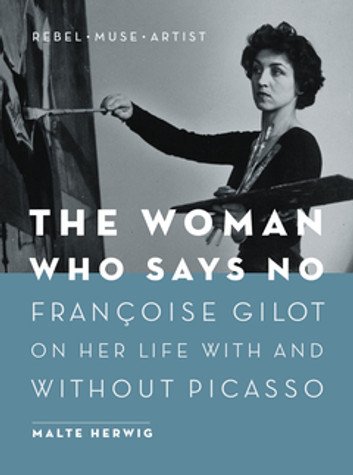
Description
The Woman Who Says No: A Portrait of Courage and Independence
“The Woman Who Says No: Françoise Gilot on Her Life With and Without Picasso” by Malte Herwig chronicles an extraordinary woman’s journey. Françoise Gilot refused to be defined solely by her relationship with Pablo Picasso. Moreover, she built a remarkable artistic career and life on her own terms. This biography explores how Gilot became the only woman who successfully left Picasso and thrived afterward.
The book challenges conventional narratives about women in the shadows of famous men. Gilot’s story demonstrates that artistic talent and personal strength can overcome even the most powerful attempts at control. Furthermore, her life offers inspiration to anyone seeking independence and self-determination against overwhelming odds.
Malte Herwig: The Biographer Behind the Story
Malte Herwig brings journalistic rigor and literary sensitivity to “The Woman Who Says No.” He has established himself as a skilled biographer who captures complex personalities with nuance and depth. Additionally, Herwig conducted extensive interviews with Gilot herself, providing firsthand insights into her experiences. His approach combines thorough research with compelling storytelling that brings Gilot’s remarkable life to vivid reality.
Herwig recognizes that Gilot’s story deserves telling on its own merits, not merely as a footnote. He positions her as the central figure rather than treating her as Picasso’s muse or companion. Moreover, he explores how Gilot navigated the art world as a woman in the mid-twentieth century. This perspective reveals the obstacles she faced and the courage required to overcome them successfully.
The author’s respect for Gilot’s agency and accomplishments shapes every aspect of the narrative structure. He refuses to sensationalize her relationship with Picasso or reduce her to a romantic interest. Instead, Herwig presents a complete portrait of an artist, mother, writer, and independent woman. Furthermore, he examines how Gilot’s choices influenced generations of women seeking their own paths forward.
Françoise Gilot: Artist and Independent Spirit
Françoise Gilot was born in 1921 in Neuilly-sur-Seine, France, into a prosperous bourgeois family. She showed artistic talent from childhood and pursued painting despite her father’s initial opposition. Moreover, Gilot studied at prestigious institutions and developed her skills with determination and discipline. Her early work demonstrated originality and technical proficiency that would characterize her entire career.
Gilot’s artistic vision combined elements of cubism, abstraction, and figurative representation in distinctive ways. She developed a personal style that reflected her own sensibility rather than imitating established masters. Additionally, her work explored themes of femininity, nature, and human relationships with psychological depth. Critics recognized her talent even before her association with Picasso brought unwanted attention and scrutiny.
“The Woman Who Says No” emphasizes that Gilot was already an accomplished artist when she met Picasso. She wasn’t a naive young woman seeking fame through association with a celebrity artist. Furthermore, she maintained her artistic integrity and continued developing her own work throughout their relationship. This independence would prove crucial when she later chose to leave Picasso and rebuild her life.
Meeting Picasso: A Fateful Encounter
Françoise Gilot met Pablo Picasso in 1943 when she was twenty-one and he was sixty-one. The meeting occurred at a restaurant in occupied Paris during World War II’s darkest days. Moreover, Picasso was immediately attracted to Gilot’s beauty, intelligence, and artistic talent. Their relationship would last ten years and produce two children, Claude and Paloma Picasso.
The age difference and power imbalance created inherent challenges from the relationship’s very beginning. Picasso was already the most famous artist in the world with immense wealth and influence. Additionally, he had a well-established pattern of controlling and eventually discarding the women in his life. Gilot entered this relationship with her eyes open, aware of Picasso’s reputation and history.
“The Woman Who Says No” explores the complexity of their relationship beyond simple victim-perpetrator narratives. Gilot found intellectual stimulation and artistic inspiration in Picasso’s company and creative energy. However, she also experienced his jealousy, possessiveness, and attempts to dominate every aspect of her life. Furthermore, she witnessed how he had destroyed other women emotionally and professionally through manipulation.
Life in Picasso’s Shadow
Living with Picasso meant constant negotiation between Gilot’s own artistic ambitions and his demands. He expected complete devotion and became angry when she prioritized her own work or interests. Moreover, Picasso used psychological manipulation to maintain control over Gilot and undermine her confidence. He alternated between praise and cruel criticism, keeping her emotionally off-balance and dependent.
The art world treated Gilot primarily as Picasso’s companion rather than as an artist herself. Critics and collectors dismissed her work or viewed it only through the lens of her relationship. Additionally, Picasso actively discouraged galleries from showing her paintings and dealers from representing her work. This sabotage revealed his deep insecurity and need to control women’s lives completely.
Despite these obstacles, Gilot continued painting and developing her artistic voice throughout their decade together. She refused to abandon her own creative work even when Picasso demanded her full attention. Furthermore, she maintained friendships and connections outside their relationship, preserving some independence and perspective. These choices would prove essential when she finally decided to leave Picasso in 1953.
The Woman Who Says No: Choosing Independence
Gilot’s decision to leave Picasso shocked the art world and defied all expectations about their relationship. No woman had ever left Picasso before; he always controlled when and how relationships ended. Moreover, everyone predicted that Gilot would suffer professionally and personally for her defiance and independence. Picasso himself was furious and vowed to destroy her career and reputation through his influence.
Gilot’s reasons for leaving included:
- Picasso’s controlling behavior and psychological manipulation
- His infidelity and disrespect for their relationship
- The impossibility of maintaining her own artistic identity
- Concern for her children’s well-being and development
- Recognition that staying would destroy her spirit and creativity
- Desire to live authentically rather than as someone’s possession
“The Woman Who Says No” examines the courage required to make this choice in 1953. Women had few legal rights and limited economic opportunities, especially in the art world. Additionally, Gilot faced Picasso’s wrath and his attempts to blacklist her from galleries and exhibitions. She risked everything for freedom and the chance to live on her own terms.
Building a Life After Picasso
After leaving Picasso, Gilot faced immediate retaliation and obstacles in pursuing her artistic career. Picasso used his influence to prevent galleries from showing her work and dealers from representing her. Moreover, he spread rumors and tried to damage her reputation within the art community. Many people expected Gilot to fail and return to Picasso, defeated and apologetic.
Instead, Gilot demonstrated remarkable resilience and determination in rebuilding her life and career independently. She moved to Paris and later to the United States, seeking opportunities beyond Picasso’s reach. Additionally, she continued painting prolifically and eventually found galleries willing to exhibit her work. Her artistic output during this period showed increased confidence and maturity in style and vision.
Gilot also wrote a memoir, “Life with Picasso,” published in 1964 despite Picasso’s legal attempts to suppress it. The book became an international bestseller and established Gilot as a writer and public intellectual. Furthermore, it provided unprecedented insight into Picasso’s personality and working methods from an intimate perspective. Picasso never forgave this act of independence and truth-telling about their relationship.
Gilot’s Artistic Legacy and Contributions
“The Woman Who Says No” emphasizes Gilot’s significant contributions to twentieth-century art beyond her Picasso connection. Her paintings demonstrate technical skill, emotional depth, and distinctive vision that deserve recognition independently. Moreover, her work evolved throughout her long career, showing continuous growth and experimentation. She explored various styles and subjects while maintaining a coherent artistic identity and voice.
Gilot’s art often featured strong female figures and explored themes of femininity and power. She created images that challenged traditional representations of women as passive objects of male desire. Additionally, her work incorporated elements from various artistic traditions, including cubism, surrealism, and abstract expressionism. This synthesis created a unique style that reflected her cosmopolitan background and experiences.
The book documents Gilot’s exhibitions in major museums and galleries throughout the United States and Europe. Her work appears in prestigious collections and continues attracting critical attention and scholarly analysis. Furthermore, recent years have seen renewed interest in Gilot’s artistic achievements as art history reconsiders women artists. “The Woman Who Says No” contributes to this reassessment by presenting Gilot’s complete artistic journey.
A Feminist Icon and Role Model
Françoise Gilot became an important feminist figure through her choices and public advocacy for women’s rights. Her decision to leave Picasso and speak publicly about their relationship inspired countless women. Moreover, she demonstrated that women could succeed professionally and personally without male approval or support. Her life challenged assumptions about women’s roles and capabilities in the mid-twentieth century.
Gilot spoke openly about the challenges women artists faced in a male-dominated art world. She advocated for equal opportunities and recognition based on artistic merit rather than gender. Additionally, she mentored younger women artists and encouraged them to pursue their creative visions fearlessly. Her generosity and support helped many women navigate the obstacles she had overcome herself.
“The Woman Who Says No” explores how Gilot’s feminism evolved from personal experience to broader political consciousness. She recognized that her struggles reflected systemic discrimination rather than individual circumstances or failures. Furthermore, she used her platform to advocate for changes in how society valued women’s work. Her activism extended beyond art to encompass women’s rights in all areas of life.
Speaking Truth to Power
Gilot’s willingness to speak honestly about Picasso challenged the art world’s tendency to excuse genius. She refused to remain silent about his cruelty, manipulation, and abuse of the women in his life. Moreover, she insisted that artistic greatness didn’t justify personal misconduct or give license to harm others. This position was controversial and cost her professionally, but she never wavered or recanted.
The publication of “Life with Picasso” represented an act of tremendous courage and defiance. Picasso attempted to use legal means to prevent the book’s publication and distribution worldwide. Additionally, many in the art establishment criticized Gilot for betraying Picasso’s privacy and tarnishing his reputation. She faced social ostracism and professional consequences for telling her truth about their relationship.
“The Woman Who Says No” examines why Gilot felt compelled to share her story despite these costs. She believed that silence protected abusers and perpetuated harmful patterns in relationships and society. Furthermore, she wanted other women to understand that they deserved respect and could leave destructive relationships. Her memoir became a testament to survival and the possibility of life after abuse.
Life Beyond Picasso: New Relationships and Achievements
After Picasso, Gilot married twice more and built fulfilling personal relationships on more equal terms. She married artist Luc Simon in 1955, though the marriage eventually ended in divorce. Additionally, she later married Jonas Salk, the renowned scientist who developed the polio vaccine. This relationship lasted until Salk’s death in 1995 and brought Gilot great happiness and partnership.
Gilot’s relationship with Salk demonstrated the possibility of mutual respect and support between accomplished partners. They encouraged each other’s work and maintained independent careers while sharing their lives together. Moreover, Salk respected Gilot’s artistic identity and never attempted to control or diminish her achievements. This partnership contrasted sharply with her experience with Picasso and validated her decision to leave.
“The Woman Who Says No” documents Gilot’s continued productivity and success throughout her later decades. She published additional books, including art criticism and reflections on creativity and the artistic process. Furthermore, she continued painting into her nineties, producing work that showed undiminished energy and vision. Her longevity and sustained creativity proved that leaving Picasso had liberated rather than destroyed her.
The Significance of Gilot’s Story Today
Françoise Gilot’s story remains powerfully relevant in contemporary discussions about power, gender, and artistic recognition. Her experiences illuminate ongoing challenges women face in male-dominated fields and abusive relationships. Moreover, her choices demonstrate that independence and success are possible even against overwhelming obstacles. “The Woman Who Says No” offers both historical documentation and contemporary inspiration for readers today.
The #MeToo movement has created new context for understanding Gilot’s courage in speaking publicly about abuse. Her willingness to name Picasso’s behavior and refuse silence anticipated contemporary conversations by decades. Additionally, her insistence on being recognized as an artist rather than a muse resonates with ongoing efforts to recover women’s contributions to art history and culture.
Gilot’s longevity—she lived to be 101 years old—allowed her to witness changing attitudes toward women artists. She saw increased recognition of women’s artistic achievements and greater willingness to challenge male genius narratives. Furthermore, she experienced the satisfaction of knowing her own work would be remembered and studied. “The Woman Who Says No” celebrates this vindication while acknowledging the struggles that preceded it.
Why This Biography Matters
Malte Herwig’s “The Woman Who Says No” fills an important gap in art history and feminist biography. It centers Gilot’s perspective and experiences rather than treating her as peripheral to Picasso’s story. Moreover, it demonstrates how one woman’s courage can inspire broader social change and consciousness. The book contributes to ongoing efforts to recognize women’s achievements and challenge patriarchal narratives.
The biography also serves as a case study in resilience, independence, and the power of saying no. Gilot’s story shows that leaving destructive relationships is possible and can lead to fulfillment and success. Additionally, it illustrates how speaking truth, even when costly, can liberate both the speaker and others. These lessons extend far beyond the specific circumstances of Gilot’s life with Picasso.
“The Woman Who Says No” reminds readers that women’s stories deserve telling on their own terms. Gilot wasn’t simply Picasso’s lover or muse; she was an accomplished artist, writer, and thinker. Furthermore, her life demonstrates that women can define themselves independently of their relationships with powerful men. This message remains essential for contemporary audiences navigating similar challenges in different contexts.
Conclusion: The Legacy of Saying No
“The Woman Who Says No: Françoise Gilot on Her Life With and Without Picasso” celebrates an extraordinary woman’s courage and achievements. Malte Herwig has crafted a biography that honors Gilot’s complexity, talent, and determination. Moreover, he has created a portrait that inspires readers to value independence and authenticity above approval. The book stands as both historical document and timeless testament to human resilience.
Françoise Gilot’s decision to leave Picasso and speak her truth changed how we understand power dynamics in relationships. Her refusal to be silenced or diminished paved the way for other women to claim their own voices. Additionally, her artistic legacy demonstrates that women’s creative contributions deserve recognition independent of their personal relationships. “The Woman Who Says No” ensures that Gilot’s story will continue inspiring future generations.
This biography ultimately argues that saying no can be the most powerful affirmation of self and dignity. Gilot’s life proves that independence, though difficult to achieve, brings greater fulfillment than comfortable subjugation. Furthermore, her example shows that it’s never too late to choose freedom and authenticity. “The Woman Who Says No” stands as essential reading for anyone seeking courage to live on their own terms.



Reviews
There are no reviews yet.