Description
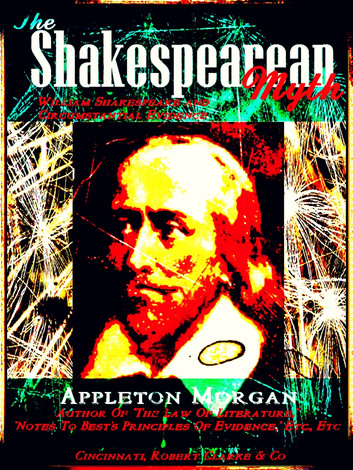
The Shakespearean Myth: A Comprehensive Synopsis of Appleton Morgan’s Investigation into William Shakespeare and Circumstantial Evidence
Introduction to The Shakespearean Myth
The Shakespearean Myth by Appleton Morgan examines William Shakespeare’s authorship through circumstantial evidence. This groundbreaking e-book challenges traditional literary history with compelling arguments. Moreover, it questions whether the Stratford man truly wrote the immortal plays. Morgan presents his case methodically and invites readers to judge for themselves. Furthermore, he relies exclusively on documented facts rather than speculation.
Appleton Morgan was a distinguished American lawyer and Shakespeare scholar. He brought legal expertise to the systematic analysis of the authorship question. Additionally, his background in evidence evaluation shaped his investigative approach. Morgan understood how circumstantial evidence builds compelling cases in court. Therefore, he applied these same principles to literary historical investigation.
The Nature of Circumstantial Evidence
Morgan begins by explaining what circumstantial evidence means in legal contexts. Unlike direct evidence, circumstantial proof relies on inference from facts. Moreover, it can be just as powerful as eyewitness testimony. Courts regularly convict defendants based entirely on circumstantial evidence when properly presented. However, such evidence requires careful analysis and logical reasoning.
The Shakespearean Myth applies this legal framework to the authorship question. Morgan argues that we must examine all available facts about Shakespeare’s life. Furthermore, we should draw reasonable conclusions from these documented circumstances. The absence of evidence can itself constitute important circumstantial proof. Therefore, gaps in the historical record deserve serious consideration.
The author emphasizes that circumstantial evidence accumulates weight through multiple supporting facts. One suspicious circumstance might mean nothing by itself. However, numerous unexplained anomalies create a pattern demanding explanation. Morgan systematically presents these accumulated circumstances throughout his investigation.
Biographical Gaps in The Shakespearean Myth
Morgan meticulously catalogs what we actually know about William Shakespeare of Stratford. The documented facts are surprisingly sparse for such a celebrated genius. Moreover, many expected records do not exist in any archive. No letters written by Shakespeare survive despite his alleged literary career. Additionally, no manuscripts in his handwriting have ever been discovered.
The author notes that, according to historical records, Shakespeare’s parents were illiterate. His father signed documents with a mark rather than a signature. Furthermore, Shakespeare’s own children apparently could not read or write. His daughter Judith signed her marriage certificate with a mark years later. Such family illiteracy seems inconsistent with the presence of a literary genius in the household.
Morgan carefully examines Shakespeare’s will as crucial circumstantial evidence. The document mentions no books, manuscripts, or literary materials whatsoever. However, it does list mundane items like beds, plates, and household goods. Furthermore, the will contains no references to theatrical connections or literary friendships. This absence strikes Morgan as highly suspicious and unexplained.
Educational Background and The Shakespearean Myth
The plays demonstrate extensive knowledge of classical literature and multiple languages. They reference Latin authors, Greek mythology, and Italian sources throughout. Moreover, they show intimate familiarity with French court customs and continental geography. Yet no records document Shakespeare attending grammar school in Stratford. Furthermore, there is no evidence of university education or foreign travel.
Morgan systematically contrasts this knowledge gap with the plays’ sophisticated content. The works contain detailed legal terminology used with professional precision. Additionally, they display aristocratic knowledge of hunting, falconry, and courtly etiquette. Such expertise would be impossible for a provincial glover’s son to acquire. Therefore, the circumstantial evidence suggests a different author with an appropriate background.
The author examines specific passages requiring specialized knowledge beyond Shakespeare’s documented experience. Medical terminology appears with technical accuracy throughout various plays. Furthermore, military strategy and naval warfare receive detailed treatment in historical dramas. Morgan argues these circumstances point toward an educated aristocrat as the true author.
Contemporary Recognition and Documentation
The Shakespearean Myth investigates what Shakespeare’s contemporaries actually said about him. Surprisingly few references to Shakespeare as a writer exist during his lifetime. Moreover, those that do exist contain puzzling ambiguities and cryptic language. Ben Jonson’s famous tribute appeared seven years after Shakespeare’s death. Additionally, its phrasing contains curious qualifications and double meanings.
Morgan examines the publication history of Shakespeare’s works as circumstantial evidence. Many plays appeared anonymously or with suspicious attribution during Shakespeare’s lifetime. Furthermore, the First Folio emerged seven years after his death under mysterious circumstances. The dedication and prefatory materials contain oddly evasive language about the author’s identity. Therefore, these publishing circumstances raise legitimate questions about true authorship.
The author notes that no contemporary writer praised Shakespeare as a literary genius. No tributes, dedications, or acknowledgments appeared during his active years in London. However, other writers of the period received extensive recognition from their peers. This silence surrounding Shakespeare constitutes significant negative circumstantial evidence according to Morgan’s analysis.
The Stratford Monument as Circumstantial Evidence
Morgan dedicates substantial attention to Shakespeare’s monument in Holy Trinity Church. Early descriptions and sketches show a figure holding a wool sack. Moreover, the monument originally depicted a grain merchant rather than a writer. The current version, showing a writer with a pen and paper, appeared later. Furthermore, this alteration occurred when establishing Shakespeare’s literary credentials became culturally important.
The author presents documentary evidence of the monument’s original appearance from travelers’ accounts. These descriptions consistently mention a man with a sack, not writing materials. Additionally, early engravings confirm that this completely different representation existed for decades. Someone deliberately changed the monument to support the authorship narrative retroactively. Therefore, this circumstantial evidence suggests conscious historical manipulation.
The timing of the alteration coincides suspiciously with the rise of Shakespeare worship in England. Moreover, it occurred when powerful cultural interests wanted to establish national literary pride. Morgan argues this represents deliberate falsification of historical evidence to maintain a myth. The altered monument constitutes circumstantial evidence of organized deception regarding Shakespeare’s identity.
Legal Analysis in The Shakespearean Myth
Morgan’s legal background shapes his analytical approach throughout the investigation. He evaluates evidence using standards applied in courtrooms every day. Moreover, he distinguishes between speculation and legitimate inference from facts. The author repeatedly emphasizes that he presents only documented circumstances, not theories. Furthermore, he invites readers to draw their own conclusions from the evidence.
The book applies legal principles about the burden of proof to the authorship question. Traditional scholars claim Shakespeare wrote the plays without providing adequate documentation. However, Morgan argues they bear the burden of proving their positive claim. Additionally, he notes that extraordinary claims require extraordinary evidence to establish. The circumstantial evidence against traditional attribution accumulates throughout his investigation.
Morgan explains how lawyers systematically build cases from accumulated circumstantial evidence. Each fact alone might seem insignificant or explainable on its own. However, the totality of circumstances creates an overwhelming pattern pointing toward one conclusion. Therefore, readers must consider all the evidence together rather than dismissing each point separately.
Signatures and Handwriting Evidence
The author examines Shakespeare’s six surviving signatures as crucial circumstantial evidence. These signatures appear on legal documents from various points in his life. Moreover, they show remarkable inconsistency in spelling and letter formation. Each signature spells the name differently, suggesting unfamiliarity with writing it. Furthermore, the handwriting appears labored and barely literate.
Morgan contrasts these signatures with the sophisticated handwriting expected from a professional writer. Authors of the period typically developed clear, practiced handwriting from constant manuscript work. However, Shakespeare’s signatures suggest someone who rarely wrote anything. Additionally, the spelling variations indicate uncertainty about the proper form of his name. Such circumstances seem incompatible with the authorship of complex literary works.
The author notes that no Shakespeare manuscripts are known to exist in his own handwriting, despite his alleged prolific output. Dozens of plays and sonnets are said to have flowed from his pen over the decades. Yet not a single page of his hand survives for comparison. Furthermore, this absence becomes more suspicious when contrasted with other writers’ preserved manuscripts. Therefore, the handwriting evidence constitutes powerful negative circumstantial proof.
The Knowledge Problem in The Shakespearean Myth
Morgan systematically catalogs specialized knowledge displayed throughout Shakespeare’s works. The plays demonstrate intimate familiarity with Italian geography and customs. Moreover, they accurately describe specific locations that the author apparently visited personally. Yet there is no evidence that Shakespeare ever traveled outside England. Furthermore, such travel would have been expensive and difficult for someone of his background.
The works offer detailed insights into court life and aristocratic society. They accurately portray the manners, speech patterns, and concerns of nobility. Additionally, they show familiarity with private aristocratic pastimes like hunting and falconry. Such knowledge would be inaccessible to a commoner without extensive aristocratic connections. Therefore, these circumstances suggest an author from the upper classes.
Legal terminology appears throughout the plays with professional precision and technical accuracy. Morgan, as a lawyer himself, recognizes the sophisticated understanding of law displayed. Furthermore, the works show familiarity with specific legal procedures and courtroom practices. This specialized knowledge points toward an author with legal training or extensive court experience. The circumstantial evidence thus narrows the field of possible authors significantly.
Publication Anomalies and Suspicious Circumstances
The Shakespearean Myth carefully examines the peculiar publication history of Shakespeare’s works. Many plays appeared without author attribution during Shakespeare’s lifetime. Moreover, others carried suspicious or ambiguous attribution that raises questions. The First Folio emerged under mysterious circumstances seven years after Shakespeare’s death. Furthermore, its prefatory materials contain cryptic language and puzzling dedications.
Morgan analyzes the dedication to the “onlie begetter” of Shakespeare’s sonnets. This phrase has puzzled scholars for centuries without a satisfactory explanation. Additionally, the dedication’s wording suggests the author’s identity was being deliberately concealed. The publisher’s choice of language seems designed to obscure rather than clarify. Therefore, this circumstantial evidence points toward an intentional mystery about true authorship.
The author notes that Shakespeare apparently showed no interest in publishing his works. He never corrected errors in printed versions or supervised publication personally. However, other writers of the period actively managed their publications and reputations. This indifference seems inconsistent with a professional writer’s natural concern for his work. Furthermore, it suggests Shakespeare may not have been the actual author.
Comparative Analysis with Other Writers
Morgan compares Shakespeare’s documented life with those of other Elizabethan writers. Contemporary authors left extensive paper trails documenting their literary activities. Moreover, they received recognition, patronage, and acknowledgment from peers during their lifetimes. Letters, dedications, and tributes actively connected them to the literary community. However, Shakespeare’s life shows none of these expected patterns.
The author systematically examines specific contemporaries, such as Ben Jonson and Christopher Marlowe. Their lives are well documented through educational records, correspondence, and contemporary references. Furthermore, their involvement in literary circles is well documented across multiple sources. Shakespeare’s life lacks all these expected documentary traces despite his alleged greater genius. Therefore, the comparative circumstantial evidence raises serious questions about traditional attribution.
Morgan notes that other writers’ wills typically mention books, manuscripts, and literary connections. They bequeathed libraries to friends or made provisions for unpublished works. However, Shakespeare’s will contains no such references whatsoever despite his supposed literary career. This absence becomes more significant when compared with contemporary writers’ documented practices. The circumstantial evidence thus suggests Shakespeare was not actually a professional writer.
The Silence of Shakespeare’s Family and Friends
The author examines the curious silence that followed Shakespeare’s death. His family members never mentioned his literary achievements in any surviving documents. Moreover, his daughter Judith apparently could not read the plays her father allegedly wrote. No letters from friends or colleagues survive discussing his work or mourning his loss. Furthermore, the Stratford community showed no awareness of his supposed literary genius.
Morgan finds this silence deeply suspicious as circumstantial evidence of something wrong. When great writers die, their communities typically acknowledge and celebrate their achievements. However, Stratford treated Shakespeare’s death as that of an ordinary businessman. Additionally, no literary figures attended his funeral or wrote immediate tributes. The circumstantial evidence suggests his contemporaries did not view him as a writer.
The author notes that Shakespeare’s wife and children never capitalized on his literary fame. They could have profited from his reputation or claimed a connection to his works. However, they lived quietly without any reference to his alleged theatrical career. Furthermore, they showed no interest in preserving manuscripts or promoting his literary legacy. Such behavior seems inconsistent with a family that knew him as a great writer.
Arguments Against Traditional Attribution
The Shakespearean Myth systematically presents circumstantial evidence challenging traditional Shakespeare authorship. Morgan organizes his arguments logically, building from documented facts to reasonable inferences. Moreover, he addresses common objections to anti-Stratfordian positions throughout his investigation. The author maintains that honest inquiry requires following evidence wherever it leads. Furthermore, he argues that tradition alone cannot substitute for documented proof.
Key circumstantial evidence against traditional attribution includes:
- No educational records documenting the extensive learning displayed in the plays
- No manuscripts surviving in Shakespeare’s handwriting despite alleged prolific output
- Illiterate family members are inconsistent with a literary genius in the household.
- Will lacks literary references despite supposed career as England’s greatest writer.
- Barely literate signatures showing unfamiliarity with writing his own name
- No contemporary recognition as a literary figure during his lifetime
- Suspicious publication history with anonymous works and delayed First Folio.
- Altered monument suggesting deliberate historical falsification after his death
Morgan emphasizes that each piece of circumstantial evidence should be considered individually. However, the accumulated weight of all these circumstances together becomes overwhelming. Furthermore, traditional scholars have failed to satisfactorily explain these anomalies. The author argues that reasonable people must acknowledge serious problems with traditional attribution.
The Legal Standard of Proof
Morgan applies courtroom standards to systematically evaluate the authorship question. In civil cases, proof requires a preponderance of evidence favoring one conclusion. Moreover, circumstantial evidence can meet this standard when properly accumulated and analyzed. The author argues that anti-Stratfordian evidence exceeds even this threshold convincingly. Furthermore, he suggests the circumstantial case would succeed in any impartial court.
The book explains how juries evaluate circumstantial evidence in criminal and civil trials. They must consider whether the evidence points more strongly toward one conclusion than the alternatives. Additionally, they should ask whether the defendant’s explanation accounts for all the circumstances. Morgan argues that traditional attribution fails to satisfactorily explain the accumulated anomalies. Therefore, the circumstantial evidence favors alternative authorship theories.
The author acknowledges that absolute certainty may be impossible without direct documentary proof. However, legal decisions are regularly based on circumstantial evidence that meets appropriate standards. Furthermore, historical conclusions necessarily rely on inference from available evidence rather than certainty. Morgan maintains that his circumstantial case meets any reasonable standard of proof. The evidence compels reconsideration of traditional attribution in light of his analysis.
Response to Traditional Scholars
Morgan addresses objections from traditional Shakespeare scholars throughout his investigation. Many dismiss authorship questions without seriously examining the circumstantial evidence. Moreover, they often rely on tradition and authority rather than documented facts. The author argues this approach violates basic principles of historical inquiry. Furthermore, he maintains that evidence should determine conclusions rather than predetermined beliefs.
Traditional scholars often claim that contemporary references prove Shakespeare’s authorship definitively. However, Morgan examines these references carefully and finds them ambiguous or suspicious. Additionally, many supposed contemporary acknowledgments appeared years after Shakespeare’s death. The circumstantial evidence suggests these later tributes may have been part of deliberate myth-making. Therefore, they cannot be accepted uncritically as proof of authorship.
The author notes that traditional scholars struggle to explain the biographical gaps and anomalies. They offer speculative explanations that lack documentary support or logical coherence. Moreover, they dismiss legitimate questions as conspiracy theories without addressing the evidence. Morgan argues this defensive posture suggests weakness in the traditional position. The circumstantial evidence demands better explanations than traditional scholarship has provided.
Alternative Candidates and The Shakespearean Myth
While Morgan focuses primarily on circumstantial evidence against traditional attribution, he acknowledges alternative candidates. Various scholars have proposed different authors as the true Shakespeare. Moreover, each candidate has supporting evidence and logical arguments in favor of their candidacy. The author maintains that identifying the true author matters less than acknowledging the problems. Furthermore, he argues that honest inquiry requires admitting when traditional answers prove inadequate.
Some proposed alternative authors include:
- Francis Bacon – philosopher and statesman with appropriate education and knowledge
- Edward de Vere, Earl of Oxford – aristocrat with documented literary interests
- Christopher Marlowe – playwright who allegedly faked his death
- William Stanley, Earl of Derby – a nobleman with theatrical connections
- Mary Sidney Herbert – educated noblewoman and literary patron
Morgan does not definitively endorse any particular alternative candidate in his investigation. However, he notes that several possess the education and background the plays require. Additionally, some alternative candidates better explain the circumstantial evidence than traditional attribution. The author encourages readers to investigate these possibilities with open minds. Therefore, his work opens the door to further inquiry rather than closing it.
The Cultural Investment in Traditional Attribution
The author examines why traditional attribution persists despite circumstantial evidence against it. Cultural institutions have invested heavily in the Shakespeare myth over centuries. Moreover, tourism, education, and national pride depend on maintaining traditional narratives. Challenging Shakespeare’s authorship threatens these established interests and investments. Furthermore, admitting error would embarrass scholars who built careers on traditional assumptions.
Morgan argues that truth should matter more than cultural comfort or institutional interests. Historical accuracy requires following evidence even when conclusions prove uncomfortable or inconvenient. Additionally, he notes that science progresses by questioning established beliefs and examining evidence objectively. Literary history should apply the same rigorous standards rather than defending tradition reflexively. Therefore, the circumstantial evidence demands honest reconsideration regardless of cultural consequences.
The book acknowledges that changing deeply held beliefs proves difficult for individuals and societies. People naturally resist conclusions that challenge their education and assumptions. However, Morgan maintains that intellectual honesty requires confronting uncomfortable evidence. Furthermore, he argues that truth ultimately serves culture better than comfortable myths. The circumstantial evidence compels this difficult but necessary reconsideration.
Methodology and Approach
The Shakespearean Myth distinguishes itself through rigorous methodology borrowed from legal practice. Morgan presents only documented facts, not speculation or theory. Moreover, he carefully distinguishes between evidence and inference throughout his investigation. The author invites readers to evaluate his reasoning and draw their own conclusions. Furthermore, he provides extensive citations allowing independent verification of his claims.
The book’s structure mirrors legal briefs, presenting circumstantial cases systematically. Each chapter builds on previous evidence while introducing new supporting circumstances. Additionally, Morgan addresses counterarguments and alternative explanations throughout his presentation. This methodical approach strengthens his case by anticipating and answering objections. Therefore, readers receive a comprehensive evaluation of all relevant evidence.
The author emphasizes that circumstantial evidence requires careful, logical analysis rather than emotional reactions. Each fact must be evaluated independently for its reliability and relevance. However, the totality of circumstances must also be considered together holistically. Morgan’s legal training enables this balanced approach, combining detailed analysis with a broader perspective. His methodology provides a model for investigating other historical controversies.
Impact on Shakespeare Studies
Morgan’s work significantly influenced subsequent debates over authorship and scholarly discussions. He established circumstantial evidence as a legitimate framework for investigating the question. Moreover, his legal approach brought new rigor to the analysis of historical documentation. Traditional scholars could no longer dismiss authorship questions without addressing accumulated evidence. Furthermore, his work encouraged other researchers to examine the documentary record more carefully.
The book demonstrated that legitimate questions existed about traditional attribution based on documented facts. General readers became aware that the authorship question involved more than conspiracy theories. Additionally, Morgan’s credentials as a lawyer and scholar lent credibility to anti-Stratfordian arguments. His work helped establish authorship studies as a serious field of inquiry. Therefore, his contribution extended beyond his specific conclusions to methodology and approach.
Some traditional scholars responded by investigating the historical record more thoroughly themselves. They sought to answer Morgan’s circumstantial arguments with better documentation and evidence. However, many gaps and anomalies he identified remain unexplained by traditional scholarship. The debate continues today partly because Morgan raised questions that still lack satisfactory answers. His circumstantial case remains influential more than a century after publication.
Modern Relevance and Continuing Questions
The circumstantial evidence Morgan presented remains relevant to contemporary debates over authorship. Modern scholars continue grappling with the same biographical gaps and documentary anomalies. Moreover, new analytical techniques have not resolved the fundamental questions he raised. Digital analysis of linguistic patterns adds new dimensions but does not provide definitive answers. Furthermore, the circumstantial case against traditional attribution has only strengthened over time.
Recent discoveries have confirmed some of Morgan’s observations about suspicious circumstances. Additionally, traditional explanations for various anomalies have proven increasingly unsatisfactory under scrutiny. The author’s legal framework for evaluating evidence remains applicable to new findings. Therefore, his work continues to influence how researchers approach the authorship question today.
The book also raises broader questions about how we establish historical truth generally. Can we trust traditional narratives when circumstantial evidence points toward different conclusions? Moreover, how should scholars balance cultural investment against documentary evidence? These methodological questions extend beyond Shakespeare studies into historical inquiry generally. Morgan’s work thus contributes to ongoing discussions about historical methodology and standards of proof.
Conclusion: The Power of Circumstantial Evidence
The Shakespearean Myth by Appleton Morgan presents a compelling circumstantial case against traditional attribution. The author systematically documents biographical gaps, suspicious circumstances, and unexplained anomalies. Moreover, he applies the legal standards of proof to evaluate the accumulated evidence rigorously. Whether readers accept his conclusions or not, they must acknowledge the questions he raises. Furthermore, his work demonstrates that circumstantial evidence deserves serious consideration in historical inquiry.
Morgan’s legal background enables a unique perspective on the authorship controversy. He understands how circumstantial evidence builds powerful cases through accumulated facts. Additionally, he recognizes that the absence of evidence can itself constitute significant proof. The biographical gaps and documentary anomalies he catalogs demand explanation from traditional scholars. Therefore, his work shifts the burden of proof toward those defending traditional attribution.
The book remains essential reading for anyone interested in the Shakespeare authorship question. It presents the anti-Stratfordian case through documented facts rather than speculation or theory. Moreover, it demonstrates how legal reasoning can effectively illuminate historical controversies. Morgan’s circumstantial approach provides a model for investigating other disputed attributions. His work continues to inspire debate and research more than a century after publication.
Ultimately, Morgan argues that honest inquiry requires following evidence wherever it leads. Cultural comfort and traditional beliefs cannot substitute for documented facts and logical reasoning. Furthermore, the circumstantial evidence he presents compels reconsideration of Shakespeare’s authorship. Whether the true author was Bacon, Oxford, or someone else matters less than acknowledging the problems. The Shakespearean Myth challenges readers to think critically about accepted narratives and evaluate evidence objectively.




Reviews
There are no reviews yet.