

Description
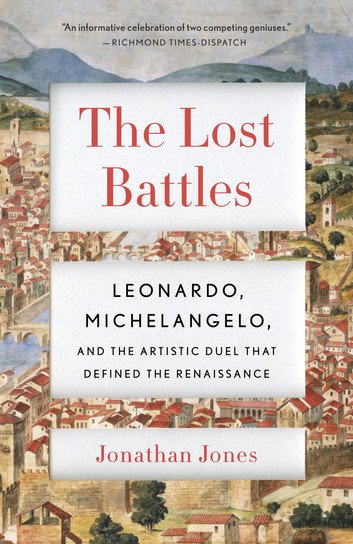
The Lost Battles: A Comprehensive Synopsis of the Renaissance’s Greatest Artistic Duel
The Lost Battles by Jonathan Jones tells the dramatic story of an epic artistic competition. In 1504, Leonardo da Vinci and Michelangelo Buonarroti faced off in Florence. They were commissioned to paint rival battle scenes in the city’s council hall. This book explores how their confrontation shaped Renaissance art forever. Moreover, it reveals the personal rivalry that fueled their creative genius.
Historical Context: Florence in 1504
Florence stood at the height of its cultural power during the early 16th century. The city had recently become a republic again. Therefore, civic leaders wanted to celebrate their freedom through art. They chose the Palazzo Vecchio’s Great Council Hall for this ambitious project.
Furthermore, Florence was home to extraordinary artistic talent at this time. Leonardo had already painted The Last Supper. Meanwhile, Michelangelo had just completed his monumental David sculpture. Consequently, the city became the stage for an unprecedented artistic showdown.
The Commission That Started It All
The Florentine government commissioned both artists to create massive frescoes. Each wall would display a different historic battle scene. Leonardo received the assignment first, in 1503. Subsequently, Michelangelo got his commission in 1504. This decision created immediate tension between the two masters.
Why Florence Chose Battle Scenes
The republic wanted to showcase its military victories. Additionally, battle scenes allowed artists to demonstrate their mastery of human anatomy. The complex compositions would feature dozens of figures in dynamic motion. Thus, these commissions represented the ultimate artistic challenge.
Leonardo da Vinci’s Vision and Approach
Leonardo chose to depict the Battle of Anghiari from 1440. He envisioned a chaotic cavalry clash at the battle’s climax. His preparatory drawings showed horses and riders twisted in violent combat. Moreover, his sketches revealed psychological intensity rarely seen in art.
However, Leonardo’s perfectionism became problematic. He experimented with new fresco techniques that ultimately failed. The paint began sliding down the wall almost immediately. Consequently, he abandoned the project in frustration around 1506.
Leonardo’s Artistic Philosophy
Leonardo believed art should capture the essence of life and motion. He studied anatomy obsessively to understand how bodies moved. Furthermore, he wanted to show the “bestial madness” of war. His approach emphasized naturalism and emotional truth above all else.
Michelangelo’s Competing Masterpiece
Michelangelo selected the Battle of Cascina from 1364 as his subject. Unlike Leonardo, he focused on a moment before combat began. His composition showed Florentine soldiers bathing in the Arno River. Suddenly, they hear an alarm and scramble to arm themselves.
Additionally, Michelangelo’s design showcased his unparalleled skill with the human form. He drew muscular nude figures in complex, twisting poses. These bodies demonstrated his deep understanding of anatomy and movement. Therefore, his cartoon became instantly famous among artists.
The Cartoon That Changed Art
Michelangelo never painted his fresco on the wall. Instead, he completed only the full-scale preparatory cartoon. Nevertheless, this drawing alone revolutionized Renaissance art. Young artists flocked to study it for years afterward. Consequently, it influenced an entire generation of painters and sculptors.
The Artistic Duel: Leonardo vs. Michelangelo
The Lost Battles examines the intense rivalry between these two giants. Leonardo was 52 years old and already legendary. Meanwhile, Michelangelo was only 29 but rising rapidly. Their personalities clashed as dramatically as their artistic styles.
Leonardo favored subtlety, sfumato, and atmospheric effects in his work. Conversely, Michelangelo preferred bold lines, sculptural forms, and raw power. Furthermore, their personal animosity was well-documented. They reportedly insulted each other publicly in Florence’s streets.
Contrasting Artistic Styles
The competition highlighted fundamental differences in Renaissance art philosophy:
- Leonardo’s approach: Emphasized painting’s superiority, atmospheric perspective, and psychological complexity
- Michelangelo’s approach: Championed sculpture’s primacy, linear clarity, and physical perfection
- Technical methods: Leonardo experimented with new materials; Michelangelo used traditional techniques
- Subject focus: Leonardo showed violence’s chaos; Michelangelo celebrated the heroic male body
- Completion rates: Both artists left their projects unfinished, though for different reasons
Why Both Projects Failed
Neither fresco was ever completed on the council hall walls. Leonardo’s experimental technique caused his paint to deteriorate rapidly. Therefore, he gave up and left Florence for Milan. Michelangelo, meanwhile, was summoned to Rome by Pope Julius II.
However, their preparatory works survived for decades. Leonardo’s partial painting remained visible until the 1560s. Similarly, Michelangelo’s cartoon was studied until it fell apart from handling. Consequently, both works influenced countless artists despite their incomplete state.
The Mystery of Leonardo’s Lost Fresco
Some scholars believe Leonardo’s painting might still exist under later frescoes. Vasari redecorated the hall in the 1560s with his own battle scenes. Moreover, recent investigations have suggested hidden layers beneath Vasari’s work. Thus, the search for Leonardo’s masterpiece continues today.
The Significance and Lasting Legacy
The Lost Battles argues this competition defined the High Renaissance’s character. It crystallized the era’s obsession with artistic genius and individual achievement. Furthermore, it established the rivalry narrative that still dominates art history.
The duel elevated both artists to near-mythical status during their lifetimes. Additionally, it demonstrated that artistic creation could be as dramatic as any battle. Therefore, the competition changed how society viewed artists and their work.
Impact on Future Generations
The battle scenes influenced European art for centuries afterward. Rubens copied Leonardo’s cavalry fight in the 17th century. Meanwhile, countless artists studied Michelangelo’s twisting figures and heroic nudes. Consequently, both compositions became foundational texts for artistic education.
Moreover, the competition established Florence as the Renaissance’s creative epicenter. It proved the city could attract and challenge the greatest talents. Thus, Florence’s reputation as an artistic capital was permanently secured.
Key Themes and Takeaways
Jonathan Jones explores several major themes throughout the book:
- Artistic rivalry as creative fuel: Competition pushed both artists to their limits
- The nature of genius: The book examines what made these men extraordinary
- Renaissance humanism: Both artists embodied the era’s celebration of human potential
- The relationship between art and power: Political forces shaped artistic production
- Perfectionism’s costs: Both men’s high standards prevented completion
- The fragility of masterpieces: Great art can be lost to time and circumstance
- Legacy versus completion: Unfinished works still changed art history forever
Understanding the Renaissance Through Conflict
Jones argues that conflict, not harmony, drove Renaissance creativity forward. Artists competed fiercely for commissions, recognition, and historical importance. Furthermore, this competitive spirit produced unprecedented innovation and excellence.
The Leonardo-Michelangelo rivalry exemplified this dynamic perfectly. Their mutual antagonism sparked some of their most ambitious work. Therefore, understanding their conflict helps us understand the Renaissance itself.
The Personal Dimension
Beyond artistic differences, personal factors intensified their rivalry. Leonardo was elegant, refined, and scientifically minded. Conversely, Michelangelo was rough, temperamental, and spiritually intense. Additionally, their different social backgrounds created tension.
Leonardo was of illegitimate birth but achieved courtly sophistication. Meanwhile, Michelangelo came from minor nobility but lived like a pauper. Thus, their personal contrasts mirrored their artistic differences.
The Book’s Historical Research
Jones draws on extensive primary sources for his narrative. He consulted contemporary accounts, letters, and financial records. Moreover, he examined the surviving preparatory drawings and copies carefully. Therefore, his reconstruction of events is thoroughly grounded in evidence.
However, Jones also employs imaginative storytelling to bring the period alive. He describes the sights, sounds, and atmosphere of Renaissance Florence vividly. Consequently, readers experience the competition as a living drama.
Scholarly Contributions
The book makes several important scholarly arguments. It challenges the notion that Renaissance art emerged from peaceful contemplation. Instead, it shows how competition, ego, and conflict drove innovation. Furthermore, it reveals the political dimensions of artistic patronage.
Additionally, Jones explores how both artists’ personalities shaped their work fundamentally. He argues that understanding the men helps us understand their art. Thus, biography and art history become inseparable in his analysis.
The Lost Masterpieces
One of the book’s most poignant themes is artistic loss. Both battle scenes are gone, surviving only through copies and descriptions. Nevertheless, their influence persisted long after their physical destruction. Therefore, Jones explores what it means for art to be “lost.”
He suggests that influence matters more than physical survival sometimes. The battle scenes lived on through the artists they inspired. Moreover, they shaped Renaissance aesthetics even in their absence. Consequently, “lost” art can still change history.
What We Can Still See
Some preparatory materials survive in museums today. Leonardo’s drawings for the Battle of Anghiari remain in various collections. Similarly, copies of Michelangelo’s cartoon exist, though the original is gone. Furthermore, written descriptions help us imagine the original compositions.
These fragments allow scholars to reconstruct the competition’s visual impact. Additionally, they demonstrate both artists’ working methods and creative processes. Thus, even incomplete evidence reveals much about Renaissance artistic practice.
Florence as the Ultimate Stage
Jones portrays Florence as more than just a setting. The city itself becomes a character in his narrative. Its republican politics, artistic traditions, and civic pride shaped the competition. Moreover, Florence’s unique culture made such a duel possible.
The city had a long tradition of artistic patronage and competition. Furthermore, Florentines believed art could express political values and civic identity. Therefore, commissioning rival masterpieces made perfect sense in this context.
The Great Council Hall
The Palazzo Vecchio’s council hall was Florence’s political heart. It housed the government and symbolized republican liberty. Consequently, decorating it was a profoundly important civic project. The battle scenes would inspire citizens and intimidate visitors.
However, the hall’s size presented enormous technical challenges. Each fresco would cover hundreds of square feet of wall space. Additionally, the height and lighting conditions complicated the work. Thus, the commission tested both artists’ abilities to their limits.
The Psychological Drama
Jones excels at exploring the psychological dimensions of the rivalry. He examines Leonardo’s insecurity about completing projects. Meanwhile, he analyzes Michelangelo’s defensive arrogance and deep sensitivity. Furthermore, he shows how their personalities influenced their artistic choices.
Leonardo’s perfectionism stemmed partly from fear of failure and criticism. Conversely, Michelangelo’s aggression masked profound vulnerability and self-doubt. Therefore, their rivalry involved deep psychological stakes beyond mere professional competition.
The Role of Reputation
Both artists were intensely concerned with their historical legacy. They understood that this commission could define their reputations forever. Moreover, they knew they were competing not just with each other. Additionally, they competed with ancient masters and future generations.
This awareness added enormous pressure to an already challenging project. Consequently, both men struggled with the weight of expectations. Their failure to complete the frescoes reflected this psychological burden.
Artistic Techniques and Innovation
The competition pushed both artists to innovate technically. Leonardo experimented with oil-based fresco techniques to achieve richer colors. However, his innovations proved disastrous when the paint wouldn’t dry properly. Therefore, technical ambition led directly to his project’s failure.
Michelangelo, meanwhile, planned to use traditional buon fresco methods. His innovation lay in compositional complexity rather than materials. Furthermore, his design challenged conventional battle scene representations. Thus, he innovated within established technical frameworks.
The Preparatory Process
Both artists created extensive preparatory studies before painting. Leonardo drew horses, warriors, and weapons from life repeatedly. Similarly, Michelangelo sketched nude models in countless poses. Additionally, both created full-scale cartoons to transfer designs to walls.
This preparatory work reveals their different creative processes clearly. Leonardo worked intuitively, constantly revising and experimenting. Conversely, Michelangelo planned systematically, building compositions through careful study. Therefore, their working methods reflected their contrasting personalities.
The Political Context
Jones emphasizes the political dimensions of the commission throughout. Florence’s republican government wanted to assert its legitimacy through art. Moreover, the battle scenes would commemorate military victories over rival cities. Therefore, the project served clear propaganda purposes.
Additionally, the government hoped the competition would produce exceptional results. Rivalry between artists might yield better work than a single commission. Furthermore, having two masterpieces would double Florence’s cultural prestige. Thus, political calculation shaped the artistic competition.
Patronage and Power
The relationship between artists and patrons was complex during this period. Artists depended on powerful patrons for commissions and protection. However, they also increasingly asserted their own creative authority. Therefore, tensions between artistic vision and patron demands were common.
Both Leonardo and Michelangelo struggled with patron relationships throughout their careers. They demanded creative freedom while needing financial support. Moreover, they resented interference but required clear direction. Consequently, their patron relationships were often contentious.
The Book’s Narrative Style
Jones writes with novelistic flair while maintaining scholarly rigor. He creates vivid scenes and dramatic tension throughout the narrative. Furthermore, he makes complex art historical arguments accessible to general readers. Therefore, the book succeeds both as scholarship and popular history.
His prose brings Renaissance Florence alive with sensory detail. Readers can almost smell the paint and hear the street noise. Additionally, he captures the emotional intensity of artistic creation. Thus, the book reads like a thriller despite its historical subject.
Balancing Fact and Imagination
Jones is careful to distinguish documented facts from reasonable speculation. He signals when he’s imagining scenes based on historical evidence. Moreover, he explains his interpretive choices and scholarly debates. Therefore, readers understand the book’s evidentiary basis clearly.
This approach makes the history engaging without sacrificing accuracy. Furthermore, it demonstrates how historians construct narratives from fragmentary evidence. Consequently, readers learn about both Renaissance art and historical methodology.
Conclusion: The Enduring Power of Artistic Rivalry
The Lost Battles ultimately argues that this competition defined Renaissance art’s character. The Leonardo-Michelangelo rivalry embodied the era’s competitive, individualistic spirit. Moreover, it demonstrated that artistic genius thrives on challenge and conflict. Therefore, understanding this duel helps us understand the Renaissance itself.
Both artists failed to complete their commissions, yet both succeeded magnificently. Their preparatory works influenced generations of artists despite remaining unfinished. Furthermore, their rivalry became legendary, inspiring countless later artistic competitions. Thus, the “lost” battles were never truly lost at all.
Jones’s book recovers this pivotal moment in art history with scholarly depth and narrative excitement. He shows how two geniuses pushed each other toward unprecedented heights. Additionally, he reveals the human drama behind artistic masterpieces. Consequently, readers gain fresh insight into both the Renaissance and the creative process itself.


Reviews
There are no reviews yet.