

Description
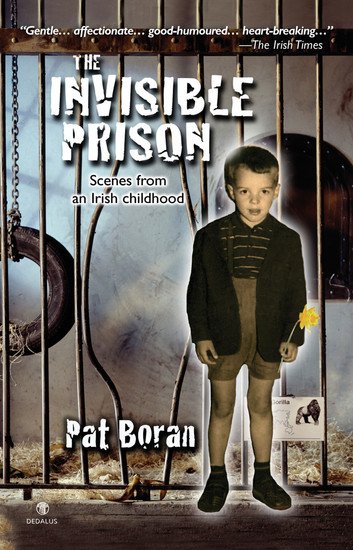
The Invisible Prison: A Luminous Irish Childhood Memoir by Pat Boran
Discovering The Invisible Prison: Pat Boran’s Childhood Memoir
The Invisible Prison: Scenes from an Irish Childhood captures the essence of growing up in small-town Ireland. Moreover, Pat Boran’s memoir transports readers to Portlaoise during the late 1960s and early 1970s. This prize-winning poet crafts a vivid portrait of childhood against an unusual backdrop. Furthermore, the book explores life in a town famous for Ireland’s maximum security political prison.
Boran grew up on Main Street in this midland Irish town during turbulent times. Additionally, his memoir offers unique perspectives on community, freedom, and innocence during this era. The Invisible Prison stands apart from typical “misery memoirs” through its warmth and humor. Therefore, readers discover a celebration of childhood rather than a tale of suffering.
This prose memoir seamlessly and effectively blends personal recollection with broader social history. Meanwhile, Boran’s poetic sensibility infuses every scene with lyrical beauty and profound insight. The book examines how children perceive their world differently from adults around them. Consequently, readers gain a fresh understanding of both childhood and Irish history through these pages.
The Invisible Prison: Setting and Historical Context
Portlaoise became synonymous with political imprisonment during Ireland’s troubled twentieth century. Moreover, the maximum security prison housed political prisoners during the Troubles and beyond. This imposing institution cast both literal and metaphorical shadows over the entire community. Furthermore, the prison’s presence shaped residents’ daily lives in countless subtle ways.
Boran’s childhood unfolded in this unique environment during the late 1960s and early 1970s. Additionally, this period marked significant social and political changes throughout Ireland and beyond. The town’s identity became inextricably linked with incarceration and political conflict during these years. Therefore, growing up here meant navigating complex realities that other Irish children never had to face.
The memoir explores how children absorbed and interpreted the prison’s presence in their lives. Meanwhile, Boran reveals how young minds processed the tension between normalcy and extraordinary circumstances. Main Street became a stage where ordinary childhood dramas played out against unusual backdrops. Thus, the setting itself becomes a character in this richly textured narrative.
The historical context includes several important elements:
- The Troubles in Northern Ireland are affecting the entire island
- Political prisoners held in Portlaoise’s maximum security facility
- Social changes sweeping through Ireland during the 1960s and 1970s
- Small-town Irish life, with its traditions and close-knit communities
- The contrast between childhood innocence and adult political realities
Pat Boran: Prize-Winning Poet Turns to Prose
Pat Boran brings exceptional literary credentials to this memoir as an acclaimed Irish poet. Moreover, his poetic sensibility enriches the prose with vivid imagery and careful attention to language. Boran also works as a broadcaster, bringing storytelling skills to his written work. Furthermore, his reputation as a poet adds depth and artistry to this childhood recollection.
The transition from poetry to prose memoir allows Boran to explore memories more expansively. Additionally, his poet’s eye captures details that other writers might overlook or dismiss as insignificant. Each scene is carefully crafted, transforming ordinary moments into luminous, meaningful experiences. Therefore, readers experience childhood through a uniquely artistic and perceptive lens throughout the book.
Boran’s literary background ensures that The Invisible Prison transcends simple autobiography or nostalgia. Meanwhile, his skills create a work that functions simultaneously as memoir and literature. The writing demonstrates how great poets can excel in prose when they choose. Consequently, the book appeals to both poetry lovers and general memoir readers equally.
An Antidote to Misery Memoirs
The Invisible Prison deliberately counters the “misery memoir” trend that dominated publishing for years. Moreover, Boran refuses to sensationalize or dramatize his childhood for commercial appeal or shock value. Instead, he presents an honest, warm, and often humorous portrait of growing up. Furthermore, the memoir celebrates the resilience and joy that children find even in challenging circumstances.
This approach doesn’t deny difficulties or pretend that life was perfect in 1960s Ireland. Additionally, Boran honestly acknowledges the complexities and tensions in his childhood environment. However, he balances these realities with the genuine happiness and freedom children experienced then. Therefore, readers encounter a more nuanced and truthful representation of Irish childhood during this era.
The humor throughout the book provides relief and authenticity to the narrative’s emotional landscape. Meanwhile, Boran’s wit captures how children find amusement in unexpected places and situations. His observations reveal the absurdities that adults take seriously, but children see clearly. Thus, the memoir becomes both entertaining and enlightening for readers of all backgrounds.
Themes of Freedom and Innocence in The Invisible Prison
The central irony of growing up near a prison while experiencing childhood freedom permeates the memoir. Moreover, Boran explores how children inhabited a world of imagination and possibility despite constraints. The physical presence of incarceration contrasted sharply with the boundless freedom of young minds. Furthermore, this tension creates powerful metaphors about Irish society and, more broadly, human nature.
Innocence emerges as a precious, fleeting state that Boran examines with tenderness. Additionally, the memoir captures how children remained largely unaware of adult anxieties and political tensions. Their world consisted of games, friendships, and small daily adventures on Main Street. Therefore, the book preserves a vanishing perspective on a specific time and place.
The celebration of childhood joys forms the memoir’s emotional core and driving force throughout. Meanwhile, Boran reminds readers of universal experiences that transcend specific historical or cultural contexts. Simple pleasures like playing with friends or exploring neighborhoods become profound in his telling. Consequently, readers reconnect with their own childhood memories as they discover Boran’s particular story.
Community and Social History
The Invisible Prison functions as social history, documenting small-town Irish life during a pivotal era. Moreover, Boran captures the rhythms and rituals that structured community existence in midland Ireland. The memoir preserves details about daily life that might otherwise disappear from collective memory. Furthermore, it shows how communities functioned before modern technology completely transformed social interactions.
Main Street serves as a microcosm of Irish society during this transitional period. Additionally, Boran’s observations reveal the town’s class structures, religious influences, and social hierarchies. The community’s relationship with the prison reflects broader Irish attitudes toward politics and conflict. Therefore, the personal memoir illuminates larger historical and cultural patterns throughout Irish society.
The sense of community that Boran describes has largely vanished from contemporary Irish life. Meanwhile, his memoir preserves the memory of neighborhoods where everyone knew everyone else intimately. Children played freely on streets that felt safe and familiar to all residents. Thus, the book serves as both a celebration and an elegy for a disappearing way of life.
Literary Style and Narrative Approach
Boran structures the memoir as a series of scenes rather than a linear chronological narrative. Moreover, this approach mirrors how memory actually works, with vivid moments standing out clearly. Each scene captures a specific incident, person, or aspect of childhood with precision. Furthermore, the episodic structure allows readers to dip in and out while maintaining coherence.
The prose demonstrates a poet’s attention to language, rhythm, and the music of sentences. Additionally, Boran employs metaphor and imagery to elevate ordinary experiences into something transcendent. His descriptions engage all the senses, immersing readers completely in his childhood world. Therefore, the reading experience becomes visceral and immediate rather than distant or abstract.
The narrative voice effectively balances an adult perspective with authentic childhood viewpoints throughout the memoir. Meanwhile, Boran avoids both excessive nostalgia and cynical retrospective judgment of his younger self. He presents scenes with honesty while maintaining affection for the child he was. Consequently, readers trust the narrator and engage deeply with the material he presents.
Meditation on Memory and Childhood
The Invisible Prison explores how memory shapes identity and understanding of personal history. Moreover, Boran examines the reliability and selectivity of childhood recollections with thoughtful nuance. The memoir acknowledges that memory reconstructs rather than accurately records past experiences. Furthermore, this self-awareness adds philosophical depth to what might otherwise be a simple reminiscence.
The act of remembering becomes a creative process that Boran investigates throughout the book. Additionally, he considers what we choose to remember and what we forget or suppress. The memoir explores how childhood experiences shape later perspectives and choices. Therefore, the book operates on multiple levels simultaneously for attentive readers to discover.
Boran’s reflections on childhood reveal universal truths about human development and perception over time. Meanwhile, he captures the particular texture of being a child in a specific place. The balance between universal and particular gives the memoir broad appeal and relevance. Thus, readers from any background can find points of connection with Boran’s experiences and insights.
Target Audience and Appeal
The Invisible Prison appeals to readers interested in Irish history and culture from this period. Moreover, anyone who enjoys well-crafted memoirs will find much to appreciate in Boran’s writing. Poetry lovers will recognize and value the literary quality of the prose throughout. Furthermore, readers seeking alternatives to sensationalized memoirs will welcome this thoughtful, humane approach.
Irish readers, particularly those who remember this era, will find the memoir especially resonant. Additionally, the book offers younger Irish generations insight into their parents’ or grandparents’ experiences. International readers gain an understanding of Irish society beyond stereotypes and simplified narratives about the country. Therefore, the memoir serves both local and global audiences with different but valid interests.
The book works well for:
- Readers interested in Irish social history and cultural studies
- Memoir enthusiasts seeking literary quality and emotional authenticity
- Poetry readers exploring their favorite poets’ prose works.
- Anyone interested in childhood studies and memory theory
- Readers seeking uplifting, humorous alternatives to dark memoirs
- Students of Irish literature and contemporary Irish writing
The Significance of Place in the Narrative
Portlaoise itself becomes a central character in Boran’s memoir through detailed, loving description. Moreover, the town’s unique identity shapes every aspect of the childhood experiences recounted. Main Street serves as the primary setting where most of the memoir’s action unfolds. Furthermore, Boran’s attachment to place demonstrates how geography influences personal development and identity formation.
The midland location places Portlaoise at the heart of Ireland, both geographically and metaphorically, during this era. Additionally, the town’s ordinariness contrasts with the extraordinary presence of the maximum security prison. This juxtaposition creates tension that runs throughout the entire narrative structure and thematic development. Therefore, the place becomes inseparable from the story Boran tells about his formative years.
The memoir captures a specific Irish landscape before modernization transformed it beyond recognition. Meanwhile, Boran’s descriptions preserve architectural details, street layouts, and natural features now altered or gone. His attention to detail allows readers to fully visualize and inhabit this world. Consequently, the book serves as a valuable record of Irish townscape during this period.
Humor and Warmth Throughout
Despite the serious backdrop of political imprisonment, humor pervades The Invisible Prison consistently and naturally. Moreover, Boran captures the absurdities and comic moments that characterize childhood everywhere universally. His observations about adults, authority figures, and social conventions reveal a child’s clear-eyed perspective. Furthermore, the humor never feels forced or inserted artificially for entertainment purposes alone.
The warmth in Boran’s writing creates an inviting atmosphere that draws readers into his world. Additionally, his affection for the people and places of his childhood shines through clearly. Even when describing difficulties or conflicts, Boran maintains a generous, understanding tone throughout. Therefore, readers feel welcomed rather than kept at a distance by the narrator’s voice.
The combination of humor and warmth distinguishes this memoir from darker Irish childhood narratives. Meanwhile, Boran proves that honesty doesn’t require bleakness or sensationalism to be effective. His approach demonstrates that joy and difficulty coexist realistically in most childhoods. Thus, the memoir offers a more balanced and ultimately more truthful portrait of growing up.
Critical Reception and Literary Merit
The Invisible Prison has received recognition for its literary quality and unique perspective on Irish childhood. Moreover, critics have praised Boran’s ability to transform personal memory into universal themes. The memoir stands as an important contribution to contemporary Irish literature and memoir writing. Furthermore, it demonstrates how poets can bring special gifts to prose narrative when they choose to do so.
Reviewers have particularly noted the book’s success in avoiding memoir clichés and predictable narratives. Additionally, Boran’s fresh approach to childhood recollection has earned praise from literary commentators. The memoir’s balance of personal and social history has been recognized as especially effective. Therefore, the book has found both critical acclaim and appreciative readers since publication.
The work contributes to ongoing conversations about Irish identity, memory, and historical representation in literature. Meanwhile, it offers an alternative model for memoir writing that prioritizes artistry over sensationalism. Boran’s achievement encourages other writers to approach their own stories with similar honesty and craft. Consequently, The Invisible Prison influences contemporary memoir writing beyond its immediate readership and impact.
Why This Memoir Matters Today
The Invisible Prison preserves a vanishing world that younger generations can barely imagine or understand. Moreover, it documents social structures and community bonds that have largely disappeared from Irish life. The memoir provides a valuable historical perspective on how Ireland has changed over the past few decades. Furthermore, it reminds readers of what has been lost alongside the gains of modernization.
The book’s themes of freedom, innocence, and community remain relevant despite changing circumstances and contexts. Additionally, Boran’s insights about childhood apply universally and powerfully across cultures and time periods. His examination of how children navigate complex adult realities speaks to contemporary concerns. Therefore, the memoir transcends its specific setting to address enduring human experiences and questions.
The alternative it offers to misery memoirs provides a necessary corrective to publishing trends. Meanwhile, Boran demonstrates that truthful, nuanced storytelling can be both honest and uplifting. His work encourages readers to reconsider their own childhoods with fresh eyes and perspectives. Thus, The Invisible Prison continues to resonate with new readers discovering it today.
Conclusion: A Luminous Portrait of Irish Childhood
The Invisible Prison: Scenes from an Irish Childhood stands as a remarkable achievement in memoir writing. Pat Boran’s poetic sensibility transforms personal recollection into art that speaks to universal human experiences. Moreover, the book captures a specific time and place in Irish history with precision and affection. The memoir succeeds in being simultaneously particular and universal, personal and historical, serious and humorous.
Boran’s celebration of childhood freedom against the backdrop of political imprisonment resonates powerfully. Furthermore, his refusal to sensationalize or dramatize his experiences offers readers an authentic connection and insight. The Invisible Prison reminds us that joy and difficulty coexist in most lives. Therefore, the memoir provides a more complete and honest portrait of childhood than darker alternatives.
This book deserves attention from anyone interested in Irish literature, memoir writing, or childhood studies. Additionally, it offers general readers a beautifully written, engaging story about growing up human. The Invisible Prison ultimately celebrates the resilience of children and the enduring power of community. Thus, Pat Boran’s memoir stands as an important and moving contribution to contemporary literature.






Reviews
There are no reviews yet.