Description
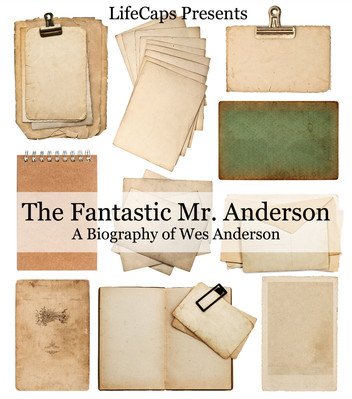
The Fantastic Mr. Anderson: A Biography of Wes Anderson by Jennifer Warner
The Fantastic Mr. Anderson offers readers an intimate portrait of one of cinema’s most distinctive auteurs. Jennifer Warner’s comprehensive biography explores Wes Anderson’s journey from Texas filmmaker to international icon. Moreover, this book examines the creative genius behind some of independent cinema’s most beloved films.
The Fantastic Mr. Anderson delves deep into the director’s unique visual language and storytelling approach. Therefore, readers gain unprecedented insight into Anderson’s artistic evolution and cultural impact.
Early Life and the Making of a Visionary
Wes Anderson was born in Houston, Texas, in 1969. His childhood experiences would later influence his filmmaking profoundly. Anderson’s parents divorced when he was young, creating emotional landscapes he’d explore throughout his career. Furthermore, his early fascination with storytelling emerged during his school years. He attended the University of Texas at Austin, where he studied philosophy. However, his true passion lay in filmmaking and visual storytelling.
During college, Anderson met Owen Wilson, who became his longtime collaborator. Together, they wrote short films that showcased Anderson’s emerging style. Additionally, these early works revealed his interest in quirky characters and precise compositions. The Fantastic Mr. Anderson chronicles how these formative years shaped his artistic vision. Warner’s research illuminates the experiences that molded Anderson’s creative sensibilities.
Bottle Rocket: The Breakthrough That Changed Everything
Anderson’s feature debut, Bottle Rocket, arrived in 1996 to modest commercial success. Nevertheless, the film caught the attention of critics and industry insiders. It starred Owen and Luke Wilson in a story about amateur criminals. The movie displayed Anderson’s signature style, though still in development. Moreover, Bottle Rocket established his interest in lovable misfits and unconventional narratives.
The Fantastic Mr. Anderson examines how this debut film launched his career. Warner details the struggles Anderson faced getting the project financed and distributed. Although Bottle Rocket didn’t become a box office hit, it built a cult following. Therefore, it opened doors for Anderson’s subsequent, more ambitious projects. The film’s themes of friendship and failed dreams would recur throughout his work.
Rushmore: A Masterpiece of Adolescent Ambition
Rushmore arrived in 1998 and marked Anderson’s true breakthrough. The film starred Jason Schwartzman as Max Fischer, an eccentric prep school student. Bill Murray delivered a career-revitalizing performance as Herman Blume, a depressed industrialist. Furthermore, Rushmore showcased Anderson’s maturing visual style and emotional depth. The movie earned critical acclaim and established Anderson as a major talent.
The Fantastic Mr. Anderson explores how Rushmore refined Anderson’s artistic voice. Warner analyzes the film’s symmetrical compositions and carefully curated color palettes. Additionally, she examines the soundtrack’s role in establishing mood and character. The collaboration between Anderson and Murray began here, becoming one of cinema’s great partnerships. Consequently, Rushmore set the template for Anderson’s future masterworks.
The film’s themes resonated with audiences worldwide. Max Fischer embodied youthful ambition, creativity, and heartbreak simultaneously. Moreover, the movie balanced comedy with genuine emotional vulnerability. Anderson’s attention to detail became increasingly apparent in every frame. Therefore, Rushmore demonstrated that independent cinema could be both artistically ambitious and accessible.
The Royal Tenenbaums: A Dysfunctional Family Masterwork
The Royal Tenenbaums arrived in 2001 as Anderson’s most ambitious project yet. The ensemble cast included Gene Hackman, Anjelica Huston, Ben Stiller, and Gwyneth Paltrow. Bill Murray and Owen Wilson returned, cementing Anderson’s repertory company approach. Furthermore, the film explored themes of family dysfunction, redemption, and lost potential. The Fantastic Mr. Anderson dedicates substantial analysis to this pivotal work.
Warner examines how The Royal Tenenbaums perfected Anderson’s visual aesthetic. Every frame displayed meticulous composition, from costumes to set design. The film’s color palette featured rich reds, browns, and muted pastels. Additionally, Anderson’s use of chapter titles and narrator enhanced the storybook quality. The movie earned Anderson his first Academy Award nomination for Best Original Screenplay.
The Tenenbaums represented a family of former child prodigies facing adult disappointments. Each character inhabited a richly detailed world of quirks and emotional wounds. Moreover, the film balanced absurdist humor with genuine pathos and heartbreak. Anderson’s direction allowed actors to deliver performances both stylized and deeply human. Therefore, The Royal Tenenbaums became a touchstone for independent cinema in the 2000s.
The Life Aquatic and The Darjeeling Limited: Expanding Horizons
The Life Aquatic with Steve Zissou premiered in 2004. Bill Murray starred as an oceanographer seeking revenge against a mythical shark. The film featured elaborate underwater sequences and Anderson’s most ambitious production design yet. However, it received mixed reviews upon release, though critical appreciation grew over time. The Fantastic Mr. Anderson contextualizes this film within Anderson’s evolving career.
Warner explores how The Life Aquatic pushed Anderson’s visual boundaries. The film incorporated stop-motion animation for its sea creatures. Additionally, it featured an elaborate ship set that became a character itself. The soundtrack included Portuguese David Bowie covers by Seu Jorge. Moreover, the movie deepened Anderson’s exploration of masculine failure and artistic obsession.
The Darjeeling Limited followed in 2007, taking Anderson to India. Owen Wilson, Adrien Brody, and Jason Schwartzman played estranged brothers on a spiritual journey. The film examined grief, family bonds, and the search for meaning. Furthermore, it showcased Anderson’s ability to blend comedy with profound emotional moments. The Fantastic Mr. Anderson analyzes how these films demonstrated his growing confidence.
Fantastic Mr. Fox: Animation and Literary Adaptation
Fantastic Mr. Fox marked Anderson’s first animated feature in 2009. Based on Roald Dahl’s beloved children’s book, it used stop-motion animation techniques. George Clooney voiced the titular fox, with Meryl Streep as Mrs. Fox. Moreover, the film allowed Anderson to create an entirely handcrafted world. The Fantastic Mr. Anderson explores how animation suited his meticulous aesthetic perfectly.
Warner details the painstaking production process behind Fantastic Mr. Fox. Anderson’s attention to detail reached new heights in the animated medium. Every puppet, set piece, and prop received careful consideration and design. Additionally, the film’s warm autumnal palette created a cozy, nostalgic atmosphere. The movie earned critical acclaim and an Academy Award nomination.
The story explored themes familiar to Anderson’s work: family, identity, and wildness versus civilization. Mr. Fox’s struggle between domesticity and his animal nature resonated emotionally. Furthermore, the film demonstrated Anderson’s ability to adapt literary material while maintaining his voice. Therefore, Fantastic Mr. Fox expanded his audience and proved his versatility.
Moonrise Kingdom and The Grand Budapest Hotel: Critical Triumphs
Moonrise Kingdom arrived in 2012, telling a story of young love and escape. Set in 1965 on a New England island, it featured newcomers alongside Anderson regulars. Bruce Willis, Edward Norton, and Tilda Swinton joined Bill Murray and Frances McDormand. Moreover, the film captured childhood innocence with tenderness and humor. The Fantastic Mr. Anderson examines this period as Anderson’s creative peak.
Warner analyzes how Moonrise Kingdom refined Anderson’s coming-of-age storytelling. The film’s visual compositions reached new levels of symmetrical perfection. Additionally, the color palette evoked 1960s nostalgia through yellows, oranges, and earth tones. The movie earned Anderson another Academy Award nomination for Best Original Screenplay. Furthermore, it demonstrated his ability to portray genuine emotion within stylized frameworks.
The Grand Budapest Hotel premiered in 2014 to universal acclaim. Ralph Fiennes starred as Gustave H., a legendary concierge at a European hotel. The film featured Anderson’s largest ensemble cast and most complex narrative structure. Moreover, it employed multiple aspect ratios to distinguish different time periods. The Fantastic Mr. Anderson celebrates this film as perhaps Anderson’s masterpiece.
The Grand Budapest Hotel earned nine Academy Award nominations, winning four. Anderson finally received a Best Director nomination for his meticulous work. The film’s production design, costumes, and makeup achieved unprecedented levels of detail. Additionally, the story blended comedy, adventure, and melancholy with perfect balance. Therefore, it represented the culmination of Anderson’s artistic evolution.
Isle of Dogs: Return to Animation
Isle of Dogs arrived in 2018 as Anderson’s second animated feature. Set in a dystopian future Japan, it told a story of exiled dogs. The film employed stop-motion animation with even greater technical sophistication than Fantastic Mr. Fox. Moreover, it featured voice work from Bryan Cranston, Edward Norton, and Bill Murray. The Fantastic Mr. Anderson examines how this film addressed contemporary political themes.
Warner explores the film’s visual influences, including Japanese cinema and art. Anderson’s research into Japanese culture informed every aspect of the production. Additionally, the film’s use of language created interesting narrative dynamics. Dogs spoke English while humans spoke unsubtitled Japanese, inverting typical power structures. Furthermore, Isle of Dogs demonstrated Anderson’s continued growth as a visual storyteller.
The film received critical praise for its technical achievements and emotional depth. However, some critics questioned Anderson’s cultural appropriation and representation of Japanese characters. Warner addresses these controversies thoughtfully in her biography. Nevertheless, Isle of Dogs showcased Anderson’s commitment to handcrafted, detail-oriented filmmaking. Therefore, it reinforced his position as animation’s most distinctive auteur.
The Anderson Aesthetic: Visual Style and Storytelling
Anderson’s visual style has become instantly recognizable across cinema. His films feature symmetrical compositions that create order from chaos. Moreover, he employs carefully curated color palettes that evoke specific emotions and eras. The Fantastic Mr. Anderson dedicates extensive analysis to these visual techniques. Warner examines how Anderson’s aesthetic serves his storytelling rather than overwhelming it.
Key elements of Anderson’s visual style include:
- Symmetrical framing and centered compositions
- Flat, perpendicular camera angles and movements
- Meticulously designed sets with rich detail
- Carefully coordinated color schemes
- Whip pans and slow-motion sequences
- Overhead shots and cross-section views
- Handwritten titles and chapter divisions
- Vintage fonts and graphic design elements
Anderson’s attention to production design extends to every prop and costume. His films create fully realized worlds that feel both fantastical and authentic. Additionally, he collaborates closely with production designer Adam Stockhausen and costume designer Milena Canonero. Furthermore, his use of music, often featuring British Invasion rock and classical pieces, enhances emotional impact. Therefore, every element works together to create a cohesive artistic vision.
Collaborations: The Anderson Repertory Company
Anderson has cultivated long-term relationships with actors, creating a repertory company approach. Bill Murray has appeared in nine Anderson films, becoming his most frequent collaborator. Owen Wilson has acted in seven films and co-wrote three screenplays with Anderson. Moreover, Jason Schwartzman, Anjelica Huston, and Willem Dafoe appear regularly. The Fantastic Mr. Anderson explores these creative partnerships in depth.
Warner examines how Anderson’s collaborative approach benefits his films. Actors understand his unique rhythm and stylized dialogue delivery. Additionally, returning performers bring depth and continuity to Anderson’s cinematic universe. Tilda Swinton has delivered memorable performances in multiple Anderson films. Furthermore, Anderson attracts major stars willing to play small roles in his ensemble casts.
These collaborations extend beyond actors to his technical crew. Cinematographer Robert Yeoman has shot all Anderson’s live-action films since Bottle Rocket. Composer Alexandre Desplat has scored several recent Anderson films beautifully. Moreover, editor Andrew Weisblum has helped shape Anderson’s distinctive pacing and rhythm. Therefore, these long-term partnerships contribute significantly to Anderson’s consistent artistic vision.
Themes: Family, Nostalgia, and Coming-of-Age
Anderson’s films consistently explore dysfunctional families seeking connection and redemption. His characters often struggle with parental abandonment, sibling rivalry, and generational conflict. Moreover, they search for belonging within unconventional family structures. The Fantastic Mr. Anderson analyzes these recurring thematic concerns throughout his filmography. Warner connects Anderson’s childhood experiences to his artistic preoccupations.
Nostalgia permeates Anderson’s work, creating bittersweet emotional landscapes. His films often take place in idealized pasts or timeless settings. Additionally, they feature vintage technology, music, and design that evoke specific eras. Anderson’s nostalgia isn’t merely aesthetic; it explores loss, memory, and longing. Furthermore, his characters frequently mourn lost potential and vanished innocence.
Coming-of-age narratives appear throughout Anderson’s films, from Rushmore to Moonrise Kingdom. His young protagonists navigate complex adult worlds with creativity and determination. Moreover, they often possess wisdom and emotional depth beyond their years. Anderson treats childhood seriously, respecting young characters’ inner lives and struggles. Therefore, his films resonate with audiences across generations.
Critical Reception and Cultural Impact
Anderson has received widespread critical acclaim throughout his career. His films consistently appear on year-end best-of lists and critical polls. Moreover, he has earned multiple Academy Award nominations for his screenwriting and direction. The Fantastic Mr. Anderson documents his critical reception from Bottle Rocket through his recent work. Warner examines both praise and occasional criticism of his distinctive style.
Some critics argue Anderson’s aesthetic has become too mannered or self-indulgent. They suggest his visual style sometimes overwhelms emotional content. However, most critics celebrate his unique voice and uncompromising artistic vision. Additionally, Anderson has influenced countless filmmakers who emulate his symmetrical compositions and color palettes. Furthermore, his success has helped legitimize quirky, personal filmmaking within mainstream cinema.
Anderson’s cultural impact extends beyond filmmaking into broader popular culture. His aesthetic influences fashion, graphic design, and interior decoration. Moreover, “Wes Anderson style” has become shorthand for a specific nostalgic, whimsical sensibility. Social media features countless posts identifying “accidental Wes Anderson” moments in real life. Therefore, his influence permeates contemporary visual culture in unexpected ways.
Legacy: A Unique Voice in Modern Cinema
Wes Anderson occupies a singular position in contemporary filmmaking. He has maintained complete creative control while working with major studios. Moreover, his films balance artistic ambition with commercial accessibility. The Fantastic Mr. Anderson concludes by assessing Anderson’s place in cinema history. Warner argues that his uncompromising vision has expanded possibilities for independent filmmakers.
Anderson’s influence on younger directors continues growing with each new film. His success demonstrates that audiences embrace distinctive, personal filmmaking. Additionally, his meticulous craftsmanship reminds filmmakers that details matter profoundly. Anderson proves that style and substance can coexist harmoniously. Furthermore, his films will likely endure as time capsules of early 21st-century independent cinema.
The Fantastic Mr. Anderson by Jennifer Warner provides the definitive account of this remarkable filmmaker’s life and work. The biography combines thorough research with insightful analysis and engaging prose. Moreover, it offers readers unprecedented access to Anderson’s creative process and artistic evolution. Therefore, this book stands as essential reading for film enthusiasts and Anderson admirers alike.

Reviews
There are no reviews yet.