Description
The Evolving European City: A Comprehensive Synopsis of Urban Transformation and Practice
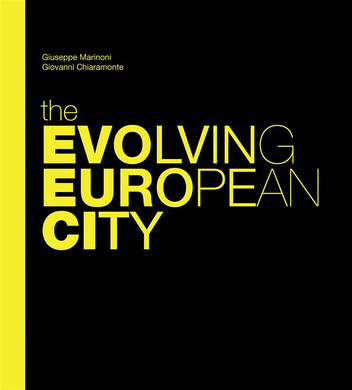
“The Evolving European City” presents a groundbreaking exploration of contemporary urban transformation across Europe. This essential e-book, introduced by Giuseppe Marinoni and Giovanni Chiaramonte, examines how European cities adapt to modern challenges. Moreover, it offers practical insights for urban planners, architects, and policymakers. The book forms part of the prestigious EUROPEAN PRACTICE series, specifically Book 29. Therefore, it builds upon established scholarship while introducing fresh perspectives on urban development.
European cities face unprecedented challenges in the twenty-first century. Climate change, migration, economic shifts, and technological advances reshape urban landscapes daily. Furthermore, these cities must balance historical preservation with contemporary needs and future sustainability. The authors recognize that successful urban evolution requires both theoretical understanding and practical application. Consequently, this book bridges academic research with real-world urban planning strategies.
Understanding the Evolving European City
The concept of the evolving European city encompasses multiple dimensions of urban change. Cities constantly adapt their physical structures, social systems, and economic functions. Additionally, they respond to demographic shifts, environmental pressures, and cultural transformations. Marinoni and Chiaramonte explore how European cities maintain their unique identities while embracing necessary changes. However, they also acknowledge the tensions between tradition and innovation in urban contexts.
European urban centers possess distinctive characteristics that set them apart from cities elsewhere. Their dense historical cores, mixed-use neighborhoods, and strong public transportation systems define their character. Moreover, European cities typically prioritize pedestrian-friendly design and public space quality. These features create livable, sustainable urban environments that serve as global models. Therefore, understanding their evolution offers valuable lessons for cities worldwide.
The book examines both successful transformations and ongoing challenges facing European cities today. Some cities have effectively revitalized declining industrial areas into vibrant cultural districts. Others struggle with housing affordability, social segregation, and infrastructure decay. Furthermore, all European cities must address climate adaptation and carbon reduction goals. The authors provide nuanced analysis of these complex, interconnected urban issues.
Comprehensive Scope and Scholarly Contributions
This e-book offers extensive coverage of contemporary European urban development and planning practice. Marinoni and Chiaramonte draw upon decades of professional experience in architecture and urban studies. Additionally, they incorporate insights from leading European practitioners, researchers, and municipal officials. The book synthesizes theoretical frameworks with empirical case studies from diverse European contexts. Consequently, readers gain both conceptual understanding and practical knowledge about urban evolution.
The authors examine European cities across different scales, from neighborhood interventions to metropolitan strategies. They analyze how local initiatives connect with regional and national urban policies. Moreover, they explore the role of European Union frameworks in shaping urban development. This multi-scalar approach reveals the complexity of contemporary urban governance and planning. However, it also identifies opportunities for coordinated action across different governmental levels.
The book pays particular attention to innovative practices emerging from European cities themselves. Many groundbreaking urban solutions originate from local experimentation rather than top-down planning. Furthermore, European cities increasingly share knowledge and collaborate on common challenges. The authors document these collaborative networks and their impact on urban practice. Therefore, the book serves as both historical record and forward-looking guide.
Key Topics Covered in The Evolving European City
This comprehensive e-book addresses the most pressing issues facing contemporary European urban areas:
- Sustainable urban development strategies that reduce environmental impact while improving quality of life
- Historic preservation approaches that honor cultural heritage while accommodating modern urban functions
- Social inclusion policies that address inequality, segregation, and access to urban opportunities
- Economic transformation from industrial to knowledge-based and service-oriented urban economies
- Climate adaptation measures that prepare cities for environmental changes and extreme weather events
- Mobility systems that prioritize public transportation, cycling, and pedestrian-friendly urban design
- Housing affordability solutions that ensure diverse populations can live in city centers
- Public space design that creates vibrant, accessible gathering places for all residents
- Digital transformation and smart city technologies that enhance urban services and governance
- Participatory planning methods that engage citizens in shaping their urban environments
Perspectives from Marinoni and Chiaramonte
Giuseppe Marinoni brings extensive expertise in urban planning and architectural practice to this project. His introduction frames the book’s central themes and establishes its theoretical foundations. Moreover, Marinoni emphasizes the importance of learning from both successes and failures. He argues that European cities must embrace experimentation while maintaining their essential character. Therefore, his perspective balances innovation with respect for urban heritage and community values.
Giovanni Chiaramonte contributes a complementary viewpoint rooted in visual culture and photographic documentation. His work captures the physical and social dimensions of urban transformation through images. Additionally, Chiaramonte explores how residents experience and perceive changes in their cities. He demonstrates that successful urban evolution requires attention to human scale and everyday life. Furthermore, his approach reminds readers that cities exist for people, not abstract planning principles.
Together, these authors create a rich, multifaceted exploration of European urban development. They combine analytical rigor with humanistic concern for urban inhabitants and communities. Moreover, they draw connections between physical design, social dynamics, and environmental sustainability. Their collaborative approach models the interdisciplinary thinking necessary for addressing complex urban challenges. Consequently, readers gain insights that transcend narrow professional or disciplinary boundaries.
Practical Applications and Professional Insights
“The Evolving European City” offers concrete guidance for professionals working in urban development fields. The book presents detailed case studies that illustrate successful strategies and common pitfalls. Additionally, it provides frameworks for analyzing local contexts and developing appropriate interventions. Urban planners will find valuable tools for engaging stakeholders and building community support. However, the book also challenges conventional planning assumptions and encourages creative problem-solving.
Architects and urban designers will appreciate the book’s attention to physical form and spatial quality. The authors examine how built environment decisions shape social interactions and environmental outcomes. Moreover, they explore the relationship between architectural design and broader urban systems. The book demonstrates that good urban design requires understanding context, history, and community needs. Therefore, it encourages designers to think beyond individual buildings toward comprehensive urban strategies.
Policymakers and municipal officials will benefit from the book’s governance and policy analysis. The authors examine how different regulatory frameworks enable or constrain urban innovation. Furthermore, they discuss funding mechanisms, public-private partnerships, and institutional coordination challenges. The book offers practical advice for implementing ambitious urban transformation projects despite political and financial constraints. Additionally, it highlights the importance of long-term vision and sustained commitment.
Who Should Read This Essential Urban Studies Text
This e-book serves multiple audiences interested in European cities and urban development. Urban planning professionals will find it an invaluable reference for contemporary practice. Moreover, architecture students and practitioners gain insights into the broader context of their work. The book helps them understand how individual projects contribute to larger urban transformations. Therefore, it encourages more thoughtful, contextually-responsive design approaches.
Academic researchers studying European urbanism will appreciate the book’s scholarly rigor and comprehensive scope. It synthesizes extensive literature while contributing original analysis and fresh perspectives. Additionally, the book identifies important questions for future research and investigation. Graduate students in urban studies, geography, sociology, and related fields will find it essential reading. Furthermore, it provides excellent foundation for understanding contemporary European urban development debates.
Policymakers and government officials responsible for urban development will gain practical insights. The book helps them understand successful strategies employed by other European cities. Moreover, it offers frameworks for evaluating proposals and making informed decisions about urban investments. Community activists and engaged citizens will also find the book accessible and informative. However, it requires some familiarity with urban planning concepts and terminology.
International readers interested in European urbanism will discover valuable comparative perspectives. The book illuminates what makes European cities distinctive in global context. Additionally, it explores which European approaches might transfer to other world regions. Urban professionals from Asia, North America, and elsewhere increasingly look to European cities for inspiration. Therefore, this book serves as essential guide to European urban practice and philosophy.
The European Practice Series Context
As Book 29 in the EUROPEAN PRACTICE series, this volume builds upon established scholarly traditions. The series examines various aspects of European professional practice across multiple disciplines. Moreover, it emphasizes the distinctive characteristics of European approaches to complex societal challenges. Each volume combines theoretical analysis with practical application and real-world case studies. Therefore, the series serves as important resource for understanding European professional culture.
This particular volume focuses specifically on urban development and the evolving nature of European cities. It complements other series volumes addressing architecture, landscape design, and regional planning. Furthermore, it demonstrates how urban practice connects with broader European values and priorities. The book reflects characteristically European concerns with sustainability, social equity, and cultural heritage. Additionally, it showcases the collaborative, consensus-oriented approaches common in European planning practice.
The series format allows for in-depth exploration of specialized topics within European practice. This volume’s focus on urban evolution enables comprehensive treatment of contemporary city development. Moreover, the book’s length and structure permit detailed case studies and nuanced analysis. Readers familiar with other series volumes will recognize consistent quality and scholarly standards. However, this book also stands alone as complete introduction to European urban development.
Visual Documentation and Photographic Evidence
Giovanni Chiaramonte’s photographic contributions add crucial visual dimension to the book’s analysis. His images document physical transformations occurring across diverse European urban contexts. Moreover, they capture the human experience of living in evolving cities. The photographs reveal details that written analysis alone cannot convey about urban change. Therefore, they serve as both evidence and interpretation of contemporary European urbanism.
The visual documentation shows how European cities balance preservation with innovation in practice. Photographs illustrate successful public space renovations, adaptive reuse projects, and neighborhood revitalization efforts. Additionally, they reveal ongoing challenges like urban sprawl, infrastructure decay, and social segregation. The images encourage readers to look carefully at urban environments and understand their complexity. Furthermore, they demonstrate that urban evolution involves both dramatic transformations and subtle, incremental changes.
Chiaramonte’s photographic approach emphasizes the relationship between people and their urban environments. His images show residents using public spaces, navigating transportation systems, and inhabiting neighborhoods. Moreover, they capture the diverse populations that characterize contemporary European cities. The photographs remind readers that urban planning ultimately serves human needs and aspirations. Therefore, they ground the book’s theoretical discussions in lived urban reality.
Historical Context and Contemporary Challenges
European cities carry the weight of centuries of history while facing unprecedented contemporary challenges. Their medieval cores, baroque expansions, and industrial-era developments create complex urban palimpsests. Moreover, twentieth-century modernist interventions and postwar reconstruction added additional layers of complexity. Understanding this historical depth helps explain both opportunities and constraints facing European cities today. Therefore, the book examines how history shapes contemporary urban development possibilities.
The post-industrial transition has profoundly affected European cities over recent decades. Manufacturing decline left many cities with abandoned factories, contaminated sites, and unemployed populations. However, successful cities transformed these challenges into opportunities for reinvention and renewal. The book analyzes strategies for converting industrial heritage into cultural assets and economic drivers. Additionally, it examines how cities develop new economic bases in knowledge, creativity, and services.
Contemporary European cities must also address the climate crisis with urgency and innovation. They face requirements to dramatically reduce carbon emissions while adapting to unavoidable climate impacts. Moreover, they must retrofit existing building stock and infrastructure for improved environmental performance. The book explores how cities balance these environmental imperatives with other urban priorities. Furthermore, it showcases innovative approaches to sustainable urban development emerging from European practice.
Migration, Diversity, and Social Cohesion
European cities have become increasingly diverse through migration from within and beyond Europe. This demographic transformation brings both opportunities and challenges for urban communities. Moreover, it raises important questions about integration, identity, and social cohesion in urban contexts. The book examines how cities respond to growing diversity through policy, planning, and design. Additionally, it explores the role of public space in fostering interaction across different communities.
Some European cities have successfully embraced diversity as source of cultural and economic vitality. They develop inclusive policies that welcome newcomers while respecting established residents’ concerns. Furthermore, they create opportunities for intercultural exchange and mutual understanding through urban programming. The book presents case studies of cities that effectively manage diversity and build cohesive communities. However, it also acknowledges persistent challenges of discrimination, segregation, and social tension.
Urban planning and design can either reinforce or reduce social divisions within cities. The authors examine how spatial arrangements affect social interaction and community formation. Moreover, they discuss the importance of affordable housing, accessible services, and quality public spaces. The book argues that socially inclusive cities require intentional policies and sustained commitment. Therefore, it provides guidance for practitioners seeking to promote equity and inclusion through urban development.
Economic Resilience and Urban Innovation
The evolving European city must develop economic resilience in an era of rapid change. Global competition, technological disruption, and economic uncertainty challenge traditional urban economic models. Moreover, cities must create opportunities for diverse populations while maintaining fiscal sustainability. The book examines strategies for building robust, adaptable urban economies that benefit all residents. Additionally, it explores the role of innovation, entrepreneurship, and creativity in urban economic development.
Many European cities have successfully transitioned from industrial to knowledge-based economies. They attract talented workers, innovative companies, and creative industries through quality of life advantages. Furthermore, they invest in education, research institutions, and cultural amenities that support economic innovation. The book analyzes factors that enable some cities to thrive while others struggle economically. However, it also addresses concerns about gentrification and displacement accompanying economic success.
The book emphasizes that sustainable urban economies must balance growth with social and environmental goals. Purely market-driven development often produces inequality, environmental degradation, and community disruption. Therefore, European cities increasingly adopt more holistic approaches to economic development. The authors showcase cities that successfully integrate economic, social, and environmental objectives through comprehensive planning. Moreover, they provide frameworks for evaluating urban economic strategies against multiple criteria.
Governance, Participation, and Democratic Urbanism
Effective urban governance proves essential for managing complex processes of city evolution. European cities employ diverse governance models reflecting different political traditions and institutional structures. Moreover, they increasingly experiment with participatory approaches that engage citizens in planning decisions. The book examines how governance arrangements affect urban development outcomes and democratic legitimacy. Additionally, it explores tensions between efficiency, expertise, and public participation in urban decision-making.
Many European cities have developed sophisticated methods for involving residents in urban planning processes. These participatory approaches range from consultation to co-design and collaborative implementation. Furthermore, they recognize that local knowledge and lived experience contribute valuable insights to planning. The book presents case studies of successful participatory projects that produced better outcomes. However, it also discusses challenges of ensuring inclusive participation and managing conflicting interests.
Digital technologies create new possibilities for urban governance and citizen engagement. Online platforms enable broader participation while providing data for evidence-based decision-making. Moreover, smart city technologies promise improved service delivery and resource management. The book examines both opportunities and risks associated with digital urban governance. Therefore, it encourages critical thinking about technology’s role in democratic urban development.
Conclusion: Essential Reading for Understanding Urban Europe
“The Evolving European City” stands as definitive guide to contemporary European urban development and practice. Giuseppe Marinoni and Giovanni Chiaramonte have created an invaluable resource for professionals and scholars. Moreover, they present complex urban issues in accessible language that engages diverse readers. The book successfully balances theoretical depth with practical application and real-world examples. Therefore, it serves multiple purposes as reference work, teaching text, and professional handbook.
The book’s comprehensive scope covers all major aspects of contemporary European urban evolution. It addresses physical, social, economic, environmental, and governance dimensions of urban change. Furthermore, it demonstrates how these different aspects interconnect in actual urban development practice. Readers gain holistic understanding of cities as complex, dynamic systems requiring integrated approaches. Additionally, the book provides tools and frameworks for analyzing specific urban contexts and challenges.
European cities offer valuable lessons for urban development worldwide despite their specific contexts. Their emphasis on sustainability, social inclusion, and quality of life reflects universal urban values. Moreover, their practical innovations in planning, design, and governance inspire cities globally. This book makes European urban practice accessible to international audiences seeking to learn from it. However, the authors wisely caution against simplistic transfer of approaches without contextual adaptation.
The evolving European city represents ongoing experiment in creating livable, sustainable, equitable urban environments. This book documents that experiment while contributing to its continued development through critical analysis. Moreover, it demonstrates that successful urban evolution requires vision, commitment, and sustained effort over time. Cities constantly change, but thoughtful guidance can shape that change toward positive outcomes. Therefore, this essential e-book deserves wide readership among all those concerned with urban futures.


Reviews
There are no reviews yet.