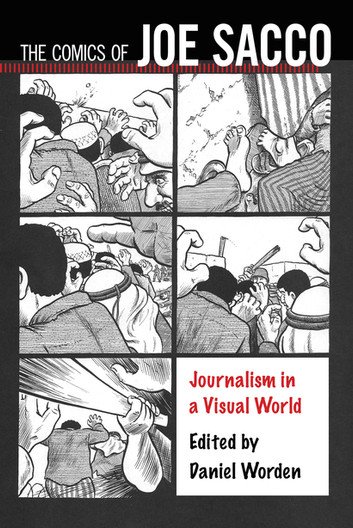
Description
The Comics of Joe Sacco: Journalism in a Visual World – A Comprehensive Synopsis
Introduction: Joe Sacco’s Revolutionary Approach to Journalism
Joe Sacco transformed journalism through the power of comics. This Maltese-American artist pioneered a completely new genre. Moreover, he proved that illustrated narratives could deliver serious news. His work combines rigorous reporting with compelling visual storytelling.
Daniel Worden’s edited collection thoroughly examines Joe Sacco’s groundbreaking contributions. The book features essays from leading comics scholars. Furthermore, it explores how Sacco revolutionized both journalism and comics. This volume belongs to the prestigious Tom Inge Series.
The collection reveals why Joe Sacco matters to contemporary media. His work challenges traditional notions of objective reporting. Additionally, it demonstrates comics’ potential for investigative journalism. Consequently, he’s reshaped how we understand visual storytelling.
Who Is Joe Sacco?
Joe Sacco was born in Malta in 1960. His family moved to Australia, then to America. He studied journalism at the University of Oregon. However, he felt constrained by traditional reporting methods.
Sacco discovered that comics could tell stories in different ways. Therefore, he began combining his artistic skills with journalism. His early work appeared in alternative comics publications. Nevertheless, his ambitions extended far beyond entertainment.
He wanted to document conflicts that mainstream media ignored. Moreover, he sought to humanize people caught in war. His approach was radically different from conventional photojournalism. Consequently, he created an entirely new form of reportage.
The Birth of Comics Journalism
Traditional journalism relies heavily on written words and photographs. However, Sacco saw limitations in these conventional formats. Comics offered unique possibilities for storytelling and analysis. Furthermore, they allowed for subjective perspective and emotional depth.
His breakthrough came with “Palestine,” published in the 1990s. This nine-issue series documented life in the occupied territories. Moreover, it presented the Israeli-Palestinian conflict through the eyes of ordinary people. The work earned him an American Book Award.
Sacco spent months living among Palestinians during his research. He conducted hundreds of interviews with residents and refugees. Additionally, he sketched constantly to capture visual details. Therefore, his comics combined firsthand observation with careful reporting.
Joe Sacco’s Unique Visual Style
Sacco’s drawing style is deliberately detailed and realistic. He uses dense crosshatching and intricate backgrounds throughout. Moreover, his panels overflow with visual information and context. This approach immerses readers in the environments he documents.
His self-portrayal in the comics is intentionally unflattering. He portrays himself as awkward and sometimes bumbling. Furthermore, he openly acknowledges his outsider status. Consequently, readers clearly understand his perspective and limitations.
The visual density serves multiple purposes simultaneously. It effectively conveys the complexity of conflict situations. Additionally, it prevents oversimplification of difficult issues. Therefore, readers must engage actively with the material.
Major Works by Joe Sacco
Sacco’s body of work spans several decades now. Each project demonstrates his commitment to serious journalism. Moreover, his books tackle some of history’s most challenging subjects. His major works include:
- Palestine (1993-1995): His groundbreaking series on the Israeli-Palestinian conflict
- Safe Area Goražde (2000): Documentation of the Bosnian War’s impact
- The Fixer (2003): A story about a Bosnian war profiteer
- Footnotes in Gaza (2009): Investigation of two 1956 massacres
- Journalism (2012): Collection of shorter reportage pieces
- The Great War (2013): A 24-foot panoramic wordless narrative
Each work required extensive research and on-the-ground reporting. Furthermore, Sacco spent months or years on each project. His dedication to accuracy matches that of any traditional journalist.
Safe Area Goražde: A Landmark Achievement
This book documents life in a Bosnian enclave during the war. Goražde was surrounded by Serbian forces throughout the conflict. Moreover, residents endured years of siege and bombardment. Sacco visited multiple times to tell their stories.
The book combines personal narratives with historical context. He interviewed survivors extensively about their wartime experiences. Additionally, he researched the conflict’s political and military dimensions. Therefore, the work provides both intimate and comprehensive perspectives.
Critics praised the book’s depth and emotional power. It demonstrated that comics could handle complex geopolitical subjects. Furthermore, it proved Sacco’s journalism met professional standards. Consequently, the book expanded comics’ credibility as reportage.
Footnotes in Gaza: Investigative Comics Journalism
This work investigates two largely forgotten massacres from 1956. Israeli forces killed hundreds of Palestinians in Gaza. However, these events received minimal historical attention afterward. Therefore, Sacco decided to document them through survivor testimony.
He spent years researching and interviewing elderly witnesses. Moreover, he cross-referenced their accounts with historical records. The process was completely traditional investigative journalism. Nevertheless, comics allowed unique ways to present findings.
The book interweaves past events with present-day Gaza. Sacco shows how history continues to affect current residents. Additionally, he honestly explores memory’s reliability and limitations. Consequently, the work raises important questions about historical truth.
The Relationship Between Comics and Journalism
Worden’s collection examines this relationship from multiple angles. Various scholars analyze how comics function as journalism. Moreover, they explore what comics can do that text cannot. The essays reveal comics’ unique strengths for reportage.
Comics allow journalists to explicitly show their presence. Traditional journalism often artificially hides the reporter’s role. However, Sacco appears as a character throughout his narratives. Therefore, readers understand how he gathered information and formed conclusions.
The medium also allows the visual reconstruction of past events. Photographs can’t capture historical moments that weren’t documented. Nevertheless, comics can illustrate events based on testimony. Consequently, they make history accessible and immediate for readers.
Joe Sacco’s Reporting Methods
Sacco’s research process closely mirrors traditional journalism. He conducts extensive interviews with multiple sources. Moreover, he verifies information through cross-referencing and documentation. His notebooks fill with details, quotes, and observations.
He spends extended periods in the places he documents. This immersion allows him to understand contexts deeply. Furthermore, he builds trust with the communities he covers. Therefore, people share stories they might withhold from outsiders.
His drawing process begins with photographs and sketches. He takes thousands of reference photos during reporting trips. Additionally, he sketches scenes and people constantly. Later, he combines these materials into finished comics pages.
Visual Storytelling Techniques
Sacco employs various techniques to enhance his narratives. Panel layouts systematically guide readers through complex information. Moreover, he uses different visual styles for different purposes. Consequently, the form reinforces the content throughout.
He often uses splash pages for emotional impact. These full-page illustrations emphasize particularly significant moments. Furthermore, they allow readers to absorb difficult information gradually. Therefore, the pacing serves both aesthetic and ethical purposes.
His use of perspective creates empathy with subjects. Close-up panels clearly show individuals’ faces and emotions. Additionally, wide shots establish environmental and social contexts. This variation keeps readers engaged while conveying information effectively.
The Ethics of Comics Journalism
Worden’s collection addresses important ethical questions about Sacco’s work. How does illustration affect journalistic objectivity and truth? Moreover, what responsibilities do comics journalists have to subjects? These questions matter increasingly as the genre grows.
Sacco acknowledges that all journalism involves subjective choices. Photographers choose what to frame and when to shoot. Similarly, he chooses what to draw and emphasize. However, he maintains rigorous standards for factual accuracy at all times.
His presence in the narratives makes his subjectivity explicit. Readers see him asking questions and forming opinions. Furthermore, they occasionally witness his mistakes and misunderstandings. Therefore, the work models transparency rather than false objectivity.
Critical Reception and Academic Analysis
Scholars have embraced Sacco’s work enthusiastically in recent years. His comics regularly appear in journalism and literature courses. Moreover, they’re studied in visual culture and media programs. Consequently, he’s achieved recognition across multiple academic disciplines.
Worden’s collection represents serious scholarly engagement with the work. Contributors analyze Sacco’s techniques from various theoretical perspectives. Furthermore, they situate his work within broader cultural contexts. The essays demonstrate comics’ legitimacy as scholarly subjects.
Critics consistently praise Sacco’s commitment to marginalized voices. He focuses on people ignored by mainstream media. Additionally, he spends time understanding their perspectives deeply. Therefore, his work challenges dominant narratives about conflicts.
Joe Sacco’s Influence on Contemporary Comics
Sacco inspired an entire generation of comics journalists. Many artists now explicitly combine reporting with illustration. Moreover, publishers increasingly support long-form comics journalism projects. Consequently, the genre he pioneered continues expanding rapidly.
His success proved that comics could address serious subjects. Publishers became more willing to support ambitious journalism projects. Furthermore, readers demonstrated an appetite for substantive visual narratives. Therefore, the market for comics journalism has grown significantly.
Young journalists increasingly see comics as viable career paths. Art schools now offer courses specifically in comics journalism. Additionally, journalism programs increasingly incorporate training in visual storytelling. Sacco’s influence thus extends beyond his own work.
The Role of Subjectivity in Sacco’s Work
Unlike traditional journalism, Sacco openly embraces his subjective perspective. He appears as a character throughout his narratives. Moreover, he shares his thoughts and reactions with readers. This approach challenges conventional notions of journalistic objectivity.
He argues that true objectivity is impossible in journalism. Every reporter makes choices about what to cover. Furthermore, they decide which sources to trust and quote. Therefore, transparency about subjectivity serves readers better than false neutrality.
His comics explicitly show the reporting process itself. Readers see him conducting interviews and taking notes. Additionally, they witness his confusion and learning process. Consequently, they can evaluate his conclusions more critically.
Visual Density and Information Design
Sacco’s pages contain remarkable amounts of visual information. Backgrounds include architectural details, street scenes, and crowds. Moreover, he draws faces with distinctive individual characteristics. This density serves important journalistic purposes effectively.
The detailed environments establish credibility through specificity. Readers see that Sacco actually visited these places. Furthermore, the details help them better understand the context. Therefore, the visual richness enhances the journalism’s authority.
However, this density also demands active reading on the part of audiences. Readers must examine panels carefully to absorb information. Additionally, they need to connect visual details with the narrative. Consequently, Sacco’s work requires more engagement than typical comics.
The Great War: Experimental Visual Journalism
This wordless panorama depicts the Battle of the Somme. The 24-foot-long illustration shows one day of fighting. Moreover, it contains no text or dialogue whatsoever. Therefore, it represents Sacco’s most experimental work to date.
The format challenges readers to engage with history in new ways. Without words, they must interpret visual information independently. Furthermore, they experience the battle’s chaos and scale viscerally. Consequently, the work creates unique emotional and intellectual responses.
This project demonstrates Sacco’s continued artistic evolution. He constantly experiments with the formal possibilities of comics. Moreover, he pushes boundaries of what journalism can be. Therefore, his work remains innovative decades into his career.
Worden’s Editorial Framework
Daniel Worden assembled an impressive collection of scholarly essays. Contributors include leading scholars in comics studies from various institutions. Moreover, the essays approach Sacco’s work from diverse perspectives. Therefore, the book provides a comprehensive critical analysis.
Worden’s introduction situates Sacco effectively within the history of comics. He explains how Sacco built on earlier traditions. Furthermore, he identifies what makes Sacco’s contribution unique. Consequently, readers clearly understand both continuity and innovation.
The collection is organized thematically rather than chronologically. Essays explore topics like ethics, aesthetics, and politics. Additionally, they examine specific works in depth individually. This structure allows readers to explore particular interests.
Comics Journalism in the Digital Age
Sacco’s work increasingly raises questions about journalism’s future. Traditional news media face economic and credibility challenges. However, comics journalism offers alternative models for storytelling. Moreover, it engages audiences that traditional reporting might miss.
Digital platforms enable new possibilities for comics journalism. Online publication allows for a range of formats and lengths. Furthermore, it permits multimedia integration and interactive elements. Therefore, the genre continues evolving beyond print limitations.
Nevertheless, Sacco’s work demonstrates that depth still matters. His books require years of research and development. Moreover, they offer sustained engagement with complex subjects. Consequently, they provide alternatives to superficial digital content.
Teaching Joe Sacco in Academic Settings
Educators increasingly use Sacco’s work in various courses. His comics appear in journalism, literature, and history classes. Moreover, they’re taught in visual culture and media studies. Therefore, his work effectively bridges multiple academic disciplines.
Students respond enthusiastically to his visual storytelling approach. The comics format makes difficult subjects more accessible. Furthermore, it clearly demonstrates journalism’s creative possibilities. Consequently, Sacco’s work inspires students across different fields.
Worden’s collection provides valuable resources for teaching purposes. The scholarly essays offer frameworks for analyzing the work. Additionally, they raise important questions for classroom discussion. Therefore, the book serves both research and pedagogical functions.
The Politics of Representation
Sacco’s work engages deeply with representation’s political dimensions. He documents communities that mainstream media often stereotypes. Moreover, he consistently challenges dominant narratives about conflicts. Therefore, his work has important political implications.
He gives voice to people typically excluded from discourse. Palestinian refugees, Bosnian civilians, and Maltese immigrants share stories. Furthermore, he presents their perspectives with respect and complexity. Consequently, his work counters dehumanizing media representations.
However, he also carefully acknowledges his own position. As a Western journalist, he inevitably brings particular perspectives. Moreover, he can’t fully understand others’ experiences completely. Therefore, he maintains humility about the limitations of his work.
Why Joe Sacco Matters Today
Sacco’s work remains urgently relevant in contemporary media landscapes. Misinformation and superficial coverage increasingly plague modern journalism. However, his approach offers alternatives to these problems. Moreover, it demonstrates journalism’s continued potential for depth.
His commitment to marginalized voices challenges the media’s typical focus. Mainstream outlets often ignore certain communities and conflicts. Nevertheless, Sacco documents these stories with care and thoroughness. Therefore, his work expands journalism’s scope and empathy.
The visual format reaches audiences that text alone might not. Comics engage readers through multiple channels simultaneously. Furthermore, they make complex information more digestible and memorable. Consequently, Sacco’s approach has important implications for journalism’s future.
The Tom Inge Series Context
This book belongs to the respected Tom Inge Series. The series examines the work of important comic artists and their contributions. Moreover, it provides a scholarly analysis of the cultural significance of comics. Therefore, Sacco’s inclusion confirms his importance to the medium.
Tom Inge was a pioneering comics scholar himself. He helped establish comics studies as a legitimate academic field. Furthermore, he championed serious analysis of popular culture. Consequently, the series bearing his name maintains high standards.
Worden’s collection upholds the series’ reputation for excellence. It effectively combines accessibility with scholarly rigor. Moreover, it appeals to both academics and general readers. Therefore, it serves the series’ mission of promoting comics scholarship.
Conclusion: A New Form of Journalism
Daniel Worden’s edited collection provides essential analysis of Joe Sacco’s work. It demonstrates why Sacco matters to journalism and comics. Moreover, it shows how his innovations continue influencing both fields. The book serves scholars, students, and general readers equally well.
Joe Sacco proved that comics could deliver serious journalism. His work combines rigorous reporting with compelling visual storytelling. Furthermore, it challenges conventional notions of objectivity and truth. Consequently, he’s permanently transformed both journalism and comics.
This collection ensures Sacco’s contributions receive proper scholarly attention. It provides frameworks for understanding his techniques and significance. Additionally, it raises important questions about journalism’s future directions. Therefore, it’s essential reading for anyone interested in contemporary media.
The essays reveal the unique strengths and possibilities of comics journalism. They show how visual storytelling can enhance reporting effectiveness. Moreover, they demonstrate that comics deserve serious critical attention. Sacco’s work will continue inspiring journalists and artists for generations.



Reviews
There are no reviews yet.