

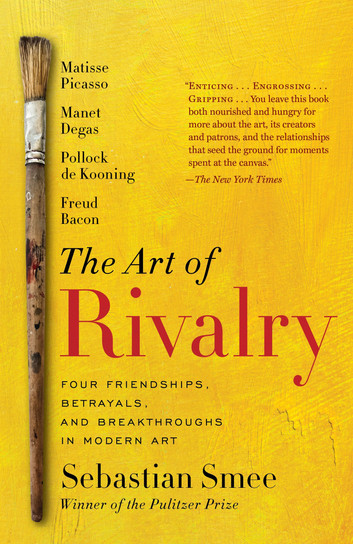
Description
The Art of Rivalry: Exploring Four Transformative Friendships in Modern Art
Discover How Competition Shaped Modern Art’s Greatest Masters
The Art of Rivalry by Sebastian Smee reveals how creative competition fueled modern art’s evolution. This Pulitzer Prize-winning book examines four pivotal artist relationships that changed art history. Moreover, Smee demonstrates how friendship and rivalry intertwined to produce groundbreaking masterpieces. The book explores the complex dynamics between artists who pushed each other toward greatness.
Smee’s narrative focuses on eight artists whose relationships defined their careers. These partnerships combined admiration with jealousy, support with competition. Furthermore, each relationship produced artistic breakthroughs that might never have occurred otherwise.
Four Legendary Artistic Partnerships
The Art of Rivalry chronicles these transformative relationships in compelling detail:
- Henri Matisse and Pablo Picasso: Two titans who challenged each other for decades
- Edgar Degas and Édouard Manet: Impressionist rivals with mutual respect and tension
- Lucian Freud and Francis Bacon: Post-war British painters who inspired darker visions
- Jackson Pollock and Willem de Kooning: Abstract Expressionists competing for American art supremacy
Matisse and Picasso: A Rivalry That Defined Modern Art
The relationship between Matisse and Picasso dominates twentieth-century art history. These giants met in 1906 and remained connected until Matisse’s death. However, their friendship was marked by intense competition and mutual influence.
Smee reveals how each artist responded to the other’s innovations. Matisse’s color experiments pushed Picasso toward Cubism’s revolutionary forms. Conversely, Picasso’s bold compositions challenged Matisse to simplify and intensify his work.
Their rivalry spanned five decades of continuous creative dialogue. Therefore, understanding their relationship illuminates modern art’s entire trajectory. Smee brings this epic competition to life with vivid storytelling.
The two artists never stopped watching each other’s progress carefully. They collected each other’s work and studied every new development. Moreover, they used rivalry as fuel for their own creative breakthroughs.
Degas and Manet: Impressionism’s Complicated Friendship
Degas and Manet shared social circles in nineteenth-century Paris. Both challenged academic painting conventions with modern urban subjects. Nevertheless, their friendship contained significant tension and disagreement.
Smee explores how these artists influenced each other’s technical approaches. Manet’s bold brushwork affected Degas’s later pastel experiments significantly. Meanwhile, Degas’s compositional innovations pushed Manet toward more daring arrangements.
Their relationship reveals how artistic rivalry operates within friendship’s boundaries. The two men admired each other yet competed for critical recognition. Additionally, they disagreed about Impressionism’s direction and purpose fundamentally.
Personal conflicts occasionally strained their professional respect and admiration. However, they continued engaging with each other’s work throughout their careers. This complex dynamic produced some of Impressionism’s most memorable paintings.
Freud and Bacon: Post-War British Art’s Dark Partnership
Lucian Freud and Francis Bacon formed an intense friendship in 1940s London. Both artists explored human flesh with unflinching honesty and psychological depth. Furthermore, their relationship combined genuine affection with competitive artistic ambition.
Smee describes their nights drinking together in Soho’s bohemian clubs. They discussed art, life, and their shared commitment to figurative painting. However, each artist pushed the other toward increasingly raw representations.
Bacon’s distorted figures challenged Freud to paint flesh more directly. Conversely, Freud’s meticulous observation influenced Bacon’s approach to portraiture. Therefore, their rivalry produced increasingly powerful and disturbing images.
The friendship eventually fractured under the weight of competition and jealousy. Bacon’s international success created tension that Freud struggled to accept. Nevertheless, their mutual influence remained evident in both artists’ mature work.
Pollock and de Kooning: Abstract Expressionism’s American Rivalry
Jackson Pollock and Willem de Kooning dominated New York’s post-war art scene. Both pioneered Abstract Expressionism’s revolutionary approach to painting and gesture. Moreover, their rivalry defined American art’s emergence as a global force.
Smee chronicles their complicated friendship during the 1940s and 1950s. They respected each other’s talent while competing for critical attention. However, their different approaches to abstraction created natural tension.
Pollock’s drip paintings challenged traditional notions of composition and control completely. De Kooning responded by intensifying his own gestural abstractions significantly. Therefore, each artist’s innovations pushed the other toward greater boldness.
Pollock’s early death in 1956 ended their rivalry prematurely. Nevertheless, their competition had already transformed American painting’s international reputation. De Kooning continued developing ideas sparked by their creative dialogue.
How Rivalry Fuels Artistic Innovation
Smee argues that creative competition drives artistic breakthroughs more than isolation. Artists need peers who challenge their assumptions and push boundaries. Furthermore, rivalry provides motivation that pure inspiration cannot sustain alone.
The book demonstrates how each artist pair elevated each other’s work. They set standards that demanded constant innovation and risk-taking. Moreover, they created environments where complacency became impossible.
Rivalry also provides the emotional intensity that fuels great art. Jealousy, admiration, and competition combine to produce extraordinary creative energy. Therefore, understanding these dynamics illuminates how masterpieces actually emerge.
The Psychology Behind Creative Competition
The Art of Rivalry explores the psychological complexity of artistic friendships deeply. Smee reveals how admiration and envy coexist within creative relationships. However, he avoids simplifying these dynamics into easy narratives.
Artists need recognition yet fear being overshadowed by talented peers. They crave honest feedback but resist criticism that threatens confidence. Additionally, they want support while maintaining fierce independence.
These contradictions create the tension that drives artistic evolution forward. Smee shows how each relationship navigated these psychological challenges differently. Nevertheless, all four partnerships shared similar underlying dynamics.
The book illuminates how artists use rivalry to overcome creative blocks. Competition provides external motivation when internal drive falters temporarily. Moreover, it offers concrete standards against which to measure progress.
Smee’s Narrative Approach and Writing Style
Sebastian Smee writes with clarity and engaging narrative momentum throughout. He avoids academic jargon while maintaining intellectual depth and rigor. Furthermore, he brings historical figures to life through vivid anecdotes.
The book reads like interconnected biographical essays rather than dry history. Smee focuses on specific moments when rivalry produced creative breakthroughs. Therefore, readers experience the drama of artistic competition firsthand.
His prose balances art criticism with human storytelling effectively. Technical discussions of painting techniques remain accessible to general readers. Moreover, Smee connects artistic choices to personal emotions and relationships.
Why This Book Matters for Art Lovers
The Art of Rivalry offers fresh perspectives on familiar modern art masters. Smee reveals hidden connections between artists and their most famous works. However, he also demonstrates broader truths about creativity and human nature.
The book helps readers understand modern art’s development through personal relationships. Abstract movements become concrete through individual stories of friendship and competition. Additionally, masterpieces gain new meaning when viewed through rivalry’s lens.
Art enthusiasts will appreciate Smee’s insights into creative processes and motivations. The book explains why certain paintings emerged at specific historical moments. Moreover, it shows how personal dynamics shaped entire artistic movements.
Lessons About Creativity and Collaboration
Beyond art history, the book offers insights into creative work generally. Smee demonstrates how competition can enhance rather than diminish collaborative relationships. Furthermore, he shows how rivalry drives innovation across all creative fields.
The artist pairs reveal that great work rarely emerges from isolation. Creative people need peers who challenge assumptions and raise standards. Therefore, building relationships with talented rivals becomes essential for growth.
The book also explores the costs of intense creative competition. Friendships suffer under the weight of jealousy and ambition regularly. However, Smee suggests these costs often produce art that justifies sacrifice.
Perfect for Multiple Audiences
The Art of Rivalry appeals to art historians seeking fresh analytical perspectives. It also engages general readers interested in creativity and human relationships. Moreover, artists themselves will recognize familiar dynamics in these historical accounts.
The book requires no specialized art history knowledge to enjoy fully. Smee provides sufficient context for understanding each artist’s significance and contribution. Therefore, curious beginners can engage as easily as experienced scholars.
Museum visitors will find the book enhances their appreciation of exhibitions. Understanding rivalry’s role deepens engagement with individual paintings and artistic movements. Additionally, the book provides conversation starters for discussing modern art.
Critical Acclaim and Recognition
Sebastian Smee’s work earned the Pulitzer Prize for Criticism in 2011. His insights into artistic relationships have influenced how critics approach art history. Furthermore, the book has become essential reading for understanding modern art.
Reviewers praised Smee’s ability to make complex relationships accessible and compelling. His narrative approach brings academic insights to broader audiences successfully. Moreover, his psychological depth adds dimensions that traditional art history often misses.
The book demonstrates that rigorous scholarship can remain engaging and readable. Smee proves that art history belongs to everyone, not just specialists. Therefore, his work has expanded conversations about modern art significantly.
Conclusion: Understanding Art Through Human Connection
Sebastian Smee reveals that modern art’s greatest achievements emerged from human relationships. The Art of Rivalry demonstrates how friendship and competition intertwined throughout art history. Moreover, it shows that creativity thrives on challenge rather than isolation.
The four partnerships explored here changed modern art’s entire trajectory permanently. Each relationship produced breakthroughs that might never have occurred in isolation. Therefore, understanding rivalry becomes essential for understanding modern art itself.
This book ultimately argues that art emerges from deeply human needs. Artists create not just from inspiration but from complex social dynamics. The Art of Rivalry makes this truth vivid, compelling, and impossible to ignore for anyone interested in creativity’s true nature.





Reviews
There are no reviews yet.