

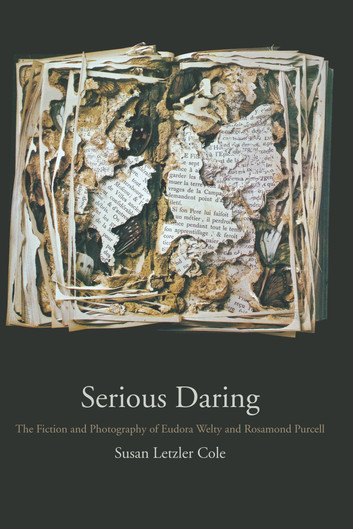
Description
Serious Daring: A Complete Synopsis of Eudora Welty and Rosamond Purcell’s Artistic Vision
Introduction: Understanding Serious Daring in Art and Literature
Serious Daring explores the remarkable creative work of two groundbreaking American artists. Susan Letzler Cole examines Eudora Welty’s fiction alongside Rosamond Purcell’s photography. Moreover, the book reveals unexpected connections between these two distinct artistic mediums. Both artists demonstrate what Cole calls “serious daring” in their approach to creativity. This concept describes their willingness to take bold artistic risks.
Welty, a celebrated Southern writer, captured Mississippi life through vivid storytelling. Purcell, a contemporary photographer, creates haunting images of natural specimens and curiosities. Furthermore, both women share a unique vision that transforms ordinary subjects. Their work challenges viewers and readers to see the world differently.
Cole’s analysis illuminates how these artists push creative boundaries fearlessly. Therefore, readers gain insight into the nature of artistic courage. The book celebrates women who refused to follow conventional artistic paths.
Eudora Welty: Fiction Writer and Photographer
Eudora Welty earned fame primarily as a fiction writer. However, she was also an accomplished photographer during the 1930s. She documented Depression-era Mississippi with her camera and pen. Moreover, her photographs reveal the same keen observation found in her stories.
Welty’s fiction captures the rhythms of Southern speech and culture. Her characters feel authentic and deeply human. Additionally, her prose style combines lyricism with precise detail. She won the Pulitzer Prize for her novel “The Optimist’s Daughter.”
Her photography work remained less known until later in her career. Yet these images demonstrate her visual storytelling abilities. Furthermore, they show her compassion for ordinary people facing hardship. Welty’s camera captured dignity in everyday Southern life.
The connection between her writing and photography runs deep. Both mediums reveal her gift for finding meaning in small moments. Therefore, understanding her photography enriches appreciation of her fiction.
Rosamond Purcell: Photography’s Bold Experimenter
Rosamond Purcell creates photographs that challenge conventional beauty standards. She photographs natural history specimens, bones, and scientific curiosities. Moreover, her work transforms these objects into haunting artistic statements. Her images often feature decay, transformation, and the passage of time.
Purcell collaborates with museums and natural history collections worldwide. She finds beauty in specimens that others might consider disturbing. Additionally, her photographs raise questions about mortality and preservation. Her work has appeared in numerous books and exhibitions.
Her artistic approach embraces imperfection and strangeness. She photographs taxidermy animals, preserved specimens, and anatomical models. Furthermore, she uses unconventional techniques to create dreamlike effects. Her images blur the line between science and art.
Purcell’s photography demonstrates serious daring through its unflinching subject matter. She confronts viewers with images of death and decay. However, she reveals unexpected beauty in these challenging subjects. Her work requires courage from both artist and audience.
The Concept of Serious Daring Explained
Cole’s central concept of “serious daring” describes a particular artistic courage. It means taking creative risks while maintaining artistic integrity. Moreover, it involves exploring uncomfortable or unconventional subjects honestly. Both Welty and Purcell exemplify this quality throughout their careers.
Serious daring differs from mere shock value or sensationalism. Instead, it represents thoughtful exploration of difficult themes. Furthermore, it requires technical skill combined with emotional honesty. Artists must dare to reveal truths that others might avoid.
This concept applies to both subject matter and artistic technique. Welty dared to write complex Southern characters without stereotypes. Similarly, Purcell dares to photograph subjects many consider macabre. Therefore, both artists expand the boundaries of their mediums.
Cole argues that serious daring is essential for meaningful art. Artists must risk failure and criticism to create authentic work. Additionally, they must trust their unique vision despite external pressure. This courage separates memorable art from safe, forgettable work.
Connections Between Fiction and Photography in Serious Daring
Cole’s book reveals surprising parallels between Welty’s fiction and Purcell’s photography. Both artists share a fascination with transformation and time. Moreover, both find profound meaning in carefully observed details. Their work demonstrates how different mediums can express similar artistic visions.
Photography and fiction both capture moments and preserve them permanently. Welty’s stories freeze characters in significant moments of change. Likewise, Purcell’s photographs preserve specimens in states of transformation. Furthermore, both artists use their mediums to explore mortality and memory.
Both women work with what already exists in the world. Welty drew characters from people she observed in Mississippi. Similarly, Purcell photographs objects she discovers in museum collections. Therefore, both artists transform reality rather than inventing it entirely.
Their work also shares a quality of patient observation. Welty spent years listening to Southern voices and stories. Meanwhile, Purcell spends hours studying specimens before photographing them. This careful attention creates depth and authenticity in their work.
Key Themes Explored in Serious Daring
Central Themes in Welty and Purcell’s Work:
- Mortality and Preservation: Both artists confront death and the desire to preserve life
- Transformation: They document how things change over time and through circumstance
- Beauty in the Overlooked: They find artistic value in subjects others ignore
- Southern Identity: Welty’s regional focus parallels Purcell’s interest in American collections
- Scientific Curiosity: Both approach subjects with investigative, almost scientific attention
- Feminine Perspective: They offer distinctly female viewpoints in male-dominated fields
- Memory and Loss: Their work explores how we remember and what we lose
The theme of transformation appears throughout both artists’ work. Welty’s characters undergo profound changes through their experiences. Additionally, Purcell photographs specimens in various states of decay. Both artists recognize that change is inevitable and meaningful.
Memory plays a crucial role in their artistic visions. Welty’s fiction often explores how characters remember their pasts. Similarly, Purcell’s photographs preserve specimens that might otherwise be forgotten. Therefore, both artists serve as keepers of memory.
The concept of beauty challenges viewers and readers alike. Welty finds beauty in ordinary Southern lives and landscapes. Meanwhile, Purcell discovers beauty in death and scientific specimens. Furthermore, both artists expand our understanding of what deserves aesthetic appreciation.
Susan Letzler Cole’s Analytical Approach
Cole brings scholarly rigor to her examination of these artists. She analyzes their work through multiple critical lenses. Moreover, she draws connections that illuminate both artists’ achievements. Her writing makes complex ideas accessible to general readers.
Cole’s background in literature and visual studies informs her analysis. She understands both the technical and emotional aspects of art. Furthermore, she respects each artist’s unique contribution to their field. Her approach avoids reducing one medium to the other.
The book includes careful close readings of specific works. Cole examines individual photographs and stories in detail. Additionally, she places both artists within broader cultural contexts. This combination of micro and macro analysis enriches understanding.
Cole’s writing style balances academic insight with readable prose. She avoids unnecessary jargon while maintaining intellectual depth. Therefore, the book appeals to both scholars and general readers. Her passion for both artists shines through every page.
Why Serious Daring Matters to Contemporary Readers
This book offers valuable insights for anyone interested in creativity. It demonstrates how artistic courage produces meaningful work. Moreover, it shows how different mediums can express similar visions. Readers gain appreciation for both literature and photography.
The book celebrates women artists who defied conventional expectations. Both Welty and Purcell worked in fields dominated by men. Furthermore, they pursued unconventional subjects and approaches fearlessly. Their example inspires contemporary artists facing similar challenges.
Cole’s analysis helps readers understand the creative process more deeply. She reveals how serious artists develop their unique visions. Additionally, she shows how technical skill combines with emotional honesty. These lessons apply across all creative disciplines.
The book also explores the relationship between art and mortality. Both artists confront death and impermanence in their work. However, they transform these difficult subjects into meaningful art. Therefore, readers gain new perspectives on universal human experiences.
Artistic Boundaries and Breaking Them
Both Welty and Purcell pushed against the limitations of their mediums. Welty’s fiction challenged stereotypes about Southern literature and culture. Similarly, Purcell’s photography expanded definitions of photographic beauty. Furthermore, both artists refused to accept conventional subject matter restrictions.
Breaking boundaries requires both courage and skill. Artists must master their craft before effectively breaking rules. Moreover, they must have clear artistic vision guiding their experiments. Random rebellion produces chaos rather than meaningful innovation.
Welty broke boundaries by writing complex, realistic Southern characters. She avoided both romanticizing and demonizing Southern culture. Additionally, she gave voice to women and marginalized people. Her fiction expanded what Southern literature could accomplish.
Purcell breaks boundaries by photographing subjects others consider inappropriate. She transforms scientific specimens into artistic subjects. Furthermore, she uses unconventional techniques to create unique effects. Her work challenges photography’s traditional focus on living beauty.
The Role of Observation in Creative Work
Both artists demonstrate the importance of careful, patient observation. Welty spent years observing Mississippi life before writing about it. Likewise, Purcell studies her subjects extensively before photographing them. Therefore, their work achieves depth that superficial observation cannot produce.
Observation requires more than simply looking at things. It involves understanding context, history, and significance. Moreover, it means seeing beyond surface appearances to deeper truths. Both artists developed this skill through years of practice.
Welty’s fiction reveals details that bring characters and settings alive. She noticed how people spoke, moved, and interacted. Additionally, she understood the social dynamics shaping Southern communities. This observational skill makes her fiction feel authentic.
Purcell’s photographs demonstrate similar observational powers. She sees artistic potential in objects others overlook. Furthermore, she understands how lighting and composition reveal hidden qualities. Her photographs make viewers see familiar objects in new ways.
Technical Mastery and Artistic Vision
Serious daring requires strong technical skills alongside bold vision. Welty mastered the craft of fiction writing through years of practice. Similarly, Purcell developed sophisticated photographic techniques. Therefore, their experimental work rests on solid technical foundations.
Technical mastery allows artists to execute their visions effectively. Without craft skills, bold ideas remain unrealized. Moreover, technical knowledge enables artists to solve creative problems. Both Welty and Purcell demonstrate this combination of skill and vision.
Welty’s prose style shows complete control of language and narrative. She crafts sentences that are both beautiful and precise. Additionally, she structures stories to maximize emotional impact. Her technical skill serves her artistic vision perfectly.
Purcell’s photographic technique enables her unique artistic effects. She understands lighting, composition, and darkroom processes thoroughly. Furthermore, she experiments with techniques to achieve specific results. Her technical knowledge supports rather than limits her creativity.
The Influence of Place and Collection
Place plays a crucial role in both artists’ work. Welty’s fiction is deeply rooted in Mississippi geography and culture. Meanwhile, Purcell’s photography often features specimens from specific museum collections. Therefore, both artists demonstrate how place shapes artistic vision.
Welty’s Mississippi is both specific and universal. She captures particular details of Southern life accurately. However, her themes resonate with readers everywhere. Additionally, she shows how regional identity influences individual experience.
Purcell’s work with museum collections raises questions about preservation and display. She photographs specimens that institutions have saved from oblivion. Furthermore, her images comment on how we categorize and understand nature. The collections themselves become part of her artistic statement.
Both artists transform their source materials through artistic vision. Welty turns Mississippi observations into universal human stories. Similarly, Purcell transforms museum specimens into profound artistic statements. Therefore, both demonstrate how artists reshape reality into art.
Gender and Artistic Authority
Cole’s book examines how gender influenced both artists’ careers. Women artists historically faced significant barriers and discrimination. Moreover, they often struggled for recognition in male-dominated fields. Both Welty and Purcell navigated these challenges successfully.
Welty achieved recognition during an era when women writers faced skepticism. She earned respect through the undeniable quality of her work. Additionally, she maintained artistic integrity despite pressure to conform. Her success opened doors for subsequent women writers.
Purcell works in photography, a field with complex gender dynamics. She photographs subjects traditionally associated with male scientific authority. Furthermore, she brings a distinctly feminine perspective to these subjects. Her work challenges assumptions about who can create certain types of art.
Both artists demonstrate that serious daring sometimes means defying gender expectations. They pursued their artistic visions regardless of social pressure. Therefore, their careers inspire women artists facing similar obstacles today.
The Book’s Structure and Approach
Cole organizes her analysis to highlight connections between the artists. She alternates between discussing Welty and Purcell throughout the book. Moreover, she draws explicit parallels between specific works. This structure helps readers understand the comparative analysis.
The book includes reproductions of both photographs and story excerpts. These visual and textual examples support Cole’s arguments effectively. Additionally, they allow readers to examine the works being discussed. The illustrations are essential to understanding Cole’s points.
Cole’s chapters explore different aspects of serious daring systematically. She examines subject matter, technique, and cultural context separately. Furthermore, she builds her argument progressively throughout the book. Each chapter deepens understanding of her central thesis.
The book concludes by reflecting on serious daring’s contemporary relevance. Cole argues that this quality remains essential for meaningful art. Therefore, studying Welty and Purcell offers lessons for current artists. Her conclusion connects historical analysis to present-day concerns.
Critical Reception and Academic Impact
Serious Daring has received praise from both literary and art critics. Scholars appreciate Cole’s interdisciplinary approach to these artists. Moreover, the book contributes to conversations about women’s artistic achievements. It has become an important resource for researchers studying either artist.
The book fills a gap in scholarship about Welty’s photography. Many studies focus exclusively on her fiction. However, Cole demonstrates why the photography matters significantly. Therefore, she expands understanding of Welty’s complete artistic vision.
Cole’s analysis of Purcell brings scholarly attention to her work. Purcell’s photography deserves more critical recognition than it receives. Furthermore, Cole’s book provides a framework for understanding Purcell’s achievements. This scholarly attention may increase Purcell’s visibility in art history.
The concept of serious daring itself has influenced subsequent criticism. Other scholars have applied this framework to different artists. Additionally, it provides useful vocabulary for discussing artistic courage. Cole’s theoretical contribution extends beyond these two specific artists.
Practical Lessons for Artists and Writers
The book offers valuable guidance for practicing artists and writers. It demonstrates how serious artists develop their unique voices. Moreover, it shows the importance of taking calculated creative risks. These lessons apply across all artistic disciplines and mediums.
Artists learn the value of patient observation from both Welty and Purcell. Rushing to create without understanding subjects produces shallow work. Furthermore, deep observation reveals unexpected artistic possibilities. Therefore, artists should invest time in studying their subjects thoroughly.
The book also teaches the importance of technical mastery. Bold artistic vision requires solid craft skills to execute effectively. Additionally, technical knowledge enables artists to solve creative problems. Artists should balance experimental impulses with disciplined skill development.
Finally, the book encourages artists to trust their unique perspectives. Both Welty and Purcell succeeded by following their distinctive visions. However, they also remained open to learning and growth. This combination of confidence and humility characterizes serious artistic practice.
Conclusion: The Enduring Power of Serious Daring
Serious Daring celebrates two remarkable artists who transformed their mediums. Susan Letzler Cole’s analysis illuminates what makes their work significant. Moreover, she reveals unexpected connections between fiction and photography. The book demonstrates how serious daring produces art that endures.
Both Eudora Welty and Rosamond Purcell exemplify artistic courage. They pursued their visions despite obstacles and criticism. Furthermore, they expanded possibilities within their respective mediums. Their example inspires contemporary artists to take meaningful creative risks.
Cole’s book makes important contributions to scholarship on both artists. It provides frameworks for understanding their achievements more completely. Additionally, it introduces the valuable concept of serious daring. This idea helps explain what distinguishes memorable art from forgettable work.
Readers finish this book with deeper appreciation for both artists. They understand how courage and skill combine to create meaningful art. Therefore, Serious Daring serves both scholarly and inspirational purposes. It reminds us that great art requires both technical mastery and bold vision.








Reviews
There are no reviews yet