

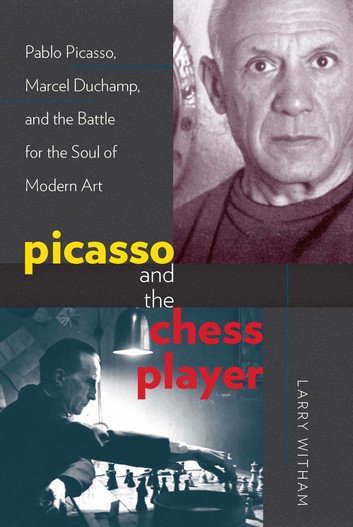
Description
Picasso and Duchamp: The Epic Rivalry That Defined Modern Art
Larry Witham’s “Picasso and the Chess Player” explores the legendary rivalry between Picasso and Duchamp. This compelling narrative reveals how two artistic giants battled for the soul of modern art. Their conflict reshaped the entire landscape of twentieth-century creativity.
The 1913 Showdown: When Picasso and Duchamp Changed Everything
In 1913, the art world witnessed a seismic shift. Picasso and Duchamp emerged as opposing forces in a cultural revolution. Pablo Picasso championed visual beauty and technical mastery. Meanwhile, Marcel Duchamp advocated for ideas over aesthetics. This fundamental disagreement would echo through decades of artistic development.
The year marked a turning point for both artists. Consequently, their divergent paths created two distinct movements. Picasso continued refining Cubism with passionate intensity. In contrast, Duchamp began questioning art’s very definition. Their approaches couldn’t have been more different.
Modern Art Versus Conceptual Art: The Core Battle
Witham’s book illuminates the philosophical divide between Picasso and Duchamp. Picasso believed in the painter’s hand and eye. He created works of stunning visual complexity. His paintings demanded technical skill and aesthetic sensitivity. Furthermore, he viewed art as emotional expression through form.
Duchamp, however, took a radically different stance. He argued that ideas mattered more than execution. His “readymades” challenged traditional artistic values completely. Moreover, he believed anyone could be an artist. This democratization of art horrified traditional practitioners.
The Philosophical Foundations
The rivalry between Picasso and Duchamp represented competing worldviews. Picasso embodied the romantic artist-genius tradition. He worked tirelessly, producing thousands of masterpieces. His studio was a sacred space of creation. Additionally, he believed art required innate talent.
Duchamp rejected this entire framework systematically. He preferred chess to painting eventually. His art required minimal physical effort. Instead, it demanded intellectual engagement from viewers. Therefore, he transformed the artist into a thinker.
New York: The American Battleground for Picasso and Duchamp
New York became crucial in this artistic war. The 1913 Armory Show introduced both artists to America. Picasso’s Cubist works shocked conservative audiences initially. Nevertheless, they demonstrated undeniable technical brilliance. American collectors began acquiring his paintings eagerly.
Duchamp’s “Nude Descending a Staircase” caused even greater controversy. Critics called it an “explosion in a shingle factory.” However, the painting became the show’s sensation. Subsequently, Duchamp gained notoriety throughout American cultural circles. His reputation as an iconoclast was firmly established.
Duchamp’s American Influence
Duchamp eventually moved to New York permanently. There, he influenced generations of American artists. His conceptual approach resonated with younger creators. Moreover, he helped establish New York as art’s capital. The city replaced Paris as the center of innovation.
Meanwhile, Picasso remained in Europe throughout his career. His influence spread through his actual artworks. Museums and collectors coveted his paintings desperately. Thus, Picasso and Duchamp influenced America through different channels. One worked through objects, the other through ideas.
Paris: The European Theater of the Picasso and Duchamp Rivalry
Paris nurtured both Picasso and Duchamp initially. The city’s bohemian atmosphere encouraged radical experimentation. Picasso arrived from Spain as a young man. He quickly absorbed and transformed European artistic traditions. His Blue and Rose periods demonstrated his versatility.
Duchamp grew up in a French artistic family. His brothers were also accomplished artists and sculptors. However, he soon rejected conventional artistic paths. Instead, he pursued increasingly conceptual directions. Paris watched as he abandoned painting altogether.
The Parisian Art Scene
The Parisian avant-garde embraced both artists differently. Picasso became the acknowledged master of modern painting. His studio attracted admirers, collectors, and fellow artists. Furthermore, he collaborated with poets, composers, and dancers. His influence permeated all creative fields.
Duchamp operated more subversively within Parisian culture. He cofounded the Dada movement with other rebels. This anti-art movement rejected traditional aesthetic values. Consequently, Duchamp became the patron saint of artistic rebellion. His legacy would prove remarkably durable.
Key Moments in the Picasso and Duchamp Story
Witham’s narrative highlights several pivotal encounters and events. These moments crystallized the differences between Picasso and Duchamp:
- The 1913 Armory Show – Both artists shocked American audiences simultaneously
- Duchamp’s “Fountain” (1917) – A urinal challenged art’s definition completely
- Picasso’s “Guernica” (1937) – Traditional painting addressed modern political horror
- Duchamp’s retirement from art – He chose chess over artistic production
- Post-war American art – Their competing legacies shaped Abstract Expressionism and Pop Art
- The 1960s conceptual art movement – Duchamp’s ideas finally triumphed institutionally
Each event demonstrated their fundamentally opposed philosophies. Moreover, these moments influenced countless subsequent artists. The reverberations continue affecting contemporary art today.
The Battle for Modern Art’s Soul
Witham frames the Picasso and Duchamp rivalry as existential. What is art’s purpose in modern society? Should it provide beauty or provoke thought? Must artists possess technical skill or just ideas? These questions divided the twentieth-century art world.
Picasso answered with his prolific output and virtuosity. He proved that modern art could be beautiful. His works demonstrated that abstraction required tremendous skill. Additionally, he showed that tradition could be transformed. Innovation didn’t require abandoning craft entirely.
Duchamp provided completely opposite answers to these questions. He demonstrated that art could be purely conceptual. Technical skill became optional or even irrelevant. Furthermore, he proved that context determined artistic meaning. A urinal became art through institutional presentation.
The Broader Cultural Implications
The conflict between Picasso and Duchamp transcended mere aesthetics. It reflected broader tensions within modern culture. Should society value skill or innovation more? Is expertise necessary or elitist? These debates continue raging today.
Picasso represented meritocracy based on talent and effort. His success came from decades of dedicated work. He mastered traditional techniques before breaking them. Therefore, his innovations carried authority and legitimacy.
Duchamp embodied democratic accessibility in artistic creation. Anyone could conceive a readymade theoretically. Execution became secondary to conception completely. Consequently, art became more inclusive but less rigorous.
Their Lasting Impact on Twentieth-Century Art
The influence of Picasso and Duchamp shaped all subsequent movements. Abstract Expressionists followed Picasso’s passionate, gestural approach. They valued spontaneity, emotion, and visual power. Artists like Pollock and de Kooning worshipped Picasso.
Pop Art and Conceptual Art descended from Duchamp directly. Warhol’s soup cans echoed Duchamp’s readymades obviously. Conceptual artists explicitly cited Duchamp as their inspiration. His ideas became dominant in institutional art contexts.
The Picasso Legacy
Picasso’s impact on painting remains unmatched historically. He demonstrated that visual art could be revolutionary. His formal innovations influenced countless painters and sculptors. Moreover, his celebrity made artists into cultural superstars.
His work ethic inspired generations of creators. Picasso produced art until his death at 91. He never stopped experimenting with new styles and media. Thus, he embodied the artist as tireless innovator.
The Duchamp Legacy
Duchamp’s conceptual revolution transformed art education and institutions. Art schools now emphasize ideas over technical training. Museums exhibit installations, performances, and conceptual works regularly. Furthermore, contemporary art often prioritizes intellectual content over aesthetics.
His ironic, detached attitude became the default artistic stance. Sincerity and beauty became suspect in serious art. Instead, critique and questioning became paramount values. Therefore, Duchamp’s influence pervades contemporary artistic culture.
Why This Rivalry Still Matters Today
Witham’s book remains relevant because the debate continues. Contemporary art still grapples with these fundamental questions. Should art be beautiful or challenging? Must artists possess traditional skills? Is conceptual art truly art at all?
The tension between Picasso and Duchamp never resolved completely. Instead, it created productive friction within artistic discourse. Some artists follow Picasso’s path of visual mastery. Others pursue Duchamp’s conceptual and intellectual approach.
Contemporary Echoes
Today’s art world reflects both Picasso and Duchamp’s influences. Figurative painters continue Picasso’s tradition of visual innovation. They prove that painting remains vital and relevant. Their work demonstrates that beauty still matters profoundly.
Meanwhile, conceptual and installation artists extend Duchamp’s legacy. They create experiences rather than objects frequently. Their work exists primarily as documentation or ideas. Thus, both traditions thrive in contemporary practice.
The Personal Dimension of the Picasso and Duchamp Rivalry
Witham explores the personal relationship between these artistic giants. Picasso and Duchamp knew each other personally in Paris. However, they never became close friends or collaborators. Their mutual respect was tinged with fundamental disagreement.
Picasso viewed Duchamp’s abandonment of painting as betrayal. He couldn’t understand choosing chess over artistic creation. His own compulsive productivity contrasted sharply with Duchamp’s restraint. Moreover, Picasso’s passionate nature clashed with Duchamp’s cool irony.
Duchamp regarded Picasso as a brilliant but limited artist. He admired Picasso’s technical abilities genuinely. However, he considered Picasso’s approach ultimately conservative. Duchamp believed his own conceptual revolution went deeper.
Critical Reception and Historical Perspective
“Picasso and the Chess Player” offers balanced analysis of both artists. Witham avoids simplistic hero-worship or dismissal. Instead, he presents Picasso and Duchamp as complex figures. Each possessed genuine insights and significant limitations.
The book situates their rivalry within broader historical contexts. World Wars, technological change, and social upheaval shaped their work. Additionally, changing art markets and institutions affected their careers. Witham provides rich historical detail throughout his narrative.
Scholarly Contributions
Witham’s research draws on extensive primary and secondary sources. He consulted archives, letters, and contemporary accounts carefully. Furthermore, he interviewed art historians and critics extensively. His scholarship is thorough and reliable throughout.
The book contributes significantly to art historical understanding. It clarifies how Picasso and Duchamp’s rivalry shaped modernism. Moreover, it explains their continuing relevance to contemporary practice. Scholars and general readers alike benefit from Witham’s insights.
Lessons for Contemporary Artists and Audiences
The Picasso and Duchamp story offers valuable lessons today. Artists must choose between competing values and approaches. Should they prioritize craft or concept? Must they choose sides in this ongoing debate?
Witham suggests that both approaches possess validity and limitations. Picasso’s path requires immense dedication and natural talent. Not everyone can achieve his level of mastery. However, his work provides enduring aesthetic pleasure and inspiration.
Duchamp’s conceptual approach seems more accessible initially. Anyone can have ideas theoretically. However, truly innovative concepts are extremely rare actually. Moreover, conceptual art often lacks broad popular appeal.
Finding Balance
Perhaps the wisest approach combines both Picasso and Duchamp’s insights. Artists can value both craft and concept simultaneously. Technical skill enhances conceptual work’s impact frequently. Conversely, strong ideas elevate skilled execution beyond mere decoration.
Contemporary artists increasingly reject false dichotomies between these approaches. They recognize that Picasso and Duchamp represent extremes. Most successful art occupies the spectrum between them. Therefore, understanding both traditions enriches artistic practice immensely.
Conclusion: The Enduring Significance of Picasso and Duchamp
Larry Witham’s “Picasso and the Chess Player” illuminates a defining artistic rivalry. The conflict between Picasso and Duchamp shaped twentieth-century art fundamentally. Their competing visions continue influencing contemporary artistic practice and discourse. Understanding their battle helps us comprehend modern art’s evolution and ongoing debates.
Moreover, their story reminds us that great art emerges from passionate conviction. Whether prioritizing beauty or ideas, both artists changed culture forever. Consequently, their rivalry remains essential to understanding art’s modern trajectory. This book provides an accessible, engaging introduction to their epic confrontation. Anyone interested in modern art should read Witham’s compelling narrative. The battle between Picasso and Duchamp continues in studios and museums today.
Reviews
There are no reviews yet.