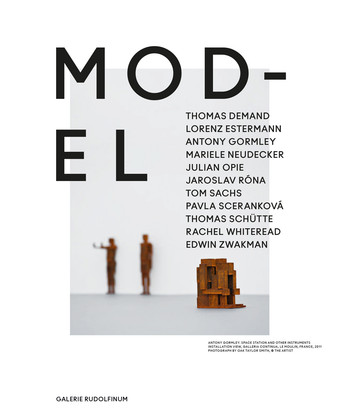
Description
MODEL by Ladislav Kesner: Contemporary Artists and the Art of Model-Making
Introduction: Exploring Contemporary Art Through the Concept of MODEL
MODEL by Ladislav Kesner offers a groundbreaking look at contemporary art and model-making. This catalogue documents the acclaimed 2015 exhibition at Galerie Rudolfinum in Prague and examines how artists use models to represent reality, space, and the human body. MODEL is both a record of the exhibition and a theoretical investigation of artistic representation.
Ladislav Kesner curated this major exhibition featuring internationally recognized artists. The catalogue includes his essay on model-making in contemporary art, as well as in-depth interviews with participating artists about their creative processes. Readers gain unique insight into how sculptors and installation artists approach representation.
The exhibition brought together diverse artistic practices united by their engagement with models and modeling. Artists explored the human figure, architectural space, memory, and perception through various approaches. Additionally, the MODEL exhibition demonstrated how model-making functions as both a process and a conceptual framework. Thus, this catalogue documents a pivotal moment in contemporary art discourse about representation.
Published by Pierot Publishers in 2015, this catalogue serves scholars, artists, and art enthusiasts equally. The publication combines visual documentation, theoretical analysis, and artist perspectives. Furthermore, it provides an accessible entry point for understanding complex contemporary art practices. Therefore, MODEL functions as an essential resource for anyone interested in contemporary sculpture and installation art.
Ladislav Kesner: Curator, Scholar, and Art Theorist
Ladislav Kesner brings extensive expertise in contemporary art theory and curatorial practice to this project. He has established himself as a leading voice in discussions about perception, cognition, and artistic representation. Moreover, his scholarly work bridges art history, cognitive science, and contemporary artistic practice. Consequently, Kesner offers a unique perspective on how artists create, and viewers experience contemporary art.
As curator, Kesner selected artists who interrogate representation through diverse methods. He identified common threads connecting varied practices across media and concepts. His curatorial vision emphasized models as tools for understanding reality, revealing unexpected connections between international artists.
Kesner’s essay in the catalogue provides a theoretical foundation for understanding the exhibition’s themes and concerns. He examines historical precedents for model-making while focusing on contemporary innovations and conceptual developments. Furthermore, his writing makes complex theoretical ideas accessible to general readers without sacrificing intellectual rigor. Therefore, his contribution elevates the catalogue beyond simple exhibition documentation.
Interviews with participating artists reveal individual perspectives on model-making and representation. Kesner’s questions illuminate each artist’s framework and creative process. These conversations show how theory and practice intersect in contemporary art, clarifying both curatorial vision and artistic intention.
The Exhibition at Galerie Rudolfinum: Context and Significance
The Galerie Rudolfinum in Prague hosted the prestigious MODEL exhibition in 2015. This historic institution has long championed contemporary art alongside its classical music programming. Furthermore, the gallery’s architectural spaces offered an ideal environment for displaying diverse sculptural and installation works. Therefore, the venue contributed significantly to the exhibition’s impact and visitor experience.
The exhibition occupied multiple gallery spaces, allowing each artist’s work to breathe and communicate effectively. Kesner’s installation design fostered dialogue among diverse artistic approaches while respecting individual artistic visions. Additionally, the spatial arrangement encouraged visitors to consider relationships between works and underlying conceptual connections. Thus, the exhibition design itself reinforced themes about models, space, and representation.
Prague’s vibrant contemporary art scene provided a receptive audience for this ambitious curatorial project. The city’s artistic community engaged enthusiastically with the exhibition’s theoretical concerns and artistic achievements. Moreover, international visitors recognized the exhibition’s significance within broader contemporary art discourse. Consequently, MODEL generated substantial critical attention and scholarly interest.
The exhibition’s 2015 timing positioned it within ongoing conversations about representation in contemporary art. Digital technologies were transforming how artists create, and viewers experience art worldwide. Additionally, questions about the body, space, and perception remained central to contemporary artistic practice. Therefore, the MODEL exhibition addressed timely concerns while examining enduring artistic questions.
Featured Artists: Diverse Approaches to Model-Making and Representation
The MODEL exhibition and catalogue feature internationally acclaimed artists whose work demonstrates varied approaches to representation:
- Antony Gormley – British sculptor, renowned for exploring the human body through cast figures and installations
- Thomas Demand – German artist creating photographic works based on meticulously constructed paper and cardboard models
- Lorenz Estermann – Austrian artist investigating architectural space and perception through sculptural interventions
- Mariele Neudecker – German-British artist creating landscape installations that blur boundaries between representation and reality
- Additional contemporary artists whose work engages with models, representation, and spatial concerns
Each artist brings a unique perspective and methodology to questions about how models function in contemporary art. Their diverse practices demonstrate the breadth of approaches to representation in current artistic production. Furthermore, their work collectively illustrates how model-making remains vital to contemporary artistic investigation. Therefore, the exhibition showcased both individual achievement and collective artistic concerns.
Antony Gormley: The Human Body as Model and Subject
Antony Gormley’s contribution to the MODEL exhibition exemplifies his decades-long investigation of the human body. His sculptures use his own body as a model and starting point for exploring human existence. Moreover, Gormley’s work questions relationships between body, space, and consciousness through powerful sculptural forms. Consequently, his practice demonstrates how the body itself functions as a fundamental model for understanding reality.
Gormley’s interview with Kesner in the catalogue reveals his philosophical approach to sculpture and representation. He discusses how casting his body creates an objective record while simultaneously expressing subjective experience. Additionally, he explains how his work invites viewers to consider their own bodily presence. Thus, Gormley’s contribution illuminates how models mediate between individual experience and universal human concerns.
The artist’s work in the exhibition demonstrated his characteristic approach to figure and space. His sculptures occupied gallery spaces, activating architectural environments and viewer awareness. Furthermore, his pieces encouraged contemplation about embodiment, presence, and human existence. Therefore, Gormley’s work provided a powerful anchor for the exhibition’s exploration of representation.
Gormley’s practice shows how traditional sculptural concerns remain relevant. He updates classical focus on the body with conceptual rigor and innovation. His work bridges sculpture traditions and contemporary investigation, connecting past and present approaches.
Thomas Demand: Photography, Models, and Constructed Reality
Thomas Demand’s artistic practice offers a fascinating counterpoint to traditional sculpture in the MODEL exhibition. He constructs elaborate paper-and-cardboard models of spaces, then photographs them before destroying them. Furthermore, his final photographic works appear deceptively realistic while revealing subtle signs of their constructed nature. Therefore, Demand’s work questions relationships between the model, the photograph, and reality itself.
Demand recreates spaces from news photos or memory using paper and cardboard. His detailed process converts two-dimensional images into three-dimensional models, then back to photos. The results transform original sources and show how models mediate forms of representation.
The artist’s contribution to MODEL illustrated how photography and sculpture intersect in contemporary art practice. His work challenges assumptions about photographic truth and documentary evidence through its construction process. Moreover, it reveals how all representation involves selection, interpretation, and transformation of reality. Consequently, Demand’s practice exemplifies conceptual sophistication in contemporary approaches to model-making.
His interview in the catalogue discusses his interest in memory, media images, and collective consciousness. Demand explains how his choice of subjects reflects the contemporary experience of reality through mediated images. Additionally, he describes his painstaking construction process and its relationship to final photographic works. Therefore, readers understand both the conceptual framework and the practical methodology behind his distinctive artistic practice.
Lorenz Estermann and Mariele Neudecker: Space, Landscape, and Perception
Lorenz Estermann’s work in the MODEL exhibition explored architectural space and viewer perception through sculptural interventions. His practice investigates how we experience and understand built environments through subtle modifications and installations. Furthermore, Estermann’s work reveals hidden aspects of familiar spaces by making visible what typically remains unnoticed. Therefore, his contribution demonstrated how models help us perceive and comprehend spatial relationships.
Estermann’s approach emphasizes phenomenological experience and bodily engagement with architectural space. His installations encourage viewers to move through spaces differently and notice details they might otherwise overlook. Moreover, his work questions assumptions about how architecture shapes human experience and behavior. Consequently, his practice illustrates how artistic interventions can transform our understanding of everyday environments.
Mariele Neudecker’s landscape installations provided another perspective on representation and reality in the exhibition. She creates enclosed environments containing miniature landscapes submerged in liquid or enclosed in glass containers. Additionally, her work evokes Romantic landscape painting traditions while employing contemporary materials and conceptual approaches. Thus, Neudecker bridges historical artistic concerns and contemporary installation practices.
Her work explores memory, nostalgia, and how we construct mental images of natural landscapes. The miniature scale of her installations creates intimate viewing experiences that contrast with the vast landscapes they reference. Furthermore, her use of glass containers and liquid creates optical effects that enhance the sense of distance. Therefore, Neudecker’s contribution demonstrated how models can evoke emotional and psychological responses to landscape.
Ladislav Kesner’s Essay: The Art of Model-Making in Contemporary Practice
Kesner’s comprehensive essay forms the theoretical heart of the MODEL catalogue and exhibition. He examines how model-making functions in contemporary art across diverse practices and conceptual frameworks. Moreover, his analysis connects historical precedents with current artistic innovations and theoretical developments. Consequently, the essay provides essential context for understanding the exhibition’s significance.
The curator explores how models serve multiple functions simultaneously in contemporary artistic practice. They function as preparatory tools, finished artworks, conceptual frameworks, and means of investigation. Additionally, models mediate between imagination and realization, between concept and physical form. Thus, Kesner demonstrates that model-making remains central to how artists think and create.
His essay examines relationships between models and the realities they represent or construct. Kesner discusses how models simplify, abstract, and transform their subjects while revealing essential characteristics. Furthermore, he explores how models help artists and viewers understand complex phenomena through manageable representations. Therefore, his analysis illuminates why model-making persists as a vital artistic strategy.
The writing addresses both practical and philosophical dimensions of model-making in contemporary art. Kesner considers technical processes alongside conceptual implications and theoretical frameworks. Moreover, he connects individual artistic practices to broader cultural concerns about representation and reality. Consequently, his essay elevates the catalogue into a significant contribution to contemporary art theory.
Artist Interviews: Individual Perspectives on Models and Representation
The interviews with participating artists provide invaluable insight into their creative processes and conceptual frameworks. Kesner’s questions encourage artists to articulate their thinking about models, representation, and artistic practice. Furthermore, these conversations reveal how theory and practice intersect in contemporary art production. Therefore, the interviews complement the curator’s essay with the artists’ own voices and perspectives.
Each interview explores the specific artist’s approach to model-making and its role in their work. Artists discuss technical processes, conceptual concerns, and how their practice has evolved over time. Additionally, they reflect on influences, inspirations, and relationships to art historical traditions. Thus, readers gain a comprehensive understanding of each artist’s distinctive contribution to contemporary art.
The conversations reveal surprising connections and differences between artists working with similar concerns through different approaches. Some artists emphasize physical process and material qualities, while others focus on conceptual frameworks. Moreover, the interviews demonstrate how diverse practices can address shared questions about representation and reality. Consequently, these conversations enrich understanding of contemporary art’s complexity and vitality.
Kesner’s interviewing style balances scholarly rigor with accessibility for general readers interested in contemporary art. He asks probing questions without resorting to impenetrable theoretical jargon or overly technical language. Furthermore, he allows artists to explain their work in their own terms while guiding conversations productively. Therefore, these interviews serve both scholarly research and broader public engagement with contemporary art.
Contemporary Sculpture and Installation: Evolution of Artistic Practice
The MODEL exhibition and catalogue document important developments in contemporary sculpture and installation art practices. Traditional sculptural concerns about form, space, and materiality persist while expanding through new technologies and concepts. Moreover, contemporary artists increasingly blur boundaries between sculpture, installation, photography, and other media. Consequently, the exhibition illustrated how sculpture continues evolving as a vital contemporary art form.
The rise of installation art has transformed how artists think about space, viewer experience, and artistic presentation. Artists now create immersive environments rather than discrete objects for contemplation from fixed viewpoints. Additionally, installation practices emphasize temporal experience and bodily engagement over static visual appreciation. Thus, contemporary approaches to three-dimensional art differ significantly from traditional sculpture while maintaining connections to it.
The artists in MODEL demonstrate how contemporary sculpture engages with architecture, photography, and conceptual art simultaneously. Their work resists easy categorization while remaining grounded in sculptural traditions and concerns. Furthermore, they employ diverse materials and techniques ranging from traditional casting to digital fabrication. Therefore, the exhibition showcased the remarkable diversity and continued relevance of contemporary sculpture.
Digital technologies have expanded possibilities for creating and experiencing three-dimensional artworks in recent decades. Artists now use computer modeling, 3D printing, and digital fabrication alongside traditional sculptural techniques. Moreover, virtual and augmented reality offer new ways to create spatial experiences and representations. Consequently, model-making in contemporary art encompasses both physical and digital approaches to representation.
The Human Body in Contemporary Art: Representation and Presence
The human body remains a central subject and concern in contemporary art despite dramatic changes in representation. Artists continue exploring embodiment, identity, and human experience through diverse approaches and media. Furthermore, contemporary body art ranges from traditional figure sculpture to performance, video, and digital media. Therefore, the body’s persistence as an artistic subject demonstrates its fundamental importance to human self-understanding.
Several artists in the MODEL exhibition used the body as a primary model and subject matter. Their work explores how we experience embodiment, how bodies occupy space, and how identity manifests physically. Additionally, these artists question assumptions about the body’s naturalness by revealing its constructed and mediated nature. Thus, contemporary body art combines phenomenological investigation with critical theoretical perspectives.
The exhibition demonstrated how artists use their own bodies as models while addressing universal human concerns. Personal experience becomes the starting point for exploring shared aspects of human existence and consciousness. Moreover, artists’ bodies serve as readily available models while carrying specific biographical and cultural meanings. Consequently, body-based work in contemporary art balances individual specificity with broader human significance.
Contemporary approaches to representing the body differ significantly from classical figurative traditions in sculpture and painting. Artists now emphasize process, materiality, and conceptual frameworks over idealized beauty or naturalistic representation. Furthermore, they incorporate diverse cultural perspectives and challenge Western art historical assumptions about the body. Therefore, contemporary body art reflects our era’s complex understanding of embodiment and identity.
Models as Conceptual Tools: Beyond Physical Representation
The MODEL exhibition revealed how contemporary artists use models as conceptual tools beyond simple physical representation. Models help artists think through ideas, test possibilities, and explore relationships between elements. Moreover, the modeling process itself becomes a form of artistic research and investigation. Consequently, model-making functions as a methodology for artistic inquiry rather than merely a preparatory step.
Contemporary artists recognize that all representation involves selection, simplification, and interpretation of reality. Models make this process explicit by acknowledging their constructed nature and relationship to what they represent. Additionally, models can reveal aspects of reality that direct observation might miss through abstraction. Thus, model-making becomes a powerful tool for understanding complex phenomena and relationships.
The catalogue’s artists demonstrate how models mediate between imagination and realization in creative processes. Models allow artists to visualize ideas, experiment with possibilities, and communicate concepts to collaborators. Furthermore, models bridge conceptual thinking and physical making in ways that pure imagination cannot achieve. Therefore, model-making remains essential to how many contemporary artists develop and realize their work.
Some artists in the exhibition treat the model itself as a finished artwork rather than a preparatory study. This approach questions traditional hierarchies between sketch and final work, between process and product. Moreover, it emphasizes how models possess their own aesthetic qualities and conceptual significance. Consequently, contemporary art expands understanding of what constitutes a finished artwork worthy of exhibition and contemplation.
Educational Value: Learning from the MODEL for Artists and Students
The MODEL catalogue serves as a valuable educational resource for art students and emerging artists. It demonstrates diverse approaches to representation and model-making through the work of accomplished contemporary practitioners. Furthermore, the artist interviews provide insight into creative processes and conceptual development rarely available elsewhere. Therefore, the publication functions as an informal masterclass in contemporary artistic practice.
Students can learn from how established artists articulate their thinking about materials, processes, and concepts. The interviews reveal that successful contemporary art requires both technical skill and conceptual sophistication. Additionally, they demonstrate how artists develop distinctive voices as they engage with broader artistic and cultural conversations. Thus, the catalogue offers models for how to think and work as a contemporary artist.
Kesner’s curatorial essay provides a theoretical framework that helps students understand the intellectual dimensions of contemporary art. He explains key concepts and debates in accessible language without oversimplifying complex ideas. Moreover, his analysis demonstrates how to write about contemporary art with clarity and rigor. Consequently, the catalogue serves both artistic practice and critical writing about art.
The publication also benefits educators teaching contemporary art, sculpture, or installation practices in academic settings. It provides concrete examples of how contemporary artists engage with representation, space, and materiality. Furthermore, the diverse practices documented offer multiple entry points for discussing contemporary art with students. Therefore, MODEL functions as a versatile teaching tool across various educational contexts.
Legacy and Influence: MODEL’s Impact on Contemporary Art Discourse
The MODEL exhibition and catalogue contributed significantly to ongoing conversations about representation in contemporary art. Kesner’s curatorial vision and the participating artists’ work generated substantial critical discussion and scholarly attention. Moreover, the project demonstrated how traditional artistic concerns remain vital when approached through contemporary perspectives. Consequently, MODEL influenced how curators, critics, and artists think about model-making and representation.
The publication documents a specific moment in contemporary art while addressing enduring questions about artistic practice. Its examination of model-making connects historical traditions with current innovations and future possibilities. Additionally, the catalogue’s combination of visual documentation, theoretical analysis, and artist perspectives creates a comprehensive resource. Thus, MODEL continues serving researchers and artists long after the original exhibition closed.
The exhibition’s success demonstrated continued public interest in sculpture and installation art despite digital media’s dominance. Visitors engaged enthusiastically with three-dimensional works that required physical presence and bodily engagement. Furthermore, the exhibition proved that conceptually sophisticated contemporary art can attract broad audiences when presented in an accessible way. Therefore, MODEL offered an encouraging example for institutions supporting contemporary sculpture and installation practices.
The catalogue’s international roster of artists reflected contemporary art’s global nature and cross-cultural conversations. Artists from different countries and backgrounds addressed shared concerns through distinctive cultural and personal perspectives. Moreover, their work demonstrated how contemporary art transcends national boundaries while remaining grounded in specific contexts. Consequently, MODEL illustrated contemporary art’s capacity to foster international dialogue and mutual understanding.
Conclusion: The Enduring Importance of Models in Contemporary Art
MODEL by Ladislav Kesner stands as an essential document of contemporary artistic practice and theoretical investigation. The catalogue captures a significant exhibition while contributing lasting insights about representation and model-making. Furthermore, it demonstrates how traditional artistic concerns evolve through contemporary approaches and conceptual frameworks. Therefore, this publication remains a valuable resource for anyone interested in contemporary sculpture and installation art.
The exhibition proved that model-making continues serving vital functions in contemporary artistic practice across diverse approaches. Artists use models to investigate reality, explore possibilities, and communicate ideas in ways that other methods cannot. Moreover, models help artists and viewers understand complex phenomena through manageable, comprehensible representations. Consequently, model-making persists as a fundamental artistic strategy despite technological and conceptual changes.
Kesner’s curatorial vision brought together diverse practices to reveal unexpected connections and shared concerns among contemporary artists. His essay and the artist interviews provide theoretical depth while remaining accessible to general readers. Additionally, the publication’s visual documentation preserves important artworks and installation views for future reference. Thus, MODEL succeeds as both an exhibition catalogue and a standalone contribution to art literature.
Read MODEL to discover how contemporary artists engage with representation, space, and the human body through model-making. Explore diverse practices from internationally acclaimed artists working at the forefront of contemporary sculpture and installation. Furthermore, gain insight into curatorial thinking and artistic processes through Kesner’s essay and artist interviews. This remarkable catalogue offers essential perspectives on contemporary art’s continued vitality and relevance.


Reviews
There are no reviews yet.