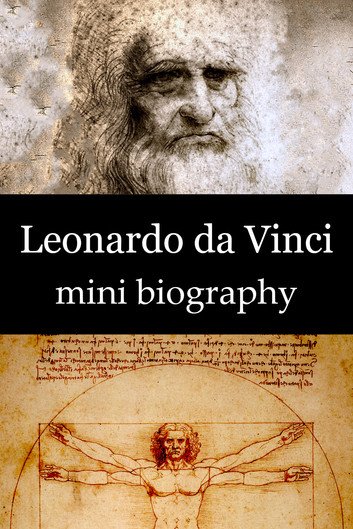
Description
Leonardo da Vinci: The Ultimate Renaissance Genius Who Changed History Forever
Leonardo da Vinci stands as history’s most celebrated polymath and visionary. This mini biography by eBios explores his extraordinary life and achievements. Moreover, it reveals how one man mastered art, science, and invention. His genius continues to inspire millions worldwide today.
The Renaissance period produced many brilliant minds. However, none matched Leonardo’s diverse talents and curiosity. He excelled in painting, sculpture, architecture, and engineering. Furthermore, he made groundbreaking discoveries in anatomy and physics.
Early Life of Leonardo da Vinci
Leonardo was born in 1452 in Vinci, Italy. He was the illegitimate son of a notary. His childhood was spent in the Tuscan countryside. Additionally, he showed artistic talent from a very young age.
His father recognized his abilities early on. Therefore, he apprenticed Leonardo to Andrea del Verrocchio. This master artist taught him painting and sculpture. Moreover, he learned metalworking and other technical skills.
The workshop environment shaped Leonardo’s interdisciplinary approach. He observed how art and science intersected naturally. Furthermore, he developed his keen eye for detail. These formative years laid the foundation for greatness.
Leonardo da Vinci’s Artistic Masterpieces
Leonardo da Vinci created some of history’s most iconic paintings. The Mona Lisa remains the world’s most famous artwork. Her enigmatic smile captivates viewers even today. Additionally, the painting demonstrates his mastery of technique.
The Last Supper adorns a monastery wall in Milan. This monumental fresco depicts Christ’s final meal in dramatic detail. However, Leonardo experimented with new painting methods for it. Unfortunately, the work began deteriorating almost immediately.
His artistic innovations transformed Renaissance painting forever. He perfected the sfumato technique for soft transitions. Moreover, he used atmospheric perspective to create depth. His understanding of light and shadow was unparalleled.
Key Artistic Achievements
Leonardo’s most significant artistic contributions include:
- The Mona Lisa with her mysterious expression
- The Last Supper shows dramatic human emotion.
- The Vitruvian Man illustrates perfect human proportions.
- Lady with an Ermine demonstrates grace and elegance.
- The Virgin of the Rocks with innovative composition
- Numerous preparatory sketches show his creative process.
Each work showcased his technical brilliance and innovation. Furthermore, they revealed his deep understanding of human nature. His paintings combined beauty with scientific observation perfectly.
Scientific Curiosity and Anatomical Studies
Leonardo possessed an insatiable curiosity about the natural world. He dissected human corpses to thoroughly understand anatomy. Moreover, he created detailed drawings of muscles and organs. His anatomical sketches were centuries ahead of their time.
He studied approximately 30 human bodies during his lifetime. His drawings accurately depicted bones, muscles, and internal organs. Furthermore, he documented the cardiovascular system in detail. These studies informed both his art and science.
His anatomical work remained unpublished during his life. However, modern scientists recognize their extraordinary accuracy and insight. Therefore, he is considered a pioneer in medical illustration. His contributions significantly advanced both art and medicine.
Engineering Marvels and Inventions
Leonardo da Vinci designed machines that seemed impossible for his era. He sketched flying machines inspired by bird flight. Additionally, he designed tanks, submarines, and parachutes. His engineering notebooks contain hundreds of innovative concepts.
Many of his inventions were never built during his lifetime. However, modern engineers have constructed working models from his drawings. Moreover, they confirm his designs were often functional. His understanding of mechanics was truly remarkable.
He designed elaborate water systems and canal locks. Furthermore, he created plans for ideal cities and fortifications. His military engineering attracted powerful patrons, such as Cesare Borgia. Therefore, he worked on various defensive and offensive technologies.
The Famous Notebooks
Leonardo kept detailed notebooks throughout his entire life. He wrote in mirror script from right to left. Moreover, he filled thousands of pages with observations and sketches. These notebooks reveal his extraordinary mind at work.
The notebooks cover an astonishing range of subjects. They include anatomy, botany, geology, and astronomy. Furthermore, they contain architectural plans and mechanical designs. His curiosity knew no boundaries.
He never organized or published these notebooks himself. After his death, they were scattered across Europe. However, surviving pages provide invaluable insights into his thinking. Therefore, scholars continue studying them even today.
Contributions to Multiple Fields
Leonardo made significant contributions beyond art and engineering. He studied optics and the nature of light extensively. Additionally, he investigated geology and the formation of fossils. His observations challenged the conventional wisdom of his time.
He understood that fossils were the remains of ancient sea creatures. Moreover, he recognized that rock layers told Earth’s history. These insights predated modern geology by centuries. Furthermore, he studied cloud formation and atmospheric phenomena.
His botanical drawings were scientifically accurate. He also investigated the mathematics of growth patterns. Therefore, his work influenced both art and natural science. His interdisciplinary approach was revolutionary for the Renaissance.
Working for Powerful Patrons
Leonardo served various powerful rulers and wealthy patrons. He initially worked for the Medici family in Florence. Later, he became court artist for Ludovico Sforza in Milan. Additionally, he served the French king Francis I.
These patrons provided financial support and resources for his work. However, Leonardo often left projects unfinished. His perfectionism and diverse interests caused frequent delays. Nevertheless, his reputation remained strong throughout his life.
He designed elaborate court entertainments and theatrical productions. Moreover, he created architectural plans for palaces and churches. His versatility made him invaluable to his employers. Therefore, he enjoyed considerable freedom and respect.
The Renaissance Man Ideal
Leonardo embodied the Renaissance ideal of the universal genius. The period celebrated individuals with diverse knowledge and skills. Moreover, it valued the integration of art and science. He represented this philosophy perfectly in every way.
The term “Renaissance man” now describes polymaths like Leonardo da Vinci. His life demonstrated that creativity transcends traditional boundaries. Furthermore, he showed that observation and experimentation yield knowledge. His approach influenced countless thinkers and artists afterward.
He believed that art required a scientific understanding of nature. Conversely, he thought science benefited from artistic observation. Therefore, he never separated these disciplines in his work. This holistic view defined his entire career and legacy.
Later Years and Final Works
Leonardo spent his final years in France as King Francis I’s guest. The king provided him with a comfortable manor house. Moreover, he received a generous pension without specific obligations. He continued working on his notebooks and projects.
He suffered a stroke that paralyzed his right hand. However, he was left-handed and could still draw. Furthermore, he continued refining earlier works, such as the Mona Lisa. His intellectual curiosity never diminished with age.
He died in 1519 at the age of 67. According to legend, he died in the king’s arms. Moreover, he was buried with great honor in France. His death marked the end of an extraordinary era.
Legacy and Influence on the Modern World
Leonardo da Vinci influenced countless artists, scientists, and inventors after him. His notebooks inspired generations of creative thinkers and innovators. Moreover, his artistic techniques became standard teaching methods. His impact on Western culture is immeasurable and profound.
Modern technology has validated many of his engineering concepts. His flying machines anticipated modern aviation by centuries. Furthermore, his anatomical studies significantly advanced medical understanding. Therefore, he is celebrated in both arts and sciences.
His life story continues to fascinate people worldwide today. Books, films, and exhibitions regularly explore his genius. Additionally, his artworks attract millions of visitors annually. His legacy grows stronger with each passing generation.
Why This Mini Biography Matters
The eBios mini biography provides an accessible introduction to Leonardo’s life. It distills his complex achievements into an engaging narrative. Moreover, it clearly highlights his most significant contributions. Therefore, it serves as an excellent starting point.
Readers gain appreciation for his extraordinary versatility and vision. They understand how he seamlessly bridged art and science. Furthermore, they see how his curiosity drove his achievements. His story inspires creativity and lifelong learning today.
The book demonstrates that genius requires both talent and dedication. Leonardo worked tirelessly to master multiple disciplines simultaneously. Additionally, he never stopped questioning and observing the world. His example encourages us to pursue knowledge passionately.
Conclusion
Leonardo da Vinci remains history’s most celebrated genius and polymath. His artistic masterpieces continue to captivate audiences worldwide today. Moreover, his scientific investigations anticipated modern discoveries by centuries. His notebooks reveal a mind of extraordinary depth and curiosity.
This mini-biography by eBios effectively captures his remarkable life. It presents his achievements in an accessible and engaging format. Furthermore, it shows how one person can excel across multiple fields. Leonardo’s legacy reminds us that human potential is truly limitless.
His life teaches us to observe nature and question everything. He demonstrated that art and science complement each other beautifully. Therefore, his example remains relevant in our specialized modern world. Leonardo da Vinci will forever inspire those who dare to dream big.




Reviews
There are no reviews yet.