

Description
One of the sharpest minds in contemporary letters, thinking out loud. Known and Strange Things gathers Teju Cole’s finest essays — meditations on photography, literature, race, and travel by the Nigerian-American writer whose novel Open City announced a major talent. Cole writes like a photographer thinks: in frames, in light, in what the image leaves out, and in what it quietly insists upon.
From James Baldwin’s Swiss village to the streets of Lagos, from the ethics of looking at suffering to the strange intimacy of a museum guard’s gaze, these essays circle a single question — how do we see, and what do we owe what we see? Cole’s answers are never simple and never dull: erudite without showing off, moral without preaching, personal without oversharing. Each piece feels like a conversation with the smartest person you know.
Read it slowly, one essay at a time. This is criticism as an art form — the rare collection that changes how you look at photographs, cities, and your own assumptions. You will finish it seeing more.
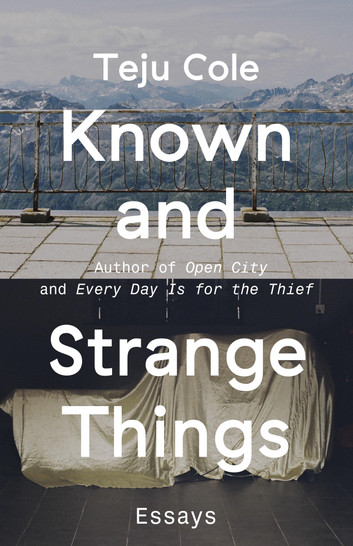
Known and Strange Things: Essays
Teju Cole — the Nigerian-American writer, photographer, and art historian behind the acclaimed novel Open City — turns his restless intelligence to the essay form in Known and Strange Things. Published in 2016 by Random House, this first collection gathers pieces on photography, literature, travel, and politics that are by turns lyrical, searching, and unsparing.
An Eye on the World
Cole writes about the power of images and the ethics of looking: from the streets of Lagos, where he grew up, to the museums of Europe and the aftermath of violence around the globe. His subjects range from Baldwin and Berger to Instagram and drone warfare, but the constant is a moral seriousness rare in contemporary criticism — an insistence that seeing clearly is the beginning of understanding.
Why Read It
Described by Faber as “a blazingly intelligent first collection of essays,” the book cemented Cole’s reputation as one of his generation’s essential voices. For readers who love criticism that thinks as hard as it feels, this is a rich, demanding, and deeply rewarding book — one to read slowly and return to often.


Reviews
There are no reviews yet