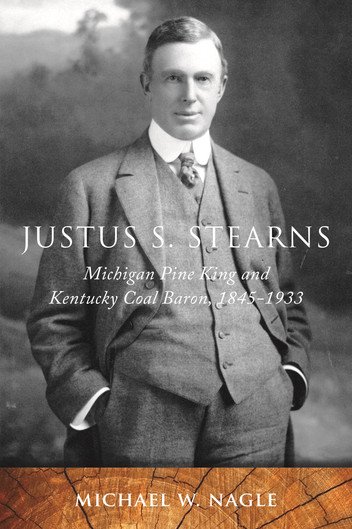
Description
Justus S. Stearns: Michigan Pine King and Kentucky Coal Baron, 1845-1933 – Book Synopsis
Discover the Life of Industrial Pioneer Justus S. Stearns
Justus S. Stearns stands as one of America’s most remarkable yet underappreciated industrial pioneers. This comprehensive biography chronicles his extraordinary journey from modest beginnings to becoming both Michigan’s legendary Pine King and Kentucky’s influential Coal Baron. Furthermore, the life of Justus S. Stearns illuminates the transformative era of American industrialization between 1845 and 1933.
Michael W. Nagle’s meticulously researched biography reveals how Justus S. Stearns built vast business empires across two states and two industries. His story demonstrates the ambition, innovation, and determination that characterized America’s greatest entrepreneurs. Moreover, understanding Justus S. Stearns provides essential insights into how individual vision shaped regional economies and national development.
This biography captures nearly nine decades of American history through the remarkable achievements of one man. Justus S. Stearns witnessed and participated in the nation’s most dramatic period of industrial growth and transformation. Additionally, his business strategies and leadership principles offer timeless lessons for contemporary readers and entrepreneurs.
The Author Behind This Definitive Biography
Michael W. Nagle brings exceptional credentials and dedication to this biographical project. His extensive research spans decades of primary sources, business records, and historical archives. Furthermore, Nagle’s scholarly approach ensures accuracy while maintaining engaging narrative flow throughout the biography.
The Great Lakes Books series provides the perfect home for this important historical work. This distinguished series focuses on the people, places, and events that shaped the Great Lakes region. Moreover, the series maintains rigorous academic standards while remaining accessible to general readers interested in regional history.
Nagle’s commitment to thorough documentation sets this biography apart from superficial historical accounts. He consulted business correspondence, newspaper archives, government records, and family documents to construct his narrative. Additionally, his analysis places individual achievements within broader economic and social contexts of the era.
What Makes This Biography Essential Reading?
This biography fills a significant gap in the literature on American business and industrial history. Despite his massive influence, Justus S. Stearns has remained largely unknown to modern audiences. Therefore, Nagle’s work rescues an important figure from historical obscurity and restores his rightful place.
The book offers rare insights into two major industries that transformed America during the 19th century. Lumber and coal powered the nation’s growth, built its cities, and fueled its factories. Furthermore, understanding these industries through the experience of one entrepreneur provides concrete examples of abstract historical forces.
Readers gain access to detailed business strategies and decision-making processes of a successful 19th-century entrepreneur. The biography demonstrates how Justus S. Stearns identified opportunities, managed risks, and built sustainable enterprises. Additionally, his approaches to expansion and diversification remain relevant to modern business practitioners today.
The Early Years of Justus S. Stearns
Born in 1845, Justus S. Stearns entered a world on the cusp of unprecedented transformation. His early years coincided with America’s rapid westward expansion and industrial development. Moreover, the circumstances of his youth shaped the ambitions and values that would guide his later success.
The biography explores the formative experiences that prepared Stearns for his future business achievements. His education, family background, and early work experiences all contributed to his entrepreneurial development. Furthermore, Nagle reveals how young Stearns recognized opportunities that others overlooked in Michigan’s vast forests.
These foundational years established patterns of hard work, strategic thinking, and calculated risk-taking. Stearns learned essential lessons about resource management, market dynamics, and business relationships early in life. Additionally, his character development during this period proved crucial to his later ability to lead large enterprises.
Justus S. Stearns and the Michigan Lumber Empire
Justus S. Stearns recognized Michigan’s enormous potential as America’s lumber supply center during the mid-19th century. The state’s vast pine forests represented untapped wealth waiting for entrepreneurs with vision and determination. Therefore, Stearns positioned himself to capitalize on the nation’s insatiable demand for timber and building materials.
The biography details how Stearns systematically built his lumber operations from modest beginnings to an industrial scale. He acquired timberlands, established sawmills, and created distribution networks throughout Michigan and beyond. Furthermore, his operations eventually earned him the title “Michigan Pine King” among industry peers and competitors.
Stearns’ success required more than simply cutting trees and selling lumber to waiting markets. He innovated in logging techniques, mill operations, and business organization to maximize efficiency and profitability. Moreover, his ability to scale operations while maintaining quality standards distinguished him from less successful competitors.
The Great Lakes Connection
The Great Lakes provided essential transportation infrastructure that made Stearns’ lumber empire economically viable. Ships carried his products to markets throughout the region and beyond at reasonable costs. Furthermore, strategic positioning near water transportation provided Stearns with significant competitive advantages over its inland operations.
The biography explores how Stearns leveraged Great Lakes shipping to dramatically expand his market reach. He understood that controlling transportation meant controlling costs and effectively serving distant customers. Additionally, his investments in shipping capabilities demonstrated his commitment to vertical integration and supply chain management.
Water transportation also influenced where Stearns located his mills, timberlands, and distribution facilities. Geographic strategy proved as important as operational efficiency in building his lumber empire. Moreover, the Great Lakes connection tied his business success to broader regional economic development patterns.
Justus S. Stearns’ Expansion into Kentucky Coal Mining
Justus S. Stearns demonstrated remarkable entrepreneurial flexibility by expanding into Kentucky’s coal mining industry. This diversification move showed his ability to identify opportunities beyond his established lumber operations. Furthermore, entering the coal mining industry required learning new technologies, markets, and business practices entirely different from those in the lumber industry.
The biography chronicles how Stearns became known as the “Kentucky Coal Baron” through strategic acquisitions and operations. He applied lessons learned in Michigan to building another industrial empire in a different state. Moreover, his success in two distinct industries across two states demonstrated exceptional business acumen and adaptability.
Coal mining presented challenges distinct from those of lumber operations, including underground work, labor management, and market dynamics. Stearns adapted his management approaches while maintaining core business principles that had proven successful. Additionally, his Kentucky operations contributed significantly to the state’s industrial development during a crucial period of growth.
Business Strategies of Justus S. Stearns
The biography reveals sophisticated business strategies that enabled Justus S. Stearns to build and maintain his empire. He thought systematically about markets, resources, competition, and long-term sustainability rather than pursuing short-term gains. Furthermore, his strategic approach distinguished him from opportunistic competitors who lacked his vision and discipline.
Stearns understood the importance of controlling multiple stages of production and distribution in his industries. This vertical integration reduced costs, improved quality control, and increased profit margins throughout his operations. Moreover, he recognized that owning resources, production facilities, and distribution channels provided competitive advantages and market power.
His expansion into coal mining demonstrated strategic diversification, reducing dependence on a single industry or market. Stearns recognized that lumber resources would eventually deplete, requiring alternative revenue sources for long-term success. Additionally, his timing of diversification moves showed remarkable foresight about industry cycles and economic trends.
Key Business Principles from Justus S. Stearns
The biography identifies essential business principles that guided Stearns’ decision-making throughout his career:
- Vertical Integration: Control resources, production, and distribution to maximize efficiency and profitability
- Strategic Location: Position operations near transportation infrastructure and key markets for competitive advantage
- Quality Focus: Maintain high standards to build a reputation and command premium prices
- Diversification: Expand into complementary industries to reduce risk and create new opportunities
- Long-term Thinking: Plan for sustainability rather than pursuing short-term gains at future expense
- Resource Management: Carefully manage finite resources to extend operational viability and profitability
- Market Analysis: Study supply, demand, and competition to identify opportunities and avoid pitfalls
- Operational Excellence: Continuously improve processes, technologies, and methods to maintain competitive advantages
The Human Side of Justus S. Stearns
Beyond business achievements, the biography explores Stearns as a complete human being with personal relationships and values. His family life, community involvement, and personal interests reveal dimensions beyond the persona of an industrial titan. Furthermore, understanding his personal side helps explain the motivations and decisions that shaped his business career.
Nagle examines how Stearns balanced demanding business responsibilities with family obligations and personal relationships. The biography reveals the human costs and rewards of building industrial empires during this era. Moreover, Stearns’ personal correspondence and private papers provide intimate glimpses into his thoughts and feelings.
His relationships with employees, business partners, and community members reflected his character and values. Stearns’ reputation for fair dealing and integrity contributed to his business success and personal legacy. Additionally, his philanthropic activities and community contributions demonstrated a commitment to more than personal wealth accumulation.
Justus S. Stearns’ Impact on Michigan and Kentucky
Justus S. Stearns’ operations profoundly shaped the communities where he conducted business throughout his career. His lumber mills and coal mines provided employment for thousands of workers and their families. Furthermore, his business activities spurred broader economic development in both Michigan and Kentucky.
The biography examines both positive contributions and negative consequences of Stearns’ industrial operations on local communities. His enterprises brought prosperity but also environmental changes and social disruptions characteristic of rapid industrialization. Moreover, Nagle presents a balanced analysis rather than a simplistic celebration or condemnation of his subject’s impact.
Towns and regions where Stearns operated still bear marks of his influence more than a century later. His business decisions shaped settlement patterns, infrastructure development, and economic trajectories that persist to this day. Additionally, understanding his impact helps explain current conditions in these historically important industrial regions.
The Era of American Industrialization
The biography places Justus S. Stearns’ life within the broader context of American industrialization from 1845 to 1933. This period witnessed the nation’s transformation from an agricultural society to an industrial powerhouse and global economic leader. Furthermore, individual entrepreneurs like Stearns drove this transformation through their vision, capital, and organizational abilities.
Nagle explores how national trends in technology, transportation, markets, and finance influenced Stearns’ opportunities and challenges. The biography demonstrates connections between individual business decisions and larger historical forces shaping the nation. Moreover, readers gain an understanding of how macro-level changes manifested in specific industries and individual careers.
This era saw dramatic changes in business organization, labor relations, government regulation, and economic philosophy. Stearns navigated these changing conditions throughout his long career, adapting strategies while maintaining core principles. Additionally, his experiences illuminate how entrepreneurs responded to evolving economic and social environments during transformative decades.
Challenges and Setbacks Along the Way
The biography honestly addresses the difficulties and failures Stearns encountered throughout his career, not just his successes. Economic depressions, market fluctuations, and competitive pressures repeatedly tested his business acumen and resilience. Furthermore, Nagle’s balanced approach reveals how Stearns responded to adversity and learned from setbacks.
Resource depletion posed existential challenges to lumber operations as Michigan’s forests gradually disappeared through harvesting. Stearns had to adapt strategies, seek new timberlands, and eventually transition toward other industries. Moreover, his responses to resource limitations demonstrated both the possibilities and constraints facing extractive industries.
Labor disputes, technological changes, and regulatory developments created additional challenges requiring constant adaptation and problem-solving. The biography shows how Stearns managed these difficulties while maintaining business viability and growth. Additionally, his ability to overcome obstacles contributed to his reputation as an exceptional entrepreneur and leader.
Justus S. Stearns’ Leadership and Management Philosophy
Justus S. Stearns developed distinctive approaches to leading organizations and managing people throughout his career. His leadership style reflected both personal values and practical lessons learned through decades of business experience. Furthermore, the biography analyzes how his management philosophy contributed to his sustained success across multiple enterprises.
Stearns believed in hiring capable people, appropriately delegating authority, and holding subordinates accountable for results. He built management teams that could operate effectively without constant direct supervision from the top. Moreover, his organizational structures allowed him to oversee multiple operations across different states and industries simultaneously.
The biography examines how Stearns balanced firmness with fairness in dealing with employees and business associates. His reputation for integrity and straight dealing helped attract talented people to his organizations. Additionally, his management approaches reflected broader trends in American business organizations during the late 19th and early 20th centuries.
The Decline of the Lumber Era
The biography chronicles the inevitable decline of Michigan’s lumber industry as forests became depleted through decades of harvesting. This transition period tested Stearns’ adaptability and strategic thinking as his original business foundation eroded. Furthermore, the lumber industry’s decline forced difficult decisions about future directions and resource allocation.
Stearns recognized earlier than many competitors that Michigan’s lumber boom could not continue indefinitely without resource renewal. His diversification into coal mining partly reflected this foresight about industry sustainability and lifecycle dynamics. Moreover, his ability to transition successfully distinguished him from competitors who failed to adapt to changing conditions.
The end of the lumber era brought economic disruption to communities that had depended on timber harvesting and processing. Stearns’ operations had helped build these communities, and their decline affected thousands of workers and families. Additionally, this transition illustrated broader patterns of boom-and-bust cycles in extractive industries throughout American history.
Justus S. Stearns: The Coal Baron Years
Justus S. Stearns’ Kentucky coal mining operations represented the second major phase of his business career. His success in this different industry demonstrated that his business acumen transcended specific sectors or technologies. Furthermore, the “Coal Baron” title reflected his dominant position in Kentucky’s coal industry during crucial development years.
The biography details how Stearns built coal-mining operations using principles proven successful in lumber, while adapting to industry-specific requirements. Underground mining required different technologies, safety considerations, and labor management approaches than timber harvesting. Moreover, coal markets operated differently from lumber markets, requiring new distribution strategies and customer relationships.
His Kentucky operations contributed significantly to that state’s industrial development and economic growth during the late 19th century. Coal-powered factories, railroads, and homes throughout the region and beyond make it essential to modern life. Additionally, Stearns’ investments in mining infrastructure and communities left lasting marks on Kentucky’s landscape and economy.
Justus S. Stearns’ Legacy and Historical Significance
The biography assesses Justus S. Stearns’ lasting impact on American business, industry, and regional development. His achievements in two major industries across nearly nine decades left permanent marks on Michigan and Kentucky. Furthermore, his business strategies and leadership approaches influenced subsequent generations of entrepreneurs and business leaders.
Stearns exemplified the entrepreneurial spirit that drove America’s transformation into an industrial powerhouse during the 19th century. His story illustrates how individual vision, determination, and capability could create enormous enterprises and shape regional economies. Moreover, understanding his legacy helps explain how modern America emerged from this transformative historical period.
The biography argues that Stearns deserves recognition alongside better-known industrial pioneers of his era. His accomplishments matched or exceeded those of more famous contemporaries in scope and impact. Additionally, rescuing his story from obscurity enriches our understanding of American business history and industrial development.
Research and Scholarship
Michael W. Nagle’s research methodology sets high standards for biographical scholarship and historical investigation. He consulted extensive primary sources, including business records, personal correspondence, newspaper accounts, and government documents. Furthermore, his thorough approach ensures that conclusions rest on solid documentary evidence rather than speculation or assumption.
The biography includes detailed citations and references that allow readers to verify information and conduct further research. Nagle’s transparent scholarship demonstrates respect for readers and commitment to historical accuracy and integrity. Moreover, his work provides a foundation for future scholars studying this period, these industries, or this region.
The author’s analysis balances sympathy for his subject with critical evaluation of his decisions, their impacts, and their historical significance. Nagle avoids both hagiography and unfair criticism, presenting Stearns as a complex historical figure. Additionally, his interpretive framework helps readers understand both achievements and limitations within appropriate historical contexts.
The Great Lakes Books Series
This biography appears in the prestigious Great Lakes Books series, which focuses on regional history and culture. The series publishes scholarly works that meet rigorous academic standards while remaining accessible to general readers. Furthermore, inclusion in this series confirms the biography’s importance and quality for understanding Great Lakes regional development.
The Great Lakes Books series has an established reputation for excellence in historical publishing over several decades. Books in the series contribute to understanding how the Great Lakes region shaped and was shaped by American development. Moreover, the series provides context for individual works, such as this biography, within broader regional historical narratives.
Readers interested in Great Lakes history will find this biography essential for understanding industrial development in the region. The series format ensures consistent quality and scholarly standards across diverse topics and time periods. Additionally, the series makes important historical research available to audiences beyond academic specialists and professional historians.
Who Should Read This Biography?
History enthusiasts will find this detailed account of Justus S. Stearns’ life fascinating and enlightening. The biography brings 19th-century American business history to life through the story of one remarkable individual. Furthermore, it provides context for understanding how modern America emerged from this transformative era.
Business readers can extract valuable lessons from Justus S. Stearns’ strategies and decision-making processes. His approaches to expansion, diversification, and risk management remain relevant to contemporary entrepreneurs today. Additionally, the biography illustrates timeless business principles through concrete historical examples and outcomes.
Michigan and Kentucky residents will appreciate learning about someone who profoundly shaped their states’ histories. Justus S. Stearns’ operations left lasting marks on landscapes, communities, and regional economic development. Moreover, understanding his impact provides perspective on current conditions and historical trajectories of these regions.
Educational Value for Students and Scholars
This biography serves as an excellent resource for students studying American history and business. It illustrates how individual entrepreneurs drove industrialization and economic transformation during the 19th century. Furthermore, Nagle’s research provides primary source material and analysis for academic papers and projects.
The book demonstrates how to conduct biographical research and present historical figures in balanced ways. Students learn to evaluate sources, construct narratives, and analyze historical significance through Nagle’s example. Additionally, the biography effectively models how to place individual lives within broader historical contexts.
Scholars researching the lumber industry, coal mining, or Great Lakes development will find essential information. Justus S. Stearns’ papers and business records provide insights into industrial operations and business practices. Therefore, the biography contributes to multiple fields of historical and economic scholarship simultaneously.
Lessons for Modern Entrepreneurs
Despite the century separating us from Justus S. Stearns’ era, his strategies remain remarkably relevant. Modern entrepreneurs can learn from his approach to identifying opportunities and building competitive advantages. Moreover, his adaptability in the face of industry changes offers lessons for today’s rapidly evolving business environment.
The biography demonstrates that fundamental business principles consistently transcend specific technologies and historical contexts. Justus S. Stearns succeeded through a focus on quality, customer relationships, and operational excellence—principles that remain essential today. Additionally, his long-term thinking and strategic patience contrast with modern short-term business culture.
Readers discover that successful entrepreneurship requires vision, persistence, and willingness to take calculated risks. Justus S. Stearns exemplified these qualities throughout his 88-year life and multi-decade business career. Thus, his story inspires and instructs anyone pursuing entrepreneurial success, regardless of era or industry.
Understanding 19th-Century American Capitalism
The biography provides insights into how capitalism functioned during America’s industrial revolution and expansion. Justus S. Stearns operated in an era of minimal regulation and maximum entrepreneurial freedom. Furthermore, his story illustrates both the opportunities and problems this system created for society.
Nagle examines how entrepreneurs like Justus S. Stearns accumulated wealth through resource extraction and exploitation. The environmental and social costs of industrialization become clear through a detailed examination of operations. However, the biography also acknowledges the economic development and prosperity these activities generated regionally.
Readers gain a balanced perspective on the complexities of 19th-century capitalism rather than simplistic judgments or conclusions. Justus S. Stearns’ life demonstrates how individual ambition, economic systems, and historical circumstances interact. Therefore, the biography contributes to ongoing discussions about capitalism’s role in American development.
The Final Years of Justus S. Stearns
The biography follows Justus S. Stearns through his final decades as he transitioned from active management. He witnessed enormous changes between his 1845 birth and 1933 death, spanning nearly a century. Moreover, his longevity allowed him to see the long-term consequences of his business decisions.
Nagle examines how Justus S. Stearns managed succession and prepared for the eventual transfer of wealth. He made provisions for family members and considered the future of his business enterprises. Additionally, his final years offered an opportunity to reflect on an extraordinary life and career.
The book describes Justus S. Stearns’ death in 1933 and the legacy he left behind. His passing marked the end of an era in American business and industrial history. Thus, readers gain perspective on how one man’s life spanned and shaped transformative decades.
Why This Biography Matters Today
Understanding figures like Justus S. Stearns helps us comprehend how modern America emerged from the past. His entrepreneurial activities shaped regions, created wealth, and transformed landscapes, effects still visible today. Furthermore, his story illustrates the human agency behind large-scale economic and social changes.
The biography challenges us to think critically about progress, development, and their costs to society. Justus S. Stearns’ successes came with environmental and social consequences that communities still address today. Moreover, his story raises questions about sustainability and responsibility that remain relevant in contemporary discussions.
Nagle’s work preserves the memory of an important but often overlooked figure in American history. Without such biographies, individuals like Justus S. Stearns fade from collective memory despite their significance. Therefore, this book performs the essential work of historical preservation and education for future generations.
Order Your Copy Today
“Ten Wealthy Americans And How They Achieved Their Wealth! Part 1” offers essential insights for anyone interested in business success and wealth creation. Thomas J. Strang’s engaging profiles will inspire, educate, and challenge you to think bigger. Moreover, the practical strategies revealed can transform your approach to building wealth and success.
Whether you’re an aspiring entrepreneur or seasoned business professional, this book delivers valuable lessons. The Wealthy Americans profiled demonstrate that extraordinary success comes from vision, persistence, and smart decisions. Additionally, their stories prove that wealth-building opportunities exist for those willing to pursue them.
Don’t miss this opportunity to learn from America’s most successful billionaires and their journeys. Order your copy today and discover the strategies that created some of history’s greatest fortunes. Your own path to wealth and success begins with understanding how others achieved theirs.






Reviews
There are no reviews yet.