

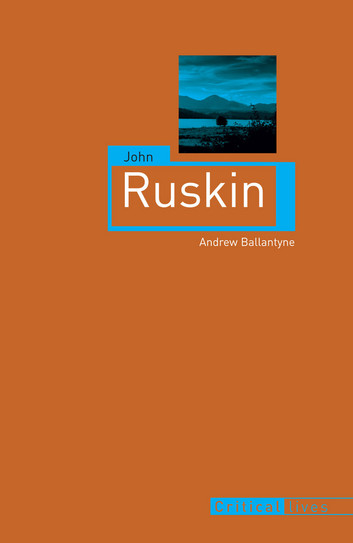
Description
The prophet of art, in perfect miniature. Andrew Ballantyne’s John Ruskin — part of Reaktion’s Critical Lives — distills the great Victorian sage: the critic who taught England to see, the defender of Turner, the champion of the Gothic, the tormented genius whose influence stretched from architecture to socialism and whose prose could make a cloud feel like scripture.
Ruskin (1819–1900) wrote like an Old Testament prophet about clouds and cathedrals — and meant every word. Ballantyne captures the brilliance and the breakdown: the unconsummated marriage, the Whistler libel trial, the late madness, the vast unfinished systems. Short but substantial, it is the ideal first Ruskin: clear, sympathetic, and honest about the damage.
For Victorian art lovers: the essential introduction. Ruskin changed how the world looks at buildings; this book shows you how he learned to see, and why it cost him everything. Elegant and indispensable. Ballantyne’s portrait is sympathetic but clear-eyed: the essential short life of a towering, troubled Victorian.
John Ruskin (1819–1900) was the most powerful art critic of the Victorian age — a man who championed Turner, defended the Pre-Raphaelites, and argued that how we build reveals who we are.
In this compact volume from Reaktion’s acclaimed Critical Lives series, architect and scholar Andrew Ballantyne presents a fresh portrait of a figure both brilliant and deeply troubled. Tracing Ruskin from his intensely sheltered childhood to his fame as the author of Modern Painters and The Stones of Venice, Ballantyne explores the convictions that made him: the belief that great art must be truthful, that Gothic architecture expressed spiritual honesty, and that a beautiful society must also be a just one.
The book does not flinch from Ruskin’s contradictions — his celebrated mind alongside his disastrous marriage and later mental decline. Accessible yet probing, it shows why Ruskin’s ideas about art, nature, and work still resonate, from conservation movements to debates about the moral purpose of beauty.
A fine entry point for readers new to Ruskin, and a sharp reassessment for those who thought they knew him.


Reviews
There are no reviews yet