Description
Jean Frédéric Bazille Paintings: Impressionism’s Lost Genius Revealed
Introduction to Bazille Paintings
Bazille paintings represent the brilliant but tragically brief career of French Impressionism’s most promising young master. This carefully curated e-book showcases Jean Frédéric Bazille’s luminous masterpieces and innovative outdoor scenes. Moreover, it brings his sun-drenched canvases and modern life depictions directly to your device.
Daniel Coenn’s My Pocket Gallery series makes these rare treasures accessible to everyone worldwide. Furthermore, this collection celebrates an artist whose genius was cut short at age twenty-eight.
The Tragic Genius of French Impressionism
Jean Frédéric Bazille (1841-1870) tragically died in battle before reaching his thirtieth birthday. He fell during the Franco-Prussian War, robbing the art world of incalculable future masterpieces. Additionally, he left behind a small but extraordinary body of work that influenced Impressionism profoundly. His death completely devastated his close friends Monet, Renoir, Sisley, and Manet.
Bazille came from a wealthy Protestant family in Montpellier in southern France. He initially studied medicine to please his parents before choosing art as his calling. Moreover, his family’s financial support allowed him to help struggling artist friends generously. He shared studios with Monet and Renoir, creating a collaborative artistic environment perfectly.
What This Bazille Paintings Collection Offers
This e-book presents a comprehensive selection of Bazille’s most important Impressionist masterpieces carefully. However, it goes beyond simple reproductions of his paintings and outdoor scenes. Each image receives high-quality digital presentation that preserves every luminous detail perfectly. Moreover, the collection allows readers to explore his innovative use of sunlight up close.
Key features of this collection include:
- High-resolution reproductions of iconic Bazille paintings and Impressionist masterpieces throughout
- Carefully selected works spanning his brief but brilliant career from 1865-1870
- Easy navigation through the My Pocket Gallery format for convenient viewing anywhere
- Portable access to rare French Impressionist treasures on any digital device
- A journey through the birth of Impressionism and modern French painting
Furthermore, the e-book format makes these rare treasures available anytime, anywhere conveniently. Additionally, readers can zoom in to discover his masterful brushwork and luminous effects.
Family Reunion: A Masterpiece of Modern Life
“Family Reunion” (1867) ranks among Bazille’s most celebrated and ambitious works. The large-scale painting depicts his family gathered on a terrace in Montpellier. Moreover, it combines portraiture, landscape, and genre painting in one harmonious composition brilliantly. The work demonstrates his ability to paint figures in bright outdoor sunlight convincingly.
The painting shows ten family members arranged casually across the sun-drenched terrace naturally. Furthermore, each figure receives individual characterization while contributing to the overall compositional balance. Bazille captured the dappled light filtering through trees with remarkable sensitivity and observation. Additionally, the work reveals his debt to Manet while establishing his own distinctive voice.
The scale and ambition of this painting announced Bazille as a major talent immediately. Moreover, it demonstrated that Impressionist techniques could work for large, complex figure compositions successfully. The painting remains in the Musée d’Orsay as a testament to his genius. Consequently, it stands as one of early Impressionism’s most important figure paintings today.
The Pink Dress: Light and Feminine Grace
“The Pink Dress” (1864) showcases Bazille’s early mastery of outdoor figure painting beautifully. The painting depicts a young woman in a flowing pink gown in a garden. Moreover, it demonstrates his sensitivity to fabric, light, and feminine elegance from early on. The work predates many Impressionist innovations while pointing toward future developments clearly.
The pink dress catches sunlight with subtle variations of tone and color throughout. Furthermore, Bazille painted the fabric with attention to how light transforms color outdoors. The figure emerges from the dappled garden setting with grace and natural presence. Additionally, the painting shows his academic training combined with fresh observational approach perfectly.
This early work established themes Bazille would explore throughout his brief career consistently. Moreover, it shows his interest in contemporary fashion and modern feminine subjects. The painting influenced his friends’ approaches to outdoor figure painting significantly later. Consequently, it represents an important step in Impressionism’s development and evolution overall.
Summer Scene: Bathers in Sunlight
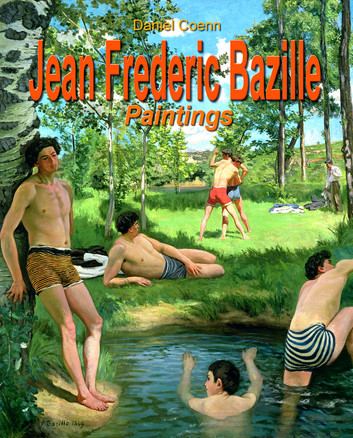
“Summer Scene” (1869) represents Bazille’s most daring and innovative composition boldly. The painting shows young men bathing in a river in brilliant sunlight. Moreover, it combines figure painting with landscape in a revolutionary modern approach. The work demonstrates his confidence in handling complex multi-figure compositions outdoors successfully.
The male nudes appear natural and unselfconscious in their outdoor setting completely. Furthermore, Bazille painted their bodies with attention to how sunlight models form outdoors. The painting avoids classical idealization, presenting contemporary young men in modern leisure activity. Additionally, it shows his willingness to tackle challenging subjects with fresh vision always.
The composition’s bold cropping and casual arrangement influenced later Impressionist figure paintings significantly. Moreover, the work demonstrates Bazille’s growing mastery just before his tragic death. The painting remains one of his most admired and studied works today. Consequently, it shows what the art world lost when he died so young.
Studio on the Rue de la Condamine
“Studio on the Rue de la Condamine” (1870) provides a fascinating glimpse into Impressionist collaboration. The painting depicts Bazille’s studio with several artist friends present and working. Moreover, it serves as a historical document of the Impressionist circle’s camaraderie. The work was painted just months before Bazille’s tragic death in battle.
The studio interior shows paintings on the walls and artists engaged in discussion. Furthermore, Bazille included portraits of Manet, Monet, and other friends in the scene. The painting celebrates the collaborative spirit that defined early Impressionism’s development perfectly. Additionally, it demonstrates his skill at interior scenes and artificial light effects.
This painting sadly became a poignant memorial after Bazille’s death shortly afterward. Moreover, it reminds viewers of the vibrant artistic community he helped create. The work hangs in the Musée d’Orsay as a testament to friendship. Consequently, it remains one of the most moving documents of Impressionism’s birth.
View of the Village: Landscape Mastery
“View of the Village” (1868) showcases Bazille’s landscape painting skills and compositional sense. The painting depicts a hillside village in southern France bathed in sunlight. Moreover, it demonstrates his ability to capture atmospheric effects and spatial depth convincingly. The work reveals his understanding of how light transforms landscape throughout the day.
The composition balances architectural elements with natural landscape features harmoniously throughout. Furthermore, Bazille used color to create depth and atmosphere without relying on traditional methods. The painting shows his southern French heritage and love of Mediterranean light clearly. Additionally, it demonstrates his contribution to Impressionist landscape painting development significantly.
This landscape work influenced his friends’ approaches to outdoor painting and color use. Moreover, it shows Bazille could excel at pure landscape as well as figures. The painting captures a specific place and moment with freshness and immediacy. Consequently, it represents an important example of early Impressionist landscape achievement overall.
Friendship with Monet and Renoir
Bazille shared studios with Claude Monet and Pierre-Auguste Renoir during crucial formative years. He provided financial support to both artists when they struggled with poverty desperately. Moreover, he purchased their paintings and helped them secure commissions and exhibition opportunities. His generosity allowed his friends to continue painting during difficult times repeatedly.
The three artists painted together outdoors, experimenting with light and color effects collaboratively. Furthermore, they influenced each other’s technical development and artistic vision significantly throughout. Bazille’s wealth freed him from commercial pressures that constrained his friends’ choices. Additionally, he used his privilege to support the emerging Impressionist movement generously.
Monet and Renoir mourned Bazille’s death deeply and honored his memory throughout their lives. Moreover, they acknowledged his crucial role in Impressionism’s early development publicly and privately. His support enabled masterpieces that might never have been created otherwise. Consequently, his legacy extends beyond his own paintings to include his friends’ achievements.
Innovative Use of Sunlight and Color
Bazille pioneered techniques for painting figures in bright outdoor sunlight convincingly and naturally. He studied how sunlight transforms local color and creates unexpected color relationships outdoors. Moreover, he avoided the dark shadows and brown tones of academic painting completely. His approach influenced the Impressionist movement’s characteristic bright palette and luminosity significantly.
He painted shadows with reflected light and color rather than simple darkening. Furthermore, he observed how sunlight creates violet and blue tones in shadows outdoors. Bazille’s color choices anticipated later Impressionist innovations ahead by several years. Additionally, his technical experiments helped establish Impressionism’s revolutionary approach to color completely.
His paintings demonstrate sophisticated understanding of color theory and optical effects throughout. Moreover, he combined scientific observation with artistic sensitivity and personal vision perfectly. Bazille proved that bright sunlight could be painted convincingly without sacrificing form. Consequently, he helped solve technical problems that had challenged landscape painters for centuries.
From Medicine to Masterpieces
Bazille initially enrolled in medical school in Paris to satisfy his family’s expectations. He attended anatomy lectures and studied medicine seriously for several years dutifully. Moreover, his medical training influenced his understanding of human anatomy and figure painting. However, his passion for art eventually overcame his family’s wishes for a medical career.
He began attending the studio of Charles Gleyre while continuing medical studies simultaneously. Furthermore, he met Monet, Renoir, and Sisley at Gleyre’s studio in 1862. Bazille gradually devoted more time to painting and less to medicine over time. Additionally, his family eventually accepted his choice and continued supporting him financially generously.
His medical background gave him analytical approach to observing light and color effects. Moreover, it contributed to his precise rendering of human anatomy in figure paintings. Bazille brought scientific curiosity to artistic problems throughout his brief career consistently. Consequently, his unique background enriched his artistic vision and technical approach significantly.
Large-Scale Figure Paintings in Landscapes
Bazille specialized in large-scale figure paintings set in outdoor landscapes ambitiously and boldly. He combined the academic tradition of figure painting with Impressionist outdoor observation perfectly. Moreover, he proved that Impressionist techniques could work for ambitious, complex compositions successfully. His approach influenced later Impressionist figure painters including Renoir and Caillebotte significantly.
His large canvases required careful planning, preparation, and execution over extended periods. Furthermore, he often made preparatory studies and sketches before beginning final paintings. Bazille balanced spontaneity with compositional structure in his ambitious works throughout consistently. Additionally, he maintained freshness and immediacy despite the scale and complexity involved.
These large figure paintings represented his most important artistic statements and ambitions clearly. Moreover, they demonstrated his desire to create modern history paintings for contemporary life. Bazille rejected historical and mythological subjects in favor of modern scenes completely. Consequently, he helped establish new possibilities for ambitious figure painting in modern art.
The Birth of Impressionism Movement
Bazille participated actively in the discussions and debates that led to Impressionism’s formation. He attended the Café Guerbois gatherings where artists debated aesthetic theories and artistic goals. Moreover, he contributed ideas about outdoor painting, color, and modern subject matter significantly. His enthusiasm and support helped unite the emerging Impressionist group during formative years.
He planned to participate in the first Impressionist exhibition scheduled for 1874. Furthermore, his death in 1870 meant he never saw the movement’s public debut. Bazille’s paintings would have been among the exhibition’s highlights undoubtedly and certainly. Additionally, his presence would have strengthened the group’s cohesion and public reception potentially.
His role in Impressionism’s birth deserves greater recognition than it typically receives today. Moreover, his contributions to the movement’s technical and aesthetic development were substantial always. Bazille helped establish principles that defined Impressionism for decades afterward significantly. Consequently, he should be remembered as a founding father of the movement completely.
Financial Support for Fellow Artists
Bazille’s family wealth allowed him to support struggling artist friends generously and consistently. He purchased paintings from Monet and Renoir when they desperately needed money. Moreover, he shared his studio space freely and paid for supplies and models. His generosity enabled his friends to continue painting during periods of extreme poverty.
He understood that financial security freed artists to experiment and develop their vision. Furthermore, he used his privilege to advance the cause of modern art selflessly. Bazille never sought recognition or repayment for his support of fellow artists. Additionally, his friends remembered his kindness and generosity throughout their long careers gratefully.
This financial support had lasting impact on Impressionism’s development and success ultimately. Moreover, it allowed masterpieces to be created that might never have existed otherwise. Bazille’s generosity represents an often-overlooked aspect of Impressionism’s history and development. Consequently, his legacy includes not only his paintings but also his friends’ achievements.
What Might Have Been: Lost Potential
Bazille’s death at twenty-eight robbed the art world of decades of potential masterpieces. He was still developing his style and had barely begun his mature period. Moreover, his technical skills and artistic vision were growing stronger with each painting. Art historians can only speculate about what he might have achieved with more time.
His trajectory suggested he would have become one of Impressionism’s greatest masters certainly. Furthermore, his large-scale figure paintings might have influenced the movement’s direction significantly differently. Bazille might have helped Impressionism gain academic acceptance and critical respect earlier. Additionally, his wealth and social connections could have benefited the movement’s commercial success.
The loss of his future paintings represents one of art history’s great tragedies. Moreover, his friends’ grief and the movement’s loss were immeasurable and profound. Bazille’s potential remains forever unrealized, leaving only tantalizing hints of what might have been. Consequently, his small surviving body of work becomes even more precious and valuable.
The My Pocket Gallery Series Advantage
Daniel Coenn created the My Pocket Gallery series to democratize art appreciation worldwide effectively. This innovative approach brings museum-quality reproductions to everyone’s fingertips affordably and conveniently always. Moreover, the series covers artists from various periods, movements, and cultural traditions comprehensively. Each volume receives careful curation and thoughtful presentation for maximum educational value consistently.
The format allows art lovers to build comprehensive digital collections without financial barriers. Furthermore, these e-books serve as excellent educational and reference resources for multiple purposes. Teachers, students, and enthusiasts benefit from portable access to masterpieces anywhere, anytime. Additionally, the pricing makes art accessible regardless of budget constraints or geographic location.
Educational Value for Art Students
This e-book serves as an invaluable resource for aspiring artists and art students. Bazille’s work demonstrates fundamental principles of composition, color, and outdoor figure painting. Moreover, his paintings show how to achieve both technical mastery and fresh vision. Art students can study his approach to sunlight, color relationships, and modern subjects.
His working process offers lessons in combining academic training with innovative observation techniques. Furthermore, his brief career provides inspiration for making the most of limited time. Students of figure painting benefit especially from studying his outdoor figure compositions. Additionally, his work shows how to paint contemporary life with dignity and artistic ambition.
Perfect for Multiple Audiences
This e-book appeals to Impressionism enthusiasts, French art lovers, and general art collectors. Students of art history will appreciate the quality and breadth of this collection. Moreover, those interested in nineteenth-century French culture gain valuable visual insights into modern life. Teachers and educators find essential teaching and learning resources throughout these pages.
This collection is ideal for:
- Impressionism enthusiasts seeking rare works by the movement’s lost genius and pioneer
- French art scholars building comprehensive digital reference libraries for research and study
- Art students learning outdoor figure painting, sunlight effects, and color theory techniques
- Anyone fascinated by tragic artistic genius and what might have been possibilities
- Teachers seeking high-quality visual materials for art history and Impressionism lessons
Furthermore, the affordable price point makes this collection accessible to everyone interested. Additionally, the digital format eliminates geographical and financial barriers to appreciation and study.
A Museum in Your Pocket
The My Pocket Gallery format revolutionizes how we experience great art in the digital age. Traditional museum visits require travel, admission fees, and limited viewing time with crowds. However, this e-book provides unlimited access from anywhere in the world instantly. Moreover, readers can revisit favorite works as often as they desire without restrictions.
The digital format offers significant advantages over physical art books and museum visits. Furthermore, it requires no shelf space and never deteriorates over time with handling. Readers can easily share discoveries with friends, family, students, and fellow enthusiasts. Additionally, the collection travels effortlessly on smartphones, tablets, e-readers, and computers everywhere.
Zoom In on Impressionist Details
Digital reproduction allows unprecedented examination of Bazille’s technique and color choices closely. Readers can zoom in to study his brushwork, color mixing, and compositional decisions. Moreover, they can discover subtle details of light effects and color relationships easily missed otherwise. This intimate viewing experience enhances appreciation and understanding significantly for all viewers.
Bazille filled his paintings with carefully observed details that reward close examination repeatedly. Furthermore, each viewing reveals new aspects of his technical skill and artistic vision. The digital format makes this detailed exploration convenient and enjoyable for everyone. Additionally, it allows readers to focus on specific areas of personal interest repeatedly.
Understanding Early Impressionism
This collection helps readers understand Impressionism’s birth and its revolutionary innovations clearly. Bazille essentially helped define the movement’s approach to outdoor painting and modern subjects. Moreover, his work demonstrates how young artists challenged academic traditions during the 1860s. The relationship between innovation and tradition defines his unique achievement and contribution.
Early Impressionism valued direct observation, bright color, and contemporary subject matter consistently. Furthermore, it rejected historical and mythological subjects in favor of modern life. Bazille adapted academic figure painting to Impressionist principles throughout his career successfully. Consequently, his work represents a crucial bridge between tradition and innovation perfectly.
Bazille’s Lasting Legacy
Bazille influenced Impressionism despite his tragically brief career and early death significantly. His vision of outdoor figure painting shaped how later artists approached the subject. Moreover, his technical innovations in painting sunlight influenced the movement for decades afterward. Even today, his work remains a touchstone for understanding Impressionism’s origins and development.
His paintings hang in major museums including the Musée d’Orsay and Musée Fabre. Furthermore, his works continue to command high prices at auctions and in galleries. Bazille proved that Impressionist techniques could achieve monumental scale and ambition successfully. Consequently, his work helped establish Impressionism’s credibility and artistic seriousness from the beginning.
Building Your Digital Art Library
This volume represents an excellent addition to any digital art collection focused on Impressionism. It complements other My Pocket Gallery titles covering different artists, periods, and movements. Moreover, collecting these e-books creates a comprehensive personal museum accessible from any device. The series makes building an art library affordable and practical for everyone.
Digital collections offer flexibility that physical books cannot match in today’s mobile world. Furthermore, they travel with you wherever you go without added weight or space concerns. You can access your entire library from a single device instantly and conveniently. Additionally, digital collections never require dusting, moving, climate control, or physical storage space.
Share Impressionist Art with Others
This e-book makes sharing art appreciation easier than ever before in human history. You can recommend specific paintings to friends through screenshots, messages, or social media. Moreover, teachers can project images during lessons without expensive equipment or complicated technology. The digital format facilitates discussion and collaborative learning experiences among students and enthusiasts.
Social media sharing allows you to introduce others to Bazille’s luminous vision globally. Furthermore, you can participate in online art communities and discussions about Impressionism. The accessibility of digital collections democratizes art appreciation across all economic and geographic boundaries. Additionally, it helps preserve cultural heritage for future generations of art lovers worldwide.
Conclusion: Experience Impressionism’s Lost Genius
“Jean Frédéric Bazille Paintings” by Daniel Coenn offers an exceptional journey through early Impressionism. This My Pocket Gallery volume makes museum-quality reproductions accessible to everyone worldwide instantly. Moreover, it celebrates one of art history’s most tragic losses and greatest what-ifs. The collection preserves Bazille’s legacy for new generations of art lovers and students.
Whether you’re a serious Impressionism collector or casual enthusiast, this e-book delivers value. Furthermore, it demonstrates how digital technology democratizes access to important cultural treasures effectively. Bazille’s vision of modern life and outdoor painting deserves wide appreciation and study. Therefore, this collection serves important cultural, educational, and artistic purposes for everyone interested.
Download this volume today and carry a gallery of Impressionist masterpieces wherever you go. Additionally, explore other titles in the My Pocket Gallery series for comprehensive art coverage. Art appreciation has never been more convenient, affordable, or enriching than it is now.



Reviews
There are no reviews yet.