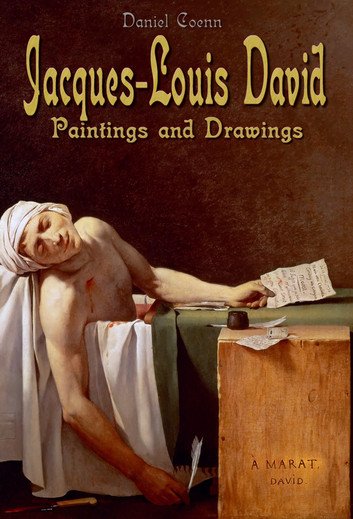
Description
Jacques-Louis David Paintings: A Complete Guide to the Master of Neoclassical Art
Introduction: Discovering Jacques-Louis David Paintings Through My Pocket Gallery
Jacques-Louis David Paintings and Drawings by Daniel Coenn brings the revolutionary artist’s masterworks to your fingertips. This e-book belongs to the acclaimed My Pocket Gallery series, which makes museum-quality art accessible to everyone. Moreover, it provides high-resolution images and expert commentary about France’s most influential neoclassical painter.
The book showcases both his monumental paintings and intimate drawings with equal attention. Therefore, readers gain comprehensive insight into David’s artistic genius and historical significance.
Daniel Coenn curates this collection with scholarly precision and genuine passion for the subject. Furthermore, the digital format allows art lovers to explore David’s work anywhere, anytime. Because the book is affordable and portable, appreciating fine art has never been easier.
Who Was Jacques-Louis David?
Jacques-Louis David lived from 1748 to 1825 during one of history’s most turbulent periods. He witnessed and participated in the French Revolution, the Reign of Terror, and Napoleon’s empire. Additionally, he became the most powerful artist in France and shaped an entire generation’s visual culture. His life intertwined with politics in ways few artists have experienced before or since.
David trained at the prestigious Académie Royale and won the coveted Prix de Rome in 1774. This prize allowed him to study ancient Roman art and Renaissance masters in Italy. Moreover, these experiences profoundly influenced his artistic development and philosophical outlook. He returned to Paris determined to reform French painting through classical principles and moral seriousness.
The artist became deeply involved in revolutionary politics and served as a deputy in the National Convention. Furthermore, he voted for King Louis XVI’s execution and organized revolutionary festivals and propaganda. Because of his political activities, he faced imprisonment after the Revolution’s radical phase ended. However, he survived and later became Napoleon’s official court painter.
The Revolutionary Power of Jacques-Louis David’s Paintings
Jacques-Louis David’s paintings revolutionized European art by rejecting Rococo frivolity in favor of classical severity. His work emphasized clear lines, balanced compositions, and morally uplifting subjects from ancient history. Moreover, he believed that art should educate citizens and inspire viewers to engage in virtuous behavior. Because he combined aesthetic innovation with political purpose, his paintings became powerful tools for social change.
David’s neoclassical style drew inspiration from ancient Greek and Roman sculpture and architecture. He studied archaeological discoveries at Pompeii and Herculaneum, which revealed authentic classical aesthetics. Furthermore, he rejected the soft colors and playful themes popular among aristocratic patrons. Instead, he painted heroes making difficult moral choices and sacrificing personal comfort for the public good.
His paintings often depicted moments of intense drama frozen in time like theatrical tableaux. Additionally, he used strong lighting contrasts and sculptural figure modeling to create a powerful visual impact. The compositions guide viewers’ eyes deliberately through carefully arranged elements toward the painting’s moral center. Therefore, every formal choice serves both aesthetic beauty and didactic purpose.
Famous Works Featured in This Collection
The e-book includes David’s most celebrated and historically significant paintings from throughout his career. These masterpieces demonstrate his technical brilliance and his ability to capture pivotal historical moments. Moreover, they reveal how his style evolved from early academic works to revolutionary propaganda to Napoleonic grandeur.
“The Oath of the Horatii” (1784) established David’s reputation and became neoclassicism’s defining masterpiece. This painting depicts three brothers swearing to fight for Rome, even though they know they’ll face their brothers-in-law. Furthermore, it exemplifies David’s belief that civic duty transcends personal relationships and family bonds. The stark composition and dramatic lighting create an unforgettable emotional impact.
“The Death of Marat” (1793) transformed a revolutionary journalist’s murder into a secular pietà. David painted his friend Marat as a martyr for the revolutionary cause. Additionally, the simple composition and muted colors create a sense of tragic nobility. Because the painting combines classical form with contemporary subject matter, it remains deeply moving today.
“Napoleon Crossing the Alps” (1801) presents the emperor as a heroic conqueror in the classical tradition. Moreover, David created multiple versions of this iconic image for different patrons. The dynamic composition and idealized portrayal helped establish Napoleon’s legendary status. Therefore, the painting demonstrates art’s power to shape historical memory and political mythology.
Jacques-Louis David Paintings and the Neoclassical Movement
Jacques-Louis David’s paintings defined the neoclassical movement and influenced artists across Europe and America. His emphasis on classical forms, moral subjects, and technical precision became the standard for academic art. Moreover, his students included many important 19th-century painters who spread his methods internationally. Because he controlled French art institutions for decades, his aesthetic principles dominated European painting.
Neoclassicism emerged partly as a reaction against Rococo art’s perceived decadence and superficiality. David and his followers believed art should serve higher purposes than mere decoration or entertainment. Furthermore, they looked to ancient Greece and Rome as models of republican virtue and civic responsibility. The movement coincided with Enlightenment philosophy and revolutionary political ideals.
David’s approach emphasized drawing over color, which he considered secondary to compositional structure. He spent months planning compositions and making preparatory drawings before touching paint to canvas. Additionally, he insisted that students master anatomy and perspective through rigorous academic training. Therefore, his teaching methods shaped art education for generations.
The Historical Context Behind the Art
Understanding Jacques-Louis David’s paintings requires knowledge of the tumultuous era that produced them. The French Revolution transformed every aspect of society, including artistic production and patronage. Moreover, David actively participated in revolutionary politics while creating some of history’s most memorable images. Because art and politics merged so completely in his work, the paintings document their historical moment.
Before the Revolution, David painted for aristocratic and royal patrons who commissioned classical subjects. However, the Revolution gave him opportunities to create art for the new republic. Furthermore, he designed revolutionary festivals, costumes, and propaganda alongside his painting practice. His art helped visualize revolutionary ideals and create shared symbols for the new political order.
The Reign of Terror tested David’s revolutionary commitment when his friend Robespierre fell from power. David faced imprisonment and nearly lost his life during the Thermidorian Reaction. Nevertheless, he survived and adapted to changing political circumstances with remarkable flexibility. Therefore, his career demonstrates both artistic genius and political pragmatism.
David’s Masterful Drawing Technique
Beyond his famous paintings, David created thousands of drawings that reveal his working process. These preparatory studies show how carefully he planned every compositional element and figure pose. Moreover, the drawings possess their own artistic merit independent of the finished paintings. Because he was a supreme draftsman, his drawings teach valuable lessons about observation and technique.
David’s drawings range from quick compositional sketches to highly finished portrait studies. He used various media, including chalk, pen, ink, and graphite, depending on his purpose. Furthermore, he often drew from live models to ensure anatomical accuracy in his painted figures. The drawings capture spontaneity and immediacy, sometimes lost in the polished final paintings.
His portrait drawings particularly demonstrate his ability to capture individual character and personality. Additionally, these intimate works reveal a more personal side of the artist than his grand historical paintings. Many drawings portray family members, friends, and fellow prisoners during his various incarcerations. Therefore, they provide valuable biographical insights alongside their aesthetic qualities.
What Readers Discover in This E-Book
Daniel Coenn’s book offers comprehensive coverage of David’s artistic achievements in an accessible digital format. The high-resolution images allow readers to examine brushwork details and compositional subtleties closely. Moreover, the accompanying text provides historical context and technical analysis that deepens understanding. Because it combines visual beauty with educational content, the book serves both casual browsers and serious students.
The e-book organizes works chronologically to show David’s artistic development across his long career. Additionally, it includes both famous masterpieces and lesser-known works that deserve wider recognition. The digital format makes zooming into details easy, revealing techniques invisible in standard reproductions. Furthermore, readers can bookmark favorite works and return to them repeatedly for continued study.
Key Features of Jacques-Louis David Paintings and Drawings
This My Pocket Gallery volume provides art enthusiasts with valuable resources and beautiful imagery:
- High-resolution reproductions of David’s most important paintings from all career periods
- Detailed drawings and sketches showing his preparatory process and working methods
- Expert commentary by Daniel Coenn explaining historical context, technique, and significance
- Biographical information covering David’s dramatic life through Revolution, Terror, and Empire
- Analysis of neoclassical style, including composition, color theory, and classical influences
- Political and historical context explaining how art and revolution intersected in David’s work
- Portable digital access allowing art appreciation on smartphones, tablets, and e-readers anywhere
- Affordable pricing makes museum-quality art accessible without the expense of books or travel.
The Influence of Jacques-Louis David’s Paintings on Later Art
Jacques-Louis David’s paintings shaped European and American art for generations after his death. His students included Jean-Auguste-Dominique Ingres, who became the 19th century’s leading academic painter. Moreover, his emphasis on classical forms and moral subjects influenced countless artists who never studied with him directly. Because he controlled French art institutions, his aesthetic principles became orthodoxy throughout Europe.
The neoclassical style he championed dominated official art until Romanticism challenged its supremacy. However, even Romantic painters like Delacroix learned from David’s compositional mastery and technical skill. Furthermore, academic art training continued following his methods well into the 20th century. His influence extended beyond painting into sculpture, architecture, and decorative arts.
Modern viewers sometimes find David’s work cold or overly formal compared to that of Romantic or Impressionist painters. Nevertheless, his technical brilliance and historical importance remain undeniable. Additionally, contemporary artists continue to discover inspiration in his powerful compositions and dramatic narratives. Therefore, studying his work remains essential for understanding Western art history.
David’s Role as Napoleon’s Court Painter
After surviving the Revolution’s aftermath, David became Napoleon Bonaparte’s official painter and propagandist. This relationship produced some of his most famous and technically accomplished works. Moreover, it demonstrated his ability to adapt his republican ideals to serve an imperial regime. Because Napoleon understood art’s propaganda value, he gave David unprecedented resources and authority.
David created multiple portraits showing Napoleon as emperor, general, and statesman. These paintings helped establish the Napoleonic legend that persists in popular imagination today. Furthermore, David planned massive paintings documenting Napoleon’s coronation and other imperial ceremonies. Though he completed only some of these ambitious projects, they showcase the grandeur of his mature style.
The “Coronation of Napoleon” (1807) ranks among the largest and most complex paintings in history. David attended the actual ceremony and made numerous preparatory studies for the work. Additionally, he included over one hundred individual portraits in the final composition. Therefore, the painting serves as both an artistic masterpiece and an invaluable historical document.
Understanding Neoclassical Aesthetics Through David’s Work
Jacques-Louis David’s paintings exemplify the core principles and philosophical foundations of neoclassical aesthetics. The style emphasized reason over emotion, clarity over ambiguity, and moral instruction over mere pleasure. Moreover, neoclassical artists believed ancient art achieved perfection that modern artists should emulate. Because they studied classical sculpture and architecture systematically, their work reflects archaeological accuracy.
Neoclassical compositions typically feature clear spatial organization with figures arranged parallel to the picture plane. David placed his subjects against simple backgrounds that don’t distract from the main action. Furthermore, he used strong horizontal and vertical lines to create stable, balanced compositions. The overall effect produces clarity and monumentality appropriate for serious moral subjects.
Color in neoclassical painting serves to draw rather than dominate compositions through sensuous appeal. David used relatively muted palettes with careful value control to model forms sculpturally. Additionally, he employed dramatic lighting to focus attention on key figures and gestures. Therefore, every formal element works together to communicate the painting’s moral message clearly.
How This E-Book Enhances Art Appreciation
The My Pocket Gallery series makes studying Jacques-Louis David’s paintings convenient and rewarding for modern audiences. Digital formats offer advantages over traditional art books through interactive features and portability. Moreover, readers can study David’s work during commutes, travels, or quiet moments at home. Because the book focuses exclusively on one artist, it provides depth impossible in general surveys.
High-resolution images reveal details that are often invisible in museum viewing conditions or in standard reproductions. Readers can zoom into brushwork, examine underdrawing, and study compositional relationships at their own pace. Furthermore, the ability to compare multiple works side by side enhances understanding of stylistic development. Therefore, digital technology actually improves certain aspects of art education and appreciation.
Daniel Coenn’s commentary provides context without overwhelming readers with excessive academic jargon. Additionally, the text explains technical terms and historical references that general audiences might not know. The writing balances scholarly accuracy with accessibility, making complex ideas understandable. Because the book respects readers’ intelligence while clearly explaining, it effectively serves diverse audiences.
Educational Value for Students and Teachers
Art students find tremendous value in studying Jacques-Louis David’s paintings as examples of technical mastery. His work demonstrates principles of composition, anatomy, perspective, and color theory at the highest level. Moreover, his preparatory drawings reveal the planning and discipline required for ambitious artistic projects. Because he achieved so much through a systematic method, he proves that genius requires hard work.
Teachers can use this e-book as a resource for lessons on neoclassicism, French history, and the political functions of art. Furthermore, David’s life and work raise important questions about artists’ ethical responsibilities during political upheaval. Students can debate whether artists should serve political causes or maintain independence from ideology. Therefore, his work stimulates critical thinking beyond purely aesthetic considerations.
The affordable digital format makes assigning the book as a course reading financially feasible for students. Additionally, the portable format allows students to study images during class discussions without expensive projection equipment. Teachers can easily reference specific works, and students can follow along on their own devices. Because technology removes traditional barriers, art education becomes more democratic and accessible.
The Enduring Relevance of David’s Art
Jacques-Louis David’s paintings continue to speak to contemporary audiences despite their historical distance. His exploration of civic duty, personal sacrifice, and political commitment remains relevant in our own troubled times. Moreover, his technical mastery and compositional sophistication still inspire artists working in traditional media. Because he addressed universal human themes through specific historical moments, his work transcends its original context.
Modern viewers appreciate David’s work differently than his contemporaries did, seeing formal qualities they might have overlooked. We can admire his paintings’ aesthetic power while questioning their political messages and propaganda purposes. Furthermore, we recognize how art shapes historical memory and political mythology in ways David’s audience couldn’t fully understand. Therefore, his work teaches lessons about the power of visual culture that extend beyond art history.
The paintings also document a pivotal moment when modern political ideologies and mass movements emerged. Additionally, they show how artists navigated dangerous political waters while maintaining artistic integrity. David’s compromises and adaptations reveal the complex relationship between creative freedom and political power. Because these issues remain urgent today, his example continues to provoke thought and debate.
Collecting and Viewing David’s Work Today
Original Jacques-Louis David Paintings reside in major museums worldwide, including the Louvre, the Metropolitan Museum, and the National Gallery. However, most people cannot easily visit these institutions to experience his monumental works in person. Therefore, high-quality reproductions like those in this e-book provide valuable access to his artistic legacy. Digital formats offer unique advantages through zoom capabilities and unlimited viewing opportunities.
The art market values David’s paintings extraordinarily highly, with works selling for millions at rare auctions. Moreover, his most famous paintings will never leave museum collections where they’re preserved for public benefit. Because original works are so inaccessible, reproductions play a crucial role in art education and appreciation. This e-book democratizes access in ways that would have pleased David’s republican ideals.
Viewing David’s work in person reveals scale and physical presence impossible to convey through reproductions. Nevertheless, digital images allow studying details and comparing works more easily than museum visits permit. Furthermore, readers can examine paintings at their own pace without crowds or time constraints. Therefore, e-books complement rather than replace the museum experience.
The My Pocket Gallery Series Philosophy
The My Pocket Gallery series embodies a democratic vision of art education and cultural access. These e-books make museum-quality reproductions available to anyone with a smartphone, tablet, or computer. Moreover, the affordable pricing removes financial barriers that prevent many people from owning art books. Because the series focuses on individual artists, each volume provides depth and comprehension impossible in surveys.
Daniel Coenn curates each volume with expertise, passion, and commitment to educational excellence. Furthermore, the consistent format across the series allows readers to build a comprehensive digital art library. The books maintain scholarly standards while remaining accessible to general audiences without specialized training. Therefore, they serve both casual art lovers and serious students equally well.
This approach to art publishing aligns with contemporary values of accessibility, affordability, and technological innovation. Additionally, digital formats reduce environmental impact compared to traditional printing and shipping. The series shows that technology can enhance rather than diminish cultural experiences when applied thoughtfully. Because it removes traditional barriers to art appreciation, it fulfills important educational and democratic functions.
Conclusion: A Revolutionary Artist for All Time
Jacques-Louis David Paintings and Drawings by Daniel Coenn offers an outstanding introduction to one of history’s most influential artists. The My Pocket Gallery format makes his masterworks accessible through affordable, portable digital distribution. Moreover, the book combines beautiful high-resolution images with informative commentary that enhances understanding and appreciation. Because David’s art addresses timeless themes through powerful visual language, it remains relevant for contemporary audiences.
His paintings demonstrate how art can shape political movements, document historical moments, and inspire moral reflection. Furthermore, his technical mastery and compositional sophistication continue to teach valuable lessons to artists and students. Whether you’re interested in art history, the French Revolution, or simply beautiful painting, this e-book provides valuable resources. Therefore, it deserves a place in every art lover’s digital library.
The enduring power of Jacques-Louis David’s paintings proves that great art transcends its original context and speaks across centuries. His revolutionary vision transformed European painting and influenced generations of artists worldwide. Additionally, his dramatic life story reminds us that artists often work at the intersection of aesthetics and politics. This accessible digital collection makes exploring his remarkable legacy easier than ever before.





Reviews
There are no reviews yet.