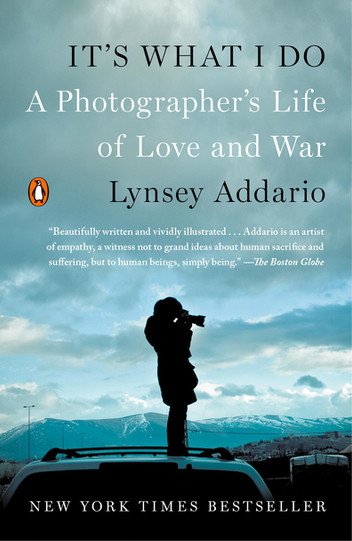
Description
It’s What I Do: A Photographer’s Life of Love and War – Lynsey Addario’s Powerful Memoir
Introduction: Understanding Lynsey Addario’s Journey as a War Photographer
Lynsey Addario stands among the world’s most respected conflict photojournalists today. Moreover, her memoir “It’s What I Do” chronicles her extraordinary career and life. She has documented wars, humanitarian crises, and human suffering across multiple continents. Furthermore, Addario’s work has appeared in The New York Times, National Geographic, and Time. Her photographs have won numerous prestigious awards, including the Pulitzer Prize.
This memoir reveals the personal cost of documenting global conflicts and tragedies. Additionally, it explores how she balanced dangerous work with relationships and motherhood. Addario writes honestly about fear, ambition, and the drive to witness history. Therefore, readers gain insight into what compels someone to repeatedly risk everything. The book stands as both an adventure story and an intimate personal reflection.
Who Is Lynsey Addario and Why Her Story Matters
Lynsey Addario grew up in Connecticut in a close-knit Italian-American family. Moreover, she discovered photography during her teenage years and fell in love with it. She studied international relations at the University of Wisconsin-Madison with growing interest. Furthermore, she began freelancing in New York City after graduating in 1995. Her early work focused on documenting immigrant communities and social issues.
Addario’s career took off when she started covering conflicts in Afghanistan. Additionally, she arrived there shortly after the September 11 attacks in 2001. She documented the lives of Afghan women under Taliban rule courageously. Meanwhile, her powerful images brought attention to their suffering and resilience. This work established her reputation as a fearless and compassionate photographer.
She became one of the few women regularly covering frontline combat zones. Furthermore, Addario faced unique challenges as a female war photographer in male-dominated spaces. She had to prove herself constantly to soldiers, editors, and colleagues. However, being a woman also gave her access to female subjects. This perspective enriched her work and set it apart from others.
Her photographs humanize conflicts by focusing on individual stories and suffering. Moreover, Addario believes in bearing witness to history’s most difficult moments. She documents not just battles but also their impact on civilians. Therefore, her work serves as a historical record and a call to action. Her images have influenced policy discussions and humanitarian responses worldwide.
The Conflicts and Assignments That Defined Addario’s Career
Addario has covered nearly every major conflict of the past two decades. Moreover, her assignments have taken her to the world’s most dangerous places. She has worked in war zones where few journalists dare to venture. Furthermore, she returns repeatedly despite the obvious risks to her safety.
Major conflicts and assignments covered include:
- Afghanistan during and after the Taliban regime (2000-present)
- The Iraq War and its aftermath (2003-2011)
- Darfur genocide and humanitarian crisis in Sudan (2004-2008)
- The war in Libya during the Arab Spring (2011)
- Syrian refugee crisis across multiple countries (2012-2016)
- Boko Haram insurgency in Nigeria and surrounding regions
- The Yemen civil war and humanitarian catastrophe
- Rohingya refugee crisis in Bangladesh (2017)
- COVID-19 pandemic’s impact on vulnerable populations worldwide
Her work in Darfur particularly moved her and changed her perspective. Additionally, she documented systematic violence against civilians and mass displacement there. The images she captured helped expose the genocide to the world. Meanwhile, she struggled with the emotional toll of witnessing such horror. This assignment significantly deepened her commitment to humanitarian photojournalism.
In Libya, Addario and her colleagues were kidnapped by government forces. Furthermore, they endured six days of captivity, beatings, and sexual assault. She feared for her life throughout this terrifying ordeal. However, she returned to conflict zones after recovering from the trauma. This incident raised questions about the risks journalists take for stories.
Her coverage of women in conflict zones has been particularly groundbreaking. Moreover, Addario focuses on how war affects mothers, daughters, and families. She documents sexual violence as a weapon of war in multiple conflicts. Additionally, she shows women’s resilience and strength amid unimaginable circumstances. This perspective has influenced how the media covers conflicts and humanitarian crises.
Personal Struggles: Balancing Love, War, and Motherhood
The memoir honestly explores Addario’s struggle to maintain personal relationships while working. Moreover, her career demands kept her away from home for months. She repeatedly missed weddings, funerals, and important family events throughout the years; furthermore, her romantic relationships suffered from her constant travel and dangerous work. Many partners couldn’t handle the stress and uncertainty of her career.
She met her husband, Paul, while on assignment in India. Additionally, he understood her work because he was also a journalist. They built a relationship despite the challenges of her demanding career. However, marriage didn’t end her internal conflicts about work and family. She continued struggling to balance competing priorities and desires constantly.
Becoming pregnant forced Addario to confront difficult questions about her future. Moreover, she worried about continuing dangerous assignments while pregnant. She feared losing her edge or being permanently sidelined by editors. Furthermore, she questioned whether she could be both a good mother and a photographer. These doubts plagued her throughout pregnancy and early motherhood intensely.
After giving birth, she returned to conflict zones despite guilt and worry. Additionally, she pumped breast milk in war zones and hotel rooms. She missed her son terribly while documenting suffering in distant countries. Meanwhile, she felt constantly judged by both colleagues and other mothers. The memoir explores this impossible balancing act with raw honesty.
Addario also addresses the physical toll of her work on her body. Furthermore, she has suffered injuries, illnesses, and exhaustion from assignments repeatedly. She contracted malaria, dealt with infections, and endured harsh conditions regularly. However, she pushed through pain and discomfort to complete her work. This dedication came at a high cost to her health over time.
Major Themes Explored in It’s What I Do
The memoir examines what drives someone to risk their life repeatedly. Moreover, Addario explores her own motivations and compulsions throughout the narrative. She questions whether her work makes a real difference in the world. Furthermore, she grapples with survivor’s guilt after colleagues died in conflicts. These philosophical questions add depth to the adventure story elements.
Key themes include:
- The moral responsibility of bearing witness to human suffering
- Gender discrimination in male-dominated fields like war photography
- The psychological impact of repeatedly witnessing trauma and violence
- Balancing personal ambition with family obligations and relationships
- The power of images to change hearts, minds, and policies
- Survivor’s guilt and the randomness of who lives and dies
- The addiction to adrenaline and danger in conflict zones
- Finding meaning and purpose through documenting difficult truths
The book also extensively explores the ethics of photographing human suffering. Additionally, Addario questions when documentation crosses into exploitation of victims. She considers her subjects’ dignity and consent in difficult circumstances. Meanwhile, she believes the world needs to see these realities. This tension between respect and revelation runs throughout her career.
Another major theme involves the cost of truth-telling in dangerous times. Furthermore, journalists face increasing threats from governments and armed groups worldwide. Addario has been detained, threatened, and assaulted multiple times during assignments. However, she continues because she believes in journalism’s essential democratic function. The memoir celebrates this commitment while acknowledging its heavy price.
The addiction to conflict zones emerges as a surprising theme. Moreover, Addario admits feeling most alive when working in dangerous situations. She struggles with normal life after returning from intense assignments repeatedly. Furthermore, she recognizes this pattern as potentially unhealthy and self-destructive. Yet she cannot imagine giving up the work that defines her.
Why Lynsey Addario’s Memoir Matters Today
“It’s What I Do” provides crucial insight into the realities of modern conflict journalism. Moreover, it shows what journalists sacrifice to bring us news from war zones. Most people never consider the risks reporters take for their stories. Furthermore, the memoir humanizes the people behind the bylines and photographs. This understanding becomes increasingly important as journalism faces attacks and skepticism.
The book also serves as an important feminist text about women’s experiences. Additionally, Addario successfully breaks down barriers in a traditionally male-dominated profession. She proves that women can excel in the most challenging journalistic environments. Meanwhile, she doesn’t pretend the path is easy or discrimination nonexistent. Her honesty helps other women navigate similar career challenges.
Her focus on civilian suffering in conflicts provides essential historical documentation. Furthermore, Addario’s photographs preserve evidence of war crimes and human rights abuses. These images serve as testimony when victims cannot speak for themselves. Therefore, her work has legal, historical, and moral significance beyond journalism. The memoir explains why this documentation matters so profoundly to her.
The book also addresses the changing media landscape and its impact. Moreover, Addario discusses how digital media transformed the economics and reach of photojournalism. She worries about declining support for expensive, dangerous international reporting. Additionally, she fears important stories will go untold without proper funding. These concerns remain highly relevant to journalism’s future and democracy’s health.
The Human Cost of Bearing Witness
Addario doesn’t romanticize the trauma she has witnessed and experienced repeatedly. Moreover, she describes nightmares, anxiety, and emotional numbness after difficult assignments. She has lost colleagues and friends to violence in conflict zones. Furthermore, she feels guilty about surviving when others didn’t. The memoir honestly addresses these psychological wounds without self-pity or melodrama.
Her kidnapping in Libya particularly affected her mental health and sense of safety. Additionally, she suffered from post-traumatic stress after the sexual assault and captivity. She questioned whether she could continue working in dangerous environments afterward. However, she ultimately decided not to let fear end her career. This decision required tremendous courage and professional commitment on her part.
The book also examines how repeatedly witnessing suffering fundamentally changes a person. Furthermore, Addario admits to becoming somewhat desensitized to violence and tragedy over time. She worries about losing her humanity and empathy through constant exposure. Meanwhile, she recognizes this emotional distance as a psychological survival mechanism. This honest self-examination significantly adds depth to the memoir’s narrative.
Despite everything, Addario maintains hope in humanity and journalism’s power to help. Moreover, she has seen extraordinary kindness and courage in the worst circumstances. She believes her photographs can inspire action and change for the better. Therefore, she continues working despite the personal costs and ongoing dangers. This optimism and dedication make her story ultimately inspiring rather than depressing.
Addario’s Legacy and Continuing Impact
Lynsey Addario has inspired a new generation of photojournalists, especially women. Moreover, her success opened doors for others in conflict photography and reporting. She mentors young photographers and advocates for their safety in the field. Furthermore, she speaks publicly about the importance of diverse perspectives in journalism. Her influence extends beyond her own impressive body of photographic work.
Her photographs have won numerous prestigious awards recognizing their excellence and impact. Additionally, she received a MacArthur Fellowship, or “genius grant,” in 2009 for her work. She has won multiple Pulitzer Prizes as part of the New York Times team. Meanwhile, her images appear in museums and galleries worldwide as art. This recognition validates photojournalism’s importance as both journalism and artistic expression.
The memoir itself became a bestseller and reached audiences beyond journalism circles. Furthermore, it was adapted into a film project with Jennifer Lawrence attached. This mainstream attention significantly brought conflict photography to broader public awareness. Therefore, Addario’s influence extends widely into popular culture and public consciousness.
She continues working today, covering conflicts and humanitarian crises around the globe. Moreover, she has expanded her focus to include climate change and migration. She documents how environmental disasters create refugees and exacerbate existing conflicts. Additionally, she covered the impact of the COVID-19 pandemic on vulnerable populations worldwide. Her work remains as relevant and necessary as ever before.
Conclusion: A Testament to Courage and Commitment
“It’s What I Do” succeeds as both a thrilling adventure story and an intimate memoir. Moreover, Lynsey Addario writes with honesty, humor, and self-awareness throughout the narrative. She doesn’t present herself as a hero but as a flawed person. Furthermore, she questions her choices while defending her commitment to the work. This balanced approach makes the memoir both credible and deeply moving.
Readers finish with profound respect for conflict journalists and their essential work. Additionally, they understand the personal sacrifices required to document history’s darkest moments. The memoir shows that bearing witness requires both physical and emotional courage. However, it also demonstrates the profound meaning this work provides to practitioners. These insights make us better consumers of news and more informed citizens.
Addario’s story reminds us that journalism matters now more than ever before. Furthermore, it shows why we need brave people willing to risk everything. Her photographs have changed policies, saved lives, and preserved historical truth. Therefore, her career stands as a testament to photojournalism’s power and importance. This memoir ensures her legacy will inspire future generations of truth-tellers.
The book ultimately celebrates the human drive to witness, document, and share. Moreover, it honors those who died pursuing truth in dangerous places worldwide. Addario carries their memory forward through her continued work and advocacy. Meanwhile, she builds a life that includes both professional achievement and personal fulfillment. Her story proves that we don’t have to choose between passion and love.
“It’s What I Do” stands as one of the finest memoirs about journalism. Furthermore, it provides essential reading for anyone interested in photography, war, or women’s stories. Addario has given us a gift with her honesty and vulnerability. Therefore, this memoir will remain relevant and inspiring for years to come. It reminds us why some stories must be told regardless of cost.





Reviews
There are no reviews yet.