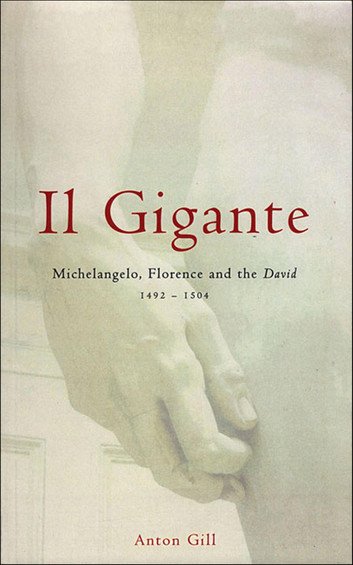
Description
Il Gigante: A Masterpiece Born from Marble and Ambition
Anton Gill’s “Il Gigante” tells the remarkable story of Michelangelo’s David. This book explores Renaissance Florence between 1492 and 1504. Moreover, it reveals how one sculptor transformed a flawed marble block into history’s most celebrated statue. Il Gigante, meaning “The Giant,” became a symbol of Florentine pride and artistic achievement. Furthermore, Gill masterfully weaves together art, politics, and human drama in this compelling narrative.
The book spans twelve transformative years in Florence’s history. Additionally, it captures the turbulent political landscape that shaped Michelangelo’s masterwork. Consequently, readers gain insight into both artistic genius and historical context.
Florence in Crisis: The Historical Backdrop of Il Gigante
Florence faced unprecedented turmoil in 1492. The powerful Medici family lost control of the city. Meanwhile, religious fervor swept through the streets under Savonarola’s influence. Therefore, the city needed a symbol of strength and resilience.
The political chaos created an uncertain environment for artists. However, it also opened opportunities for bold new commissions. Subsequently, the city fathers sought to restore Florence’s glory through magnificent art.
The Medici Fall and Republican Dreams
Lorenzo de’ Medici’s death in 1492 marked a turning point. His son Piero proved incompetent as a leader. Consequently, the Medici dynasty crumbled after decades of dominance. The citizens expelled the family in 1494.
Florence then established a republican government. Citizens dreamed of reviving ancient Roman civic virtues. Moreover, they wanted art that reflected their newfound freedom. Il Gigante would eventually embody these republican ideals perfectly.
Savonarola’s Reign of Fire
Girolamo Savonarola dominated Florence from 1494 to 1498. This Dominican friar preached apocalyptic sermons throughout the city. Furthermore, he condemned worldly pleasures and artistic vanity. His followers burned books, paintings, and luxury items in “bonfires of the vanities.”
Artists faced difficult choices during this period. Many feared creating works that might offend religious sensibilities. Nevertheless, the hunger for beauty never completely disappeared. Eventually, Savonarola’s execution in 1498 allowed artistic freedom to flourish again.
The Marble Block: Il Gigante’s Troubled Beginning
A massive Carrara marble block sat abandoned for decades. The Opera del Duomo had commissioned it in 1464. However, sculptor Agostino di Duccio barely started work before abandoning the project. Another artist, Antonio Rossellino, also gave up on the stone.
The marble had significant flaws and an awkward shape. Additionally, previous attempts had left unfortunate gouges in the stone. Therefore, most sculptors considered it ruined and unusable. The block languished in the cathedral workshop for nearly forty years.
Why Artists Rejected the Stone
The marble presented numerous technical challenges. Its narrow depth significantly limited sculptural possibilities. Moreover, the previous carving attempts had removed crucial material. Consequently, any figure would need an unusual, constrained pose.
Many master sculptors examined the block over the years. Each one walked away, deeming the project impossible. Furthermore, the stone’s flaws threatened to crack during carving. Only an exceptionally skilled and confident artist would dare attempt it.
Young Michelangelo: The Artist Who Dared
Michelangelo Buonarroti was only twenty-six in 1501. Despite his youth, he had already created remarkable works. His Pietà in Rome had established his reputation as a prodigy. Additionally, his technical skill surpassed artists twice his age.
The young sculptor possessed extraordinary confidence and ambition. He studied the abandoned marble block carefully and thoroughly. Subsequently, he convinced the Opera del Duomo to grant him the commission. Therefore, in August 1501, Michelangelo began transforming Il Gigante.
Michelangelo’s Early Training and Influences
Michelangelo was trained in Florence’s artistic workshops from childhood. Lorenzo de’ Medici had recognized his talent early. Consequently, the young artist studied classical sculptures in the Medici gardens. He absorbed lessons from ancient Greek and Roman masters.
His anatomical knowledge exceeded that of contemporary sculptors. Moreover, he had dissected corpses to understand human musculature perfectly. This knowledge would prove essential for creating Il Gigante’s powerful physique. Furthermore, his understanding of marble’s properties was unmatched.
Creating Il Gigante: Three Years of Intense Labor
Michelangelo worked on the statue from 1501 to 1504. He labored in complete secrecy behind wooden screens. Additionally, he worked with remarkable speed and precision. The artist carved directly into the marble without preliminary models.
The physical demands of the work were extraordinary. Michelangelo stood on scaffolding for hours each day. Furthermore, marble dust filled his lungs constantly. Nevertheless, his vision drove him forward relentlessly.
Technical Innovations and Challenges
The narrow marble block required innovative solutions. Michelangelo designed a figure with weight shifted onto one leg. This contrapposto pose created dynamic tension and movement. Moreover, it maximized the available depth.
The sculptor employed several groundbreaking techniques:
- Direct carving: Working without full-scale models, trusting his vision completely
- Anatomical precision: Creating muscles that appeared ready to move
- Optical adjustments: Enlarging the head and hands for viewing from below
- Surface finishing: Polishing the marble to luminous perfection
Each technical choice demonstrated Michelangelo’s genius. Consequently, Il Gigante transcended mere craftsmanship to become art.
The Symbolism Behind David’s Pose
Michelangelo chose to depict David before fighting Goliath. This moment of contemplation showed psychological depth. Additionally, it emphasized intelligence over brute strength. The hero’s focused gaze suggested strategic thinking.
David’s nudity referenced classical Greek athletic statues. Moreover, it symbolized truth and moral virtue. The figure’s muscular tension conveyed potential energy. Therefore, viewers sensed imminent action despite the static pose.
Il Gigante Revealed: Florence’s Reaction
Michelangelo unveiled the completed statue in 1504. Florence’s citizens and artists responded with overwhelming awe. Furthermore, a committee of prominent artists debated its placement. Leonardo da Vinci and Botticelli participated in these discussions.
The statue stood seventeen feet tall and weighed six tons. Its scale and beauty exceeded all expectations. Moreover, Il Gigante demonstrated that Florentine art rivaled ancient masterpieces. Consequently, civic pride swelled throughout the city.
The Great Debate Over Placement
Originally, the statue was intended for the cathedral. However, its artistic merit demanded a more prominent display. Therefore, city leaders proposed placing it in the Piazza della Signoria. This location would make Il Gigante a political symbol.
The move required extraordinary engineering efforts. Workers transported the massive statue through narrow streets. Additionally, they built a special wooden framework for protection. The journey took four days to complete successfully.
Political Symbolism: Il Gigante as Republican Icon
David perfectly represented Florence’s republican government. Like the biblical hero, Florence faced powerful enemies. Moreover, the city relied on courage and virtue rather than size. Therefore, Il Gigante became a symbol of civic independence.
The statue stood outside the Palazzo Vecchio, the seat of government. Its placement sent a clear political message. Furthermore, David’s gaze pointed toward Rome, Florence’s rival. Consequently, the sculpture embodied both artistic and political defiance.
Florence’s Enemies and Allies
Florence navigated complex political relationships during this period. The city faced threats from larger, more powerful states. Additionally, internal factions constantly competed for control. Nevertheless, Florentine citizens maintained fierce independence.
The Medici family plotted their return from exile. Meanwhile, France and Spain vied for Italian dominance. Therefore, Florence needed symbols of strength and unity. Il Gigante provided exactly that inspiration.
Artistic Revolution: Il Gigante’s Impact on Renaissance Art
Michelangelo’s David transformed Renaissance sculpture forever. Artists recognized a new standard of excellence. Moreover, the statue demonstrated that modern artists could surpass ancient masters. Consequently, Il Gigante inspired countless imitations and innovations.
The sculpture’s naturalism shocked contemporary viewers. Every muscle, vein, and tendon appeared anatomically perfect. Furthermore, the figure seemed alive and breathing. Therefore, other sculptors studied Michelangelo’s techniques intensely.
Influence on Contemporary and Future Artists
Leonardo da Vinci admired the statue despite professional rivalry. Raphael incorporated his lessons into his paintings. Additionally, younger sculptors made pilgrimages to study Il Gigante. The work became essential education for any serious artist.
The statue’s influence extended across centuries. Baroque sculptors like Bernini responded to its challenges. Moreover, neoclassical artists repeatedly returned to their principles. Even modern sculptors acknowledge its enduring impact.
Anton Gill’s Historical Narrative
Gill’s book brings this extraordinary story to vivid life. He combines meticulous historical research with engaging storytelling. Moreover, he explores the human drama behind artistic creation. Therefore, readers understand both the art and the artist.
The author examines primary sources and contemporary accounts carefully. He thoroughly reconstructs daily life in Renaissance Florence. Additionally, Gill analyzes the political machinations surrounding Il Gigante’s creation. Consequently, the book offers a comprehensive historical context.
Gill’s Approach to Biography and History
Gill balances multiple narrative threads skillfully. He explores Michelangelo’s personal struggles and triumphs. Furthermore, he illuminates the broader cultural and political landscape. Therefore, readers gain a multifaceted understanding.
The book avoids hagiography while celebrating genius. Gill presents Michelangelo as complex and sometimes difficult. Moreover, he shows how historical circumstances shaped artistic choices. Consequently, the narrative feels authentic and nuanced.
The Legacy of Il Gigante
Michelangelo’s David remains one of humanity’s greatest artworks. Millions visit the statue annually in Florence’s Accademia Gallery. Moreover, countless reproductions appear worldwide. Therefore, Il Gigante continues inspiring people five centuries later.
The statue represents the pinnacle of Renaissance achievement. It embodies humanist ideals of beauty and virtue. Additionally, it demonstrates technical mastery that remains unsurpassed. Consequently, David symbolizes human creative potential itself.
Modern Preservation and Display
The original statue was moved indoors in 1873 for protection. Environmental damage threatened the marble’s integrity. Furthermore, a replica now stands in the Piazza della Signoria. Therefore, both preservation and public access are maintained.
Conservation efforts continue to protect Il Gigante today. Scientists constantly monitor the marble’s condition. Moreover, climate control systems maintain optimal environmental conditions. Consequently, future generations will inherit this masterpiece intact.
Conclusion: Understanding Il Gigante Through Gill’s Eyes
Anton Gill’s “Il Gigante” offers essential reading for art lovers. The book illuminates a pivotal moment in Western culture. Moreover, it reveals how genius, opportunity, and necessity converged. Therefore, readers understand David’s creation as historical drama.
The narrative spans art, politics, religion, and human ambition. Gill demonstrates how these forces shaped Michelangelo’s masterpiece. Furthermore, he shows why Il Gigante transcends mere sculpture. Consequently, the book enriches appreciation for this extraordinary achievement.
Michelangelo transformed a rejected marble block into eternal beauty. David embodies Renaissance ideals and Florentine pride. Moreover, Il Gigante proves that human creativity can overcome any obstacle. Therefore, this story continues to inspire artists and dreamers worldwide.





Reviews
There are no reviews yet.