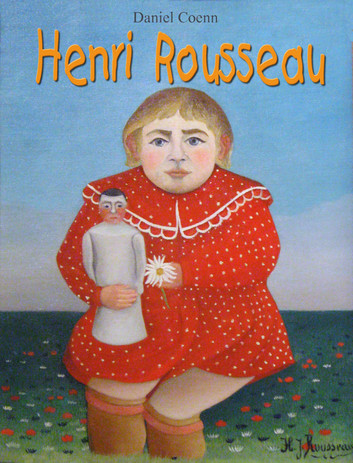
Description
Henri Rousseau: The Self-Taught Master of Naïve Art – My Pocket Gallery
Henri Rousseau stands as one of art history’s most fascinating figures. Born in 1844, this self-taught French painter earned the nickname “Le Douanier” (the customs officer) due to his day job. Henri Rousseau created a distinctive naïve art style that revolutionized modern painting. His work bridged the gap between traditional and avant-garde art movements. He passed away in 1910, leaving behind an extraordinary legacy.
The Unlikely Artist: Henri Rousseau’s Early Life
Henri Rousseau worked as a toll and customs collector in Paris. He didn’t begin painting seriously until age 40. This late start made his achievements even more remarkable. Moreover, he had no formal artistic training whatsoever. His colleagues at the customs office often mocked his artistic ambitions.
Nevertheless, Rousseau pursued his passion with unwavering determination. He spent his free time sketching and painting. His unique vision began to take shape during these early years. The customs office provided steady income while he developed his skills.
Self-Taught Genius and the Naïve Art Style
Rousseau’s lack of formal training became his greatest strength. His naïve or primitive style emerged naturally from his self-taught approach. He painted with childlike directness and honesty. Furthermore, his work displayed a dreamlike quality that captivated viewers. Traditional perspective and proportion rules didn’t constrain him.
His paintings featured flat, two-dimensional representations. Bold outlines defined every shape and figure. The colors he chose were vibrant and unmodulated. Additionally, his compositions possessed an almost magical quality. Critics initially dismissed his work as amateurish and unsophisticated.
However, this primitive style would later influence major art movements. His honest approach to painting resonated with modernist sensibilities. The naïve quality of his work became its defining characteristic.
The Bold Decision: Retirement and Full-Time Painting
In 1893, Rousseau made a life-changing decision. He retired from his customs position at age 49. This allowed him to dedicate himself entirely to painting. Therefore, his artistic output increased dramatically during this period. He could finally pursue his true calling without distraction.
The retirement years proved to be his most productive. He painted with renewed energy and focus. His distinctive style matured and became more confident. Moreover, he began creating his most ambitious works. Financial struggles accompanied this freedom, but Rousseau remained committed.
The Enchanting Jungle Paintings
Rousseau created approximately 20 jungle paintings throughout his career. These works became his most celebrated and recognizable pieces. Remarkably, he never traveled to tropical locations. Instead, he drew inspiration from Paris’s botanical gardens and zoo. Additionally, he studied illustrated books and magazines for exotic details.
His jungle scenes featured lush, dense vegetation. Wild animals prowled through impossibly green foliage. The compositions created mysterious, dreamlike atmospheres. Furthermore, every leaf and plant received meticulous attention. His jungles existed in an imaginary, timeless realm.
Inspiration Sources for the Jungle Works
Rousseau’s creative process relied on various visual references:
- Visits to the Jardin des Plantes in Paris
- Postcards depicting tropical landscapes
- Photographs from travel magazines
- Illustrated botanical books
- Animal specimens at the Natural History Museum
- Paintings at the Louvre Museum
These sources combined in his imagination to create unique visions. He transformed ordinary references into extraordinary fantasies. His method demonstrated resourcefulness and creative vision.
Masterpiece: “The Sleeping Gypsy” (1897)
“The Sleeping Gypsy” ranks among Rousseau’s most iconic works. The painting depicts a wandering musician asleep in the desert. A lion stands over the sleeping figure, sniffing curiously. Moonlight bathes the entire scene in ethereal luminescence. The composition creates an atmosphere of mysterious tranquility.
The painting showcases Rousseau’s distinctive style perfectly. Bold colors contrast against the sandy landscape. The figures appear flat yet possess undeniable presence. Moreover, the scene balances danger with strange peacefulness. The lion seems protective rather than threatening.
This work exemplifies his ability to create dreamlike narratives. The painting invites multiple interpretations and emotional responses. It remains one of the most beloved images in modern art.
“The Dream” (1910): A Final Masterpiece
Rousseau completed “The Dream” shortly before his death. This large canvas represents the culmination of his artistic vision. A nude woman reclines on a Victorian sofa amid dense jungle. Exotic animals and lush plants surround her improbable presence. The scene merges reality and fantasy seamlessly.
The painting measures over six feet tall. Its ambitious scale matched Rousseau’s grand vision. Furthermore, the work demonstrates his mature technical abilities. Every element receives careful, loving attention. The jungle teems with life and mysterious energy.
“The Dream” influenced countless later artists. Surrealists particularly admired its dreamlike quality. The painting proved that imagination could triumph over academic training.
“The Hungry Lion Throws Itself on the Antelope”
This dramatic work showcases Rousseau’s jungle paintings at their most violent. A lion attacks an antelope in dense vegetation. Blood flows as nature displays its brutal reality. However, the scene maintains a strange decorative beauty. The violence appears stylized rather than truly horrific.
Bright colors dominate despite the dark subject matter. The jungle foliage creates an intricate tapestry. Additionally, other animals observe from the dense undergrowth. The composition balances chaos with careful arrangement. Rousseau transforms savagery into visual poetry.
Bold Colors and Two-Dimensional Representation
Rousseau’s color palette distinguished his work immediately. He favored pure, unmixed hues applied directly. His greens ranged from deep emerald to bright lime. Blues, reds, and yellows appeared in their most saturated forms. Therefore, his paintings possessed extraordinary visual impact.
His two-dimensional approach rejected traditional perspective. Figures and objects appeared flat against the picture plane. Depth came from overlapping forms rather than atmospheric perspective. Moreover, this flatness created decorative, pattern-like effects. His compositions resembled elaborate tapestries or stained glass.
The bold outlines surrounding each form enhanced this effect. Everything possessed clear, definite boundaries. This technique gave his work graphic strength and clarity.
Exotic Subjects and Imaginary Worlds
Rousseau gravitated toward exotic and unusual subjects. His imagination roamed far beyond his Parisian surroundings. Jungles, deserts, and tropical paradises filled his canvases. Furthermore, he painted mysterious figures and fantastical scenarios. His work transported viewers to impossible dreamscapes.
He combined familiar and strange elements freely. A Victorian sofa might appear in a jungle setting. European figures wandered through tropical landscapes. These juxtapositions created surreal, thought-provoking images. Additionally, his exotic subjects reflected contemporary fascination with colonialism.
His paintings offered escape from mundane reality. They invited viewers into worlds of pure imagination. This escapist quality contributed greatly to his appeal.
Exhibition at the Salon des Indépendants
Starting in 1885, Rousseau exhibited at the Salon des Indépendants. This venue welcomed artists rejected by official academic salons. It provided crucial exposure for his unconventional work. Moreover, the Salon operated without jury selection. Any artist could exhibit by paying a small fee.
Rousseau showed his work there regularly for 25 years. Initially, critics and public ridiculed his paintings. His naïve style seemed laughably incompetent to many viewers. Nevertheless, he persisted despite mockery and rejection. His confidence in his vision never wavered.
The Salon eventually brought him important recognition. Avant-garde artists began noticing his unique qualities. His persistence at the Salon proved essential to his legacy.
Influence on Surrealists
The Surrealist movement embraced Rousseau posthumously. His dreamlike imagery aligned perfectly with Surrealist principles. André Breton and other Surrealists celebrated his work enthusiastically. Furthermore, they recognized him as a spiritual predecessor. His paintings demonstrated the power of unconscious imagination.
Rousseau’s jungles anticipated Surrealist landscapes. His strange juxtapositions prefigured Surrealist techniques. The mysterious narratives in his work inspired later artists. Additionally, his self-taught status appealed to Surrealist anti-academic attitudes. They saw him as a pure, untainted creative force.
Max Ernst and other Surrealists studied his compositions carefully. His influence appears in countless Surrealist jungle scenes. The movement helped establish his reputation as a major artist.
Impact on Fauvism
The Fauvist movement also drew inspiration from Rousseau’s work. His bold, pure colors anticipated Fauvist techniques. Henri Matisse and André Derain admired his fearless approach. Moreover, his rejection of naturalistic color influenced their experiments. The Fauvists pushed his color innovations even further.
His flat, decorative compositions resonated with Fauvist aesthetics. Both approaches emphasized surface pattern over illusionistic depth. Furthermore, both movements valued emotional expression over academic correctness. Rousseau demonstrated that untrained vision could produce powerful art.
The Fauvists recognized him as a kindred spirit. His work validated their own radical color experiments.
Recognition by Picasso and the Avant-Garde
Pablo Picasso discovered Rousseau’s work around 1908. He immediately recognized its revolutionary qualities. Picasso purchased several Rousseau paintings for his collection. Furthermore, he organized a famous banquet honoring the older artist. This event brought together Paris’s artistic elite.
The banquet became legendary in art history. Avant-garde luminaries gathered to celebrate Rousseau’s achievements. Guillaume Apollinaire, the poet and critic, attended enthusiastically. He became one of Rousseau’s most important champions. Additionally, he wrote extensively about the painter’s significance.
Picasso saw connections between Rousseau’s primitivism and African art. Both rejected Western academic traditions. Both accessed more fundamental visual truths. Therefore, Rousseau’s work influenced Picasso’s own revolutionary developments. The recognition from such figures validated Rousseau’s lifetime of effort.
Creative Process: Postcards, Photographs, and the Louvre
Rousseau’s creative process combined observation and imagination. He visited the Louvre regularly to study masterworks. Classical paintings influenced his compositional approaches. However, he transformed these influences through his unique vision. Moreover, he never simply copied what he saw.
Postcards provided crucial visual references for exotic subjects. He collected images of tropical plants and animals. Photographs from magazines supplemented his visual library. These sources sparked his imagination rather than limiting it. Additionally, he combined multiple references into original compositions.
His botanical garden visits provided direct observation opportunities. He sketched plants and studied their forms carefully. This research grounded his fantastic jungles in reality. The combination of study and imagination produced his distinctive style.
The Remarkable Collection: 300-400 Works
Rousseau created between 300 and 400 works during his career. This substantial output spans paintings, drawings, and sketches. His productivity increased dramatically after his 1893 retirement. Moreover, he worked steadily despite financial hardships. His dedication to painting never faltered.
The collection includes portraits, landscapes, and jungle scenes. He also painted urban views of Paris. Additionally, he created allegorical and historical subjects. His range demonstrated versatility within his distinctive style. Each work bears his unmistakable visual signature.
Many works remain in major museum collections worldwide. The Museum of Modern Art in New York holds several masterpieces. The Louvre and Musée d’Orsay in Paris display his paintings. Therefore, his work receives ongoing scholarly attention and public admiration.
Legacy and Continuing Influence
Rousseau’s influence extends far beyond his lifetime. Modern and contemporary artists continue discovering inspiration in his work. His validation of self-taught artists opened new possibilities. Furthermore, he demonstrated that formal training isn’t essential for greatness. His career encourages artists to trust their unique visions.
His naïve style influenced folk art and outsider art movements. The directness of his approach remains relevant today. Additionally, his imaginative subjects inspire fantasy and surrealist artists. His bold color use continues influencing contemporary painters. The dreamlike quality of his work feels timeless and universal.
Art historians now recognize him as a major modernist pioneer. His reputation has grown steadily since his death. Consequently, exhibitions of his work attract large audiences worldwide.
My Pocket Gallery: Accessible Art Education
The My Pocket Gallery series makes art history accessible to everyone. These e-books provide comprehensive introductions to major artists. The format allows readers to explore art on mobile devices. Moreover, the series presents information in engaging, readable formats. Art appreciation becomes convenient and portable.
Each volume combines biographical information with visual analysis. High-quality reproductions accompany detailed discussions. The e-books serve students, enthusiasts, and casual readers alike. Additionally, the affordable format democratizes art education. Knowledge that once required museum visits becomes instantly available.
The series covers artists from various periods and movements. Each book maintains consistent quality and depth. Therefore, readers can build comprehensive art historical knowledge. The digital format allows for easy reference and study.
Henri Rousseau in My Pocket Gallery
This volume explores Rousseau’s life and artistic achievements thoroughly. Readers discover the customs officer who became an artistic revolutionary. The e-book examines his major works in detail. Furthermore, it explains his influence on modern art movements. His fascinating story unfolds through accessible prose and beautiful images.
The book contextualizes Rousseau within art history. It explains why his naïve style proved so influential. Additionally, it explores his creative process and inspirations. Readers gain deep understanding of his unique contributions. The volume serves as both introduction and reference.
High-quality reproductions showcase his masterpieces effectively. Readers can zoom in to examine details closely. The digital format enhances the viewing experience. Moreover, the portable nature allows study anywhere, anytime. Art appreciation fits into busy modern lifestyles.
Conclusion
Henri Rousseau transformed from customs officer to artistic pioneer. His self-taught approach produced a revolutionary naïve style. Despite initial mockery, he persisted in his unique vision. His jungle paintings created dreamlike worlds of extraordinary beauty. Bold colors and two-dimensional compositions defined his distinctive aesthetic.
Recognition came from avant-garde artists like Picasso and Apollinaire. His work influenced Surrealists, Fauvists, and countless later artists. The 300-400 works he created demonstrate remarkable dedication. His masterpieces like “The Sleeping Gypsy” and “The Dream” remain beloved worldwide. His legacy proves that formal training cannot limit true artistic genius.
The My Pocket Gallery e-book brings his story to contemporary audiences. Readers discover why this humble customs officer matters to art history. His life inspires anyone who dreams of creative achievement. Therefore, Rousseau’s example continues encouraging artists to trust their visions. His paintings remind us that imagination can triumph over convention.



Reviews
There are no reviews yet.