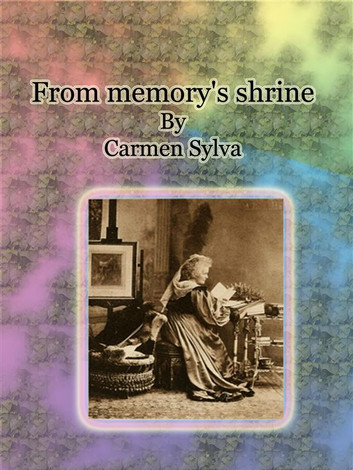
Description
From Memory’s Shrine: Carmen Sylva’s Reflective Literary Masterpiece
Introduction: Discovering From Memory’s Shrine
From Memory’s Shrine stands as one of Carmen Sylva’s most intimate and reflective literary works. This collection offers readers a glimpse into the author’s personal recollections and philosophical musings. Moreover, the book reveals the depth of Carmen Sylva’s literary talent and emotional sensitivity. Therefore, it remains an important work for understanding nineteenth-century European literature and royal authorship.
Carmen Sylva was the pen name of Queen Elisabeth of Romania, a remarkable woman who balanced royal duties with serious literary pursuits. Furthermore, she wrote prolifically in multiple languages throughout her life. Additionally, her works explored themes of memory, loss, beauty, and the human condition. Consequently, she earned respect as both a monarch and a genuine literary artist.
From Memory’s Shrine captures the queen’s reflections on life, love, and the passage of time. The collection demonstrates her skill in crafting evocative prose and poetry. Thus, readers encounter a unique voice that bridges royal experience with universal human emotions.
Who Was Carmen Sylva?
Carmen Sylva was born Princess Elisabeth of Wied in 1843 in Germany. She married Prince Carol of Romania in 1869, later becoming queen when he ascended the throne. Moreover, she brought German culture and literary traditions to her adopted Romanian homeland. Therefore, she served as a cultural bridge between Western Europe and the Balkans.
Despite her royal position, Elisabeth maintained a serious commitment to writing and artistic creation. She published poetry, prose, plays, and essays under her pseudonym Carmen Sylva. Additionally, she collaborated with other writers and supported literary endeavors throughout Romania. Furthermore, she used her influence to promote education and cultural development.
Her personal life was marked by tragedy, particularly the death of her only child. This loss profoundly affected her writing and worldview. Consequently, themes of grief, memory, and spiritual consolation permeate much of her work. Nevertheless, she continued creating art and serving her adopted country with dedication.
Carmen Sylva wrote in German, Romanian, French, and English, demonstrating remarkable linguistic versatility. Thus, she reached audiences across Europe and beyond with her literary productions.
The Nature of From Memory’s Shrine
From Memory’s Shrine is a collection of reflective pieces that blend memoir, meditation, and literary artistry. The work draws from Carmen Sylva’s personal experiences and observations. Moreover, it transforms private memories into universal reflections on human existence. Therefore, readers find both intimate revelation and broader philosophical insight.
The collection’s title suggests a sacred space where memories are preserved and honored. Indeed, Carmen Sylva treats recollection as a spiritual practice throughout the work. Furthermore, she explores how memory shapes identity and provides meaning to human life. Additionally, the shrine metaphor implies that memories deserve reverence and careful preservation.
The pieces vary in length and style, ranging from brief lyrical fragments to longer narrative passages. However, they share common themes and a consistent authorial voice. Consequently, the collection achieves unity despite its varied contents and approaches.
Carmen Sylva’s approach combines Romantic sensibility with realistic observation and psychological depth. Thus, the work appeals to readers seeking both emotional resonance and intellectual substance.
Major Themes in Memory’s Shrine
The central theme of From Memory’s Shrine is the power and significance of memory itself. Carmen Sylva examines how recollection preserves the past and shapes present consciousness. Moreover, she explores memory’s role in maintaining connections with lost loved ones. Therefore, the work becomes a meditation on time, loss, and continuity.
Nature appears frequently as both subject and metaphor throughout the collection. The author finds spiritual meaning and emotional solace in natural beauty. Additionally, she uses natural imagery to express complex emotional states and philosophical ideas. Furthermore, seasonal changes mirror human experiences of growth, decline, and renewal.
Love in its various forms—romantic, maternal, spiritual—receives extensive treatment in these reflections. Carmen Sylva writes movingly about the joys and sorrows of deep emotional attachment. However, she also acknowledges love’s capacity to cause profound suffering. Consequently, her treatment of love is nuanced and psychologically sophisticated.
Key themes explored in From Memory’s Shrine include:
- The preservation and meaning of personal memory
- Grief and the process of mourning lost loved ones
- The consolations of nature and beauty
- The passage of time and human mortality
- Spiritual seeking and religious faith
- The role of art in expressing and transcending suffering
- The tension between royal duty and personal desire
- The search for meaning in loss and disappointment
Death and mortality appear as recurring concerns throughout the collection. Nevertheless, Carmen Sylva approaches these subjects with courage and philosophical depth rather than morbid fascination.
Literary Style and Approach
Carmen Sylva’s prose in From Memory’s Shrine demonstrates remarkable lyrical quality and emotional intensity. Her sentences often achieve poetic compression and musical rhythm. Moreover, she employs vivid imagery that engages multiple senses simultaneously. Therefore, readers experience her memories and reflections with unusual immediacy and power.
The author’s style blends Romantic emotionalism with careful observation and precise description. She avoids excessive sentimentality through specific details and honest emotional complexity. Additionally, her writing shows influence from German Romantic literature and philosophy. Furthermore, she incorporates elements of folk tradition and fairy tale into her reflective prose.
Carmen Sylva frequently uses metaphor and symbol to convey complex emotional and spiritual states. Natural phenomena become vehicles for exploring inner experience and philosophical questions. However, she grounds these symbolic elements in concrete sensory experience. Consequently, her writing achieves both imaginative reach and tangible reality.
The tone throughout the collection varies from melancholic to hopeful, from intimate to universal. Thus, readers encounter a full range of human emotional experience within these pages.
The Cultural and Historical Context
From Memory’s Shrine emerged from the unique cultural position of its author. Carmen Sylva occupied an unusual space as both European royalty and serious literary artist. Moreover, she lived during a period of significant political and cultural change in Romania. Therefore, her work reflects both personal experience and broader historical currents.
The late nineteenth century saw Romanticism giving way to Realism and early Modernism in European literature. Carmen Sylva’s writing shows awareness of these shifting literary movements. Additionally, her work demonstrates engagement with contemporary philosophical and spiritual questions. Furthermore, she participated in broader European literary culture through correspondence and publication.
Romania itself was establishing its modern identity during Carmen Sylva’s reign as queen. The country had recently gained independence and was developing national institutions and culture. Consequently, the queen’s literary activities contributed to this nation-building project. Nevertheless, her writing maintained international perspective and universal human concerns.
The position of women writers in the nineteenth century presented particular challenges and opportunities. However, Carmen Sylva’s royal status provided unusual freedom to publish and pursue literary ambitions. Thus, she represents an exceptional case of female authorship during this period.
Memory and Personal Loss in the Collection
Personal tragedy deeply informs the reflections in From Memory’s Shrine. Carmen Sylva’s only child, Princess Maria, died at age four in 1874. This devastating loss haunted the queen throughout her life and profoundly influenced her writing. Moreover, the collection contains numerous references to maternal grief and the pain of losing a child. Therefore, readers encounter authentic emotional testimony alongside literary artistry.
The author explores how memory preserves connection with the deceased while also intensifying grief. She examines the paradox that remembering brings both comfort and renewed pain. Additionally, she considers whether memory ultimately heals or perpetuates suffering. Furthermore, these reflections achieve universal resonance beyond her specific circumstances.
Carmen Sylva also addresses other losses—of youth, of possibilities, of earlier selves. The passage of time itself becomes a form of loss requiring mourning and acceptance. However, she ultimately finds meaning and even beauty in transience and change. Consequently, the collection moves toward acceptance without denying the reality of suffering.
The shrine metaphor suggests that proper remembrance requires ritual, reverence, and dedicated space. Thus, writing itself becomes a sacred practice of honoring what has been lost.
Spiritual and Philosophical Dimensions
From Memory’s Shrine reveals Carmen Sylva’s deep engagement with spiritual and philosophical questions. She explores the relationship between earthly existence and transcendent meaning. Moreover, she considers how suffering might serve spiritual development and understanding. Therefore, the collection offers more than personal memoir—it presents a philosophical worldview.
The author draws on Christian tradition while also showing interest in broader spiritual perspectives. She references biblical themes and imagery throughout her reflections. Additionally, she explores mystical experiences and the possibility of direct spiritual knowledge. Furthermore, she considers the role of faith in confronting mortality and loss.
Nature serves as a primary source of spiritual insight and consolation in these writings. Carmen Sylva finds divine presence manifested in natural beauty and seasonal cycles. However, she avoids simplistic pantheism through her nuanced treatment of nature’s complexity. Consequently, her nature writing achieves both spiritual depth and observational accuracy.
The question of life’s meaning in the face of suffering and death receives sustained attention. Thus, readers encounter serious philosophical inquiry alongside personal reflection and literary artistry.
The Role of Art and Beauty
Carmen Sylva consistently emphasizes art’s importance in human life throughout From Memory’s Shrine. She views artistic creation as a fundamental human need and spiritual practice. Moreover, she explores how beauty provides consolation and meaning amid suffering. Therefore, the collection itself exemplifies the healing and transformative power of art.
The author discusses various art forms—literature, music, visual arts—and their effects on consciousness. She examines how aesthetic experience can transcend ordinary awareness and connect individuals to deeper reality. Additionally, she considers the relationship between beauty and truth in artistic expression. Furthermore, she reflects on the artist’s responsibility and the sources of creative inspiration.
Writing appears as both personal necessity and gift to others throughout these reflections. Carmen Sylva describes the compulsion to transform experience into language and form. However, she also acknowledges the limitations of words to capture certain experiences. Consequently, her reflections on art demonstrate sophisticated understanding of creative process and aesthetic theory.
The collection suggests that creating and appreciating beauty represents a form of resistance against suffering and mortality. Thus, art becomes a means of asserting human dignity and spiritual aspiration.
Structure and Organization of the Collection
From Memory’s Shrine follows a loosely associative structure rather than strict chronological or thematic organization. The pieces flow into one another through emotional and imagistic connections. Moreover, this structure mirrors the actual workings of memory and consciousness. Therefore, readers experience the collection as a journey through the author’s inner landscape.
Some sections focus on specific memories or experiences, while others offer more abstract meditations. The variation in length and approach creates rhythm and maintains reader engagement. Additionally, recurring images and themes provide unity across the diverse contents. Furthermore, the collection’s structure allows readers to enter at various points and create their own pathways.
The collection’s organizational principles include:
- Thematic clustering around memory, loss, nature, and spiritual seeking
- Emotional progression from grief toward acceptance and hope
- Seasonal imagery providing natural structure and symbolic framework
- Recurring motifs that create coherence across varied pieces
- Balance between specific personal memories and universal reflections
- Alternation between lyrical intensity and quieter contemplative passages
This organic structure suits the collection’s reflective nature and personal origins. Thus, the form itself reinforces the content’s emphasis on memory’s associative and non-linear character.
Language and Translation Considerations
Carmen Sylva originally wrote From Memory’s Shrine in German, her native language. The work demonstrates her mastery of German literary tradition and linguistic resources. Moreover, the original German text achieves particular lyrical beauty and philosophical depth. Therefore, readers of German encounter the work in its most authentic form.
However, translations have made the collection accessible to broader international audiences. English translations attempt to preserve the original’s poetic qualities and emotional intensity. Additionally, translators face challenges in conveying cultural references and linguistic nuances. Furthermore, some wordplay and sound patterns inevitably resist translation across languages.
The author’s multilingual abilities influenced her writing style even in German. She incorporated elements from Romanian, French, and English literary traditions. Consequently, her prose sometimes shows cosmopolitan character that transcends single national tradition. Nevertheless, German Romanticism remains the primary stylistic influence throughout the collection.
Modern readers may find some nineteenth-century language and sensibility unfamiliar or dated. Thus, approaching the work requires some historical imagination and willingness to engage different literary conventions.
Carmen Sylva’s Literary Legacy
From Memory’s Shrine represents an important contribution to nineteenth-century European literature. Carmen Sylva’s work demonstrates that royal authorship could achieve genuine literary merit. Moreover, she helped establish women’s voices in serious literary discourse during a restrictive period. Therefore, her legacy extends beyond this single collection to broader cultural significance.
The author’s influence on Romanian literature and culture proved particularly significant. She promoted Romanian language and folklore while introducing Western European literary models. Additionally, she supported emerging Romanian writers and artists through patronage and encouragement. Furthermore, her example inspired other women to pursue literary and artistic ambitions.
Carmen Sylva’s international reputation during her lifetime exceeded most contemporary women writers. She corresponded with major literary figures and received critical recognition across Europe. However, her work fell into relative obscurity after her death in 1916. Consequently, modern readers are rediscovering her contributions and reassessing her literary achievement.
The collection’s themes of memory, loss, and spiritual seeking remain universally relevant. Thus, From Memory’s Shrine continues speaking to contemporary readers despite its historical origins.
Relevance for Contemporary Readers
Modern audiences can find much of value in From Memory’s Shrine despite temporal distance. The collection addresses fundamental human experiences that transcend specific historical moments. Moreover, Carmen Sylva’s reflections on grief and memory resonate with anyone who has experienced loss. Therefore, the work maintains emotional and psychological relevance for contemporary readers.
The author’s emphasis on mindfulness and careful attention to experience anticipates current interest in contemplative practices. She demonstrates how reflection and remembrance can provide meaning and consolation. Additionally, her nature writing offers perspective valuable in our environmentally conscious age. Furthermore, her integration of spiritual seeking with intellectual inquiry appeals to modern sensibilities.
Carmen Sylva’s example as a woman balancing multiple roles and pursuing creative expression remains inspiring. She navigated public duties while maintaining private artistic life and authentic voice. However, she also acknowledged the costs and conflicts inherent in such balancing. Consequently, her experience speaks to contemporary discussions of women’s lives and creative work.
The collection’s literary qualities—lyrical prose, vivid imagery, emotional honesty—reward careful reading regardless of historical interest. Thus, From Memory’s Shrine succeeds as both historical document and living literature.
Critical Reception and Scholarly Attention
During Carmen Sylva’s lifetime, From Memory’s Shrine received generally positive critical reception. Reviewers praised the work’s emotional depth and literary craftsmanship. Moreover, critics acknowledged the author’s genuine talent beyond her royal status. Therefore, the collection contributed to her reputation as a serious literary figure.
However, some contemporary critics dismissed her work as amateurish or overly sentimental. Gender bias and assumptions about royal authorship influenced these negative assessments. Additionally, the collection’s personal and emotional focus conflicted with emerging modernist literary values. Furthermore, political considerations sometimes colored critical responses to the queen’s literary productions.
Modern scholarship has begun reassessing Carmen Sylva’s contributions to European literature. Feminist literary historians have recovered her work and examined her significance. However, she remains less studied than many male contemporaries of comparable achievement. Consequently, opportunities exist for further scholarly exploration and critical reevaluation.
The collection deserves attention as both literary achievement and historical document. Thus, From Memory’s Shrine rewards multiple approaches and interpretive frameworks.
Comparing Memory’s Shrine to Other Works
From Memory’s Shrine shares characteristics with other nineteenth-century reflective and memorial literature. The work resembles Romantic autobiography and confessional writing in its personal focus. Moreover, it participates in the period’s fascination with memory, consciousness, and subjective experience. Therefore, readers can productively compare it with works by other Romantic and post-Romantic authors.
The collection shows particular affinity with German Romantic prose and poetry. Carmen Sylva’s style recalls writers like Novalis and Jean Paul in its lyrical intensity. Additionally, her nature writing connects to traditions established by Goethe and other German literary masters. Furthermore, her philosophical concerns reflect broader German intellectual currents of the period.
However, Carmen Sylva’s unique position as queen-author distinguishes her work from most contemporary literature. She writes from unusual perspective combining privilege with genuine suffering and constraint. Consequently, her reflections offer insights unavailable to writers in different social positions. Nevertheless, she achieves universal resonance through honest exploration of common human experiences.
The collection also anticipates later developments in memoir and personal essay writing. Thus, it occupies an interesting position in literary history between Romanticism and modernist experimentation.
Practical Reading Approaches
Readers approaching From Memory’s Shrine benefit from understanding its historical and biographical context. Learning about Carmen Sylva’s life illuminates many references and emotional currents in the work. Moreover, familiarity with nineteenth-century European history enriches appreciation of the collection’s cultural dimensions. Therefore, some preliminary research enhances the reading experience significantly.
However, the collection also rewards direct engagement without extensive background knowledge. Carmen Sylva’s emotional honesty and vivid writing communicate across temporal and cultural distances. Additionally, the universal themes of memory and loss require no specialized knowledge. Furthermore, readers can appreciate the literary qualities without historical expertise.
Suggested approaches for reading From Memory’s Shrine:
- Read slowly and reflectively, allowing time for emotional and intellectual engagement
- Notice recurring images and themes that create unity across diverse pieces
- Consider how the author transforms personal experience into universal reflection
- Pay attention to the lyrical qualities of the prose and its musical rhythms
- Reflect on your own memories and losses in dialogue with the text
- Research historical context to deepen understanding of specific references
- Compare passages with other nineteenth-century reflective literature
- Consider the work’s relevance to contemporary concerns and experiences
The collection invites multiple readings and reveals new dimensions with each encounter. Thus, From Memory’s Shrine rewards sustained attention and repeated engagement.
The Enduring Power of Memory’s Shrine
From Memory’s Shrine stands as a testament to Carmen Sylva’s literary talent and emotional courage. The collection transforms personal grief and reflection into art of lasting value. Moreover, it demonstrates how writing can preserve memory and create meaning from loss. Therefore, the work achieves both personal and universal significance.
Carmen Sylva’s voice remains distinctive and compelling more than a century after the work’s creation. Her honest exploration of suffering, beauty, and spiritual seeking continues resonating with readers. Additionally, her literary craftsmanship rewards careful attention and aesthetic appreciation. Furthermore, her example as woman writer and creative spirit maintains inspirational power.
The collection reminds contemporary readers of memory’s importance in human life and identity. We live through our memories and create meaning by reflecting on experience. However, Carmen Sylva also shows that remembrance requires courage and can intensify pain. Consequently, her work offers no easy consolations but rather honest companionship in confronting loss.
From Memory’s Shrine ultimately affirms life’s value despite suffering and mortality. Thus, it provides both artistic achievement and spiritual sustenance for readers willing to engage its depths.
Conclusion: Why Read From Memory’s Shrine Today
From Memory’s Shrine deserves attention from contemporary readers for multiple compelling reasons. The collection offers literary beauty, emotional depth, and philosophical substance in equal measure. Moreover, it provides insight into a remarkable woman’s life and consciousness. Therefore, reading Carmen Sylva enriches understanding of both nineteenth-century culture and timeless human experiences.
The work’s exploration of memory and loss speaks directly to universal human concerns. Everyone experiences grief and must find ways to preserve and honor what has been lost. Additionally, Carmen Sylva’s reflections on nature, beauty, and spiritual seeking address fundamental questions about meaning and value. Furthermore, her literary artistry demonstrates how language can capture and communicate complex inner experience.
For readers interested in women’s literary history, the collection represents an important recovery project. Carmen Sylva’s achievement challenges assumptions about royal authorship and women’s creative capabilities. However, the work succeeds on its own merits regardless of historical significance. Consequently, it rewards reading as living literature rather than merely historical artifact.
From Memory’s Shrine ultimately invites readers into sacred space where memory is honored and preserved. The collection demonstrates that reflection and remembrance constitute essential human activities deserving time and attention. Thus, engaging with Carmen Sylva’s work becomes an act of participating in the ongoing human project of creating meaning through memory and art.


Reviews
There are no reviews yet.