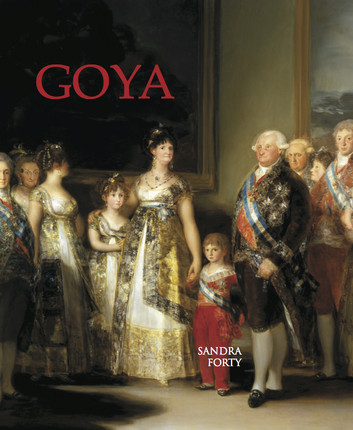
Description
Francisco De Goya: Sandra Forty’s Essential Guide to Spain’s Revolutionary Master Painter
Francisco De Goya transformed Spanish art and influenced modern painting across three centuries of artistic evolution. Sandra Forty’s “Francisco De Goya” from the TAJ Mini Books series presents an accessible introduction to this revolutionary master. Moreover, this compact biography illuminates how Goya bridged Old Masters and contemporary art through eight remarkable decades. His work captured Spain’s most turbulent period with unprecedented honesty and psychological depth throughout his career.
Forty’s concise study reveals how personal tragedy and political upheaval shaped Goya’s distinctive artistic vision. Furthermore, it demonstrates why art historians call him the “father of modernism” for his groundbreaking approach. The book provides essential context for understanding his evolution from court painter to visionary social commentator.
Goya’s Early Life and Rise to Royal Court Painter
Francisco José de Goya y Lucientes was born on March 30, 1746, in Fuendetodos, Aragon, Spain. His father worked as a gilder, providing young Goya with early exposure to artistic craftsmanship and techniques. Therefore, he began studying painting at age fourteen under José Luzán y Martínez in Zaragoza.
Goya later moved to Madrid in 1763 to advance his artistic training and career prospects. He studied with court painter Francisco Bayeu, whose sister Josefa he married in 1773 for love. Additionally, this connection helped him quickly establish his reputation within Spain’s artistic circles and royal patronage networks.
By 1786, he had been appointed court painter to King Charles III of Spain. He created tapestry designs depicting Spanish life with unprecedented realism and keen social observation throughout. Moreover, his portraits of Spanish royalty revealed a psychological depth rarely seen in official court paintings at the time.
His famous work “The Family of Charles IV” demonstrated his mastery of group portraiture brilliantly. However, it also, with honesty, subtly revealed the weaknesses and vanities of his royal subjects. Consequently, Goya established himself as Spain’s preeminent painter while maintaining remarkable artistic independence and integrity.
The Dark Vision: Revolutionary Artistic Evolution and Social Commentary
A severe illness in 1792 left Francisco De Goya completely deaf, profoundly transforming his artistic perspective forever. This personal tragedy dramatically deepened his work’s psychological intensity and emotional power over the subsequent decades. Therefore, his later paintings explored unflinchingly darker themes of human suffering, violence, and social injustice.
Goya created “Los Caprichos” (The Caprices) in 1799, a series of 80 revolutionary etchings. These prints satirized Spanish society, superstition, and the corruption of church and state with biting wit. Furthermore, they demonstrated his mastery of printmaking techniques and his courage in social commentary despite risks.
The Peninsular War (1808-1814) inspired his most powerful and disturbing artistic statements about human conflict. He witnessed Napoleon’s invasion of Spain and the devastating famine that killed 20,000 in Madrid alone. Additionally, he documented these horrors in “Los Desastres de la Guerra” (The Disasters of War) with unflinching candor.
This series of 82 etchings presented war’s brutality with unprecedented honesty and graphic detail throughout. He showed executions, starvation, and atrocities committed by both French and Spanish forces without bias. Consequently, these works established him as one of art history’s first great anti-war artists worldwide.
Francisco De Goya’s major artistic achievements and masterworks included:
- “The Naked Maja” and “The Clothed Maja” – controversial paintings challenging artistic conventions boldly
- “The Third of May 1808” – a powerful depiction of the execution scene of Spanish resistance fighters
- “The Family of Charles IV” – psychologically penetrating royal group portrait revealing character flaws
- “Los Caprichos” – satirical etchings critiquing Spanish society and superstition with dark humor
- “Los Desastres de la Guerra” – unflinching documentation of war’s horrors and human suffering
- “La Tauromaquia” – a series exploring Spanish bullfighting culture and tradition in detail
- “Black Paintings” – fourteen dark murals depicting nightmarish visions of violence and madness
- “Saturn Devouring His Son” – haunting image of mythological violence representing political despair
The Black Paintings and Goya’s Final Revolutionary Years
In his seventies, Goya created his most disturbing and visionary works at his home. He painted fourteen murals directly on the walls of his residence, the Quinta del Sordo. Moreover, these “Black Paintings” depicted nightmarish scenes of violence, witchcraft, and human degradation without restraint.
“Saturn Devouring His Son” became the most famous and disturbing of these dark masterpieces worldwide. The painting shows the Titan Saturn consuming his child in graphic, horrifying detail. Therefore, it represents his profound pessimism about human nature and Spain’s political situation under tyranny.
These works were never intended for public display, making them entirely personal artistic statements. They revealed an artist confronting mortality, deafness, and political disillusionment without compromise or fear. Additionally, they anticipated Expressionism and modern art nearly a century in advance.
In 1824, Goya left Spain for France, seeking political refuge in Bordeaux from the oppression there. He continued painting and experimenting with lithography until his peaceful death on April 16, 1828. Consequently, he spent his final years creating works that profoundly influenced generations of modern artists.
Sandra Forty’s Accessible Introduction to a Revolutionary Master
Sandra Forty brings strong credentials to this TAJ Mini Books biography of the Spanish master. She studied medieval and early modern history at London University, including training at the Courtauld Institute. Moreover, her background enables her to effectively contextualize Goya’s work within broader European artistic traditions.
The TAJ Mini Books format makes Goya’s complex artistic legacy accessible to general readers everywhere today. Forty’s concise approach clearly highlights the most important aspects of his life and revolutionary contributions. Furthermore, the book serves as an ideal introduction for those discovering this master painter for the first time.
Forty examines how his work successfully bridged eighteenth-century court painting and modern artistic expression. She explains his technical innovations in etching, lithography, and painting with clarity and precision throughout. Therefore, readers gain an understanding of both his artistic methods and his profound cultural impact worldwide.
The biography demonstrates why his willingness to depict psychological truth influenced Manet, Picasso, and countless others. His anti-war imagery remains powerfully relevant to contemporary audiences worldwide facing similar conflicts and injustices. Additionally, his artistic courage continues to inspire artists who use their work for social criticism today.
Sandra Forty’s “Francisco De Goya” ultimately celebrates an artist who never compromised his vision or integrity. It honors his contributions to painting, printmaking, and the development of modern art over the course of centuries. Therefore, this accessible biography serves both as an introduction and an invitation to explore his remarkable legacy.


Reviews
There are no reviews yet.