Description
The Architect of Nostalgia
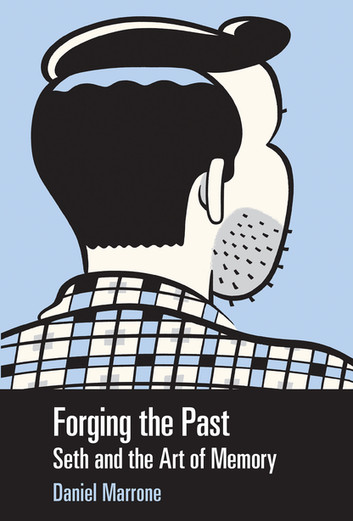
Daniel Marrone explores the complex world of the Canadian cartoonist Seth in this scholarly study. Seth is famous for his distinct retro style and melancholic themes. The book analyzes how he uses comics to reconstruct the past. He often blends real history with fictional memories. Consequently, Marrone examines the thin line between truth and invention in Seth’s work. The artist creates a world that feels both familiar and lost.
The Art of Memory
The narrative focuses on Seth’s masterpiece, It’s a Good Life, If You Don’t Weaken. In this story, the protagonist searches for a forgotten illustrator from the 1940s. Marrone explains how this quest reflects a deep longing for a simpler time. Moreover, the book discusses Seth’s use of a limited color palette to evoke nostalgia. He typically uses shades of blue, gray, and black. Thus, the visual style reinforces the narrative’s somber mood.
Building Fictional Worlds
Marrone dives into Seth’s fascination with architecture and model-building. The artist famously created an entire miniature city called Dominion. This project allowed him to build the past he imagined physically. Furthermore, the book explores how Seth’s physical environment influences his storytelling. He treats his comics as archival objects rather than just simple stories. Therefore, the reader sees Seth as a curator of his own imagination.
Key Themes in Seth’s Work
The study identifies several recurring elements that define Seth’s artistic identity:
The “Grey” Aesthetic: The use of muted tones to represent the passage of time.
Auto-fiction: The blending of personal autobiography with fictional characters.
Collecting: A focus on the value of old magazines, toys, and books.
Urban Loneliness: Depicting the isolation found in changing cityscapes.
A Legacy of Craft
Ultimately, Forging the Past honors Seth as a master of the comics medium. Marrone highlights his influence on the contemporary graphic novel. The author provides a detailed look at Seth’s meticulous drawing process. Additionally, the book argues that Seth’s work is a form of cultural preservation. He saves discarded pieces of history through his art. In conclusion, this study offers a profound look at one of today’s greatest artists.



Reviews
There are no reviews yet.