Description
Discover the Distinctive Vision of a Swiss Master
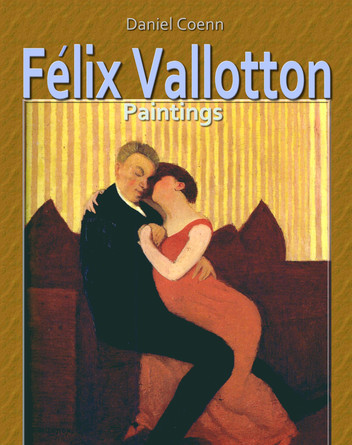
Félix Vallotton Paintings brings the remarkable works of this Swiss-French artist directly to your digital device. This portable collection showcases a painter who bridged post-impressionism and modernism with unique vision. Moreover, it offers convenient access to an artist whose psychological depth and technical precision revolutionized painting. The collection celebrates a master whose cool, observant eye captured modern life’s complexities.
Understanding Félix Vallotton Paintings and Their Unique Character
Félix Vallotton created some of the most psychologically compelling artworks of the late nineteenth and early twentieth centuries. He painted with an unemotional precision that revealed hidden tensions in everyday domestic scenes. Furthermore, his distinctive style combined flat color areas with strong, decisive outlines and simplified forms. His art challenged the emotional expressiveness dominating much contemporary painting with calculated restraint.
Vallotton lived from 1865 to 1925 and became a crucial member of the Les Nabis movement. This progressive group of Parisian artists rejected naturalistic representation in favor of decorative, symbolic approaches. Additionally, they emphasized flat patterns, bold colors, and subjective vision over objective reality. Therefore, Vallotton developed his mature style within this innovative and experimental artistic community.
His paintings captured modern bourgeois life with penetrating psychological insight and subtle irony. He showed the emotional distance between people sharing intimate spaces and supposedly close relationships. Nevertheless, he maintained technical control and compositional balance that gave his works timeless classical quality. Thus, his art balanced contemporary subject matter with enduring formal sophistication and restraint.
The Revolutionary Approach of Félix Vallotton Paintings
Before joining Les Nabis, Vallotton trained in traditional academic methods at the École des Beaux-Arts. He mastered conventional portraiture and realistic representation through years of disciplined study and practice. However, exposure to avant-garde artists in 1890s Paris transformed his entire artistic approach dramatically. This radical shift produced the distinctive style that defines his most important and memorable works.
He developed a technique using flat color areas separated by strong, dark outlines and contours. His compositions eliminated atmospheric perspective and modeling in favor of decorative surface patterns. Moreover, he reduced forms to essential shapes while maintaining recognizable subjects and clear narratives. Hence, his paintings achieved striking visual impact through simplification rather than elaborate realistic detail.
Critics initially struggled to categorize his cool, detached approach to emotionally charged domestic subjects. They found his unemotional treatment of intimate scenes disturbing and psychologically unsettling for viewers. Furthermore, his refusal to sentimentalize relationships or beautify subjects challenged conventional artistic expectations. Nevertheless, his technical mastery and compositional sophistication earned respect even from conservative critics.
Iconic Masterpieces in Félix Vallotton Paintings Collections
Several of Vallotton’s works achieved iconic status and demonstrated his unique artistic vision perfectly. These paintings showcase his ability to create psychological tension through composition and color alone. Additionally, they reveal his skill at transforming ordinary domestic moments into profound artistic statements. Therefore, understanding these key works helps appreciate his entire artistic achievement and contribution.
Five paintings particularly exemplify Vallotton’s genius and distinctive approach to modern life:
- The Ball (1899) – A child’s red ball rolling across a park creates mysterious narrative tension
- Dinner, Effect of Lamp (1899) – A family meal reveals emotional distance despite physical proximity
- The Lie (1898) – A reclining woman and standing man suggest unspoken conflict and deception
- The Visit (1899) – Two women in an interior convey psychological complexity through posture and placement
- Woman Searching Through a Cupboard (1901) – Domestic activity becomes a study in form and color
These works demonstrate Vallotton’s ability to invest simple scenes with complex psychological and emotional meaning. They show his mastery of composition, color relationships, and the expressive power of simplified forms. Moreover, they reveal how he used everyday subjects to explore universal human experiences and relationships. Thus, his paintings transcend their specific historical moment to speak across generations and cultures.
The Artistic Techniques Behind Félix Vallotton Paintings
Vallotton developed distinctive technical approaches that enhanced his paintings’ psychological impact and visual power. He used flat, unmodulated color areas that emphasized decorative surface patterns over three-dimensional illusion. Furthermore, these simplified color zones created striking contrasts and harmonies that drew viewer attention immediately. His color choices always served compositional structure and psychological meaning rather than naturalistic representation.
His brushwork remained smooth and controlled, eliminating visible strokes that might distract from overall composition. He built surfaces with careful, deliberate application that created seamless, almost enamel-like finishes. Additionally, he used strong dark outlines to separate forms and create graphic clarity and impact. Therefore, his technical choices produced paintings that read clearly from distance while rewarding close examination.
Vallotton composed his paintings with mathematical precision and careful attention to geometric relationships between elements. He often used flattened perspective and elevated viewpoints that emphasized pattern over spatial depth. Moreover, he arranged figures and objects to create psychological tension through placement and body language. Hence, his compositions achieved powerful effects through calculated design rather than spontaneous emotional expression.
Vallotton’s Connection to Printmaking and Woodcuts
Vallotton achieved early fame through his revolutionary woodcut prints before gaining recognition as a painter. He created bold, graphic prints that simplified forms into stark black and white patterns. Furthermore, his printmaking profoundly influenced his painting style’s development and distinctive visual character. Thus, understanding his prints illuminates the sources of his unique approach to painting.
His woodcuts demonstrated unprecedented technical mastery and innovative use of the medium’s graphic possibilities. He eliminated traditional crosshatching in favor of large, flat areas of pure black and white. Moreover, he used the woodcut’s inherent limitations to develop a simplified, powerful visual language. Hence, printmaking taught him to think in terms of essential forms and bold contrasts.
The graphic clarity and simplified forms of his prints directly influenced his painting technique. He transferred the woodcut’s flat patterns and strong outlines to his oil paintings seamlessly. Additionally, his printmaking experience taught him to eliminate unnecessary details and focus on essential elements. Therefore, his work in different media reinforced and strengthened his distinctive artistic vision consistently.
Vallotton’s Influence on Modern Art and Later Artists
Vallotton’s flat, decorative style and psychological approach influenced numerous twentieth-century artists and movements significantly. His simplified forms and bold outlines anticipated aspects of Fauvism and German Expressionism’s development. Furthermore, his cool, detached observation of modern life prefigured New Objectivity and later realist movements. Thus, his artistic innovations helped shape multiple directions in modern art’s evolution.
Contemporary artists continue finding inspiration in his unique combination of formal sophistication and psychological insight. His ability to create tension through composition and color rather than dramatic gesture remains relevant. Additionally, his unflinching examination of bourgeois life and relationships speaks to ongoing artistic concerns. Therefore, his work maintains vitality and relevance for artists working in diverse styles today.
Art historians increasingly recognize Vallotton as a crucial transitional figure between nineteenth and twentieth-century painting. He absorbed post-impressionist innovations while developing approaches that pointed toward modernist abstraction and simplification. Moreover, his psychological realism influenced figurative painting throughout the twentieth century in various forms. Hence, his historical importance extends beyond his immediate circle to broader developments in art.
The Les Nabis Movement and Artistic Community
Vallotton joined Les Nabis in 1892 and became an integral member of this innovative group. The Nabis rejected impressionist naturalism in favor of symbolic, decorative approaches to painting and design. Furthermore, they drew inspiration from Japanese prints, medieval art, and contemporary symbolist literature extensively. Their work emphasized flat patterns, arbitrary colors, and subjective vision over objective representation.
The group included artists like Pierre Bonnard, Édouard Vuillard, and Maurice Denis who became lifelong friends. They met regularly to discuss art theory, share ideas, and support each other’s work. Additionally, they collaborated on decorative projects including theater sets, posters, and illustrated books. Therefore, Les Nabis represented both an artistic movement and a supportive creative community.
Vallotton’s Swiss background and printmaking expertise brought unique perspectives to the predominantly French group. His cooler, more detached approach contrasted with some members’ warmer, more intimate domestic scenes. Moreover, his technical precision and compositional rigor influenced the group’s overall development and achievements. Hence, he contributed distinctively while absorbing influences that shaped his mature artistic style.
The Psychological Dimension in Félix Vallotton Paintings
Vallotton infused his domestic interiors and portraits with subtle but powerful psychological tension and complexity. His figures often appear emotionally distant despite physical proximity in shared intimate spaces. Furthermore, he suggested unspoken conflicts, secrets, and emotional undercurrents through posture and spatial relationships. Hence, his paintings function as psychological studies disguised as simple domestic genre scenes.
Félix Vallotton Paintings particularly excel at revealing the emotional isolation within bourgeois marriage and family life. Couples share rooms but avoid eye contact, suggesting communication breakdowns and emotional disconnection. Moreover, his compositions emphasize physical and psychological barriers between figures through furniture placement and spatial division. The paintings suggest that modern domestic life often masks profound loneliness and misunderstanding.
He drew on his own complicated personal life and relationships for psychological insight and authenticity. His marriage to a wealthy widow brought financial security but apparently limited emotional satisfaction. Additionally, he maintained complex relationships with models and other women that informed his paintings’ tensions. Therefore, his art reflected genuine understanding of modern relationships’ complexities rather than abstract theorizing.
Vallotton’s Portraits and Their Distinctive Character
Vallotton created numerous portraits throughout his career that demonstrate his psychological penetration and technical mastery. He painted friends, family members, fellow artists, and commissioned subjects with equal precision and insight. Furthermore, his portraits combined physical likeness with psychological characterization that revealed inner lives and personalities. Thus, his portrait work ranks among his most important and accomplished artistic achievements.
His portrait style evolved from academic naturalism to the simplified, flattened approach of his maturity. Early portraits show conventional modeling and atmospheric effects typical of nineteenth-century academic training. However, later portraits employ flat color areas, strong outlines, and simplified forms characteristic of his Nabis period. Additionally, mature portraits achieve psychological depth through composition and color rather than detailed realistic rendering.
He often portrayed sitters in ways that suggested psychological complexity or even unflattering character traits. His portraits avoided conventional flattery in favor of honest, sometimes harsh psychological observation and analysis. Moreover, he captured moments of introspection, boredom, or emotional distance rather than posed formal dignity. Hence, his portraits challenged conventional expectations while demonstrating profound understanding of human psychology and character.
Vallotton’s Nudes and Their Controversial Nature
Vallotton painted numerous female nudes throughout his career with characteristic detachment and formal precision. His nudes avoided idealization or romantic sentiment in favor of objective, almost clinical observation. Furthermore, they often suggested psychological complexity or emotional tension rather than simple aesthetic appreciation. Thus, his treatment of the nude challenged conventional approaches and sometimes provoked critical controversy.
His nude paintings frequently depicted women in psychologically ambiguous or emotionally charged situations and contexts. He showed women alone in interiors, suggesting introspection, boredom, or emotional isolation and disconnection. Moreover, his compositions often included mirrors, creating complex spatial relationships and psychological self-reflection. Hence, his nudes functioned as psychological studies rather than simple celebrations of female beauty.
Critics sometimes found his unemotional treatment of the nude disturbing or inappropriately detached and cold. They expected either idealized beauty or erotic appeal rather than his objective, analytical approach. Additionally, his refusal to sentimentalize or romanticize female subjects challenged deeply held cultural expectations. Nevertheless, his technical mastery and compositional sophistication earned respect even from those uncomfortable with his approach.
Vallotton’s Landscapes and Still Life Paintings
Beyond his famous interiors and portraits, Vallotton created remarkable landscapes and still life paintings. His landscapes simplified natural forms into flat color areas and geometric patterns with characteristic precision. Furthermore, they demonstrated his ability to find decorative possibilities in diverse subjects beyond domestic interiors. Thus, his landscape work expanded his artistic range while maintaining his distinctive visual approach.
His still life paintings arranged objects with the same careful compositional control evident in his figural works. He selected simple objects and arranged them to create satisfying formal relationships and color harmonies. Moreover, his still lifes avoided symbolic complexity in favor of pure visual pleasure and formal experimentation. Hence, these works demonstrated his commitment to painting as arrangement of forms and colors.
Later in his career, Vallotton painted increasingly ambitious landscapes including Swiss mountain scenes and seascapes. These works showed continued evolution and experimentation with color, light, and atmospheric effects. Additionally, they revealed his ability to adapt his simplified style to diverse subjects and scales. Therefore, his complete oeuvre demonstrates remarkable versatility within his distinctive artistic vision and approach.
Why Félix Vallotton Paintings Matter Today
Vallotton’s art remains powerfully relevant in our contemporary world of complex relationships and emotional disconnection. His penetrating observations of modern life’s psychological tensions speak to ongoing human experiences and struggles. Furthermore, his paintings remind us that emotional isolation can exist within physical intimacy and proximity. Thus, his nineteenth-century works address issues still urgent in the twenty-first century’s digital age.
His technical achievements and compositional innovations continue influencing artists across diverse styles and contemporary approaches. Art students study his use of flat color, strong outlines, and simplified forms effectively. Moreover, his ability to create psychological depth through formal means provides enduring lessons for artists. Hence, his work remains central to art education and artistic practice worldwide today.
Contemporary interest in psychological realism and domestic subjects has renewed appreciation for Vallotton’s distinctive contributions. His unflinching examination of bourgeois life anticipated later artistic movements and contemporary concerns significantly. Additionally, his work bridges historical periods and connects nineteenth-century innovations to twentieth-century modernism seamlessly. Therefore, his art speaks to both historical understanding and contemporary artistic practice effectively.
The Convenience of Digital Art Collections
Félix Vallotton Paintings in the My Pocket Gallery series offers unprecedented access to this master’s works. Traditional art books are heavy, expensive, and difficult to carry while traveling or studying away. However, digital collections provide instant access to high-quality images on phones, tablets, and computers. Moreover, users can zoom in to examine details impossible to see in printed reproductions.
Digital formats allow art lovers to study paintings anywhere without visiting distant museums or libraries. Students can reference specific works while writing papers or preparing presentations with immediate convenience. Furthermore, the portable format encourages spontaneous viewing and repeated engagement with artworks over time. Thus, technology democratizes access to cultural treasures previously available only to privileged few.
The collection preserves Vallotton’s legacy for future generations in durable, easily shareable digital formats. Physical books deteriorate, but digital files can be copied and preserved indefinitely without quality loss. Additionally, digital collections can be updated with new scholarship, higher-resolution images, and supplementary materials. Therefore, this format serves both immediate convenience and long-term cultural preservation goals effectively.
For Students, Scholars, and Art Enthusiasts
This collection serves diverse audiences interested in art history, modernism, and visual culture comprehensively. Students gain convenient reference material for courses in modern art, Les Nabis, and turn-of-century painting. Moreover, scholars appreciate having comprehensive image collections for research and teaching without expensive museum visits. The accessible format supports both casual appreciation and serious academic study effectively and efficiently.
Art enthusiasts discover or rediscover a master whose works reward repeated viewing and careful contemplation. Vallotton’s paintings reveal new details and meanings with each encounter and changing life experiences. Furthermore, the collection allows building personal relationships with specific works through frequent, convenient access. Hence, it supports the kind of sustained engagement that deepens artistic understanding and appreciation.
Teachers and educators find the portable format ideal for classroom presentations and student assignments. Digital images project clearly for group viewing and discussion of composition, technique, and meaning. Additionally, students can access the same images for homework and independent study outside class. Therefore, the collection enhances art education at all levels from introductory surveys to advanced seminars.
Building Your Understanding of Modern Art
Vallotton’s work provides an ideal entry point for understanding modernism’s development and diverse directions. His clear compositions and accessible subject matter make his paintings immediately engaging for viewers. Moreover, his technical mastery demonstrates how traditional skills could serve revolutionary artistic visions effectively. Thus, studying his work builds appreciation for both academic training and innovative experimentation.
The collection allows comparing different periods and approaches within Vallotton’s career development over decades. Early works show academic influence while later paintings reveal increasing simplification and decorative emphasis. Furthermore, viewers can trace how his style evolved while his psychological insight remained constant. Hence, the collection illustrates artistic growth and development within a coherent vision.
Understanding Vallotton enriches appreciation of artists he influenced and movements he helped shape significantly. His compositional strategies and psychological approach established patterns that subsequent artists adapted and transformed. Additionally, recognizing his influence helps viewers understand connections between seemingly different artistic movements and periods. Therefore, studying his work illuminates broader patterns in modern art’s development and evolution.
Vallotton’s Place in Art History
Art historians increasingly recognize Vallotton as a crucial but sometimes overlooked figure in modernism’s development. He bridged post-impressionism and twentieth-century movements while maintaining distinctive individual vision throughout his career. Furthermore, his work influenced diverse directions including Fauvism, Expressionism, and later psychological realism significantly. Thus, his historical importance extends beyond his immediate circle to broader artistic developments.
His Swiss nationality and outsider status in Parisian art circles may have contributed to relative neglect. French art history often emphasized native artists over foreign-born members of Parisian movements. Additionally, his cool, detached approach lacked the emotional appeal of some contemporaries’ warmer styles. Nevertheless, recent scholarship has restored his reputation and recognized his significant contributions appropriately.
Major museums worldwide now recognize Vallotton’s importance and actively collect his paintings and prints. Retrospective exhibitions have introduced his work to new audiences and sparked renewed critical interest. Moreover, art market prices for his works have risen dramatically as collectors recognize his quality. Hence, his reputation continues growing as more people discover his distinctive artistic vision and achievements.
The Evolution of Vallotton’s Style
Vallotton’s artistic development shows fascinating evolution from academic naturalism to radical simplification and abstraction. His early works demonstrate complete mastery of conventional nineteenth-century painting techniques and approaches. However, exposure to avant-garde ideas in 1890s Paris transformed his entire artistic vision dramatically. Additionally, his printmaking experience accelerated his movement toward simplified forms and flat patterns.
His mature style emerged fully formed in the late 1890s with his most famous interior scenes. These paintings combined all elements of his distinctive approach including flat colors and psychological tension. Furthermore, they demonstrated how he could invest simple domestic subjects with profound artistic and emotional meaning. Thus, this period represents the culmination of his artistic development and experimentation.
Later works showed continued evolution including experiments with more atmospheric effects and varied subjects. He painted increasingly ambitious landscapes and explored different approaches to color and light effects. Moreover, he never stopped experimenting within his established style’s parameters and distinctive visual language. Hence, his career demonstrates ongoing artistic growth rather than static repetition of successful formulas.
Conclusion: The Enduring Power of Félix Vallotton Paintings
Félix Vallotton created art that transcends its specific historical moment to speak across generations and cultures. His paintings explore universal human experiences of isolation, disconnection, and psychological complexity with penetrating insight. Moreover, they demonstrate how great art can find profound meaning in ordinary domestic life. Félix Vallotton Paintings in this convenient digital collection ensures his legacy remains accessible to audiences.
His revolutionary approach to composition, color, and psychological observation changed modern painting’s possibilities forever significantly. He proved that simplified forms and flat patterns could convey complex emotions and psychological states. Furthermore, he showed that detached observation could reveal deeper truths than sentimental emotional expression. Thus, his artistic choices carried both aesthetic and philosophical dimensions that continue resonating today.
The My Pocket Gallery series makes experiencing his masterworks easier than ever before in history. Art lovers can carry dozens of his paintings in their pockets and view them anywhere. Additionally, the digital format allows sharing discoveries with friends and family instantly across any distance. Therefore, technology serves democratic ideals by making great art accessible to everyone interested.
This essential collection belongs in every art lover’s digital library alongside impressionists and modernist masters. It offers both immediate visual pleasure and opportunities for deeper study and understanding over time. Moreover, it preserves and celebrates an artist whose distinctive vision and technical mastery established new possibilities. Hence, Félix Vallotton Paintings provides lasting value for anyone interested in art, psychology, or modern life.


Reviews
There are no reviews yet.