Description
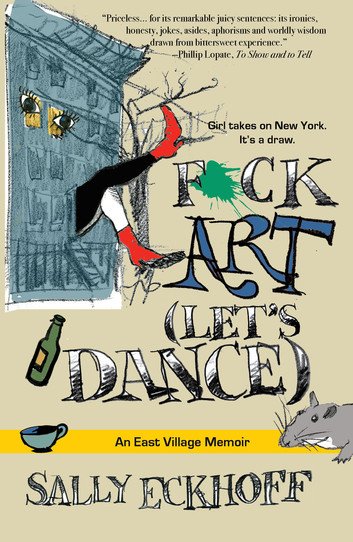
F*ck Art (Let’s Dance): Sally Eckhoff’s Raw Memoir of 1970s-80s NYC Art Scene
Discovering F*ck Art (Let’s Dance): A Painter’s Journey Through Lower East Side Chaos
F*ck Art (Let’s Dance) by Sally Eckhoff captures a pivotal decade in New York City’s cultural history. Moreover, this 2015 memoir chronicles the author’s experiences as a young painter navigating Manhattan’s gritty streets. Published by Ig Publishing, the book spans the 1977 Summer of Sam through the 1988 Tompkins Square Park riots. Furthermore, Eckhoff’s raw, unflinching narrative reveals what it meant to be young, broke, and creative in downtown NYC.
Sally Eckhoff arrived in New York City as an aspiring painter with ambition and little else. Additionally, she would later become a respected writer and critic for The Village Voice. However, this memoir focuses on her formative years before she achieved critical acclaim and professional recognition. Therefore, readers witness her transformation from an uncertain newcomer to a confident artist who claims the city as her own.
The Lower East Side during this era was simultaneously dangerous and exhilarating for young artists. Meanwhile, abandoned buildings, crime, and urban decay created an unlikely backdrop for creative explosion and innovation. Eckhoff navigates this landscape with determination, vulnerability, and keen observation throughout the narrative. Thus, the book becomes both a personal memoir and a cultural document of an irreplaceable historical moment.
The Summer of Sam and F*ck Art (Let’s Dance)’s Opening
The memoir opens in 1977 during the infamous Summer of Sam serial killer crisis. Moreover, David Berkowitz’s killing spree created an atmosphere of fear and paranoia throughout New York City. Young women with long dark hair—like Eckhoff—felt particularly vulnerable during this terrifying period of violence. Furthermore, this opening establishes the book’s unflinching approach to the era’s darkness and danger.
The Summer of Sam serves as more than a mere historical backdrop in Eckhoff’s narrative structure. Additionally, it symbolizes the chaos, unpredictability, and genuine danger that characterized life in 1970s New York City. The serial killer’s presence forced residents to confront mortality and vulnerability in their daily routines. Therefore, Eckhoff’s decision to begin here signals her commitment to portraying the era’s full reality.
Despite the fear, young artists like Eckhoff continued pursuing their creative dreams in the city. Meanwhile, the danger somehow intensified the sense of living fully and urgently in the present moment. The Summer of Sam paradoxically heightened both caution and recklessness among the city’s creative community. Thus, the opening captures the contradictions that defined this extraordinary time and place in history.
The 1977 blackout and subsequent looting also feature in this early section of the memoir. Furthermore, these events revealed deep social tensions and economic desperation underlying the city’s surface glamour. Eckhoff observes that a crisis exposes both the worst and the best of human nature. Consequently, readers understand the complex social landscape she navigated as a young artist finding her way.
Tompkins Square Park Riots: Where F*ck Art (Let’s Dance) Concludes
The memoir concludes with the 1988 Tompkins Square Park riots, marking the end of an era. Moreover, these violent clashes between police and residents symbolized gentrification’s arrival in the Lower East Side. The park had been a gathering place for artists, punks, homeless people, and neighborhood residents. Furthermore, the riots represented the beginning of the neighborhood’s transformation into something unrecognizable and expensive.
The Tompkins Square Park riots erupted over a proposed curfew that threatened the park’s role. Additionally, the conflict reflected larger tensions about who had the right to occupy public space. Long-time residents and newcomers clashed with authorities attempting to “clean up” the increasingly valuable neighborhood. Therefore, the riots became a flashpoint for debates about urban development, displacement, and community control.
Eckhoff’s presence at these riots perfectly bookends her Summer of Sam opening. Meanwhile, both events involve violence, fear, and the sense that the city was fundamentally changing. The eleven years between these moments encompass her transformation from newcomer to established community member. Thus, the riots carry personal significance beyond their broader historical and cultural importance for the city.
The riots marked the beginning of the Lower East Side’s gentrification and eventual transformation. Furthermore, the neighborhood that nurtured Eckhoff’s artistic development would soon become unaffordable for struggling artists. The memoir captures this moment of transition with sadness, anger, and clear-eyed recognition of inevitability. Consequently, F*ck Art (Let’s Dance) becomes an elegy for a vanished New York that can never return.
Sally Eckhoff: Painter, Writer, and Lower East Side Chronicler
Sally Eckhoff came to New York City primarily as a painter seeking artistic community and opportunity. Moreover, her visual art practice remained central to her identity throughout the years covered in this memoir. The book describes her studio spaces, her artistic process, and her struggles to create meaningful work. Furthermore, Eckhoff’s painter’s eye shapes how she vividly observes and describes the world around her.
Her later career as a Village Voice writer and critic adds retrospective authority to the memoir. Additionally, Eckhoff developed skills in cultural observation and analysis that inform her storytelling throughout the book. However, she resists the temptation to impose later wisdom on her younger self’s experiences artificially. Therefore, the narrative maintains immediacy and authenticity despite being written decades after the events described.
Eckhoff’s dual identity as both participant and observer enriches the memoir’s perspective significantly throughout. Meanwhile, she experiences the Lower East Side scene from within while maintaining enough distance to reflect. This balance allows her to capture both the excitement and the genuine hardship of the era. Thus, readers get neither romanticized nostalgia nor a cynical dismissal, but an honest, complex portrayal instead.
The author’s background and sensibility shape the memoir’s distinctive voice and approach in several ways:
- Painter’s attention to visual detail, color, texture, and spatial relationships
- A critic’s ability to contextualize personal experience within larger cultural movements
- The writer’s skill in crafting vivid scenes and memorable character portraits
- Participants’ insider knowledge of the art scene’s unwritten rules and hierarchies
- Observer’s capacity to recognize patterns and significance in seemingly random events
Her multifaceted perspective makes F*ck Art (Let’s Dance) more than a simple autobiography or nostalgia piece. Furthermore, Eckhoff brings analytical rigor to personal narrative without sacrificing emotional honesty or vulnerability. The result is a memoir that works on multiple levels for different readers—thereby appealing to those seeking personal stories, cultural history, or artistic inspiration.
Making the City Her Own: A Young Artist’s Journey
The central narrative arc of F*ck Art (Let’s Dance) follows Eckhoff’s gradual claiming of New York City. Moreover, she arrives as an outsider, uncertain of her place in the intimidating urban landscape. The memoir traces her growing confidence, knowledge, and sense of belonging over eleven transformative years. Furthermore, this journey from stranger to insider provides the book’s emotional and structural backbone throughout.
Making the city her own required learning its geography, rhythms, dangers, and hidden opportunities. Additionally, Eckhoff had to discover which neighborhoods, venues, and communities welcomed her artistic ambitions. She maps the city through personal experience rather than guidebooks or conventional tourist routes. Therefore, her New York emerges as a lived, felt reality rather than an abstract concept or a pasted image.
The process involved both external exploration and internal transformation as she developed her artistic voice. Meanwhile, Eckhoff learned to navigate the art world’s social dynamics, economic realities, and creative challenges. She made friends, enemies, lovers, and collaborators who shaped her understanding of herself and her work. Thus, claiming the city meant simultaneously discovering and creating her identity as an artist and person.
The memoir shows how physical spaces and creative communities intertwined in the Lower East Side scene. Furthermore, specific locations—clubs, galleries, apartments, streets—become characters in the narrative, each with a distinct personality. Eckhoff’s relationship with these places evolves as she gains experience and the neighborhood itself changes. Consequently, the book becomes a love letter to a specific version of New York that existed briefly.
The Gritty Lower East Side: Art, Danger, and Possibility
The Lower East Side during 1977-1988 was simultaneously inspiring and terrifying for young artists like Eckhoff. Moreover, the neighborhood combined extreme poverty, crime, and urban decay with explosive creative energy. Abandoned buildings provided cheap studio space but also attracted dangerous activities and unstable individuals. Furthermore, this contradiction between opportunity and threat defined daily life for the area’s artistic community.
The physical environment reflected decades of disinvestment, white flight, and municipal neglect throughout the neighborhood. Additionally, burned-out buildings, empty lots, and crumbling infrastructure created an almost post-apocalyptic landscape. However, this very abandonment created space for artists, musicians, and other creative people to experiment. Therefore, the neighborhood’s problems paradoxically enabled its vibrant cultural scene to flourish.
Eckhoff describes the Lower East Side’s gritty reality without romanticizing or sanitizing the genuine hardships involved. Meanwhile, she acknowledges the privilege of choosing poverty and danger, even as others had no choice. The memoir grapples honestly with the ethics of artists colonizing poor neighborhoods for cheap rent. Thus, F*ck Art (Let’s Dance) avoids a simple celebration of the bohemian lifestyle and confronts uncomfortable questions.
The neighborhood’s diversity—ethnic, economic, and cultural—shaped the art scene’s character and creative output. Furthermore, Puerto Rican, Jewish, African American, and white communities coexisted in complex, sometimes tense relationships. Artists interacted with long-time residents, recent immigrants, drug dealers, and everyone in between daily. Consequently, the Lower East Side scene reflected genuine urban diversity rather than a homogeneous artistic enclave.
Painting, Eating, Dancing: The Raw Chronicle of Daily Life
F*ck Art (Let’s Dance) focuses on the mundane, physical realities of artistic life in 1970s-80s NYC. Moreover, Eckhoff describes the actual work of painting—mixing colors, stretching canvases, and cleaning brushes. The memoir doesn’t skip over boring or unglamorous aspects of pursuing creative ambitions in difficult circumstances. Furthermore, this attention to daily detail makes the book feel authentic and grounded throughout.
Eating—or often not eating—features prominently as Eckhoff struggles with poverty and limited resources constantly. Additionally, the book describes creative strategies for obtaining food when money ran out between jobs. Meals become social occasions, artistic fuel, and markers of economic status in the narrative. Therefore, food serves as both literal sustenance and a metaphor for the hunger driving artistic ambition.
Dancing provides escape, community, and physical expression throughout the memoir’s pages and Eckhoff’s experiences. Meanwhile, clubs like CBGB, Mudd Club, and others offered spaces where artists could lose themselves. The dance floor became a democratic space where economic and social hierarchies temporarily dissolved in music. Thus, dancing represented freedom from the constraints and struggles that otherwise defined daily existence.
The memoir’s title F*ck Art (Let’s Dance) captures this tension between serious artistic ambition and joyful abandon. Furthermore, it suggests that sometimes the best response to difficulty is pleasure, movement, and connection. Eckhoff refuses to choose between high artistic purpose and low physical enjoyment throughout the narrative. Consequently, the book celebrates both painting and dancing, creation and release, work and play equally.
Punk Culture and DIY Ethos in F*ck Art (Let’s Dance)
Punk culture profoundly shaped the Lower East Side art scene during the years Eckhoff’s memoir covers. Moreover, punk’s aggressive energy, anti-establishment attitude, and raw aesthetic influenced visual artists as well as musicians. The movement rejected polish, professionalism, and conventional beauty in favor of authenticity and immediacy—furthermore, punk allowed creation without formal training, expensive materials, or institutional approval.
The DIY (Do It Yourself) ethos extended beyond music to encompass art, fashion, publishing, and lifestyle. Additionally, artists created their own venues, galleries, and distribution networks outside mainstream commercial systems. This self-sufficiency was partly a matter of necessity—no one else would support their work—and partly an ideological choice. Therefore, the DIY approach was both a practical strategy and a political statement about artistic autonomy.
Eckhoff participated in this culture while maintaining her identity as a painter rather than a musician. Meanwhile, she absorbed punk’s lessons about directness, energy, and refusing to wait for permission. The memoir shows how punk’s influence permeated the entire downtown creative scene during this era. Thus, F*ck Art (Let’s Dance) documents punk’s broader cultural impact beyond its musical origins.
The punk scene’s inclusivity and exclusivity existed in constant tension throughout the Lower East Side community. Furthermore, the movement welcomed outsiders and misfits while carefully policing authenticity and credibility. Eckhoff navigates these contradictions as she establishes her place within the scene’s social hierarchies. Consequently, the book reveals the complexity of punk culture beyond stereotypes of simple rebellion or nonconformity.
Urban Decay and Vitality: The Paradox of 1970s-80s New York
New York City during the late 1970s and 1980s was famously broke, dangerous, and dysfunctional. Moreover, the 1975 fiscal crisis had brought the city to the brink of bankruptcy. Services declined, infrastructure crumbled, and crime rates soared to unprecedented levels throughout all boroughs. Furthermore, the middle-class flight to the suburbs left entire neighborhoods abandoned and economically devastated.
Yet this same period produced extraordinary cultural vitality and creative innovation across multiple artistic disciplines. Additionally, hip-hop, punk, new wave, graffiti art, and downtown performance art all flourished simultaneously. The city’s very dysfunction created space for experimentation that wouldn’t have been possible otherwise. Therefore, decay and vitality weren’t opposites but rather two sides of the same coin.
Eckhoff’s memoir captures this paradox without resolving it into a simple narrative or easy conclusions. Meanwhile, she shows how danger and creativity, poverty and richness of experience coexisted in daily life. The book refuses to either condemn the city’s problems or romanticize them as necessary for art. Thus, F*ck Art (Let’s Dance) presents a nuanced portrait of a complex historical moment.
The relationship between urban conditions and artistic production remains contested and debated among cultural historians. Furthermore, some argue that gentrification and safety improvements killed the creative scene that thrived on chaos. Others insist that romanticizing poverty and danger ignores real suffering and injustice experienced by residents. Consequently, Eckhoff’s firsthand account contributes a valuable perspective to these ongoing conversations about cities and culture.
Survival, Freedom, and Creativity: Core Themes
Survival—physical, economic, and artistic—constantly forms a central theme throughout F*ck Art (Let’s Dance). Moreover, Eckhoff describes the daily challenge of securing food, shelter, and safety in a hostile environment. The memoir doesn’t shy away from depicting the genuine hardship, fear, and vulnerability she experienced regularly. Furthermore, survival required creativity, resourcefulness, and community support beyond individual effort alone.
Freedom represents another central theme as Eckhoff explores what liberation means for a young artist. Additionally, the Lower East Side offered freedom from conventional expectations, middle-class respectability, and suburban conformity. However, this freedom came with costs—poverty, danger, and constant uncertainty about the future. Therefore, the book examines the price of freedom and whether the trade-offs were ultimately worth it.
Creativity drives the narrative as Eckhoff pursues her artistic vision despite obstacles and discouragement. Meanwhile, the memoir explores what it takes to maintain creative commitment when success seems unlikely. She describes both the joy of making art and the frustration of struggling to improve. Thus, F*ck Art (Let’s Dance) offers an honest portrayal of the unglamorous reality of artistic development.
These three themes—survival, freedom, and creativity—interweave throughout the memoir in complex, sometimes contradictory ways:
- Survival sometimes required compromising freedom through day jobs and commercial work
- Freedom enabled creativity but also created instability that threatened survival
- Creativity provided meaning that made survival struggles feel worthwhile and purposeful
- The tension between these values generated the energy that fueled the scene
- Different artists balanced these competing demands in different ways, with varying results
Eckhoff’s exploration of these themes gives F*ck Art (Let’s Dance) depth beyond simple nostalgia or autobiography. Furthermore, her honest examination of difficult choices and trade-offs resonates with contemporary artists facing similar dilemmas. The memoir suggests that these tensions are inherent to artistic life rather than unique to one era. Consequently, the book speaks to timeless questions about how to live creatively and authentically.
Target Audience: Who Should Read F*ck Art (Let’s Dance)
Memoir readers seeking authentic, well-crafted personal narratives will find much to appreciate in Eckhoff’s book. Moreover, the author’s skill in scene-setting, character development, and narrative pacing makes for compelling reading. The memoir effectively balances reflection with immediacy, analysis with emotion throughout its pages. Furthermore, Eckhoff’s distinctive voice and perspective distinguish her work from generic memoir formulas.
New York City history enthusiasts will value F*ck Art (Let’s Dance) as a primary source. Additionally, the book provides firsthand testimony about a pivotal decade in the city’s cultural evolution. Eckhoff’s detailed descriptions of specific locations, events, and people create a valuable historical record beyond statistics. Therefore, the memoir contributes to our understanding of how New York transformed from near-bankruptcy into global cultural capital.
Art scene fans and participants will recognize the dynamics, personalities, and challenges Eckhoff describes vividly. Meanwhile, the book captures the excitement, competition, and camaraderie that characterize creative communities everywhere. Her honest portrayal of artistic struggle and occasional triumph rings true for anyone pursuing creative work. Thus, the memoir speaks to universal aspects of artistic life while remaining grounded in specifics.
The book also appeals to several other audiences with different interests and backgrounds throughout:
- Punk and alternative music fans are interested in the cultural context surrounding the music
- Urban studies scholars examining gentrification, displacement, and neighborhood change
- Feminist readers interested in women’s experiences in male-dominated art scenes
- Anyone nostalgic for pre-digital, pre-gentrified New York City
- Young artists seeking inspiration and realistic expectations about creative careers
- Cultural historians documenting the 1970s-80s American urban experience
General readers interested in well-written, engaging nonfiction will also find the memoir accessible and rewarding. Furthermore, Eckhoff’s prose style is clear, vivid, and free of pretension or unnecessary jargon. The book requires no specialized knowledge of art history or New York geography to be fully appreciated. Consequently, F*ck Art (Let’s Dance) reaches beyond narrow niche audiences to connect with broader readerships.
Why F*ck Art (Let’s Dance) Matters Today
The memoir preserves firsthand testimony about a New York City that no longer exists. Moreover, the Lower East Side Eckhoff describes has been completely transformed by gentrification and development. The artists, venues, and communities she chronicles have largely dispersed or disappeared entirely from the neighborhood. Furthermore, her book serves as a crucial historical document, preventing this era from being forgotten or misremembered.
Contemporary artists facing similar challenges of survival and creative commitment can learn from Eckhoff’s experiences. Additionally, the memoir offers a realistic portrayal of the difficulties of artistic life without discouraging or romanticizing them. Her honest account of both successes and failures provides a valuable perspective for emerging artists today. Therefore, F*ck Art (Let’s Dance) functions as both a historical document and a practical guide for creative careers.
The book raises important questions about gentrification, displacement, and who has the right to the city. Meanwhile, Eckhoff’s presence as a young artist in a poor neighborhood anticipates later waves of gentrification. The memoir honestly grapples with uncomfortable questions about artists’ roles in neighborhood change and displacement. Thus, the book contributes to ongoing debates about urban development, housing justice, and cultural preservation.
The tension between art and life that the title F*ck Art (Let’s Dance) captures remains relevant. Furthermore, artists today still struggle to balance serious creative work with joy, pleasure, and a full life. Eckhoff’s refusal to choose between these values offers an alternative to both careerism and pure hedonism. Consequently, the memoir’s central insight about integrating art and life speaks powerfully to contemporary concerns.
Literary Style and Narrative Approach
Eckhoff’s prose style in F*ck Art (Let’s Dance) is direct, vivid, and unpretentious throughout. Moreover, she writes with a painter’s eye for visual detail, color, texture, and spatial relationships. The memoir’s sentences are clear and muscular, avoiding unnecessary ornamentation or academic language. Furthermore, her voice feels authentic and immediate rather than artificially constructed or overly polished.
The narrative structure follows roughly chronological order from 1977 to 1988 with occasional flashbacks. Additionally, Eckhoff organizes the memoir around significant events, relationships, and artistic developments rather than a strict timeline. This approach allows her to explore themes and ideas while maintaining forward narrative momentum. Therefore, the book balances storytelling with reflection, scene with summary, and action with analysis effectively.
Eckhoff employs several distinctive literary techniques that enhance the memoir’s impact and readability:
- Vivid sensory descriptions that immerse readers in specific moments and places
- Sharp character sketches that bring the era’s personalities to life memorably
- Honest self-examination that acknowledges mistakes and limitations without self-pity
- Dark humor that lightens difficult material without trivializing genuine hardship
- Cultural references that ground the narrative in its specific historical moment
The author’s background as a Village Voice critic influences her analytical approach to personal experience. Meanwhile, she contextualizes her individual story within larger cultural movements and historical forces. This dual perspective—personal and analytical—gives the memoir depth beyond simple autobiography or nostalgia. Thus, F*ck Art (Let’s Dance) works as both an intimate personal story and a broader cultural history.
Critical Reception and Cultural Impact
F*ck Art (Let’s Dance) received positive reviews praising Eckhoff’s honest, vivid portrayal of 1970s-80s NYC. Moreover, critics appreciated her refusal to romanticize or sanitize the era’s genuine difficulties and dangers. The memoir was recognized for capturing a specific cultural moment with authenticity and insight. Furthermore, reviewers noted Eckhoff’s skill in balancing personal narrative with broader historical and cultural context.
The book has found particular resonance among readers who experienced the era firsthand and recognize its accuracy. Additionally, younger readers discover a New York City radically different from today’s sanitized, expensive version. The memoir serves as both a source of nostalgia for those who were there and a revelation for those who weren’t. Therefore, F*ck Art (Let’s Dance) bridges generational divides and creates dialogue about urban change.
The memoir contributes to the growing body of literature documenting the pre-gentrification creative scenes of New York City. Meanwhile, it joins works by other artists, musicians, and writers preserving this crucial period. Eckhoff’s painter’s perspective adds a unique dimension to this collective memory and historical record. Thus, the book enriches our understanding of how different artistic disciplines intersect downtown.
The cultural impact extends beyond literary circles to influence conversations about cities, art, and community. Furthermore, the memoir has been cited in academic studies of gentrification, urban culture, and artistic production. Eckhoff’s firsthand account provides valuable primary source material for scholars and researchers studying this period. Consequently, F*ck Art (Let’s Dance) serves multiple purposes for different audiences and continues gaining recognition.
Conclusion: A Raw, Essential Chronicle of Artistic Life
F*ck Art (Let’s Dance) stands as essential reading for anyone interested in New York City cultural history. Sally Eckhoff’s memoir captures a pivotal decade with honesty, insight, and vivid descriptive power throughout. Moreover, the book preserves firsthand testimony about a vanished world that profoundly shaped contemporary urban culture. The Lower East Side scene Eckhoff chronicles influenced art, music, fashion, and attitudes far beyond its geographical boundaries.
The memoir’s greatest strength lies in its refusal to romanticize or simplify the era’s complexities. Furthermore, Eckhoff acknowledges both the excitement and the genuine hardship of pursuing art in difficult circumstances. Her honest examination of survival, freedom, and creativity resonates with artists across generations and locations. Therefore, F*ck Art (Let’s Dance) transcends its specific historical moment to address timeless questions about living.
Eckhoff’s journey from an uncertain newcomer to a confident artist who claims the city as her own inspires readers. Additionally, her story demonstrates the importance of community, persistence, and the ability to maintain creative commitment despite obstacles. The memoir shows how individual artistic development intertwines with larger cultural movements and historical forces. Thus, personal narrative becomes a window into broader social and cultural transformation during a crucial period.
This raw, unflinching chronicle deserves attention from memoir readers, history enthusiasts, and art scene participants alike. Moreover, F*ck Art (Let’s Dance) offers valuable lessons about cities, creativity, and the costs of gentrification. Sally Eckhoff’s distinctive voice and painter’s eye create a memorable portrait of a time and place. Consequently, the memoir will continue resonating with readers seeking authentic accounts of artistic life and urban transformation.

Reviews
There are no reviews yet.