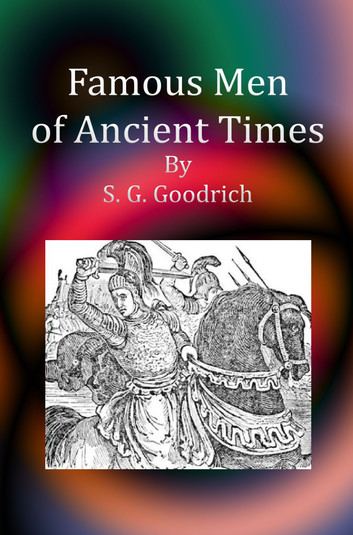
Famous Men of Ancient Times by S. G. Goodrich

Price range: $2.99 through $23.49

S. G. Goodrich presents the fascinating lives of iconic leaders and thinkers from antiquity. This volume explores the triumphs and legacies of history’s greatest men. Readers discover the enduring power of ancient wisdom.

Additional information

Publisher

cbook2463

Release Date

June 27, 2016

Number of pages

261

Language

English

ISBN

1230001201772

Download options

Epub

Format

Digital Book, Paper Book

SKU: 1230001201772 Categories: , , Product ID: 26057

Description

Famous Men of Ancient Times: A Classic Journey Through History

“Famous Men of Ancient Times” by S. G. Goodrich introduces readers to legendary figures from antiquity. This timeless educational work brings ancient history alive through engaging biographical sketches and moral lessons. Moreover, the book has inspired generations of young readers since its first publication in 1843. Therefore, it remains a valuable resource for understanding the foundations of Western civilization today.

Samuel Griswold Goodrich, better known by his pen name Peter Parley, created this masterpiece. Furthermore, he designed the book specifically to make history accessible and exciting for children. His storytelling approach combines factual accuracy with compelling narratives that capture young imaginations. Consequently, the book became a cornerstone of nineteenth-century American education and literary culture.

The work presents biographical sketches of influential leaders, thinkers, and warriors from ancient civilizations. Additionally, each chapter focuses on a different historical figure whose actions shaped the world. Goodrich weaves moral lessons throughout these stories to teach character alongside historical facts. Therefore, readers gain both knowledge and wisdom from these ancient examples of greatness.

Goodrich’s Educational Vision in Famous Men of Ancient Times

Samuel Griswold Goodrich revolutionized children’s literature with his Peter Parley series of educational books. Moreover, he believed young minds deserved engaging content rather than dry textbook presentations. His approach made learning feel like adventure rather than tedious memorization of dates. Furthermore, he understood that stories about real people inspire children more than abstract concepts.

“Famous Men of Ancient Times” exemplifies Goodrich’s innovative teaching philosophy throughout its pages. Additionally, he presents history as a series of human dramas with relatable emotions. The ancient figures emerge as real people with strengths, weaknesses, and difficult choices. Therefore, young readers connect personally with these distant historical personalities and their struggles.

Goodrich’s writing style remains accessible while maintaining respect for his young audience’s intelligence. Moreover, he avoids talking down to children or oversimplifying complex historical situations unnecessarily. His clear prose explains ancient contexts without overwhelming readers with excessive scholarly detail. Consequently, the book works equally well for independent young readers and family read-aloud sessions.

Ancient Greek Heroes and Thinkers Featured

The book dedicates substantial attention to ancient Greece’s most influential figures and their achievements. Moreover, Goodrich recognizes Greece as the birthplace of Western philosophy, democracy, and dramatic arts. He presents Greek heroes and thinkers as foundational to understanding modern civilization’s development. Furthermore, their stories demonstrate timeless principles of courage, wisdom, and civic responsibility.

Readers encounter legendary figures whose names remain familiar even in contemporary culture and education. Additionally, Goodrich provides context for understanding why these individuals mattered to their societies. He explains their contributions without requiring prior knowledge of ancient Greek history or culture. Therefore, the book serves as an excellent introduction for students beginning their classical studies.

The Greek biographical sketches balance military leaders with philosophers and cultural innovators throughout. Moreover, this variety shows that greatness takes many forms beyond battlefield victories alone. Goodrich celebrates intellectual achievement and artistic creativity alongside physical courage and strategic brilliance. Consequently, readers learn that ancient societies valued diverse talents and contributions from their citizens.

Roman Leaders and the Empire’s Legacy

Ancient Rome receives extensive coverage reflecting its profound influence on Western law and government. Moreover, Goodrich traces Rome’s evolution from small city-state to vast empire spanning continents. He presents Roman leaders as complex figures navigating power, ambition, and responsibility constantly. Furthermore, their decisions shaped European history for centuries after Rome’s eventual fall.

The Roman biographical sketches explore both republican and imperial periods of Roman history. Additionally, Goodrich examines how Rome’s political system evolved and eventually transformed into autocracy. He shows young readers how societies change over time through human choices and actions. Therefore, the Roman chapters offer lessons about government, leadership, and the consequences of decisions.

Goodrich presents Roman military conquests alongside cultural achievements in architecture, engineering, and law. Moreover, he helps readers understand that Rome’s lasting legacy extends beyond territorial expansion. Roman innovations in infrastructure, legal systems, and administration influenced all subsequent European civilizations. Consequently, understanding Rome becomes essential for comprehending modern Western society’s foundations and structures.

The Famous Men of Ancient Times Biographical Approach

Goodrich structures each chapter around a single historical figure’s life story and major accomplishments. Moreover, this biographical approach makes history personal and memorable for young readers. Children remember stories about people more easily than abstract historical trends or movements. Furthermore, the biographical format allows Goodrich to explore character development and moral choices naturally.

Each biographical sketch follows a similar pattern that helps readers navigate the material easily. Additionally, Goodrich introduces the historical context before focusing on the individual’s specific contributions. He describes the person’s early life, major achievements, and lasting impact on civilization. Therefore, readers gain a complete picture of each figure’s significance and historical importance.

The biographical sketches vary in length depending on the figure’s historical significance and complexity. Moreover, major figures like Alexander the Great receive more extensive treatment than lesser-known individuals. This proportional approach helps readers understand relative importance without explicit ranking or comparison. Consequently, the book’s structure itself teaches historical perspective and the concept of significance.

Key Historical Figures Covered in the Book

“Famous Men of Ancient Times” introduces readers to a diverse array of ancient personalities. Moreover, the selection spans multiple civilizations, time periods, and types of achievement throughout history. Goodrich carefully chose figures who exemplify different virtues and made distinct contributions to civilization. Furthermore, this variety ensures that readers encounter multiple models of excellence and greatness.

The book features these influential ancient figures among many others presented:

  • Confucius – Chinese philosopher who established ethical principles still followed today worldwide
  • Cyrus the Great – Persian emperor known for tolerance and administrative genius
  • Leonidas – Spartan king who led the heroic stand at Thermopylae
  • Socrates – Greek philosopher who pioneered the Socratic method of questioning
  • Alexander the Great – Macedonian conqueror who spread Greek culture across three continents
  • Hannibal – Carthaginian general who nearly defeated Rome during the Punic Wars
  • Julius Caesar – Roman general and statesman who transformed the Roman Republic

Each figure receives treatment that highlights their unique contributions and historical circumstances. Additionally, Goodrich explains why these particular individuals deserve remembrance and study by future generations. The selection demonstrates that greatness emerges from various cultures and takes many forms. Therefore, readers learn to appreciate diverse civilizations and their contributions to human progress.

Moral Lessons Woven Throughout the Narratives

Goodrich never separates historical facts from moral instruction in his educational approach. Moreover, he believes that history’s primary value lies in teaching character and ethical principles. Each biographical sketch illustrates virtues like courage, wisdom, justice, or self-discipline in action. Furthermore, Goodrich explicitly draws connections between ancient examples and contemporary moral challenges.

The moral lessons emerge naturally from the historical narratives rather than feeling forced. Additionally, Goodrich trusts young readers to recognize virtue and vice through story examples. He occasionally adds brief commentary highlighting the moral significance of particular actions or decisions. Therefore, the book teaches ethics through demonstration rather than abstract preaching or lecturing.

Some biographical sketches also serve as cautionary tales about pride, cruelty, or poor judgment. Moreover, Goodrich presents flawed historical figures alongside virtuous ones to show consequences of choices. He demonstrates that even great leaders made mistakes with serious repercussions for themselves. Consequently, readers learn that character matters more than talent or power for lasting success.

Historical Accuracy and Engaging Storytelling Combined

Goodrich maintains remarkable historical accuracy while crafting narratives that captivate young imaginations. Moreover, he researched ancient sources carefully to ensure factual reliability in his accounts. His commitment to truth distinguishes his work from purely fictional historical tales or legends. Furthermore, this accuracy makes the book valuable for serious study alongside its entertainment value.

The author acknowledges when historical sources conflict or leave gaps in our knowledge. Additionally, he explains which details come from reliable ancient historians versus later traditions. This intellectual honesty teaches young readers about historical methodology and source evaluation early. Therefore, the book cultivates critical thinking alongside historical knowledge from the beginning.

Despite his commitment to accuracy, Goodrich never allows facts to overwhelm the human drama. Moreover, he selects details that illuminate character and advance the narrative rather than listing. His storytelling skill makes ancient events feel immediate and relevant to contemporary readers. Consequently, history becomes a living subject rather than a collection of dead facts.

The Book’s Influence on Education and Literature

“Famous Men of Ancient Times” profoundly influenced American education throughout the nineteenth and early twentieth centuries. Moreover, it became a standard text in schools and homes across the nation. Teachers appreciated its combination of solid content with age-appropriate presentation and moral instruction. Furthermore, the book inspired numerous imitators attempting to replicate Goodrich’s successful formula elsewhere.

The Peter Parley series, including this volume, sold millions of copies during Goodrich’s lifetime. Additionally, the books remained in print and popular for decades after his death. Multiple publishers issued new editions with updated illustrations and occasionally revised text throughout. Therefore, the work’s longevity testifies to its enduring value and appeal across generations.

Goodrich’s biographical approach to teaching history influenced educational philosophy and curriculum development significantly. Moreover, educators recognized that narrative engagement improves retention and understanding of historical material. His methods anticipated modern educational research about storytelling’s power in learning and memory. Consequently, contemporary teachers still employ biographical approaches when introducing historical periods to students.

Timeless Relevance of Ancient Wisdom Today

The ancient figures in “Famous Men of Ancient Times” remain relevant to contemporary readers. Moreover, their struggles with power, ethics, and leadership mirror challenges facing modern society. The fundamental questions about justice, courage, and wisdom never become outdated or irrelevant. Furthermore, ancient examples provide perspective on current events by showing historical patterns clearly.

Young readers today can still learn valuable lessons from these ancient biographical sketches. Additionally, the book demonstrates that human nature remains essentially constant across millennia and cultures. The same virtues that made ancient leaders great still matter in modern contexts. Therefore, studying ancient figures helps develop character and judgment applicable to contemporary life.

The book also teaches cultural literacy by introducing figures referenced throughout Western literature. Moreover, understanding classical allusions enriches reading of later works from Shakespeare to modern novels. These ancient names and stories form a shared cultural vocabulary across generations and nations. Consequently, familiarity with classical figures enhances appreciation of art, literature, and political discourse.

The 1843 First Edition and Publishing History

The original 1843 edition of “Famous Men of Ancient Times” appeared during American publishing’s golden age. Moreover, Goodrich worked with prestigious Boston publisher Bradbury, Soden & Co. for this release. The first edition featured illustrations that enhanced the text and helped young readers visualize. Furthermore, the book’s physical quality reflected its importance as a serious educational work.

Early editions became collector’s items valued for their historical significance and beautiful craftsmanship. Additionally, library copies from the original printing occasionally surface in rare book markets today. These first editions provide insight into nineteenth-century educational priorities and children’s literature standards. Therefore, they interest both book collectors and historians of education and publishing equally.

Subsequent editions updated illustrations and occasionally revised text to reflect new historical scholarship. Moreover, publishers adapted the book’s format for changing educational needs and reading preferences. Some editions condensed the content while others expanded coverage of particular civilizations or figures. Consequently, the publishing history itself demonstrates the book’s adaptability and enduring appeal over time.

Interactive Learning Through Historical Biography

Goodrich’s biographical approach creates natural opportunities for interactive learning and family discussion. Moreover, parents and teachers can use the book as a springboard for deeper exploration. Each chapter raises questions about ethics, leadership, and historical causation worth discussing together. Furthermore, the biographical format encourages readers to compare ancient figures with contemporary leaders.

The book works excellently for read-aloud sessions that promote conversation and critical thinking. Additionally, adults can pause to ask children what they would have done in similar situations. These discussions help young readers develop moral reasoning and historical imagination simultaneously and naturally. Therefore, the book becomes a tool for active learning rather than passive information absorption.

Readers can also use the book as a starting point for further research projects. Moreover, each biographical sketch introduces topics worth exploring in greater depth through additional reading. Children might investigate the ancient civilizations mentioned or compare different historical accounts of events. Consequently, “Famous Men of Ancient Times” serves as a gateway to lifelong historical learning.

Why This Classic Deserves Modern Readers

Despite its nineteenth-century origins, “Famous Men of Ancient Times” offers value to contemporary audiences. Moreover, Goodrich’s clear prose and engaging narratives transcend their original historical context effectively. The book provides an antidote to modern education’s fragmentation by presenting history as coherent. Furthermore, it demonstrates that educational content can be both rigorous and genuinely enjoyable.

The work offers modern readers a window into how previous generations understood and taught history. Additionally, it shows the continuity of Western civilization’s core values across different eras. Reading Goodrich helps contemporary students understand their cultural heritage and intellectual foundations more deeply. Therefore, the book serves both historical and contemporary educational purposes simultaneously and effectively.

Modern families seeking alternatives to digital entertainment will find this book particularly valuable. Moreover, it provides screen-free content that stimulates imagination and builds knowledge without passive consumption. The biographical format naturally encourages discussion and reflection rather than mere information processing. Consequently, “Famous Men of Ancient Times” supports family bonding while educating about history and character.

The Enduring Legacy of Goodrich’s Masterwork

“Famous Men of Ancient Times” stands as Samuel Griswold Goodrich’s most enduring contribution to literature. Moreover, it exemplifies his belief that education should inspire rather than merely inform. The book’s continued availability in modern editions proves its lasting relevance and appeal. Furthermore, it remains a testament to the power of well-crafted biographical narrative in teaching.

Goodrich’s work influenced countless later writers who attempted similar biographical approaches to history. Additionally, his emphasis on moral instruction alongside factual content shaped educational philosophy for generations. Modern character education programs echo his conviction that history teaches virtue through example. Therefore, his influence extends far beyond the specific book into broader educational practice.

The book ultimately succeeds because it treats young readers with respect and high expectations. Moreover, Goodrich never condescends or oversimplifies to the point of distortion or inaccuracy. He trusts children to understand complex ideas when presented clearly and engagingly. Consequently, “Famous Men of Ancient Times” honors both its subjects and its readers equally.

Reviews

There are no reviews yet.

Be the first to review “Famous Men of Ancient Times by S. G. Goodrich”

Your email address will not be published. Required fields are marked *

E-mail
Password
Confirm Password